
Choosing the right safety shoes can be challenging when workers face different hazards across construction sites, factories, warehouses, and chemical facilities. To choose safety shoes effectively, buyers need to understand workplace risks, protective features, and applicable safety standards. The right footwear helps reduce exposure to workplace hazards while supporting comfort and durability during long shifts.
Why Safety Shoe Requirements Differ Between Industries
Safety footwear is designed to address specific occupational hazards. A shoe that performs well on a dry factory floor may not provide adequate traction on an oily surface. Similarly, footwear designed for warehouse operations may lack the specialized protection needed for electrical maintenance or chemical handling.
For employers and procurement teams, the selection process should begin with a workplace risk assessment. Consider the materials workers handle, the condition of the floor, the likelihood of falling objects, exposure to liquids, and the amount of time employees spend standing or walking.
Comfort and durability also affect product suitability. Workers may wear safety shoes for eight hours or longer each day. Poor fit, excessive weight, and inadequate ventilation can contribute to discomfort and reduced compliance with workplace footwear policies.
The objective is to select safety shoes that provide the protection required for the job without introducing unnecessary features or compromising everyday usability.
Which Safety Shoes Are Suitable for Different Industries?
Construction and Heavy Manufacturing
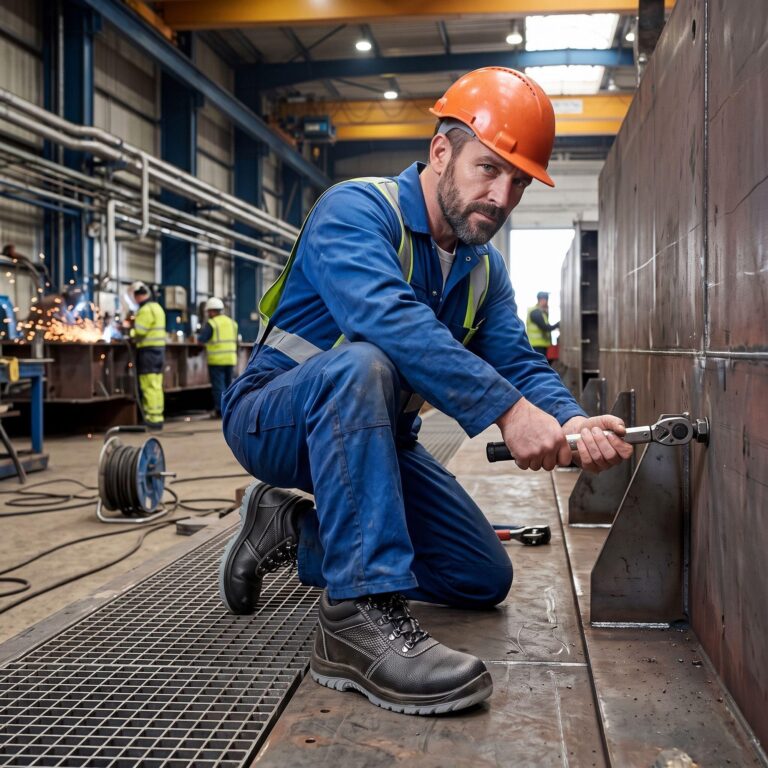
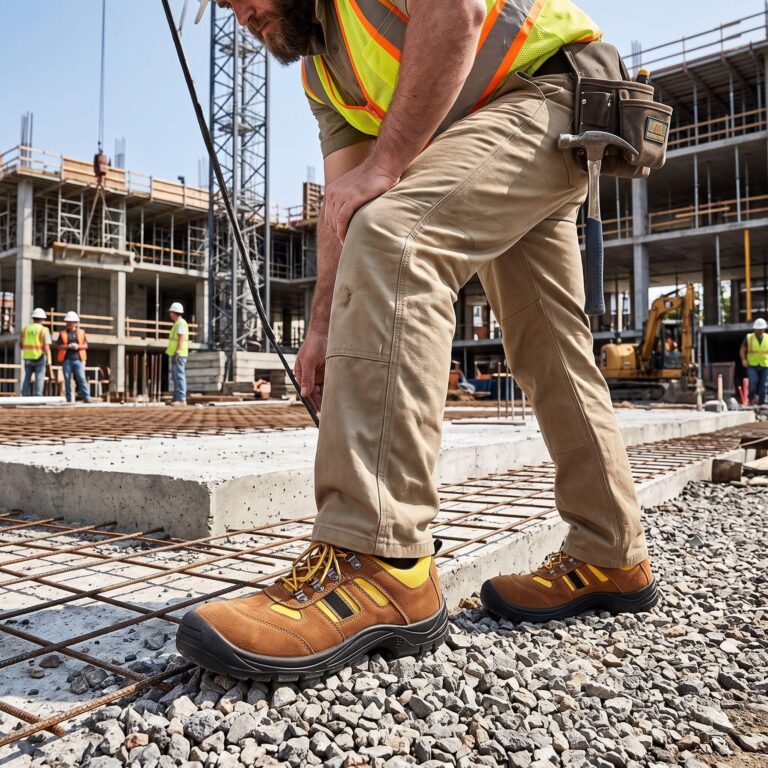
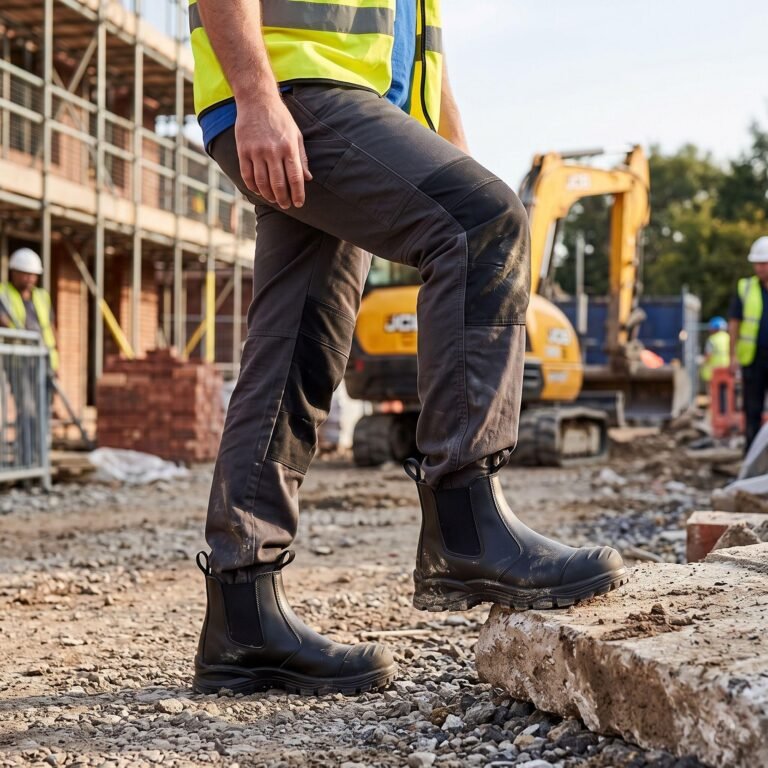
Construction workers and manufacturing operators may encounter falling tools, heavy materials, sharp debris, and uneven ground. These environments often require footwear with impact-resistant toe protection and, where puncture hazards exist, a suitable puncture-resistant midsole.
Steel toe caps are widely used for demanding industrial applications. Composite and aluminum alternatives may also be suitable when they meet the required protective performance. The choice should depend on the applicable specification rather than the material name alone.
Outsole design deserves equal attention. Workers moving across concrete, gravel, metal surfaces, or construction debris need appropriate traction and abrasion resistance. In environments involving hot surfaces, buyers should also check whether the outsole meets the relevant heat-resistance requirements.
For manufacturing facilities, consider the actual production process. Workers handling metal components may need puncture protection, while those working near moving equipment may require additional site-specific measures. Safety shoes should form part of a broader workplace safety system.
Warehousing and Logistics
Warehouse employees frequently walk between storage areas, handle packages, and operate around pallets or material-handling equipment. Common hazards include falling goods, rolling loads, slippery floors, and prolonged standing.
A suitable pair of warehouse safety shoes should provide the required toe protection, reliable traction for the floor conditions, and a comfortable fit. Cushioning and footwear weight become particularly important when workers cover long distances during a shift.
Breathable lining materials can improve comfort in warm indoor environments. However, ventilation should not compromise the protection needed against liquids, dust, or other workplace hazards.
Procurement teams should also consider the warehouse layout. Smooth coated floors, dusty concrete, and wet loading areas can create different traction requirements. Selecting footwear based on the actual working surface is more useful than choosing a model simply because it is marketed for warehouse use.
Oil and Gas Operations
Oilfields, refineries, and petrochemical facilities can expose workers to oil, fuel, water, heat, and heavy equipment. Some sites also have electrical hazards or potentially explosive atmospheres that require specialized protective measures.
When choosing safety shoes for oil and gas work, buyers should assess:
- Oil and fuel resistance: The outsole material should be suitable for the substances encountered.
- Slip resistance: Traction should be appropriate for contaminated or wet surfaces.
- Impact protection: Toe protection must meet the required performance level.
- Heat resistance: Footwear should suit foreseeable contact with hot surfaces where applicable.
- Additional protection: Electrical, chemical, or other specialized properties may be necessary depending on the task.
Oil resistance and slip resistance are different properties. A sole that resists deterioration from oil does not automatically provide sufficient grip on an oily floor. Buyers should review relevant test data and evaluate the conditions in which the footwear will be used.
Where explosive atmospheres are present, footwear selection must follow the site’s hazardous-area procedures. Ordinary safety footwear should not be assumed to provide protection against every ignition or electrical risk.
Electrical Maintenance and Electronics Manufacturing
Electrical maintenance and electronics production have different footwear requirements, even though both may involve electrical equipment.
Workers exposed to electric shock hazards may need footwear meeting specific electrical safety requirements. Meanwhile, electronics manufacturing facilities may require electrostatic discharge (ESD) footwear to help control static electricity and protect sensitive components.
These functions should not be confused. ESD footwear is intended to manage electrostatic charge under defined conditions. It is not a substitute for electrically insulating footwear when protection against electric shock is required.
Procurement teams should identify the intended application before selecting a product. They should then verify the relevant electrical or electrostatic performance requirements, product documentation, and compatibility with the site’s grounding and safety procedures.
A non-metallic toe cap alone does not establish that a shoe provides electrical insulation. The complete footwear design and its verified performance determine whether it is suitable for the intended task.
Chemical Processing and Industrial Laboratories
Chemical plants and industrial laboratories may expose workers to acids, alkalis, solvents, oils, and other hazardous substances. The appropriate footwear depends on the specific chemical, its concentration, temperature, exposure duration, and potential contact with the shoe.
Material compatibility is therefore essential. A material that resists one chemical may deteriorate when exposed to another. Buyers should consult manufacturer test data and relevant chemical compatibility information rather than relying on general descriptions such as chemical-resistant.
Construction details also matter. Seams, closures, and the junction between the upper and outsole can affect how well footwear withstands liquid exposure. Where splashing or immersion is possible, protective boots may be more appropriate than low-cut safety shoes.
If workers face substantial chemical exposure, footwear alone may not provide sufficient protection. The complete PPE selection should follow the workplace risk assessment and applicable safety procedures.
Food Production and Industrial Cleaning
Food production and cleaning operations often involve wet floors, detergents, repeated washing, and long periods of standing.
In these environments, prioritize appropriate slip resistance, water-related protection where required, and materials that can withstand the cleaning products used. Easy-to-clean surfaces may also support hygiene procedures.
Buyers should verify that the footwear is suitable for the facility’s sanitation requirements. A shoe designed for general industrial use may not withstand frequent washing or repeated exposure to cleaning chemicals.
For employees who stand for extended periods, fit, cushioning, and weight are also important. These features should be evaluated alongside protective performance rather than treated as secondary considerations.
How to Compare Safety Shoe Specifications and Standards
Once the workplace hazards are identified, procurement teams can translate them into measurable product requirements.
Understand EN ISO 20345:2022
EN ISO 20345:2022 is a European standard specifying requirements for general-purpose safety footwear, including protective toe caps and applicable additional protective properties.
When purchasing safety footwear for European markets, buyers should verify the applicable conformity requirements, product markings, technical documentation, and the specific performance claims made for each model.
The required protection varies by product category and designation. For example, requirements concerning puncture resistance, water-related performance, and outsole properties should be checked against the relevant classification and test results. A product’s general compliance does not mean it is suitable for every specialized hazard.
For US workplaces, procurement teams should also consider applicable Occupational Safety and Health Administration (OSHA) requirements and relevant protective footwear standards, including ASTM F2413 where applicable.
Key Parameters to Check Before Purchasing
| Specification | What Procurement Teams Should Verify |
|---|---|
| Toe protection | Impact and compression performance |
| Puncture resistance | Whether the protective layer meets the required test conditions |
| Slip resistance | Suitability for the actual floor and contamination conditions |
| Outsole material | Resistance to abrasion, oils, fuels, or heat as required |
| Water-related protection | The specific water resistance or penetration performance required |
| Electrical properties | Suitability for electrical insulation or ESD control, as applicable |
| Chemical compatibility | Resistance to the substances encountered at work |
| Fit and comfort | Sizing, width, heel stability, cushioning, and toe room |
| Construction durability | Suitability for repeated flexing and the expected working conditions |
Not every workplace needs every feature. Selecting specifications according to documented risks helps buyers avoid paying for properties that do not address the intended application.
Common Mistakes When Selecting Industrial Safety Footwear
Choosing Only by Price
The initial purchase price does not tell the whole story. Footwear that wears out quickly or causes discomfort may lead to more frequent replacement and lower worker acceptance.
Compare product specifications, expected service conditions, durability, and replacement requirements. A purchasing decision should account for both protective performance and practical service life.
Assuming One Model Fits Every Department
Different departments may face different hazards, even within the same factory. Warehouse staff, maintenance technicians, and production operators may require different footwear specifications.
A single model can be suitable for several tasks, but only when it meets the requirements of each work area. Department-specific risk assessments provide a more reliable basis for bulk purchasing.
Ignoring Fit and Wearability
A certified product can still be unsuitable if it does not fit the wearer properly. Foot width, toe room, heel movement, and sock thickness can all affect comfort.
Where possible, arrange sample trials with workers who represent the intended user group. Collect feedback on fit, walking comfort, and performance under realistic working conditions before placing a large order.
Treating Certification as Proof of Universal Protection
Safety standards define specific performance requirements. They do not automatically establish suitability for every chemical, electrical, thermal, or environmental hazard.
Always review the exact product designation, test documentation, and additional requirements associated with the workplace. Specialized hazards may require additional PPE beyond safety footwear.
Overlooking Inspection and Replacement
Protective performance can deteriorate through wear, impact damage, chemical exposure, or material breakdown. Employers should establish inspection and replacement procedures based on the manufacturer’s instructions, actual working conditions, and applicable safety requirements.
A Practical Selection Process for Procurement Teams
A consistent process makes safety footwear purchasing more reliable.
- Assess workplace hazards. Identify impact, puncture, slip, electrical, chemical, and thermal risks.
- Define technical requirements. Specify the protective features required for each task or department.
- Verify compliance. Review applicable standards, product markings, test reports, and conformity documentation.
- Evaluate construction and materials. Check outsole properties, upper materials, stitching or bonding, and expected durability.
- Arrange fit trials. Test representative sizes and evaluate comfort during normal work activities.
- Review performance after purchase. Inspect footwear condition and collect feedback to identify problems early.
This approach allows buyers to compare products using documented requirements instead of relying solely on appearance, material labels, or price.
What Is the Best Way to Choose Safety Shoes for Your Industry?
The best safety shoes are those that match the hazards of the job, meet applicable safety requirements, and fit the wearer comfortably. Construction and manufacturing often require impact and puncture protection; warehousing places greater emphasis on suitable traction and comfort; oil and gas operations may require oil-resistant outsoles and additional hazard-specific features; electrical work requires a clear distinction between insulation and ESD control; and chemical processing demands verified material compatibility.
Before purchasing, assess the working environment, identify the required protective properties, verify product documentation, and evaluate fit under realistic conditions. No single safety shoe is appropriate for every industry. The most suitable choice is the one supported by verified performance and the specific risks workers face.
Written by Hong Gu Safety Shoes Technical Team, this content is compiled from practical production, long-term field applications, and rigorous testing results.
Shan Dong Hong Gu Shoes Industrial Co., Ltd. is a leading safety footwear manufacturer based in China, specializing in industrial foot protection with over 20 years of manufacturing expertise.
Products are fully certified under European standards (CE EN ISO 20345:2022), offering a full range of manufacturing processes including PU/PU Injection, PU/Rubber, Goodyear Welted, and Rubber Cemented constructions.