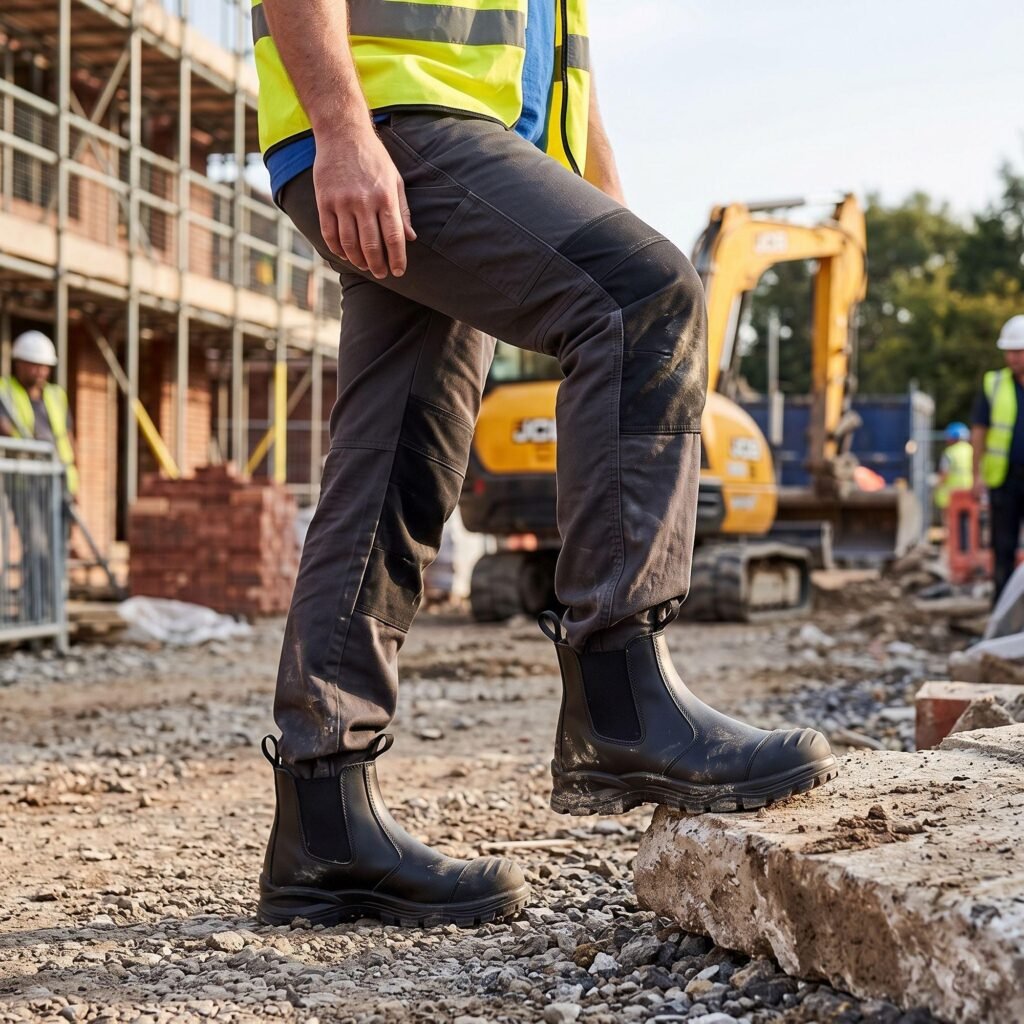
Delays in safety shoe manufacturing inevitably lead to immediate stockouts, lost contracts, and compromised workplace safety. Consequently, balancing raw material lead times with machine capacity and stringent quality control requires precise production planning to meet global distribution demands efficiently.
The Current Landscape of Industrial Footwear Manufacturing
Global demand for occupational safety footwear is growing steadily year over year. Furthermore, buyers require strict compliance with rigorous testing standards, primarily CE EN ISO 20345:2022 and GB21148-2020. Consequently, this compliance requirement puts immense pressure on manufacturing facilities to increase their daily output without sacrificing quality. However, scaling up production is not simply about adding more worker shifts. Rather, it involves coordinating highly complex supply chains and intricate assembly lines.
Specifically, factories must manage inventory for diverse and specialized components, including 200J impact-resistant steel toe caps, Kevlar midsoles, full-grain cowhide leather, and polyurethane (PU) raw materials. As a result, unexpected fluctuations in material delivery times often create sudden production bottlenecks. Ultimately, these delays can disrupt the entire factory schedule and delay bulk shipments.
Overcoming Capacity Bottlenecks and Strategic Planning Methods
Effective capacity planning requires breaking down the entire manufacturing process into measurable, trackable units. Therefore, factory managers must align their production scheduling directly with the specific construction methods utilized on the floor.
1. Managing Material Lead Times
Missing a single component stops the entire assembly line immediately. Therefore, production planners must establish a minimum 14-day safety stock for critical items like protective toe caps, insoles, and outsoles. Additionally, integrating inventory management software helps track real-time stock levels against upcoming order requirements. Ultimately, this proactive approach prevents sudden manufacturing halts and ensures smooth transitions between different bulk orders.
2. Machine Cycle Optimization
Different shoemaking constructions have vastly different production speeds and capacity limits. For instance, planning for injection requires a different timeline than traditional stitching.
- PU/PU Injection: This process is highly automated and incredibly efficient. Thus, a single rotary injection machine can produce thousands of pairs daily. However, the chemical mixing ratios and mold temperatures must remain perfectly stable.
- Goodyear Welted: Conversely, this is a labor-intensive, traditional manufacturing process. Although it offers superior longevity and durability, it requires significantly more time and highly skilled labor per pair.
- Rubber Cemented: Meanwhile, this method requires highly specific curing times. Specifically, industrial adhesives need adequate time to bond properly under targeted heat and pressure settings.
| Construction Method | Production Speed | Key Planning Constraint |
| PU/PU Injection | High | Mold availability and cooling time |
| PU/Rubber | Medium-High | Rubber vulcanization time |
| Rubber Cemented | Medium | Adhesive curing and pressing time |
| Goodyear Welted | Low | Skilled stitching labor |
3. Labor and Maintenance Buffers
Running shoemaking machines at maximum capacity inevitably causes rapid wear and tear on the equipment. Therefore, production schedules should strictly allocate a 10% to 15% buffer for routine machine maintenance, cleaning, and mold changes. Furthermore, cross-training workers to handle both the PU injection and cementing lines prevents unexpected labor shortages. Consequently, factories can maintain steady output even during peak order seasons.
Common Errors in Footwear Production Scheduling
Factory planners often make critical mistakes that disrupt the supply chain and severely compromise product safety.
Ignoring Adhesive Curing Times
First, rushing the cementing process inherently weakens the outsole bond. Consequently, shoes must cure for the designated period to pass strict peel strength tests. Otherwise, the soles may detach in harsh industrial environments.
Overbooking Injection Machines
Second, booking a PU injection rotary machine at 100% capacity leaves absolutely zero room for error. For example, a minor power issue or a temporary chemical blockage will immediately delay all subsequent orders. Therefore, a realistic schedule is paramount.
Skipping In-line Quality Checks
Finally, speeding up production often tempts operators to bypass intermediate testing protocols. Instead, factories must continuously test impact resistance, compression, and anti-slip properties directly on the line. Otherwise, finding critical defects at the final packaging stage wastes both valuable time and expensive materials.
Key Takeaways for Efficient Safety Footwear Production
In conclusion, optimizing a safety shoe factory requires a rigorous, data-driven approach to machine capabilities and material flow. Specifically, accurate production planning prevents supply bottlenecks by maintaining safety stock for critical components and factoring in specific processing times for different assembly methods. Furthermore, factory managers must expertly balance high-speed processes like PU injection with strict quality control protocols. Ultimately, maintaining a built-in capacity buffer ensures consistent product compliance with CE EN ISO 20345:2022 standards while guaranteeing on-time delivery for global buyers.
Written by Hong Gu Safety Shoes Technical Team, this content is compiled from practical production, long-term field applications, and rigorous testing results.
Shan Dong Hong Gu Shoes Industrial Co., Ltd. is a leading safety footwear manufacturer based in China, specializing in industrial foot protection with over 20 years of manufacturing expertise.
Products are fully certified under European standards (CE EN ISO 20345:2022), offering a full range of manufacturing processes including PU/PU Injection, PU/Rubber, Goodyear Welted, and Rubber Cemented constructions.