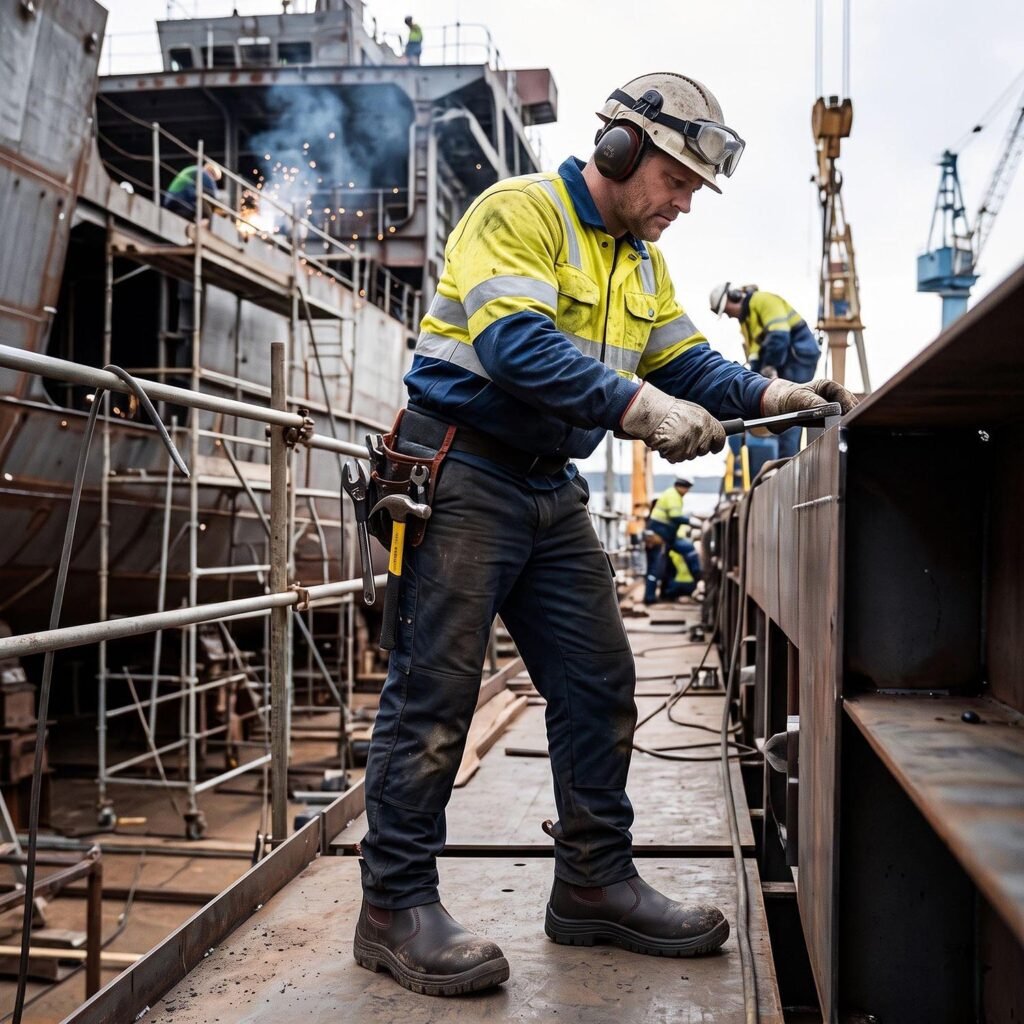
Standing for eight hours or longer can leave workers with sore heels, tired arches, and aching legs. The right safety shoes can reduce discomfort while maintaining the impact protection, slip resistance, and durability required for demanding workplaces.
Why Safety Shoes Feel Uncomfortable During Long Shifts
Workers in manufacturing plants, warehouses, assembly lines, workshops, and distribution centers often spend most of their shifts standing or walking on hard floors. Concrete and other rigid surfaces provide little cushioning, so repeated loading can increase pressure on the heels and forefeet.
Safety footwear adds another consideration. A protective toe cap, reinforced sole, and other safety features can increase shoe weight or reduce flexibility if the design does not match the task. Shoes that fit poorly may also create pressure points, friction, and restricted toe movement.
The best safety shoes for standing all day are not necessarily the softest or lightest models. They need to balance cushioning, stability, fit, breathability, and workplace protection.
Workers should also distinguish between ordinary fatigue and persistent pain. Footwear can improve comfort, but ongoing heel pain, numbness, swelling, or other symptoms may require assessment by a qualified healthcare professional.
What Makes Safety Shoes Suitable for Standing All Day?
1. Cushioning That Supports Repeated Loading
Midsole cushioning helps absorb and distribute forces generated during walking and prolonged standing. Materials such as polyurethane (PU) can provide cushioning, durability, and practical support in industrial footwear.
However, a softer sole is not always better. Excessively soft or unstable cushioning may make standing feel less secure, especially when workers carry loads or move across uneven surfaces. The midsole should provide a balance between shock absorption and stability.
When evaluating safety shoes for long shifts, consider the following:
- Heel cushioning that reduces concentrated pressure.
- Adequate forefoot cushioning for workers who walk frequently.
- A stable platform that does not collapse excessively under load.
- Consistent comfort throughout a full work shift, rather than only during a brief fitting.
2. A Supportive and Stable Sole
Arch support requirements vary according to foot shape, body mechanics, and individual comfort. Some workers prefer a contoured footbed, while others feel more comfortable with a relatively neutral design.
A supportive insole should fit securely inside the shoe without lifting the heel excessively or compressing the toes. Removable insoles can be useful when replacement footbeds or approved orthotic inserts are needed, provided they do not compromise the footwear’s protective fit.
The outsole also matters. A broad, stable contact area can help workers maintain balance during stationary tasks. For jobs involving frequent turning, pushing equipment, or carrying materials, excessive sole flexibility or instability may cause additional fatigue.
3. Lightweight Construction Without Compromising Protection
Shoe weight affects comfort when workers take thousands of steps during a shift. A lighter safety shoe may reduce the effort required to lift the foot repeatedly, but weight should never be considered in isolation.
Toe cap material, outsole construction, upper materials, and protective components all influence the final weight. A well-designed shoe uses materials appropriate to the workplace while maintaining the required protective performance.
For example, composite toe caps may weigh less than some steel alternatives and offer different thermal properties. Steel toe caps remain suitable for many industrial applications. The correct choice depends on the required protection, workplace hazards, fit, and applicable standards.
4. Breathable Materials and Effective Moisture Management
Heat and moisture can make long shifts uncomfortable. A breathable upper can improve air exchange, while a moisture-managing lining and suitable socks help keep the foot drier.
Workers in warm production areas or warehouses may benefit from lightweight uppers with suitable ventilation. In wet environments, however, water resistance or waterproofing may be more important than maximum airflow.
The material choice should match actual working conditions. Ventilation openings are not appropriate where they would expose the foot to liquid hazards, hot particles, or other workplace risks.
5. A Proper Fit Across the Entire Foot
Fit is one of the most important factors when selecting safety footwear for prolonged standing. Shoes that are too short can press against the toes, while shoes that are too wide may allow excessive movement and friction.
Check the following areas during fitting:
- Toe box: The toes should have sufficient room to move without contacting the protective toe cap during normal standing and walking.
- Heel: The heel should remain secure without excessive slipping or rubbing.
- Width: The upper should not squeeze the forefoot or create pressure along the sides.
- Instep: Laces or fastening systems should secure the foot without excessive pressure.
- Insole: The footbed should feel supportive and lie flat without bunching or sliding.
Try safety shoes while wearing the socks normally used at work. Feet can swell during the day, so fitting later in the day may help reveal pressure points that are less noticeable in the morning.
How to Choose Safety Shoes for Different Work Environments
The most suitable safety shoes depend on the work surface, movement patterns, and specific hazards. A design that works well in a dry assembly area may not be suitable for a wet production floor or a construction site.
| Work environment | Features to prioritize | Important consideration |
|---|---|---|
| Warehouses and distribution centers | Cushioning, moderate weight, stable support, slip resistance | Workers often alternate between standing, walking, and handling loads. |
| Assembly lines and manufacturing plants | Long-shift comfort, secure fit, appropriate toe protection | Choose the protection level according to machinery, components, and falling-object risks. |
| Construction sites | Impact protection, penetration resistance where required, durable outsole | Ground conditions and puncture hazards may outweigh the benefits of an especially soft sole. |
| Wet production areas | Slip-resistant outsole, suitable water resistance, secure fit | Select footwear based on the actual contaminants and floor conditions. |
| Workshops and maintenance areas | Durable construction, stable sole, task-specific protection | Consider sharp objects, oils, equipment, and other identified hazards. |
| Warm indoor workplaces | Breathable upper, moisture management, suitable lining | Ventilation must not expose workers to workplace hazards. |
Slip resistance deserves particular attention for workers who spend long periods standing on smooth floors. However, no outsole performs equally well on every surface. Oil, water, cleaning chemicals, food residues, and floor finishes can affect traction differently. Buyers should assess footwear performance against the conditions present at the workplace.
Which Safety Shoe Construction Is Better for Long Hours?
Safety footwear construction influences flexibility, weight, durability, and underfoot comfort. No single construction method is automatically best for every worker.
PU/PU injection construction commonly combines a polyurethane midsole and outsole. Depending on the formulation and design, it can offer cushioning, relatively low weight, and practical wear resistance for factory and warehouse applications.
PU/Rubber construction combines polyurethane with rubber, often to balance cushioning with outsole durability or resistance to demanding working conditions. Its suitability depends on the rubber compound, bonding quality, and the hazards involved.
Goodyear welted construction uses a welt-based assembly method that can support durable, repairable footwear designs. The resulting shoe may be heavier or stiffer than some injection-molded alternatives, depending on the materials and pattern.
Rubber cemented construction bonds the outsole to the upper assembly using an adhesive process. Performance depends on the rubber compound, bonding system, upper materials, and manufacturing quality.
For workers who stand for most of an indoor shift, a well-fitted shoe with balanced cushioning and a stable platform may be a practical starting point. In environments with heat, chemicals, sharp debris, or uneven ground, the required protection must guide the construction choice.
Safety Standards and Protective Features to Check
Comfort does not replace compliance with workplace safety requirements. In Europe, EN ISO 20345 specifies requirements for safety footwear, including protective toe caps and applicable performance requirements. The 2022 edition introduced updated classifications and requirements, so buyers should check the precise designation and documentation of the footwear being purchased.
Depending on the product classification and applicable requirements, relevant features may include:
- Toe protection: Designed to protect against specified impact and compression hazards.
- Slip resistance: Assessed according to the applicable test requirements and product designation.
- Penetration resistance: Important where nails, metal fragments, or other sharp objects may penetrate the sole.
- Water resistance: Relevant for work involving wet conditions or exposure to water.
- Heat and oil resistance: Necessary only where the workplace conditions and product specifications call for these properties.
- Antistatic or electrical properties: Must be selected according to the identified electrical risks and the relevant footwear classification.
Buyers should not assume that every safety shoe includes every protective feature. Check the product marking, instructions for use, conformity documentation, and applicable national or regional requirements. For example, antistatic footwear is not the same as electrically insulating footwear, and the two should not be treated as interchangeable.
Common Mistakes When Buying Safety Shoes for All-Day Standing
One common mistake is choosing footwear based only on softness. A cushioned shoe may feel comfortable initially but become tiring if it lacks adequate stability or does not suit the worker’s foot shape.
Another is selecting the lightest model without checking the required protection. Lightweight construction is useful only when the shoe still meets the workplace’s impact, penetration, traction, and other relevant requirements.
Workers should also avoid choosing the wrong size in the hope that the shoe will stretch enough to become comfortable. Protective toe caps do not stretch like ordinary upper materials, and insufficient toe space can remain a problem throughout the shoe’s service life.
Finally, worn-out footwear should not be kept in service solely because the upper still looks acceptable. Compressed cushioning, damaged outsoles, worn tread, separated components, and changes in fit can affect both comfort and protection. Inspection and replacement should follow the manufacturer’s guidance and workplace procedures.
How Can Employers Improve Comfort for Workers Who Stand All Day?
Footwear is only one part of managing prolonged standing. Employers can also review workstation layout, floor conditions, task rotation, and opportunities for short movement breaks.
Where appropriate, anti-fatigue mats can reduce discomfort at fixed workstations, provided they do not introduce trip hazards or interfere with carts and machinery. Adjustable work surfaces and supportive seating options may also help workers alternate their posture when the task permits.
A practical footwear evaluation should involve workers who perform the actual job. Test candidate shoes under normal working conditions, assess comfort over a representative shift, and confirm that all required protective features remain suitable. Purchasing decisions based on a short fitting alone may overlook problems that appear after several hours.
Which Safety Shoes Are Best for Standing All Day?
The best safety shoes for standing all day combine effective cushioning, a stable sole, a secure fit, breathable materials where appropriate, and the protective features required by the job. For warehouse and indoor manufacturing workers, lightweight PU/PU or other suitable cushioned constructions may be worth evaluating. For construction, wet production, and heavy industrial tasks, outsole performance and hazard-specific protection may take priority over weight alone.
Before purchasing, check the toe protection, slip resistance, sole construction, fit, and relevant certification. Whenever possible, evaluate the footwear during a full working shift. The right choice is the shoe that maintains comfort and stability over time while providing the protection required by the working environment.
Written by Hong Gu Safety Shoes Technical Team, this content is compiled from practical production, long-term field applications, and rigorous testing results.
Shan Dong Hong Gu Shoes Industrial Co., Ltd. is a leading safety footwear manufacturer based in China, specializing in industrial foot protection with over 20 years of manufacturing expertise.
Products are fully certified under European standards (CE EN ISO 20345:2022), offering a full range of manufacturing processes including PU/PU Injection, PU/Rubber, Goodyear Welted, and Rubber Cemented constructions.