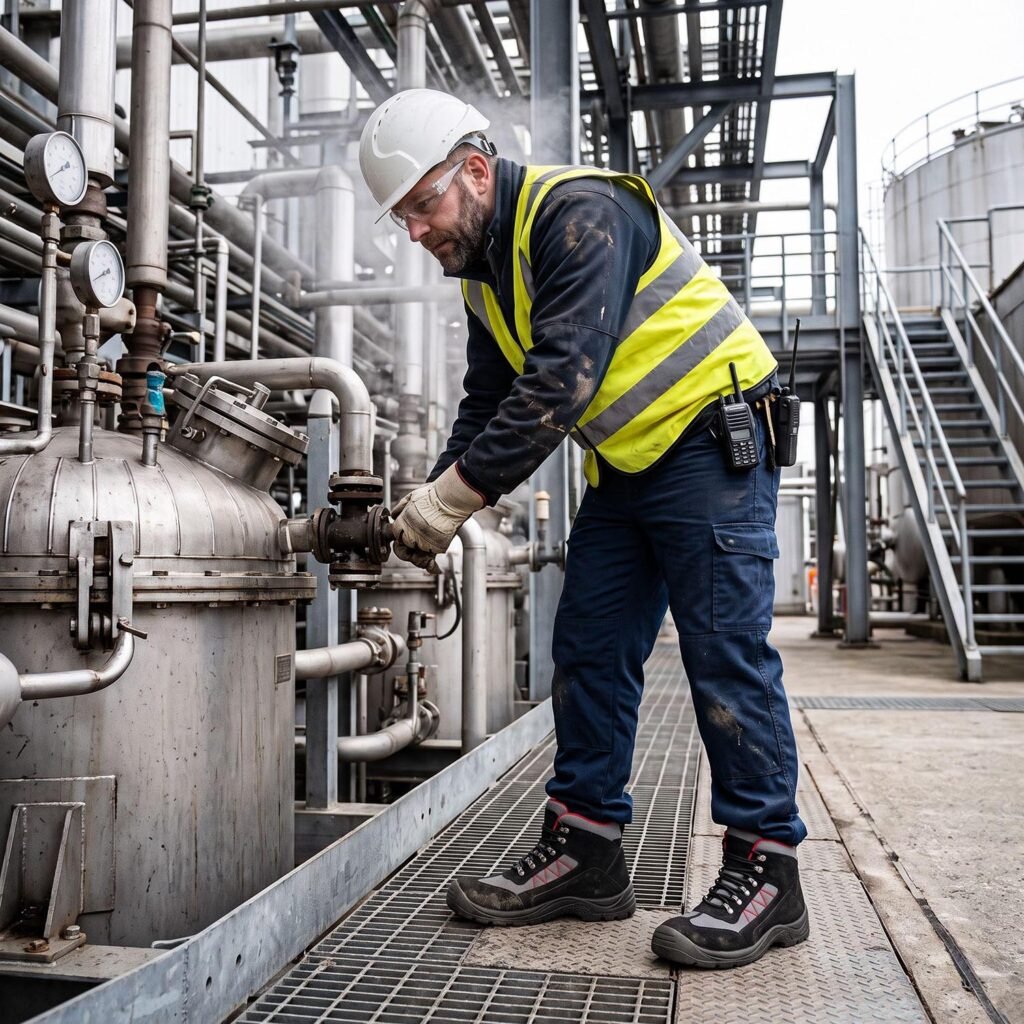
Industrial buyers are paying closer attention to Safety Shoe Market Trends when selecting protective footwear. Price and toe protection are no longer the only considerations; certification, workplace hazards, comfort, durability, materials, and technical documentation increasingly influence purchasing decisions.
What Is Changing in the Industrial Safety Shoe Market?
The industrial safety footwear market continues to expand across manufacturing, construction, logistics, warehousing, energy, mining, transportation, and other workplaces. Recent market research estimates the global industrial safety footwear market at about USD 13.78 billion in 2026, with continued growth expected through 2034.
For buyers, however, the more important change is what companies are asking suppliers to provide.
Traditional procurement often focused on three points: safety toe, basic certification, and unit price. Today, purchasing teams are paying more attention to the complete product specification. Weight, slip resistance, puncture protection, water resistance, breathability, durability, ergonomic design, and documentation can all influence the final decision.
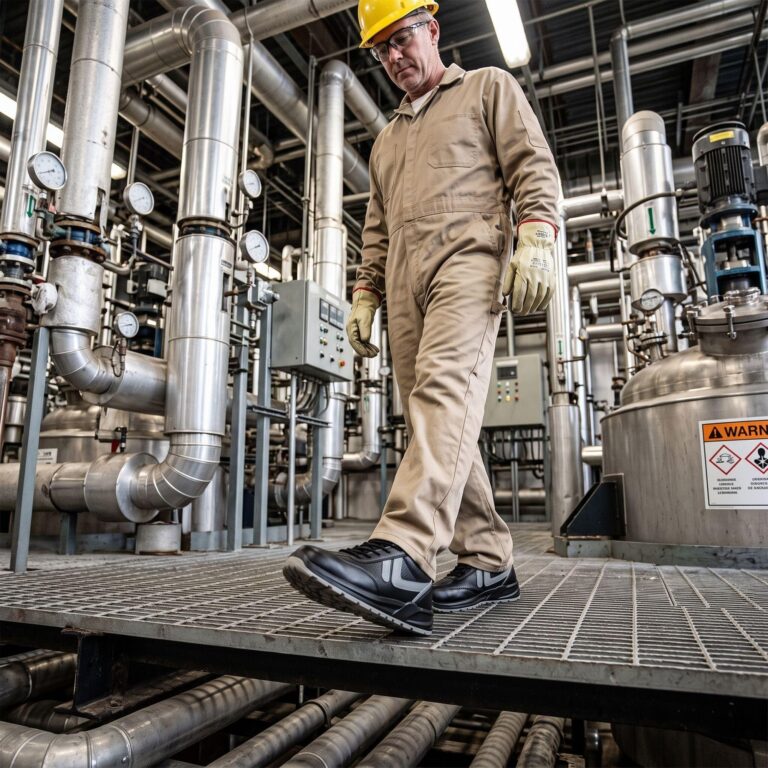
This is particularly noticeable in warehouses and logistics facilities, where workers may walk for long periods. Lightweight composite toe caps, breathable uppers, cushioned midsoles, and flexible outsole designs can make a safety shoe more suitable for these environments. Heavy-duty construction, mining, and industrial applications may still require stronger leather uppers, steel toe caps, penetration-resistant midsoles, and durable rubber or PU/rubber outsoles.
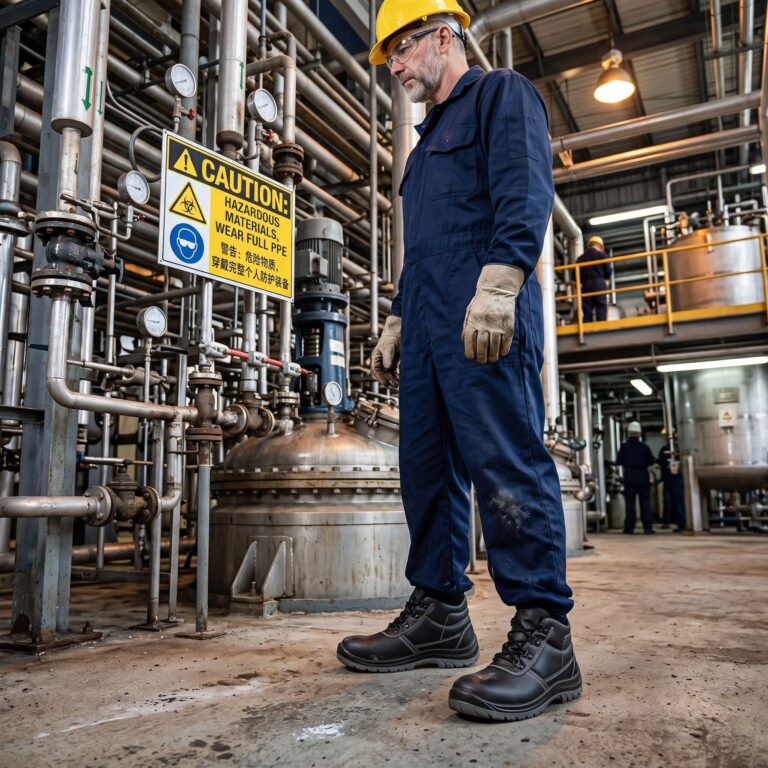
Another important trend is the move toward hazard-specific safety footwear rather than using one general-purpose shoe for every job.
Which Safety Shoe Trends Should Industrial Buyers Watch?
1. Compliance is becoming more specification-driven
For European buyers, EN ISO 20345:2022 is an important reference point. In 2026, buyers should pay attention not only to whether a product carries CE marking, but also to its applicable protection class, testing information, declaration of conformity, and technical documentation.
The European PPE framework requires manufacturers to demonstrate conformity with applicable essential health and safety requirements and maintain the relevant technical documentation.
The 2022 edition also introduced changes to protection classifications and markings. For example, buyers may now encounter classifications such as S3L, S3S, S6, and S7, depending on the protection configuration.
This makes it important to specify the required standard before discussing price or placing an order.
2. Lightweight protection is gaining attention
Steel toe caps remain suitable for many demanding industrial applications, but lightweight safety footwear is becoming increasingly important.
Composite and fiberglass toe caps can reduce footwear weight and are useful where workers spend many hours walking or standing. Non-metallic penetration-resistant midsoles can also support lighter footwear designs.
The key point is not that composite protection replaces steel. Instead, buyers should match the protective component to the workplace hazard, required standard, and working conditions.
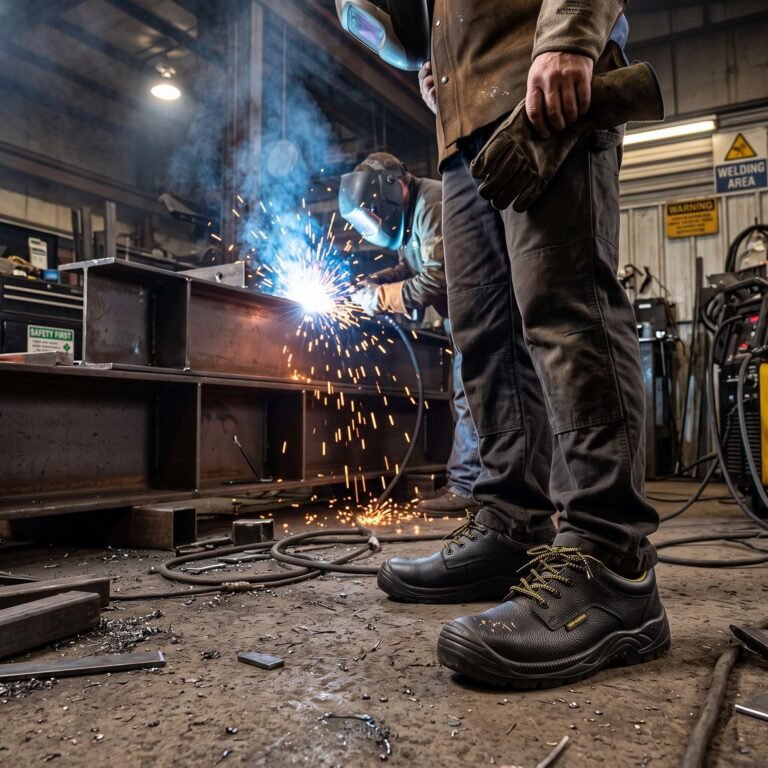
A warehouse worker, construction worker, electrician, and mining worker may need very different safety shoe configurations.
3. Slip resistance and workplace-specific outsole design matter more
Slip-related accidents are a major concern in industrial environments. As a result, outsole design is receiving more attention during product selection.
Buyers should consider the actual floor conditions, including dry surfaces, wet floors, oil exposure, uneven ground, dust, chemicals, and outdoor terrain.
PU, PU/rubber, TPU, and rubber outsoles can provide different combinations of flexibility, abrasion resistance, grip, durability, and weight. The correct choice depends on the application rather than simply selecting a material because it is commonly used.
4. Comfort is becoming part of safety performance
A safety shoe that technically meets the required protection level may still be unsuitable if workers find it uncomfortable.
Industrial buyers are increasingly looking at:
- Overall footwear weight
- Toe-box space
- Flexibility
- Cushioning
- Breathability
- Moisture management
- Heel support
- Insole construction
- Long-hour wearing comfort
This is particularly relevant in logistics, manufacturing, warehousing, and other jobs where employees may wear safety footwear throughout an entire shift.
Comfort also has a practical procurement value. If workers avoid wearing the assigned footwear because it is uncomfortable, the protective value of the product is reduced.
How Should Industrial Buyers Select Safety Shoes?
A practical purchasing process can start with five questions.
First, identify the workplace hazards.
Determine whether workers face impact, compression, puncture, slipping, water, heat, electrical, electrostatic, chemical, or other risks.
Second, identify the destination market and applicable standard.
European procurement may require EN ISO 20345, while other markets may follow different regulatory and testing systems. A product specification should be built around the market where the footwear will actually be sold or used.
Third, define the protection class and construction.
Decide whether the project requires steel or composite toe protection, a penetration-resistant midsole, water protection, a particular outsole material, or other performance characteristics.
Fourth, check the complete documentation.
Do not evaluate a supplier only by looking at a certificate image. Product markings, test reports, declarations, technical specifications, and the actual production configuration should correspond with each other.
Finally, evaluate samples before mass production.
The sample should be checked for dimensions, materials, construction, outsole performance, comfort, appearance, and consistency with the agreed specification.
Recent EU market-surveillance work on professional safety footwear has specifically examined both product performance and documentation and marking requirements.
Common Mistakes Industrial Buyers Should Avoid
One common mistake is choosing a safety shoe simply because it has a familiar protection label.
Another is comparing suppliers only on factory price. A cheaper product may use a different outsole compound, toe cap, upper material, or construction method, which can change the final performance and service life.
Buyers should also be careful when changing components after testing. Replacing the toe cap, penetration-resistant insert, outsole, or other important components can affect the tested configuration. The production shoe should remain consistent with the configuration covered by the relevant conformity and test documentation.
It is also worth avoiding overly broad specifications such as “CE safety shoes” or “S3 safety shoes” without defining the exact requirements. A better purchase specification should include the target market, standard, protection class, materials, construction, outsole requirements, size range, testing requirements, packaging, and documentation.
What Should Industrial Buyers Prioritize in 2026?
The safety shoe market is moving toward verified protection, application-specific design, lighter materials, better comfort, and stronger documentation. For industrial buyers, the best purchasing decision is not necessarily the shoe with the lowest unit price. It is the product that matches the workplace hazards, applicable standard, worker requirements, and expected service life while maintaining consistent production quality.
In practical terms, buyers should evaluate compliance + protection + comfort + durability + documentation + total procurement value together. This approach makes it easier to compare suppliers and reduces the risk of receiving footwear that does not match the original specification.
Written by Hong Gu Safety Shoes Technical Team, this content is compiled from practical production, long-term field applications, and rigorous testing results.
Shan Dong Hong Gu Shoes Industrial Co., Ltd. is a leading safety footwear manufacturer based in China, specializing in industrial foot protection with over 20 years of manufacturing expertise.
Products are fully certified under European standards (CE EN ISO 20345:2022), offering a full range of manufacturing processes including PU/PU Injection, PU/Rubber, Goodyear Welted, and Rubber Cemented constructions.