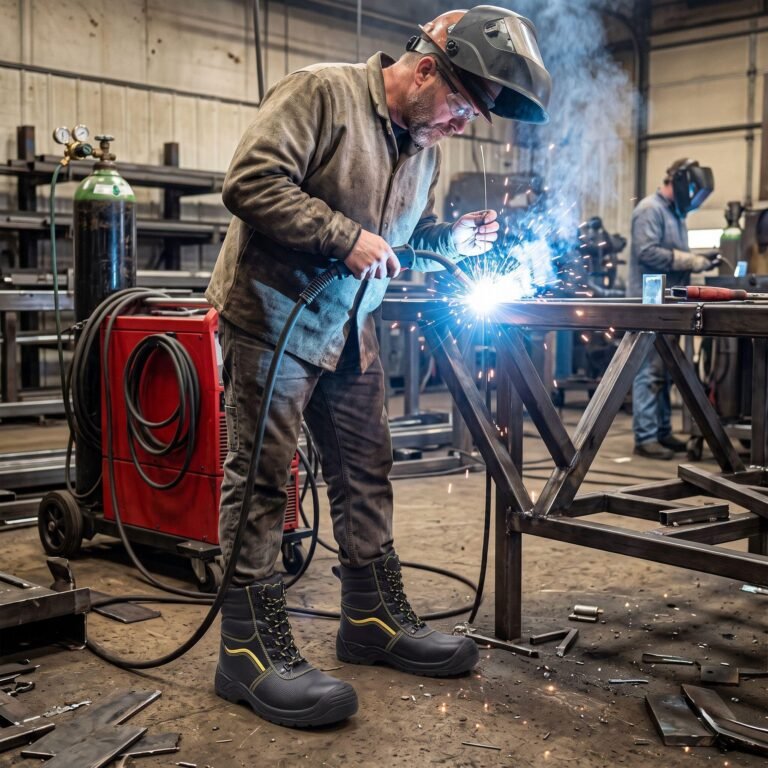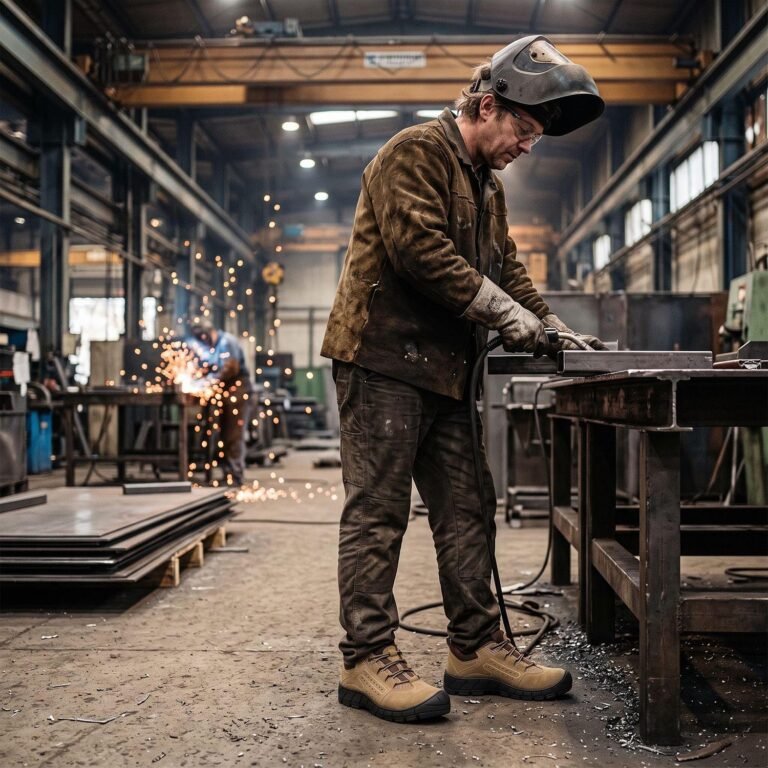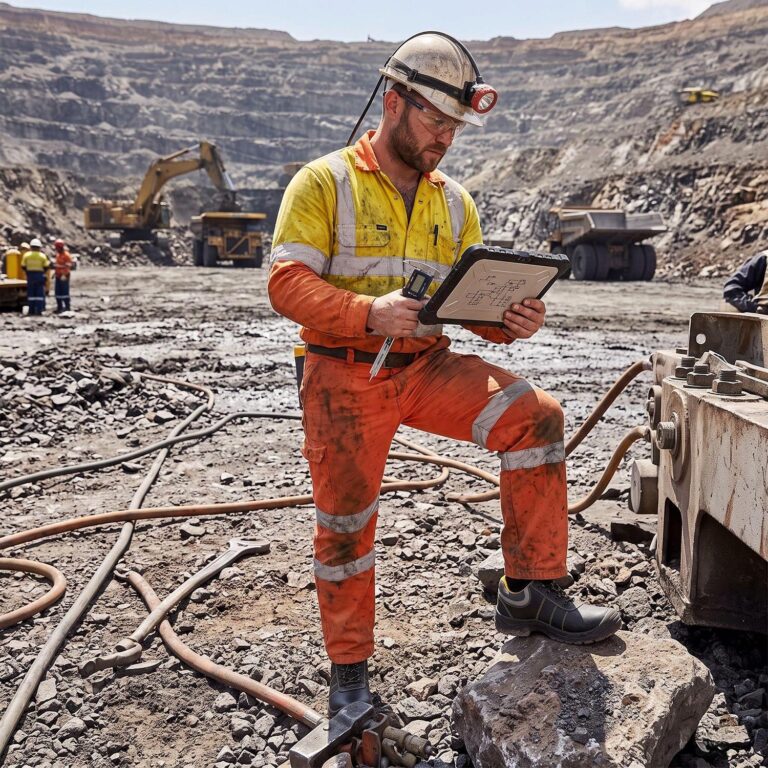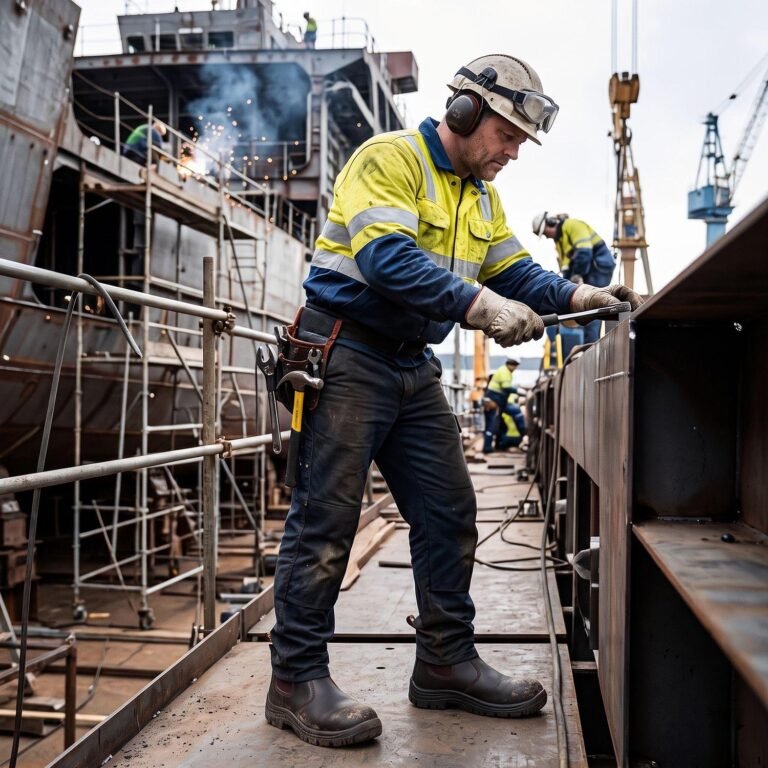
Moisture Management Technology in Safety Shoes helps control sweat buildup, improve breathability, and reduce discomfort during long work shifts. Effective moisture control also helps manage damp linings and unpleasant odors.
Why Moisture Management Matters in Safety Shoes
Safety shoes are designed to protect workers from hazards such as impact, compression, punctures, and slipping. However, protective construction can also limit ventilation, especially when shoes are worn for extended periods in warm environments or during physically demanding work.
The foot contains numerous sweat glands, and perspiration naturally increases with physical activity, temperature, and individual physiology. When sweat accumulates inside safety footwear, the lining and insoles may become damp. Prolonged moisture exposure can contribute to skin softening, friction, blisters, and unpleasant odors.
Moisture management technology in safety shoes addresses these issues through a combination of material selection, internal construction, and ventilation design. The objective is not simply to absorb sweat. It is to manage moisture so that the foot environment remains more comfortable throughout the working day.
This is particularly important in manufacturing plants, warehouses, construction sites, logistics facilities, and other workplaces where employees may wear protective footwear for eight hours or longer.
How Moisture Management Technology Works
Moisture control in safety footwear usually depends on several components working together. No single material can eliminate sweat, and the effectiveness of a design depends on the working environment and the wearer’s activity level.
1. Moisture-Wicking Linings
Moisture-wicking linings help move perspiration away from the skin and distribute it across a larger fabric surface. This allows moisture to spread and evaporate more readily when ventilation conditions permit.
Synthetic textile linings can be engineered with fiber structures that support capillary action. Instead of allowing sweat to remain concentrated in one area, these structures help transfer liquid moisture through the fabric.
When evaluating a safety shoe lining, manufacturers should consider its moisture transport performance, drying time, abrasion resistance, and durability after repeated wear. A lining that performs well when new may behave differently after exposure to sweat, dust, friction, and routine cleaning.
Moisture-wicking materials are useful in warm workplaces and applications involving frequent walking or physical exertion. However, wicking does not mean that the lining is waterproof or that sweat disappears immediately.
2. Breathable Mesh and Textile Uppers
The upper material affects how heat and water vapor move out of the shoe. Mesh and engineered textiles can provide better air permeability than some dense, coated materials.
Breathable uppers are often suitable for indoor manufacturing, warehousing, and logistics work where exposure to liquid water is limited. Their performance depends on the fabric structure, thickness, coatings, and overall shoe construction.
Safety requirements must remain the priority. A highly breathable upper is not automatically suitable for environments involving water, chemicals, hot surfaces, or other specific hazards. In these applications, the upper must provide the necessary protective properties while balancing moisture control with durability.
Manufacturers should assess the complete footwear construction rather than judging breathability from the appearance of the upper alone.
3. Moisture-Absorbing and Quick-Drying Insoles
The insole sits directly beneath the foot and can significantly influence the internal moisture environment. Depending on the design, it may use open-cell foam, textile covers, perforations, or other material structures to absorb or redistribute perspiration.
Absorbent materials can temporarily hold moisture, while quick-drying materials are intended to release moisture more readily under suitable conditions. These are related but different functions.
An insole that absorbs a large amount of sweat may still feel damp if it dries slowly. For workers wearing the same shoes throughout a long shift, drying performance and moisture retention are therefore important considerations.
Insole design should also account for cushioning, dimensional stability, wear resistance, and compatibility with the shoe’s protective construction. Replacing an insole with an unsuitable aftermarket product may affect fit or interfere with specific footwear requirements.
4. Internal Ventilation and Heat Management
Air circulation can help remove heat and water vapor from the space around the foot. Shoe volume, lining structure, tongue design, and upper construction all influence internal airflow.
Perforations and breathable panels may improve ventilation in suitable applications. However, openings must not compromise the required protection against workplace hazards.
Moisture management also depends on the fit of the footwear. Shoes that are too tight can restrict airflow and increase friction, while shoes that are too loose may cause movement and rubbing. Correct sizing helps balance comfort, stability, and the intended protective function.
How to Choose Safety Shoes with Effective Moisture Control
The most suitable moisture management system depends on the job, environmental conditions, and expected wearing time.
| Working environment | Moisture management considerations |
|---|---|
| Warehouses and logistics | Breathable textile uppers, moisture-wicking linings, and quick-drying insoles |
| Indoor manufacturing | Durable linings, adequate airflow, and materials that tolerate repeated daily wear |
| Hot working environments | Heat and sweat management combined with appropriate occupational protection |
| Wet or outdoor environments | Water resistance or waterproofing, suitable linings, and practical drying procedures |
| Heavy physical work | Moisture transport, secure fit, cushioning, and abrasion-resistant internal materials |
Buyers should review technical specifications and, where available, test results rather than relying only on terms such as “breathable,” “cooling,” or “sweat-resistant.”
Useful evaluation criteria include water vapor permeability, water vapor resistance, air permeability where relevant, moisture absorption, drying time, and lining durability. These measurements assess different properties, so they should not be treated as interchangeable.
For example, water vapor permeability describes how readily water vapor passes through a material under specified test conditions. Air permeability measures airflow through a material. A material can perform differently across these tests, and neither measurement alone describes the comfort of the finished shoe.
For bulk purchasing, footwear samples should be evaluated under conditions that resemble actual use. Feedback from workers can help identify problems with damp linings, heat buildup, fit, or drying time that may not be obvious from a product specification sheet.
Moisture Management and Safety Footwear Standards
Moisture management is a comfort and material-performance consideration. It does not replace the protective requirements of occupational footwear.
In Europe, EN ISO 20345 specifies requirements for safety footwear, including protective toe-cap performance and other applicable protective properties. The 2022 edition introduced or updated classification and performance requirements, with the applicable markings depending on the footwear design and intended protection.
Buyers should distinguish between protective performance and comfort claims. A safety shoe may provide certified impact protection without necessarily having exceptional moisture-wicking performance. Conversely, a highly breathable shoe is not automatically suitable for a hazardous workplace.
When purchasing safety footwear, confirm the applicable standard, category, markings, and additional properties required for the intended job. Where moisture management is a purchasing priority, request relevant material data or finished-footwear test results in addition to the required safety documentation.
Common Mistakes When Evaluating Moisture Management
One frequent mistake is assuming that breathable footwear cannot become damp. Breathable materials can help water vapor escape, but they cannot prevent perspiration or guarantee a dry interior under every condition.
Another mistake is treating moisture-wicking and waterproofing as the same feature. Moisture-wicking materials help move sweat away from the skin, whereas waterproof construction is designed to resist external water penetration. The two functions address different problems and may require different design choices.
Buyers should also avoid evaluating comfort from upper material alone. The lining, insole, internal volume, fit, and overall construction all affect moisture conditions inside the shoe.
Maintenance matters as well. Safety shoes should be dried according to the manufacturer’s instructions, with removable insoles taken out when appropriate. Allowing footwear to dry between shifts and rotating between pairs when practical can help reduce persistent dampness. Excessive heat should be avoided unless the manufacturer confirms that the materials can tolerate it.
Finally, moisture management claims should be supported by suitable evidence. Marketing descriptions are not substitutes for test data, and results from individual materials do not automatically represent the performance of the complete footwear product.
What Is the Best Moisture Management Technology for Safety Shoes?
The most effective moisture management approach combines moisture-wicking linings, suitable upper materials, well-designed insoles, adequate internal ventilation, and correct footwear fit. The right combination depends on the workplace, physical activity, exposure to water, and required protective properties.
For warm indoor environments, breathable textiles and quick-drying internal materials may be appropriate. For wet or demanding outdoor conditions, moisture control must be balanced with water resistance, durability, and the required safety features.
When selecting safety shoes, buyers should evaluate moisture management alongside applicable protective standards, material durability, fit, and real-world performance. This approach helps identify footwear that supports both occupational protection and long-shift comfort.
Written by Hong Gu Safety Shoes Technical Team, this content is compiled from practical production, long-term field applications, and rigorous testing results.
Shan Dong Hong Gu Shoes Industrial Co., Ltd. is a leading safety footwear manufacturer based in China, specializing in industrial foot protection with over 20 years of manufacturing expertise.
Products are fully certified under European standards (CE EN ISO 20345:2022), offering a full range of manufacturing processes including PU/PU Injection, PU/Rubber, Goodyear Welted, and Rubber Cemented constructions.