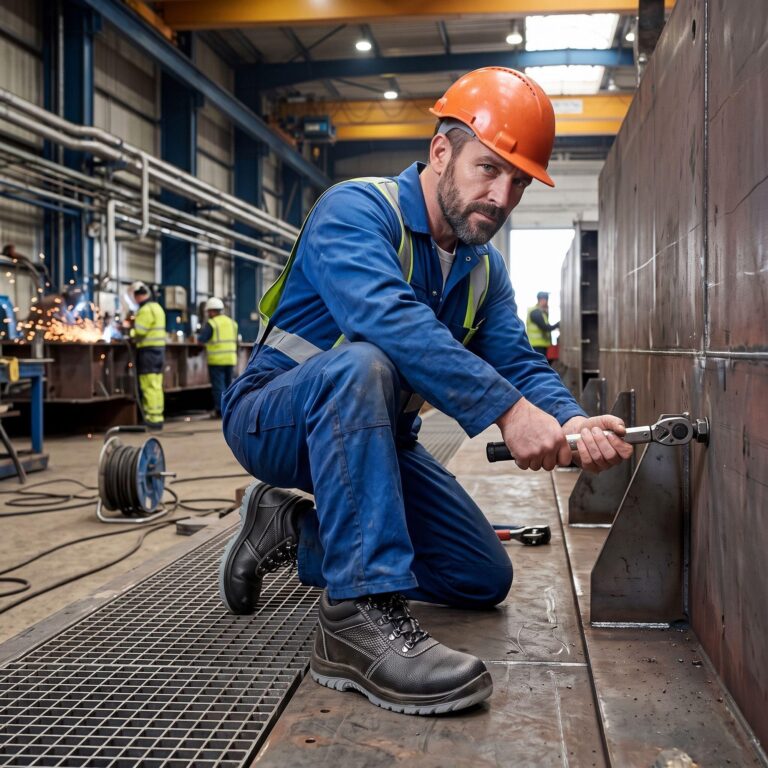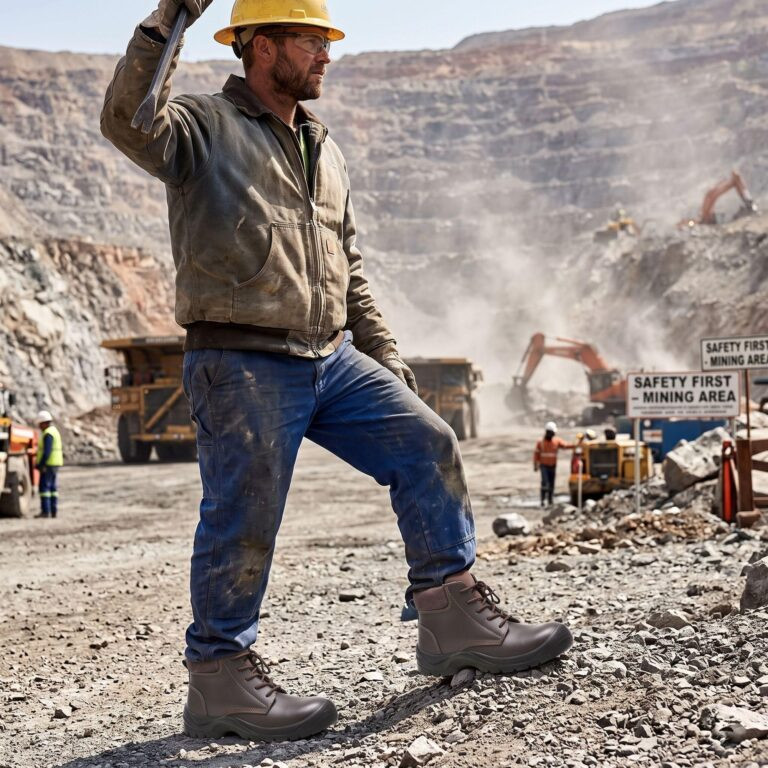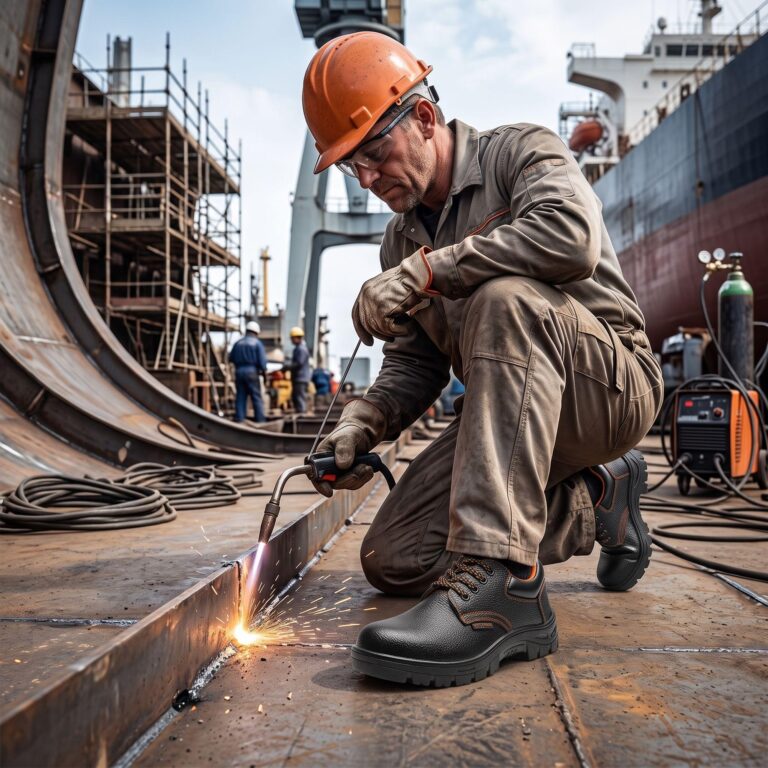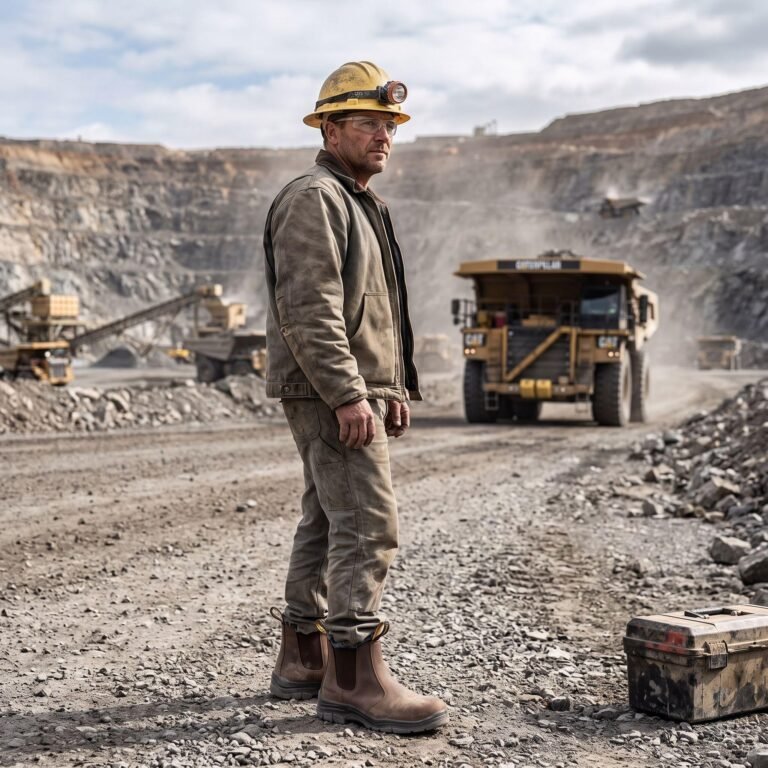
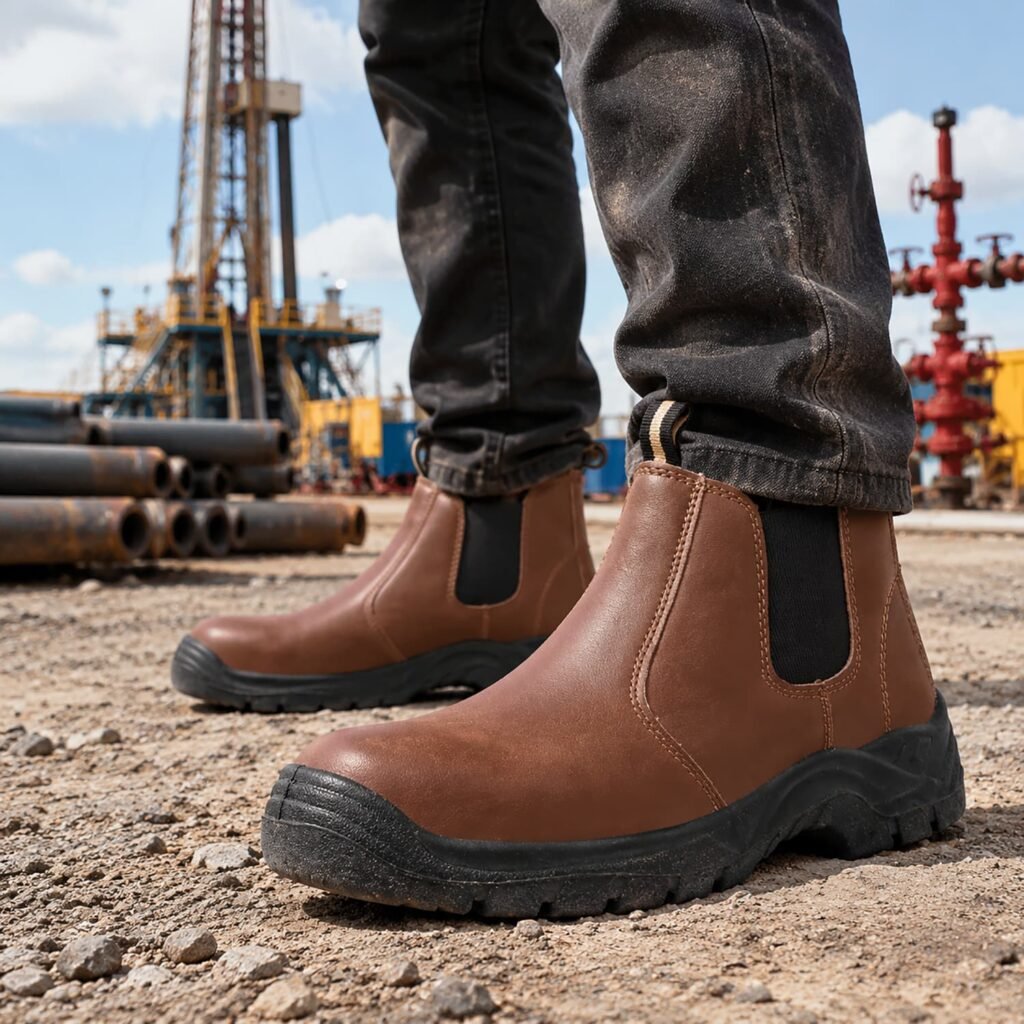
Safety Shoes for Military and Defense Applications must provide suitable foot protection, comfort, and durability in demanding working environments. Military and defense personnel may work on uneven terrain, in wet conditions, around heavy equipment, or for long hours on foot. Choosing the right footwear requires more than impact protection. It is essential to consider the mission, terrain, climate, and specific workplace hazards while ensuring that the footwear meets applicable safety standards and procurement requirements.
What Makes Safety Shoes Suitable for Military and Defense Applications?
Military and defense applications cover a wide range of working environments. Maintenance workshops, military vehicle depots, logistics facilities, equipment assembly areas, airfields, and outdoor support operations all present different risks to the feet.
Unlike standard industrial work, some defense-related tasks involve frequent transitions between indoor and outdoor environments. Personnel may move from concrete floors to gravel, muddy ground, metal platforms, or vehicle access steps during the same shift. Footwear that performs well in one environment may be unsuitable for another.
The first step is to distinguish between protective safety footwear for military support work and specialized operational or combat boots. Industrial safety shoes are generally designed around workplace hazards such as falling objects, sharp materials, slippery floors, and electrical risks. Combat or tactical footwear may prioritize mobility, ankle support, durability, and mission-specific requirements.
These categories can overlap, but they are not interchangeable. A pair of safety shoes that meets an industrial footwear standard does not automatically meet military procurement specifications or specialized operational requirements.
For procurement teams, facility managers, and defense equipment suppliers, the selection process should begin with a documented hazard assessment. The footwear must then be evaluated against applicable standards, actual working conditions, and the requirements of the intended users.
Key Performance Requirements for Military and Defense Safety Footwear
The appropriate safety footwear specification depends on the task and the environment. Several performance factors deserve particular attention during product selection.
1. Impact and Compression Protection
Personnel working in vehicle maintenance, equipment storage, and military logistics facilities may face risks from dropped tools, moving equipment, or heavy components. Protective toe caps help reduce the risk of injury from impact and compression.
Toe protection can use steel or non-metallic materials, depending on the design requirements. The choice should consider the required protection level, available internal space, footwear weight, and compatibility with the applicable standard.
A protective toe cap alone does not make footwear suitable for every defense application. The complete shoe must be evaluated for fit, sole performance, durability, and the hazards present at the workplace.
2. Puncture Resistance and Outsole Performance
Sharp metal fragments, nails, wire, and other debris may be present in maintenance areas or on damaged work surfaces. A puncture-resistant midsole can help protect the foot from sharp objects penetrating through the outsole.
Outsole design also affects traction and stability. For personnel moving between smooth concrete, wet floors, gravel, and metal steps, the tread pattern and rubber compound should be selected according to the expected surfaces.
Slip resistance should be verified using the applicable test method rather than judged by appearance alone. No outsole can prevent every slip, particularly where oil, mud, loose gravel, or other contaminants are present.
3. Water Resistance and Climate Adaptability
Military support operations may take place in rain, humid conditions, cold storage areas, or hot outdoor environments. Footwear construction should reflect the climate and the duration of exposure.
Water-resistant uppers and suitable seam construction can help limit water entry. However, water resistance is not the same as complete waterproofing. Buyers should also consider breathability, lining materials, drying time, and moisture management.
In hot climates, excessive insulation can increase discomfort. In cold environments, inadequate insulation may reduce comfort and contribute to cold-related foot problems. The appropriate balance depends on temperature, activity level, and expected exposure.
4. Weight, Fit, and Long-Shift Comfort
Footwear that feels comfortable during a short fitting may become uncomfortable after hours of standing or walking. Excessive weight, poor heel retention, insufficient toe space, and inappropriate arch support can all affect wearability.
A suitable design should provide adequate room for the toes, stable heel support, and cushioning appropriate to the working surface. Lightweight materials may reduce fatigue, but weight reduction should not compromise required protective performance.
For large procurement orders, wear trials across representative users can help identify sizing problems before full-scale deployment.
Which Standards Apply to Military and Defense Safety Shoes?
Standards should be selected according to the purchasing market, workplace hazards, and procurement specifications.
- EN ISO 20345:2022: Specifies requirements for general-purpose safety footwear, including mechanical risks, slip resistance, thermal risks, and ergonomic performance. Additional hazards may require complementary standards or specialized protective equipment.
 NEN
- ASTM F2413: Specifies performance requirements for protective footwear in the United States. Buyers should confirm the applicable edition and required protection categories for the intended application.
- OSHA 29 CFR 1910.136: Addresses foot protection in applicable US general-industry workplaces, including hazards involving falling or rolling objects, sole penetration, and certain electrical risks. Occupational Safety and Health Administration+1
These standards do not automatically establish compliance with military-specific procurement requirements. A defense contract may specify additional durability tests, construction details, material restrictions, colors, identification markings, or operational performance criteria.
Procurement teams should review the complete technical specification before approving a product. They should also verify that test reports and certificates correspond to the actual footwear model and construction being supplied.
Common Mistakes When Selecting Defense Safety Footwear
Assuming industrial safety shoes are combat boots. Industrial safety footwear is intended to address defined workplace hazards. Combat and tactical boots may have different requirements for mobility, ankle support, environmental exposure, and operational use.
Choosing the heaviest shoe for maximum protection. More weight does not automatically mean better protection. The correct specification is the one that meets the identified hazards while remaining practical for the intended task.
Treating water resistance as waterproof protection. Upper materials, seams, tongue construction, and closures all affect water entry. The complete product should be evaluated under the conditions specified by the buyer.
Relying on certificates without checking the model. Test evidence must match the relevant product, construction, and protection claims. Changes to materials, outsoles, or manufacturing processes may affect performance.
Ignoring wearer trials. Even technically compliant footwear can be unsuitable if sizing, flexibility, or fit causes discomfort. Sample evaluation should include walking, standing, climbing, and other routine work movements where relevant.
How Should Buyers Specify Safety Shoes for Military and Defense Applications?
The most reliable approach is to define the operating environment first, identify the associated foot hazards, and then select footwear that meets the required protective standard and procurement specification.
For military workshops and logistics facilities, toe protection, puncture resistance, traction, and durability may be important. For outdoor support personnel, weather resistance, grip, fit, and weight may require greater attention. Specialized operational footwear should be assessed against its own mission-specific requirements.
Manufacturers should provide clear product specifications, relevant test documentation, construction details, sizing information, and evidence supporting claimed protective features. Buyers should verify these details before placing bulk orders.
Written by Hong Gu Safety Shoes Technical Team, this content is compiled from practical production, long-term field applications, and rigorous testing results.
Shan Dong Hong Gu Shoes Industrial Co., Ltd. is a leading safety footwear manufacturer based in China, specializing in industrial foot protection with over 20 years of manufacturing expertise.
Products are fully certified under European standards (CE EN ISO 20345:2022), offering a full range of manufacturing processes including PU/PU Injection, PU/Rubber, Goodyear Welted, and Rubber Cemented constructions.