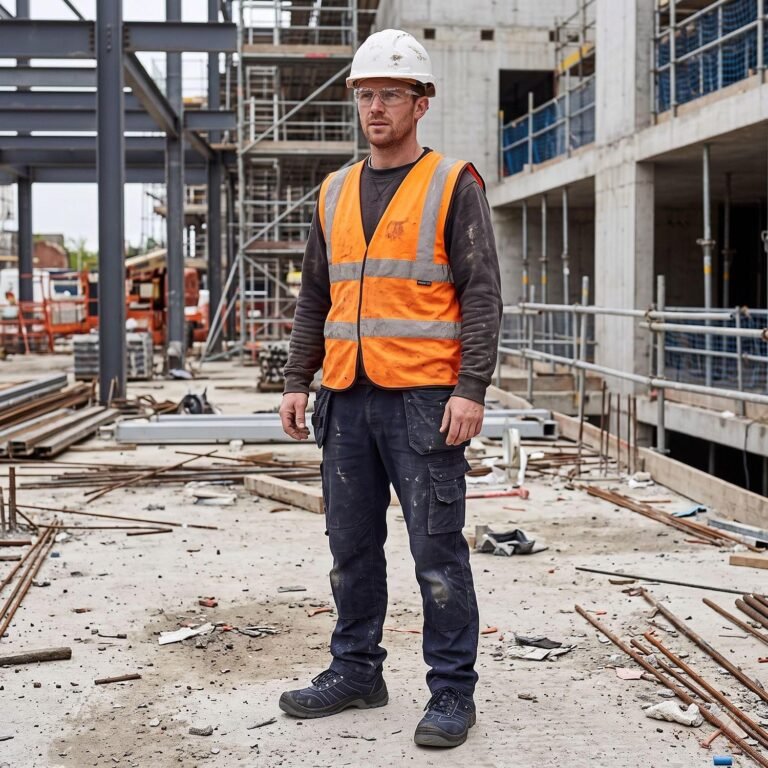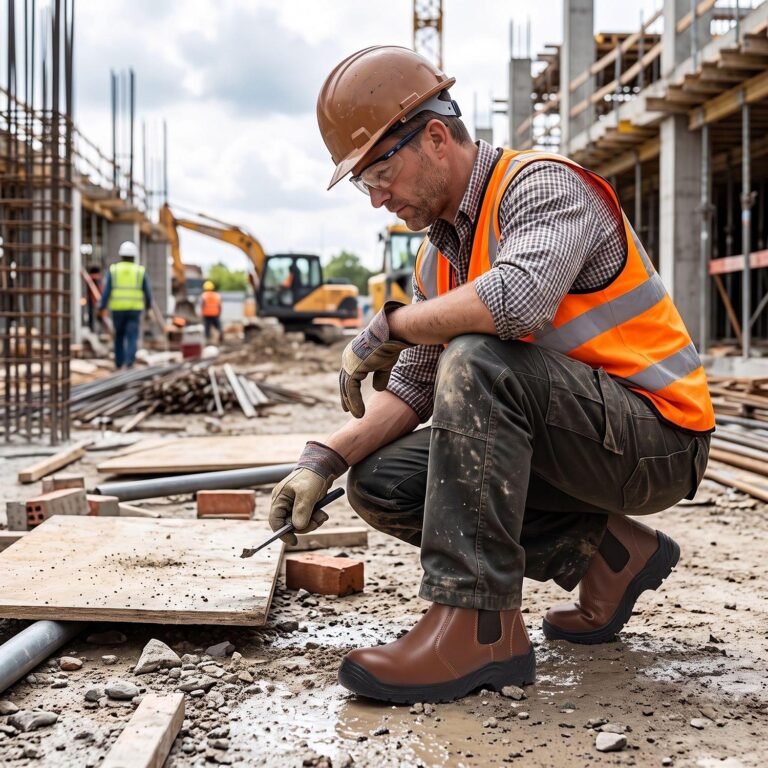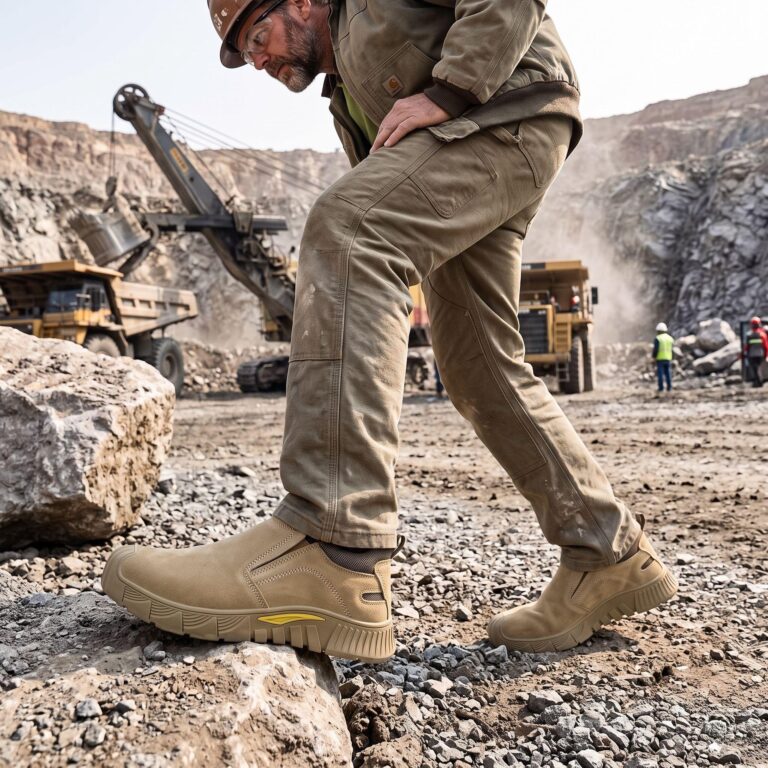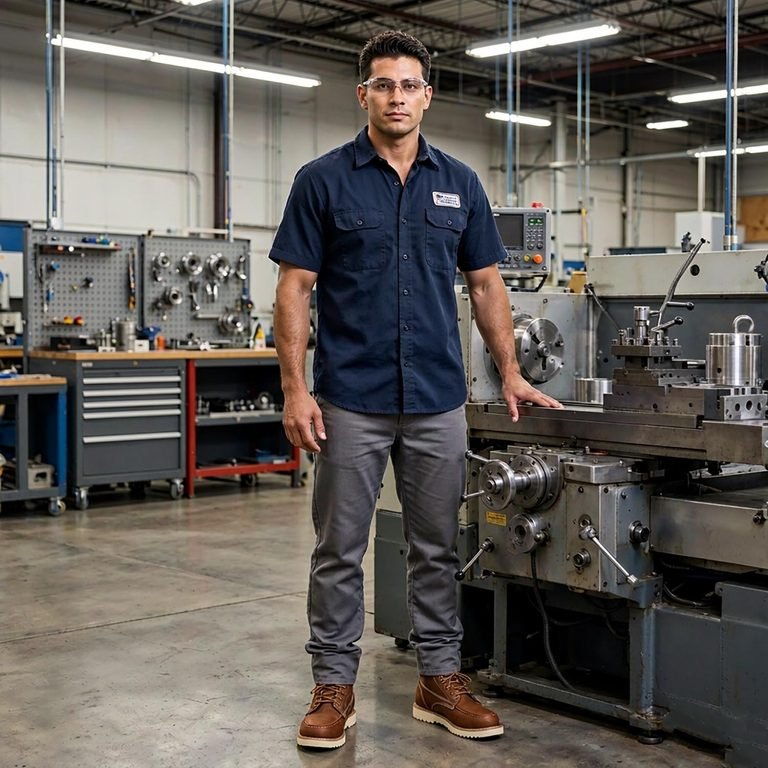
Import Safety Shoes from China successfully requires careful planning, especially when selecting qualified manufacturers, verifying product certifications, and arranging international shipping. Understanding safety standards, product specifications, and import procedures helps buyers reduce risks, control costs, and avoid unnecessary delays.
Why Do Many Buyers Choose China for Safety Shoe Imports?
China has an established safety footwear manufacturing industry, supported by a mature supply chain for raw materials, components, production equipment, and quality inspection.
Buyers can source different types of industrial safety footwear, including steel toe safety shoes, composite toe shoes, anti-static footwear, puncture-resistant shoes, and electrical hazard protection footwear.
Another important advantage is manufacturing flexibility. Chinese factories can produce safety shoes for different working environments, customer requirements, and target markets.
For example:
- Construction: Safety shoes with protective toe caps, anti-slip outsoles, and puncture-resistant midsoles.
- Manufacturing: Footwear with anti-static properties, oil-resistant outsoles, and abrasion resistance.
- Electrical work: Insulating safety footwear designed for specific electrical hazards.
- Chemical processing: Footwear with appropriate resistance to oils, acids, alkalis, and other workplace substances.
- Warehousing and logistics: Lightweight safety shoes with comfortable insoles and durable outsoles.
However, a large product selection does not automatically mean every product meets the requirements of the destination market. Importers need to evaluate product specifications, certification documents, and factory production capabilities before purchasing.
How to Import Safety Shoes from China: 7 Essential Steps
1. Identify Your Target Market and Safety Requirements
Before contacting manufacturers, determine where the safety shoes will be sold and which occupational safety standards apply.
Different countries and regions have different requirements for protective footwear.
For example:
| Market | Relevant Standard or Requirement |
|---|---|
| European Union | EN ISO 20345:2022 |
| United States | ASTM F2413 |
| Canada | CSA Z195 |
| China | GB 21148-2020 |
The European EN ISO 20345:2022 standard covers general requirements for safety footwear, including impact resistance, compression resistance, and additional protective properties.
For the US market, ASTM F2413 specifies performance requirements for protective footwear, including impact and compression protection.
Importers should also check applicable market-access regulations. For example, safety footwear placed on the EU market must comply with the relevant PPE Regulation (EU) 2016/425 requirements.
Do not select a product based only on its appearance or selling price. Match its protective functions to the actual workplace hazards.
2. Find a Qualified Safety Shoe Manufacturer in China
Choosing the right manufacturer is one of the most important decisions when importing safety footwear.
A reliable supplier should have more than attractive product catalogs. Buyers need to understand its actual manufacturing capabilities.
Pay attention to the following factors:
- Manufacturing experience: Check how long the factory has been producing safety footwear and whether it understands international market requirements.
- Production capacity: Confirm whether the factory can handle your expected order quantity and delivery schedule.
- Product range: Check whether it manufactures steel toe, composite toe, anti-static, puncture-resistant, and other protective footwear.
- Quality control: Ask about incoming material inspections, production checks, and finished-product testing.
- Certification documents: Request relevant test reports, certificates, and technical documentation.
- Customization capabilities: Confirm whether the manufacturer can customize materials, colors, outsole designs, logos, and packaging.
It is also important to distinguish between a trading company and an actual manufacturer.
A trading company may offer products from several factories, while a manufacturer generally has more direct control over production processes. Neither type should be judged by its business label alone. Verify who actually manufactures the shoes and who is responsible for quality and compliance.
3. Confirm Product Specifications Before Ordering
Safety shoes are technical products. Even small differences in materials or construction can affect their protective performance.
Before requesting a quotation, prepare a detailed specification sheet.
Important parameters include:
| Specification | What to Confirm |
|---|---|
| Toe protection | Steel toe cap or composite toe cap |
| Midsole | Steel plate or non-metallic puncture-resistant insert |
| Upper material | Genuine leather, microfiber, or other materials |
| Outsole | PU, rubber, or PU/rubber combination |
| Slip resistance | Applicable performance requirements |
| Electrical properties | ESD, anti-static, or electrical insulation |
| Water resistance | Water-resistant upper or other specified protection |
| Sizes | Required size range and size conversion |
| Branding | Logo, label, and packaging requirements |
Pay particular attention to the difference between anti-static and electrically insulating footwear.
Anti-static footwear helps control electrostatic charge accumulation. Electrically insulating footwear is designed for specific electrical hazards and requires different testing. These properties are not interchangeable.
The more detailed the specifications, the easier it is to compare quotations and avoid misunderstandings during production.
4. Request Samples and Verify Product Quality
Never rely entirely on product photographs when purchasing safety shoes in bulk.
Request physical samples before confirming a large order. A sample allows buyers to examine the actual materials, workmanship, comfort, and overall construction.
During sample evaluation, check:
- Whether the upper material matches the agreed specifications.
- Whether stitching and bonding are consistent.
- Whether the toe cap and puncture-resistant midsole meet the specified requirements.
- Whether the outsole provides the required grip and durability.
- Whether the shoe size and fit match the target market.
- Whether the product markings correspond to the certification documents.
For protective performance, visual inspection alone is insufficient.
Impact resistance, compression resistance, slip resistance, puncture resistance, and electrical properties require appropriate testing methods and equipment.
If the order is intended for a regulated market, verify that the tested product configuration matches the actual goods being purchased. A certificate for a different model or construction should not be treated as proof of compliance.
5. Compare Quotations and Understand the Total Import Cost
When comparing Chinese safety shoe manufacturers, the lowest quotation is not necessarily the most economical choice.
A complete quotation should clearly specify:
- Unit price.
- Minimum order quantity (MOQ).
- Sample charges.
- Customization costs.
- Packaging requirements.
- Production lead time.
- Payment terms.
- Shipping arrangements.
Importers should also calculate the total landed cost rather than focusing only on the factory price.
The total import cost may include:
- Product purchasing cost.
- Sample and testing fees.
- International freight.
- Cargo insurance.
- Customs duties and import taxes.
- Customs clearance charges.
- Local transportation and warehousing.
Shipping terms should also be clearly defined.
For example, FOB generally means the seller delivers the goods on board the nominated vessel at the agreed port. CIF includes cost, insurance, and freight to the named destination port, but does not automatically include import customs clearance or local delivery.
For smaller orders, air freight may offer shorter transportation times, while sea freight is often more economical for larger shipments.
The best option depends on order volume, delivery deadlines, and destination.
6. Confirm Production Details and Conduct Quality Inspections
After confirming the sample and placing an order, buyers should establish clear production and inspection requirements.
A practical quality control process can be divided into three stages.
Pre-production inspection
Confirm raw materials, colors, sizes, product specifications, packaging, and approved samples before mass production begins.
During-production inspection
Check stitching, sole bonding, material consistency, assembly quality, and production progress.
Pre-shipment inspection
Inspect finished products before shipment. Verify quantities, size distribution, labeling, packaging, and visible defects.
For safety footwear, the inspection process should also include appropriate performance testing based on the product’s intended protective functions.
For large orders, buyers can arrange independent third-party inspections. This provides an additional layer of verification before the goods leave China.
7. Prepare Shipping Documents and Complete Customs Clearance
Once production and inspection are completed, the manufacturer and freight forwarder need to prepare the relevant export and import documents.
Common documents include:
- Commercial Invoice.
- Packing List.
- Bill of Lading or Air Waybill.
- Sales Contract or Purchase Order.
- Certificate of Origin, when required.
- Relevant product test reports and conformity documentation.
The correct HS code is also important because it determines the applicable customs classification, duties, and import requirements.
Safety footwear is generally classified within HS heading 6403 or 6404, depending on the upper material and footwear construction. However, the exact classification must be confirmed according to the product’s characteristics and the destination country’s customs tariff.
For EU imports, buyers should also verify applicable VAT, customs duty, product compliance documentation, and importer responsibilities before shipment.
Working with an experienced customs broker or freight forwarder can help reduce documentation errors and clearance delays.
Common Mistakes to Avoid When Importing Safety Shoes from China
Even experienced importers can encounter problems when purchasing protective footwear. Several mistakes deserve particular attention.
1. Choosing suppliers based only on price
An unusually low quotation may indicate differences in materials, construction, testing, or service. Compare complete specifications rather than unit prices alone.
2. Assuming all CE-marked products meet EU requirements
A CE logo alone does not establish compliance. Buyers should verify the applicable conformity assessment, EU Declaration of Conformity, technical documentation, and relevant test reports.
3. Ignoring differences between safety standards
EN ISO 20345, ASTM F2413, and CSA Z195 have different technical requirements. A product tested under one standard should not automatically be considered compliant with another.
4. Skipping sample approval
Bulk production without an approved reference sample can lead to inconsistencies in materials, sizing, colors, and workmanship.
5. Overlooking packaging and labeling
Incorrect product labels, size markings, or packaging information can create additional problems during distribution and customs procedures.
6. Failing to clarify delivery responsibilities
Before placing an order, confirm the Incoterms, shipment schedule, insurance arrangements, and responsibility for customs clearance.
What Is the Best Way to Import Safety Shoes from China Successfully?
Successfully importing safety shoes from China requires more than finding a factory and negotiating a competitive price. Buyers need to establish clear product requirements, verify manufacturing capabilities, check applicable safety standards, approve samples, and arrange reliable quality inspections.
The most practical approach is to work directly with a qualified manufacturer that can provide consistent production, transparent specifications, and relevant compliance documentation.
For importers, careful preparation before placing an order can reduce product quality risks, avoid certification problems, and make the entire purchasing process more predictable.
Written by Hong Gu Safety Shoes Technical Team, this content is compiled from practical production, long-term field applications, and rigorous testing results.
Shan Dong Hong Gu Shoes Industrial Co., Ltd. is a leading safety footwear manufacturer based in China, specializing in industrial foot protection with over 20 years of manufacturing expertise.
Products are fully certified under European standards (CE EN ISO 20345:2022), offering a full range of manufacturing processes including PU/PU Injection, PU/Rubber, Goodyear Welted, and Rubber Cemented constructions.