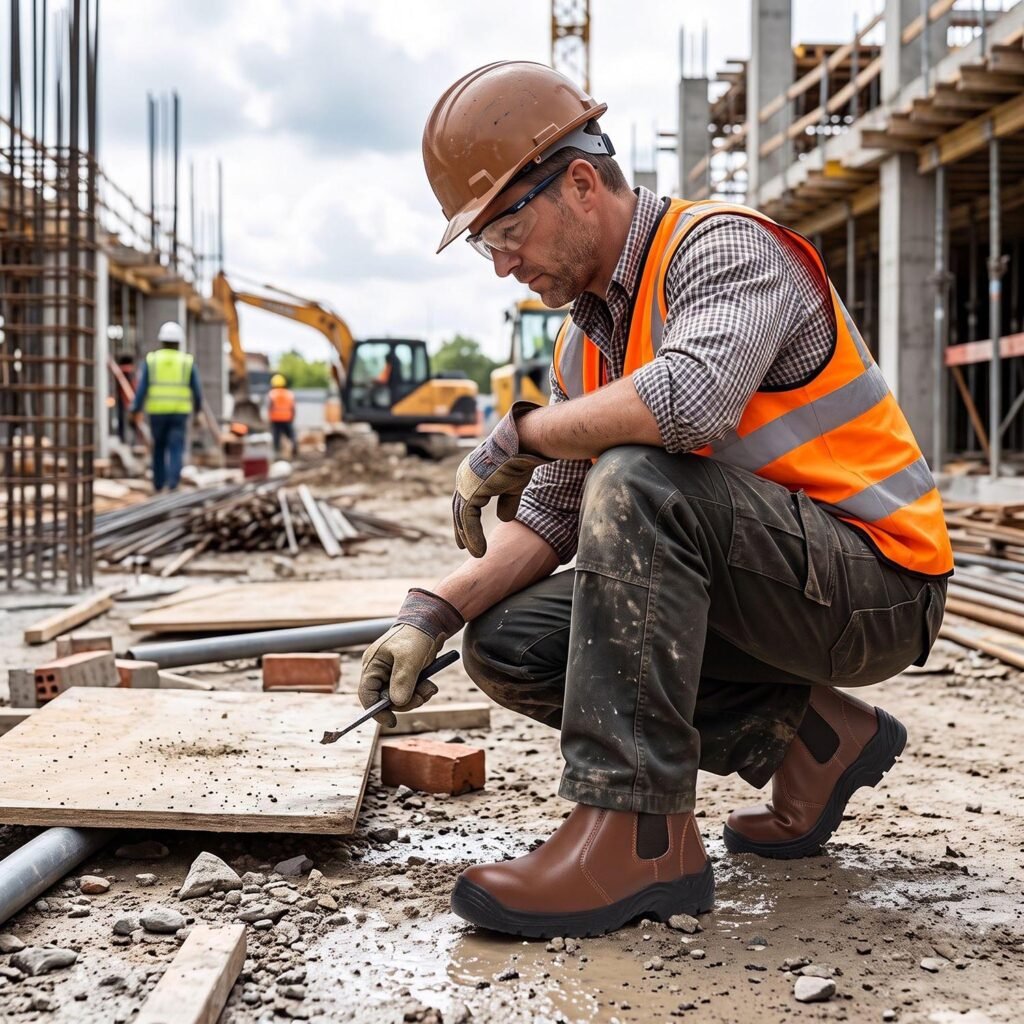
Customized safety shoes help businesses protect workers against specific workplace hazards while maintaining comfort, durability, and compliance with applicable safety standards. Choosing the right design requires more than changing the shoe’s appearance. Buyers must consider impact risks, electrical hazards, chemical exposure, slip resistance, and the working environment.
Why Different Industries Need Customized Safety Shoes
A safety shoe designed for a warehouse may not provide adequate protection for an oilfield or chemical processing plant. Each workplace presents different risks, and these risks determine the materials, protective components, outsole construction, and performance requirements of the footwear.
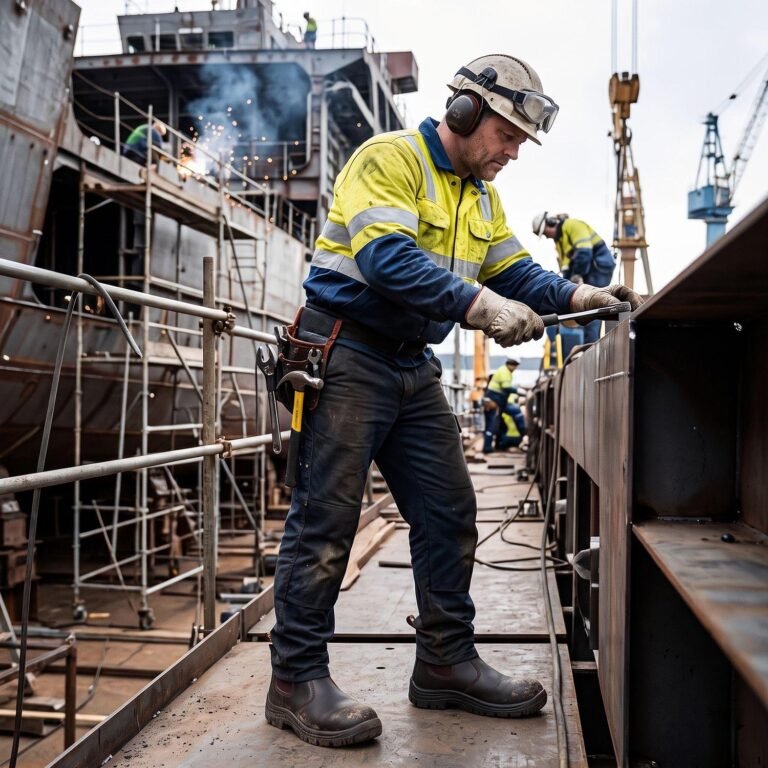
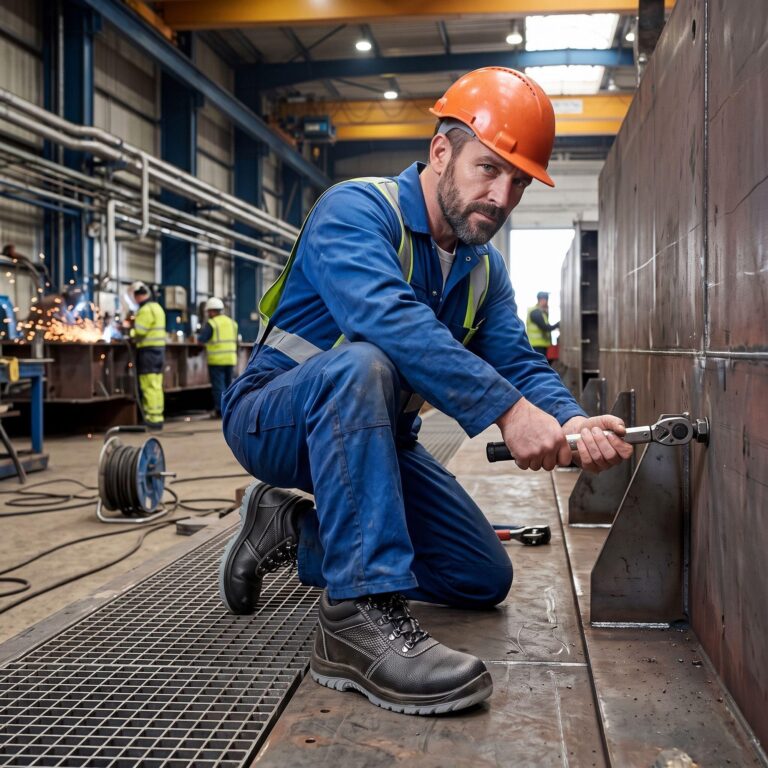
For example, construction workers may need protective toe caps and penetration-resistant midsoles to reduce injuries caused by falling objects and sharp materials. Workers in manufacturing facilities may require slip-resistant outsoles and footwear designed for long shifts on hard floors. In electrical environments, suitable footwear may need specific electrical hazard protection, depending on the task and applicable regulations.
Customization allows companies to select safety footwear according to their actual operating conditions rather than relying on a single standard design for every department.
For industrial distributors, importers, and procurement teams, customized safety footwear can also help meet regional market requirements, company uniform policies, and specific end-user preferences. The key is to ensure that every modification supports a defined requirement without compromising the shoe’s protective performance.
How to Customize Safety Shoes for Different Industries
The customization process should begin with a workplace risk assessment. Once the hazards are identified, manufacturers can determine the appropriate protection, materials, construction method, and testing requirements.
1. Construction and Heavy Manufacturing
Construction sites and heavy manufacturing facilities expose workers to falling objects, sharp debris, uneven surfaces, and heavy equipment.
Common customization options include:
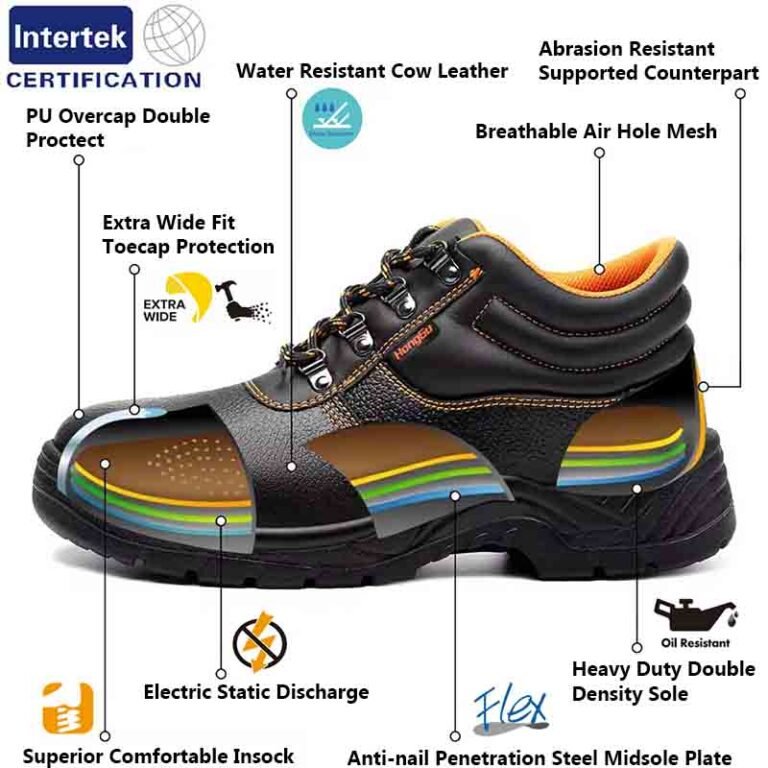
- Protective toe caps: Steel or suitable non-metallic materials can provide impact and compression protection when tested to the required standard.
- Penetration-resistant midsoles: Metal or non-metallic inserts help protect the foot from sharp objects penetrating the sole.
- Abrasion-resistant uppers: Durable leather or other suitable materials can withstand repeated contact with rough surfaces.
- Reinforced outsoles: Appropriate rubber or polyurethane compounds can improve wear resistance and traction under specified conditions.
Manufacturers should select the combination according to the actual hazards, required protection level, and expected service conditions. A stronger-looking shoe does not necessarily provide better certified protection.
2. Oil, Gas, and Petrochemical Operations
Oilfields, refineries, and petrochemical facilities may involve slippery surfaces, hydrocarbon exposure, outdoor weather, and electrically hazardous areas.
For these applications, customization may include oil-resistant or fuel-resistant outsole compounds, slip-resistant tread patterns, durable upper materials, and designs that reduce water ingress.
Chemical resistance requires particular attention. Resistance to oils and fuels does not automatically mean that a shoe can withstand acids, alkalis, solvents, or other industrial chemicals. The specific chemical, concentration, temperature, and exposure duration can affect material performance.
Where electrical hazards or potentially explosive atmospheres are present, footwear selection must follow the site’s safety assessment. Ordinary antistatic footwear, electrically insulating footwear, and footwear intended for use in explosive atmospheres serve different purposes. They should not be treated as interchangeable.
3. Warehousing, Logistics, and Transportation
Warehouse and logistics employees often walk for extended periods, move goods, and work on smooth concrete floors. Their footwear needs to balance impact protection, grip, weight, and comfort.
Useful customization options include lightweight protective toe caps, cushioned insoles, breathable upper materials, and outsole designs suited to the facility’s floor conditions.
Slip resistance should be evaluated against the actual environment. A sole that performs well on dry concrete may behave differently on wet, oily, or contaminated flooring. Buyers should specify the surface conditions and relevant test requirements rather than relying on general claims such as “non-slip.”
For workers who walk long distances during each shift, fit and internal space are also important. Excessive shoe weight, poor heel retention, and insufficient toe room can contribute to discomfort and fatigue.
4. Electrical and Electronics Manufacturing
Electrical work requires careful selection because different types of protective footwear address different hazards.
For electronics assembly, suitable footwear may need antistatic or electrostatic discharge (ESD) properties to help control static electricity. The appropriate resistance range depends on the workstation, flooring, grounding arrangements, and applicable ESD program.
Electrical maintenance and utility work may require electrically insulating footwear designed and tested for the relevant electrical hazards. Such footwear is not equivalent to antistatic or ESD footwear, which is intended to dissipate static charge.
Procurement teams should clearly identify whether the primary concern is static control or protection against electrical shock. Manufacturers can then select suitable materials, sole constructions, and testing procedures. Any requested change to the outsole, insole, or other conductive components should be evaluated to ensure that the finished footwear retains its required properties.
5. Food Processing and Wet Working Environments
Food processing, commercial cleaning, and other wet workplaces may require footwear that resists water ingress, provides suitable traction, and can withstand frequent cleaning.
Depending on the environment, customization may include water-resistant or waterproof construction, easy-to-clean upper materials, slip-resistant outsoles, and designs that limit exposed seams or areas where dirt can accumulate.
Water resistance should not be confused with complete waterproof protection. The finished shoe’s construction and test results determine its actual performance.
Where cleaning agents or sanitizing chemicals are used, buyers should also verify material compatibility. Repeated exposure to cleaning chemicals, hot water, or aggressive washing procedures can affect adhesives, upper materials, and outsole performance.
6. Outdoor Work and Cold Environments
Workers in agriculture, infrastructure maintenance, forestry, and cold-storage operations may face rain, mud, low temperatures, and uneven terrain.
Depending on the application, customized safety shoes may include thermal insulation, moisture management, deeper tread patterns, water-resistant construction, or outsoles formulated to maintain suitable performance in low temperatures.
Insulation requirements should reflect the expected temperature and activity level. Excessive insulation can cause overheating during strenuous work, while insufficient insulation may reduce comfort in cold conditions.
For outdoor environments, buyers should also consider sole flexibility, ankle support where appropriate, and resistance to abrasion. These features must be balanced with the required impact, penetration, and slip protection.
Which Safety Shoe Specifications Should Buyers Define?
Before requesting a customized safety shoe, procurement teams should prepare a clear technical specification. This reduces misunderstandings during sampling and production.
| Specification | What to confirm |
|---|---|
| Protection level | Required toe protection, penetration resistance, and other workplace-specific hazards |
| Applicable standards | Target market regulations and the required footwear standard or classification |
| Upper material | Leather, textile, synthetic materials, or combinations suited to the working environment |
| Outsole | Slip resistance, abrasion resistance, oil or chemical compatibility, and temperature requirements |
| Electrical properties | Antistatic, ESD, electrically insulating, or other specifically required properties |
| Comfort and fit | Size range, toe room, cushioning, breathability, and expected wearing duration |
| Construction | PU/PU injection, PU/rubber, Goodyear welted, or rubber cemented construction, as appropriate |
| Appearance | Colors, logos, stitching, finish, and company uniform requirements |
| Testing | Required laboratory tests, documentation, and any additional application-specific evaluations |
The selected construction method should match the intended use. PU/PU injection footwear can offer a lightweight design, while PU/rubber constructions may suit applications requiring particular outsole characteristics. Goodyear welted and rubber cemented footwear offer different manufacturing structures and repair or durability considerations. No construction method is automatically suitable for every industry.
Safety Standards and Certification Requirements
Customized safety shoes must meet the requirements applicable to their intended market and protective function. For European markets, EN ISO 20345:2022 establishes requirements for safety footwear, including protective toe caps and applicable performance classifications.
Depending on the product and market, additional requirements may apply to slip resistance, penetration resistance, water-related properties, heat resistance, electrical characteristics, or other hazards. Buyers should identify the relevant requirements before development begins.
A critical point is that a certified base model cannot automatically be assumed to remain compliant after customization. Changes to the upper material, outsole compound, protective components, construction, or other tested features may affect performance and certification status.
Manufacturers should assess whether proposed modifications fall within the existing certified product configuration or require additional testing and conformity assessment. Buyers should request relevant test reports, technical documentation, and certification information for the finished product configuration.
For markets outside Europe, the applicable national or regional standards should also be confirmed. Requirements can differ, so the European standard should not be treated as a universal substitute for local regulations.
Common Mistakes When Ordering Customized Safety Shoes
One common mistake is choosing footwear based mainly on price or appearance. A visually robust shoe may still be unsuitable for a specific chemical, electrical, or slip hazard.
Another mistake is requesting several modifications without checking how they interact. For example, changing an outsole compound may affect grip, electrical resistance, abrasion performance, or bonding strength. Adding insulation can also affect weight and breathability.
Buyers should avoid assuming that one safety shoe can cover every workplace. A mixed industrial site may require different footwear specifications for warehouse staff, maintenance technicians, production operators, and outdoor workers.
It is also important to confirm sample approval, size grading, production tolerances, packaging, and inspection criteria before mass production. A successful sample does not remove the need for quality control during manufacturing.
Finally, customization should be based on documented requirements rather than unverified claims. Clearly defined performance criteria make it easier for manufacturers and buyers to assess whether the finished footwear is suitable for its intended application.
How to Work with a Safety Shoe Manufacturer
A practical customization project follows a clear sequence.
First, provide the manufacturer with information about the working environment, main hazards, target market, and required standards. Include details such as floor conditions, temperature range, chemical exposure, and expected daily wearing time.
Next, agree on the technical specification, materials, outsole design, protective components, appearance, and size range. The manufacturer can then develop samples for fit assessment and relevant performance testing.
Before placing a bulk order, review the sample, verify the applicable documentation, and confirm the production specifications. Any material or component substitutions should be controlled to avoid unintended changes to protective performance.
Throughout production, inspection procedures should address material consistency, construction quality, dimensions, bonding, appearance, and the applicable finished-product requirements.
Frequently Asked Questions
Can safety shoes be customized for multiple industries?
Yes, but each version should be developed for its intended working conditions. A shared design platform may be possible, but different industries can require different outsole compounds, protective components, materials, and performance tests.
Can customized safety shoes carry a company logo?
Logo printing, embroidery, embossing, and other branding methods may be available. The method and placement should be evaluated to ensure they do not interfere with the shoe’s protective structure, material performance, or applicable certification requirements.
Does changing the outsole affect safety certification?
It can. An outsole change may influence slip resistance, electrical properties, chemical compatibility, abrasion resistance, and the integrity of the footwear construction. The manufacturer should assess the proposed change and determine whether further testing or conformity assessment is necessary.
What information is needed for a customized safety shoe quotation?
Buyers should provide the intended industry, target market, required protection level, applicable standards, preferred materials, outsole requirements, size range, branding details, estimated order quantity, and expected delivery schedule. Reference images or an existing technical specification can also help clarify the design.
Final Considerations
Customized safety shoes should be developed around workplace hazards, applicable standards, and the actual needs of workers. The most suitable solution balances protection, fit, durability, and working conditions while maintaining the required product conformity. Clear specifications, controlled material selection, sample evaluation, and appropriate testing help buyers reduce procurement risks and obtain footwear suited to their intended applications.
Written by Hong Gu Safety Shoes Technical Team, this content is compiled from practical production, long-term field applications, and rigorous testing results.
Shan Dong Hong Gu Shoes Industrial Co., Ltd. is a leading safety footwear manufacturer based in China, specializing in industrial foot protection with over 20 years of manufacturing expertise.
Products are fully certified under European standards (CE EN ISO 20345:2022), offering a full range of manufacturing processes including PU/PU Injection, PU/Rubber, Goodyear Welted, and Rubber Cemented constructions.