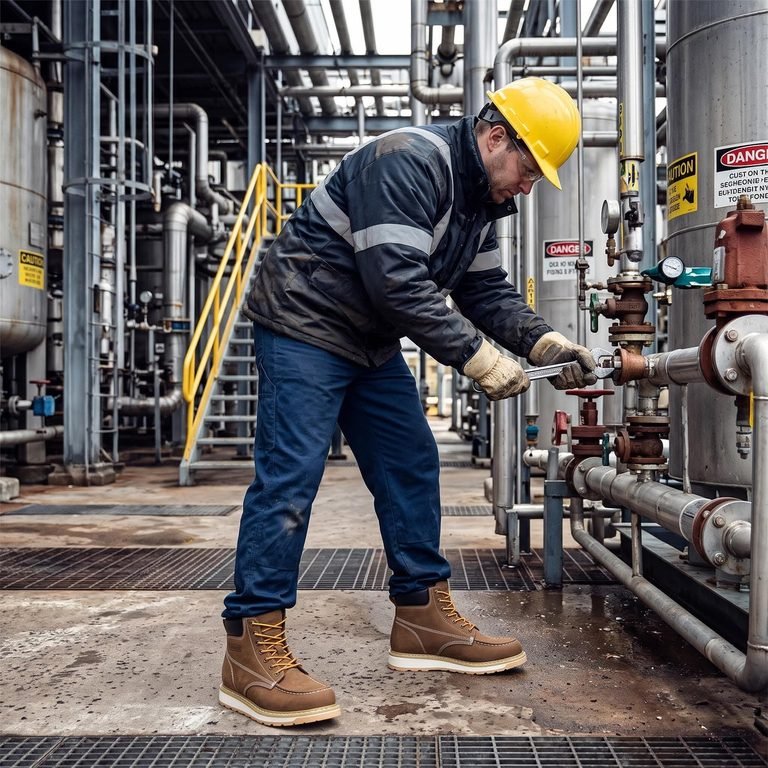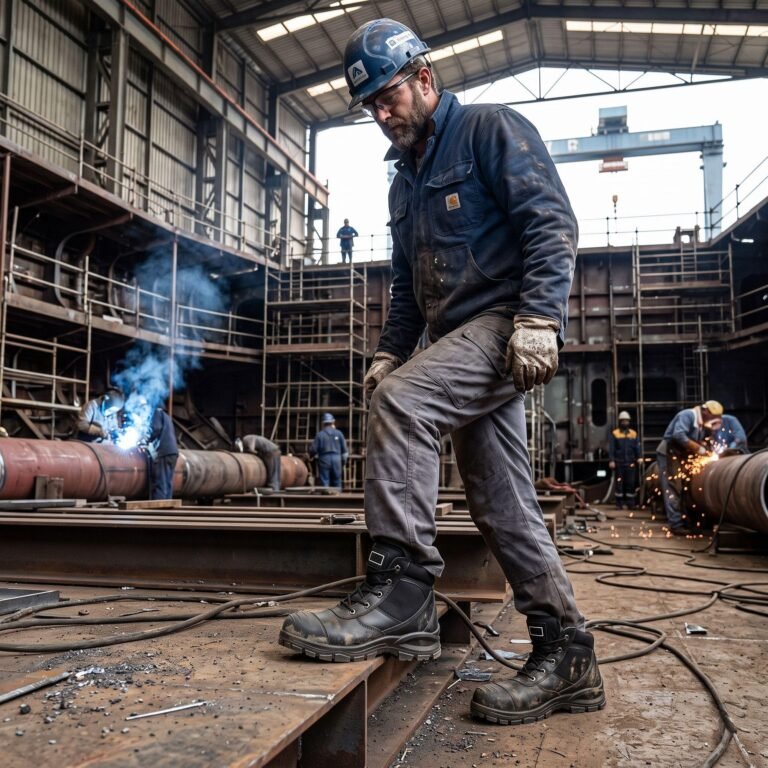
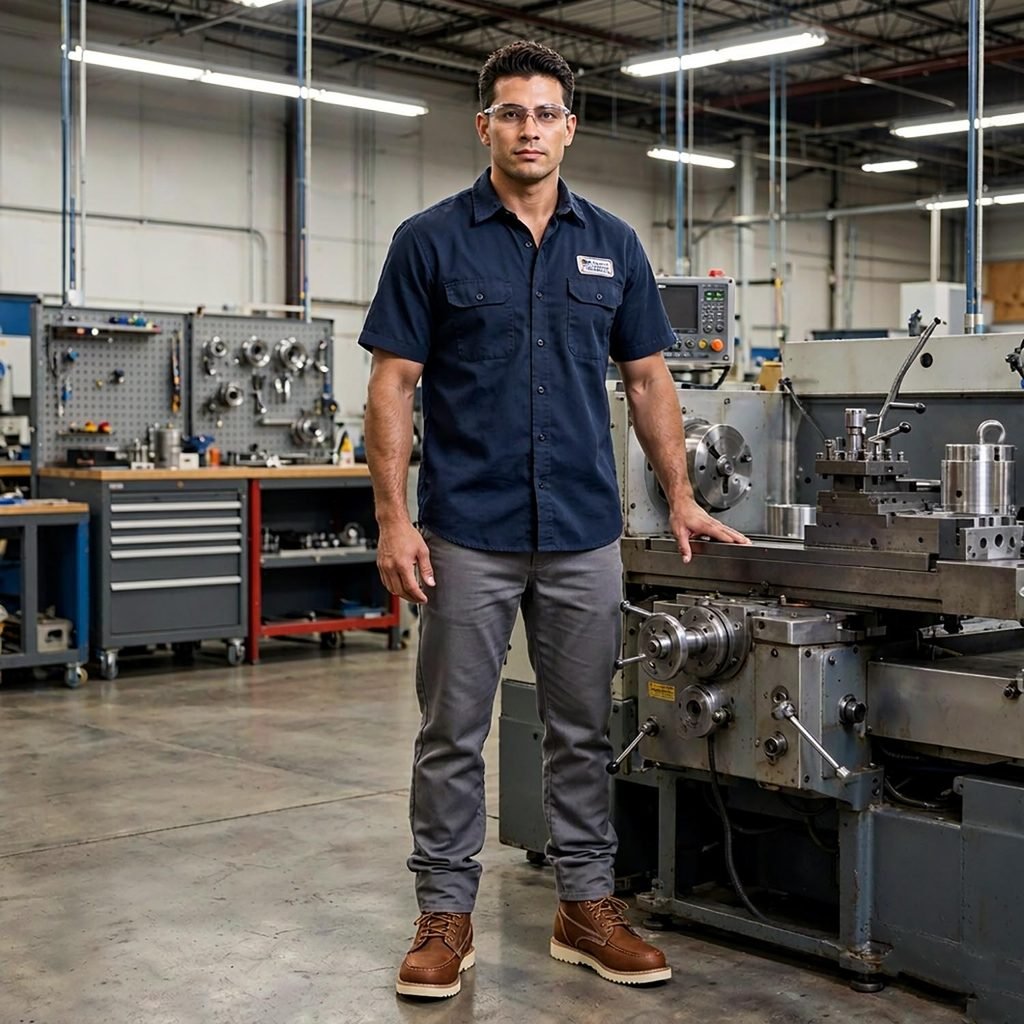
Safety Shoes for Firefighters are essential for protecting firefighters and emergency workers from heat, falling objects, sharp debris, slippery surfaces, and other workplace hazards. Choosing the right footwear requires careful consideration of protective features, material performance, applicable safety standards, and the specific demands of emergency response operations.
Why Do Firefighters and Emergency Workers Need Specialized Safety Shoes?
Emergency response work involves rapidly changing conditions. Firefighters may enter buildings exposed to high temperatures, walk across unstable surfaces, or work near burning materials. Rescue personnel may deal with broken glass, metal fragments, wet floors, chemicals, and heavy equipment.
Ordinary industrial safety shoes may not provide sufficient protection for these environments. Footwear designed for emergency workers needs to address several risks simultaneously.
Common workplace hazards include:
- Heat exposure: Contact with hot surfaces, heated debris, and radiant heat can damage footwear materials and cause foot injuries.
- Impact injuries: Falling tools, building materials, and heavy equipment can cause toe injuries.
- Puncture hazards: Nails, broken glass, metal fragments, and sharp debris may penetrate the sole.
- Slippery surfaces: Water, foam, oil, and other liquids can increase the risk of slips and falls.
- Electrical hazards: Certain rescue and emergency operations may involve electrical equipment or damaged electrical installations.
- Extended working hours: Long shifts and physically demanding activities require footwear with suitable support, fit, and cushioning.
These conditions make material selection, sole construction, protective components, and footwear testing important considerations.
Essential Features of Safety Shoes for Firefighters and Emergency Workers
Not every safety shoe is suitable for firefighting or rescue operations. Buyers should evaluate the following features according to the actual working environment.
1. Heat and Flame Resistance
Heat resistance is an important consideration when selecting footwear for firefighting applications. The upper materials, outsole, stitching, adhesives, and other components must be evaluated as a complete construction.
Leather is commonly used in protective footwear because of its durability and suitability for demanding working conditions. However, not all leather offers the same level of heat protection.
The outsole also requires careful selection. Rubber compounds designed for elevated-temperature environments may provide better resistance to heat exposure than ordinary footwear materials.
Buyers should distinguish between different heat-related properties:
- Heat resistance of footwear materials.
- Resistance to contact with hot surfaces.
- Flame resistance of materials.
- Resistance to radiant heat.
- Thermal insulation against heat transfer.
These properties are not interchangeable. A shoe with a heat-resistant outsole does not automatically provide complete protection against flames or prolonged high-temperature exposure.
2. Impact and Compression Protection
Firefighters and emergency workers frequently handle heavy equipment and work around unstable structures.
Protective toe caps help reduce the risk of injuries caused by falling objects or compression. Common materials include:
- Steel toe caps: Provide strong impact and compression protection and are widely used in industrial safety footwear.
- Composite toe caps: Made from non-metallic materials, offering an alternative where metal-free footwear is required.
The appropriate toe protection should be selected according to the applicable safety standard and workplace requirements.
3. Puncture-Resistant Outsoles
Broken glass, nails, metal fragments, and sharp construction debris are common hazards at accident and disaster sites.
A puncture-resistant midsole can help prevent sharp objects from penetrating the bottom of the footwear.
Two common constructions are:
- Steel penetration-resistant plates: Provide mechanical protection against sharp objects.
- Non-metallic penetration-resistant layers: Use specialized textile or composite materials to provide puncture resistance with greater flexibility in certain constructions.
The choice depends on the required protection level, footwear weight, flexibility, and operational conditions.
4. Slip Resistance and Outsole Grip
Emergency workers may need to move quickly across wet concrete, muddy ground, oily surfaces, and debris-covered floors.
A suitable outsole should provide reliable traction under the conditions expected at the workplace.
Important design considerations include:
- Outsole tread depth and pattern.
- Rubber compound formulation.
- Contact area with the ground.
- Resistance to wear.
- Performance on wet and contaminated surfaces.
Slip resistance should be verified through the relevant testing requirements rather than judged by appearance alone.
5. Ankle Support and Foot Stability
Ankle injuries can occur when emergency workers move across uneven terrain, climb stairs, carry heavy equipment, or navigate unstable surfaces.
High-cut footwear can offer additional ankle coverage and may provide better support than low-cut safety shoes, depending on its construction and fit.
However, ankle coverage alone does not guarantee injury prevention. The overall design should balance stability, flexibility, weight, and freedom of movement.
6. Water Resistance and Moisture Management
Firefighting and rescue operations frequently involve water, foam, rain, and wet ground.
Water-resistant or waterproof footwear can help reduce water penetration. The distinction is important:
- Water-resistant footwear offers a degree of protection against moisture.
- Waterproof footwear is designed and tested to resist water penetration under specified conditions.
Breathable lining materials and moisture-management features can also improve comfort during extended shifts.
Which Safety Standards Apply to Emergency Worker Footwear?
Safety footwear standards help buyers understand the tested protection capabilities of a product. However, industrial safety footwear certification should not automatically be interpreted as certification for structural firefighting.
EN ISO 20345:2022
EN ISO 20345:2022 is a European standard specifying basic and additional requirements for safety footwear used in workplaces.
Depending on the tested construction and classification, relevant features may include:
- Protective toe caps.
- Slip resistance.
- Resistance to fuel oil.
- Water-related performance.
- Penetration resistance.
- Heat-related outsole properties.
Some commonly referenced classifications and markings include:
| Marking | General meaning |
|---|---|
| SB | Basic safety footwear requirements |
| S1 | Additional requirements for specified workplace conditions |
| S2 | Includes water penetration and absorption requirements for the upper |
| S3 | Includes penetration-resistant construction and cleated outsole requirements |
| HRO | Resistance of the outsole to contact heat |
| HI | Heat insulation of the sole assembly |
| CI | Cold insulation of the sole assembly |
| P | Penetration resistance, subject to the applicable test requirements |
| SR | Additional slip-resistance performance under the applicable test conditions |
The exact classification and additional markings should be checked against the product’s declaration of conformity and test documentation.
Importantly, HRO does not mean that the entire shoe is fireproof. Likewise, an S3 classification does not establish suitability for every firefighting operation.
EN 15090 for Firefighters’ Footwear
EN 15090 is a dedicated European standard for footwear used by firefighters.
It addresses footwear performance requirements for firefighting applications and includes classifications related to different operational environments.
The standard distinguishes between different types of firefighting activities, including general firefighting and more demanding environments involving greater thermal and operational hazards.
When purchasing firefighter boots, buyers should check:
- Whether the product is specifically tested to EN 15090.
- The applicable footwear type and classification.
- Heat and flame-related performance.
- Resistance to water penetration.
- Mechanical protection.
- Suitability for the intended firefighting activity.
This distinction matters because general-purpose industrial safety footwear certified to EN ISO 20345 is not automatically suitable for structural firefighting.
ASTM F2413
ASTM F2413 specifies performance requirements for protective footwear in the United States.
It covers protective features such as impact resistance and compression resistance, with additional requirements available for specific hazards.
Depending on the product and application, buyers may need to consider:
- Impact protection.
- Compression protection.
- Puncture resistance.
- Electrical hazard protection.
- Static-related performance requirements.
ASTM F2413 certification alone does not establish that footwear is suitable for all firefighting environments. Specialized fire-service requirements must also be considered.
How to Select the Right Safety Footwear for Different Emergency Operations
Different emergency workers face different risks. A single footwear design may not meet every operational requirement.
Structural Firefighting
Structural firefighters enter buildings where flames, radiant heat, hot debris, and falling materials may be present.
Footwear should be specifically designed and certified for firefighting applications, with particular attention to EN 15090 where European requirements apply.
High-cut firefighter boots, heat-resistant construction, protective toe caps, and suitable outsole performance are important considerations.
Wildfire and Outdoor Firefighting
Wildfire personnel often work on uneven ground, loose soil, rocks, and steep slopes.
Their footwear should provide:
- Strong traction on natural terrain.
- Durable upper materials.
- Suitable heat protection.
- Ankle coverage and stability.
- Comfort during extended walking and standing.
The appropriate design may differ from footwear intended for indoor structural firefighting.
Rescue and Disaster Response
Rescue teams may work in collapsed buildings, damaged roads, industrial accident sites, and other hazardous locations.
Their footwear may require impact protection, puncture resistance, slip resistance, and water protection.
The exact requirements depend on whether the work involves structural collapse, road rescue, flood response, or industrial emergencies.
Medical and Emergency Response Personnel
Paramedics and emergency medical technicians often move between ambulances, hospitals, roads, and accident scenes.
Their footwear priorities may include slip resistance, lightweight construction, easy cleaning, comfortable cushioning, and sufficient toe protection where workplace risk assessments require it.
Not every medical emergency worker needs specialized firefighter boots. Footwear should be selected according to the actual hazards involved.
Important Considerations When Purchasing Firefighter Safety Shoes
Selecting suitable emergency footwear involves more than checking a product description or certification label.
Verify Complete Product Certification
Buyers should request relevant test reports, certification documents, and declarations of conformity.
Check that the documentation matches the exact footwear model and construction being purchased.
A certificate for one product cannot automatically be applied to another model with different materials, outsole construction, or protective components.
Evaluate the Entire Footwear Construction
Heat-resistant leather alone does not make a complete shoe suitable for firefighting.
The outsole, lining, stitching, adhesives, protective toe cap, and other components all affect overall performance.
Manufacturers should evaluate the finished footwear rather than relying only on individual material specifications.
Consider Fit and Operational Comfort
Emergency workers may wear protective footwear for long periods while carrying heavy equipment.
Incorrect sizing can cause discomfort, blisters, and reduced mobility.
Buyers should consider toe space, heel stability, ankle fit, footwear weight, and compatibility with the socks used during operations.
Avoid Confusing Industrial Safety Shoes with Firefighter Boots
One common purchasing mistake is assuming that ordinary S3 safety shoes are suitable for firefighting because they include toe protection and puncture resistance.
These features address specific mechanical hazards but do not establish compliance with dedicated firefighting footwear requirements.
For structural firefighting, buyers should prioritize footwear designed and tested for the relevant fire-service standard.
Establish Inspection and Replacement Procedures
Protective footwear can deteriorate through repeated exposure to heat, moisture, chemicals, abrasion, and mechanical stress.
Regular inspections should cover:
- Cracks or deformation in the outsole.
- Damaged seams and upper materials.
- Worn tread patterns.
- Exposed or damaged protective components.
- Signs of heat damage.
- Water penetration or lining deterioration.
Footwear showing significant damage should be removed from service and assessed according to the manufacturer’s instructions and workplace safety procedures.
Frequently Asked Questions
Are ordinary S3 safety shoes suitable for firefighters?
Not necessarily. S3 footwear provides specified industrial safety features, including toe protection and penetration resistance. However, it does not automatically meet the dedicated requirements for firefighting footwear. Structural firefighters should use footwear designed and tested for the relevant firefighting standard, such as EN 15090.
What is the difference between EN ISO 20345 and EN 15090?
EN ISO 20345 covers general industrial safety footwear, while EN 15090 specifically addresses footwear for firefighters. Their intended applications and performance requirements differ. Industrial safety footwear certification should not be treated as a substitute for firefighting footwear certification.
Do firefighter boots need heat-resistant soles?
Heat-related outsole performance is an important consideration for firefighting footwear. However, the required protection depends on the firefighting environment and applicable standard. Buyers should evaluate the complete footwear construction, including the upper, outsole, lining, and connecting components.
Are steel toe caps or composite toe caps better for emergency workers?
Both can provide impact and compression protection when manufactured and tested to the applicable requirements. Steel toe caps offer a traditional metal protective structure, while composite toe caps provide a non-metallic alternative. The better choice depends on operational requirements, footwear weight, and workplace conditions.
How often should firefighter safety boots be replaced?
There is no universal replacement interval for every pair of firefighter boots. Replacement depends on exposure, frequency of use, maintenance, material condition, and manufacturer recommendations. Boots should be inspected regularly and removed from service when their protective performance may have been compromised.
Final Considerations
Safety shoes for firefighters and emergency workers must be selected according to the specific hazards of each operation. Heat resistance, flame-related performance, impact protection, puncture resistance, slip resistance, water protection, and footwear stability all require careful evaluation.
For structural firefighting, dedicated footwear meeting the applicable EN 15090 requirements is essential. General industrial safety footwear certified to EN ISO 20345 may be appropriate for certain rescue, maintenance, and emergency support tasks, but it should not be assumed to provide equivalent firefighting protection.
The right footwear is determined by verified testing, suitable construction, correct sizing, and the actual conditions in which emergency workers operate.
Written by Hong Gu Safety Shoes Technical Team, this content is compiled from practical production, long-term field applications, and rigorous testing results.
Shan Dong Hong Gu Shoes Industrial Co., Ltd. is a leading safety footwear manufacturer based in China, specializing in industrial foot protection with over 20 years of manufacturing expertise.
Products are fully certified under European standards (CE EN ISO 20345:2022), offering a full range of manufacturing processes including PU/PU Injection, PU/Rubber, Goodyear Welted, and Rubber Cemented constructions.