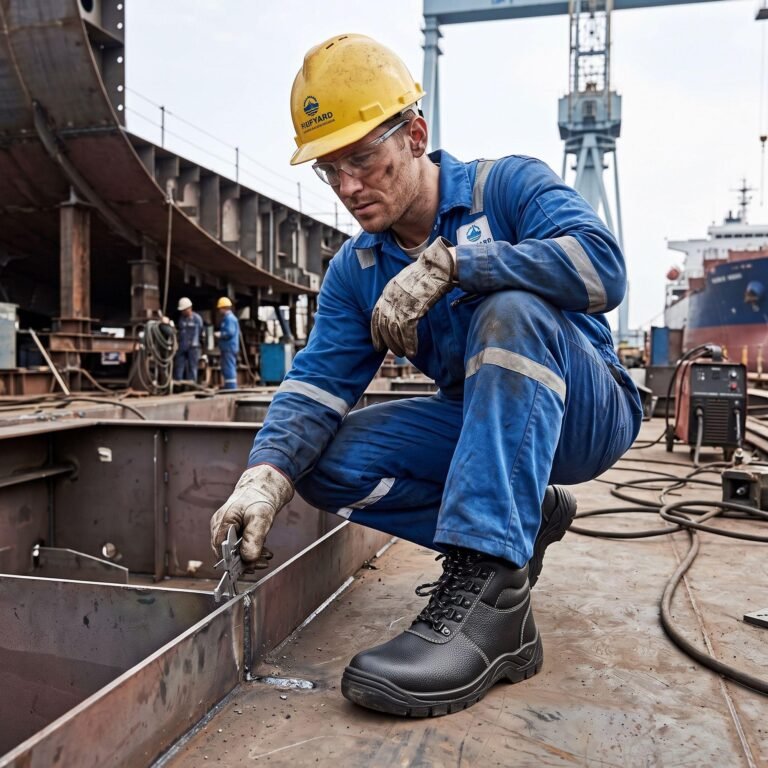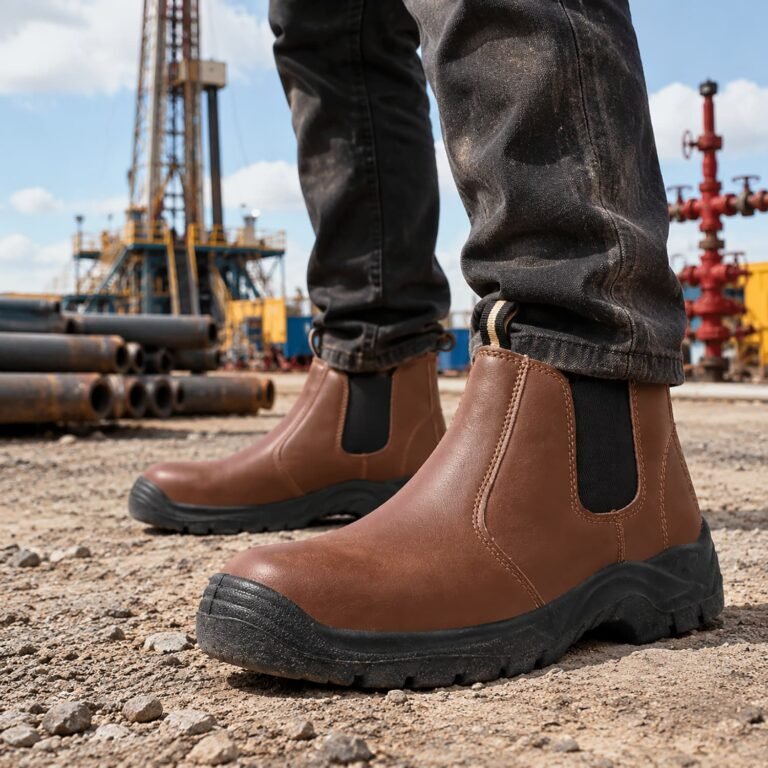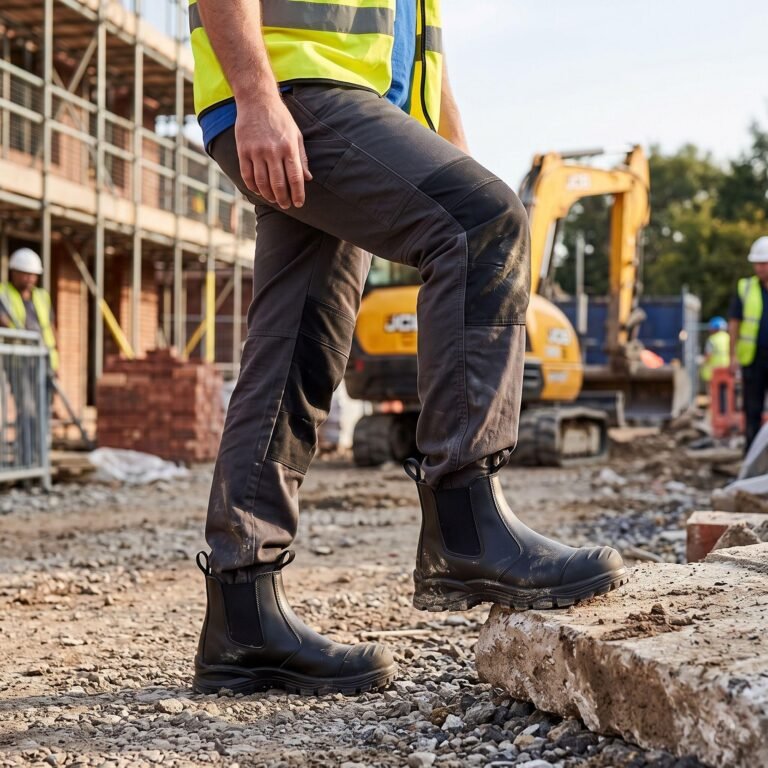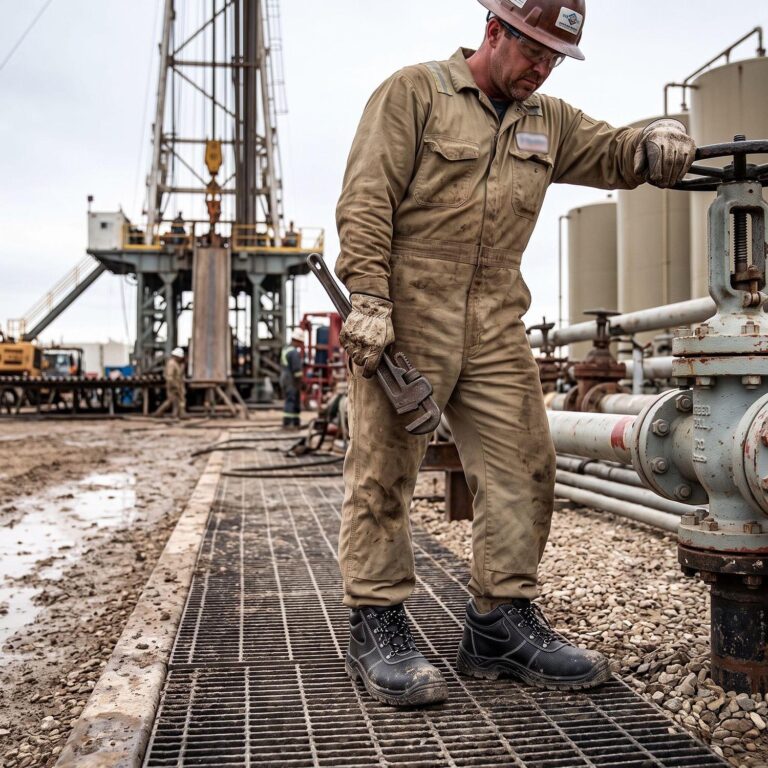
A safety shoe may look well-made on the outside, but hidden defects in the sole, protective toe cap, stitching, or bonding can affect its protective performance. A systematic quality inspection process helps identify these risks before products reach workers.
Why Is Quality Inspection Important in Safety Shoe Manufacturing?
Quality inspection is an essential part of safety shoe manufacturing. It ensures that each pair meets the required safety standards, product specifications, and customer expectations.
Safety footwear is designed to protect workers from workplace hazards such as falling objects, sharp materials, slippery surfaces, electrical risks, and chemical exposure. Even a small manufacturing defect can affect the shoe’s ability to provide the intended protection.
For example, an incorrectly positioned steel toe cap may reduce the available protective space. Poor sole bonding can cause separation during daily use. Incorrect outsole materials may also affect slip resistance, oil resistance, or chemical resistance.
A reliable safety shoe quality control system should cover the entire production process, rather than relying only on a final inspection.
Manufacturers generally divide quality inspection into several stages:
- Incoming material inspection
- Component and production process inspection
- Semi-finished product inspection
- Finished safety shoe inspection
- Laboratory testing and performance verification
- Final packaging and shipment inspection
Each stage serves a different purpose. Together, they help maintain consistent product quality across production batches.
How Does the Quality Inspection Process Work?
A professional safety shoe inspection process starts before production and continues until the finished footwear is ready for shipment.
1. Incoming Raw Material Inspection
The quality of finished safety shoes depends heavily on the materials used in manufacturing. Before production begins, incoming materials should be checked against approved specifications.
Common materials requiring inspection include:
- Upper leather or synthetic materials: Check thickness, color consistency, surface defects, flexibility, and tensile properties.
- Steel toe caps: Verify dimensions, material specifications, deformation resistance, and compatibility with the shoe design.
- Composite toe caps: Check structural integrity, dimensions, and impact protection requirements.
- Puncture-resistant midsoles: Inspect thickness, coverage, material consistency, and dimensional accuracy.
- Outsole materials: Evaluate hardness, density, color, and material suitability.
- Lining and insoles: Check thickness, appearance, moisture management properties, and dimensional consistency.
For PU safety shoes, manufacturers should also monitor the quality of polyurethane raw materials. Variations in material ratios, storage conditions, or processing properties may affect sole density, bonding, and overall durability.
Incoming inspection records help manufacturers trace material batches if quality problems occur later.
2. Cutting and Stitching Quality Inspection
After raw materials pass inspection, production moves to cutting and stitching.
At this stage, inspectors focus on whether shoe components match the approved patterns and technical drawings.
Important inspection points include:
- Upper material cutting accuracy
- Component dimensions and symmetry
- Stitching density and thread strength
- Seam alignment and stitching consistency
- Reinforcement around high-stress areas
- Tongue, collar, and lining positioning
Uneven stitching or weak seams can cause the upper to deform or separate during use. Incorrect cutting dimensions may also create fitting problems and affect the final appearance.
Inspectors should identify these defects before the upper moves to lasting and sole attachment.
3. Toe Cap and Protective Component Inspection
The protective toe cap is one of the most important components of safety footwear.
Depending on the product design, manufacturers may use steel toe caps or non-metallic composite toe caps. Both must meet the applicable impact and compression requirements.
Inspection should cover:
- Correct toe cap model and size
- Accurate installation position
- Secure fixing during lasting
- Adequate internal clearance
- No sharp edges or deformation
- Compatibility with the footwear structure
The toe cap must remain correctly positioned after the upper is shaped and the sole is attached.
Manufacturers should also verify the finished shoe’s protective performance through appropriate laboratory tests. Visual inspection alone cannot confirm impact resistance or compression resistance.
For puncture-resistant footwear, the protective midsole must provide the required coverage and remain correctly positioned throughout production.
4. Lasting and Sole Attachment Inspection
Lasting is an important manufacturing stage because it determines the shoe’s shape and affects the fit between the upper and sole.
Inspectors should check whether the upper is properly formed around the last, with no obvious wrinkles, distortion, or uneven tension.
Sole attachment requires particular attention because different manufacturing constructions have different bonding and assembly requirements.
PU/PU Injection Construction
In PU/PU injection production, inspectors should monitor injection temperature, material ratio, mold conditions, injection pressure, and curing time.
Typical inspection points include sole density, surface appearance, molding consistency, and bonding between the upper and outsole.
PU/Rubber Construction
For PU/Rubber safety shoes, both material layers require inspection. The connection between the PU midsole and rubber outsole should be checked for proper bonding and structural consistency.
Goodyear Welted Construction
Goodyear welted footwear requires careful inspection of welt stitching, outsole attachment, and structural alignment. Uneven stitching or poor attachment may affect durability.
Rubber Cemented Construction
For rubber cemented footwear, inspectors should pay attention to surface preparation, adhesive application, bonding pressure, and curing conditions.
Regardless of construction type, sole adhesion should be verified through appropriate bond-strength testing rather than appearance alone.
5. Finished Safety Shoe Inspection
Once assembly is complete, every finished pair should undergo a visual and dimensional inspection.
This stage identifies defects that may have been missed during earlier production steps.
Common inspection items include:
| Inspection Item | What to Check |
|---|---|
| Appearance | Scratches, stains, uneven color, and surface defects |
| Stitching | Loose threads, broken stitches, and uneven seams |
| Sole | Cracks, deformation, and molding defects |
| Bonding | Visible gaps or separation between upper and sole |
| Toe cap | Correct position and shoe symmetry |
| Size | Compliance with the order specifications |
| Laces and eyelets | Correct installation and secure attachment |
| Labels | Accurate size, model, and required markings |
Inspectors should compare finished footwear with approved samples and product specifications.
Size inspection is particularly important for bulk orders. A production batch should not contain inconsistent sizing or incorrect product combinations.
6. Laboratory Testing and Safety Performance Verification
Visual inspection cannot determine whether safety shoes meet their required protective performance. Laboratory testing is therefore necessary.
For footwear intended for the European market, EN ISO 20345:2022 provides requirements for safety footwear. The applicable tests depend on the footwear classification and declared protective features.
Common laboratory tests include:
| Test | Purpose |
|---|---|
| Impact resistance | Evaluates toe protection under specified impact conditions |
| Compression resistance | Checks toe protection under compressive loading |
| Slip resistance | Evaluates performance on specified test surfaces |
| Sole bond strength | Measures the attachment strength between sole and upper |
| Puncture resistance | Evaluates resistance to penetration through the sole structure |
| Flexing resistance | Assesses material and sole durability during repeated bending |
| Water resistance | Evaluates water penetration or absorption, where applicable |
| Electrical resistance | Checks electrical properties according to the declared footwear category |
Other tests may be necessary depending on the intended working environment.
For example, safety shoes designed for chemical plants may require additional evaluation of resistance to specific chemicals. Footwear intended for electrical work may require testing according to the relevant electrical protection requirements.
Manufacturers should use suitable testing equipment, documented procedures, and applicable test methods. Test results should be linked to the relevant product model and production batch.
Common Quality Inspection Mistakes in Safety Shoe Production
Even when a factory has an established inspection system, certain problems can still affect product consistency.
1. Relying Only on Final Inspection
Waiting until all shoes are completed makes defects more expensive to correct. Problems such as incorrect toe cap positioning or poor stitching should be identified during production.
2. Treating Appearance as Proof of Safety Performance
A shoe can look perfect but still fail impact, compression, puncture, or slip resistance tests. Appearance inspection and laboratory testing serve different purposes.
3. Ignoring Material Batch Differences
Changes in leather thickness, PU raw material properties, adhesives, or outsole compounds may affect finished footwear. Incoming material records and batch traceability help control these variations.
4. Using the Same Testing Requirements for Every Model
Different safety shoe categories have different protective requirements. A standard toe-protected safety shoe does not automatically require the same additional tests as footwear designed for chemical exposure, electrical hazards, or specialized industrial applications.
5. Failing to Keep Inspection Records
Without documented inspection results, it becomes difficult to identify recurring defects or investigate customer complaints.
A practical quality management system should record material batches, production dates, inspection results, laboratory reports, and corrective actions.
What Should Buyers Check When Evaluating a Safety Shoe Manufacturer?
Importers, wholesalers, and industrial procurement teams should look beyond product photographs and quotations when evaluating a safety footwear supplier.
The following questions can help assess manufacturing quality control:
- Does the manufacturer inspect raw materials before production?
- Are toe caps and puncture-resistant components checked during assembly?
- Does the factory conduct in-process and finished-product inspections?
- Are laboratory tests performed according to applicable safety standards?
- Can the manufacturer provide valid test reports and relevant certification documents?
- Are production batches traceable?
- Does the factory have a process for handling defective products and customer complaints?
For European buyers, it is important to verify that the footwear model, certification documentation, and declared protective features correspond to the applicable EN ISO 20345 requirements.
A CE marking alone should not be treated as sufficient evidence of every protective performance claim. Buyers should review the relevant EU Declaration of Conformity, type-examination documentation where applicable, and supporting technical information.
How Can Manufacturers Maintain Consistent Safety Shoe Quality?
Consistent safety shoe quality requires coordinated control across materials, production processes, finished products, and laboratory testing.
The most effective approach combines incoming material inspection, in-process quality checks, final product inspection, and performance verification. Each production stage should have clear acceptance criteria and documented inspection records.
When defects are identified, manufacturers should investigate their causes, implement corrective actions, and verify that the same problem does not continue in subsequent batches.
For buyers, choosing a safety shoe manufacturer with a documented inspection process makes it easier to evaluate product reliability, verify compliance, and maintain consistent quality across repeat orders.
Written by Hong Gu Safety Shoes Technical Team, this content is compiled from practical production, long-term field applications, and rigorous testing results.
Shan Dong Hong Gu Shoes Industrial Co., Ltd. is a leading safety footwear manufacturer based in China, specializing in industrial foot protection with over 20 years of manufacturing expertise.
Products are fully certified under European standards (CE EN ISO 20345:2022), offering a full range of manufacturing processes including PU/PU Injection, PU/Rubber, Goodyear Welted, and Rubber Cemented constructions.