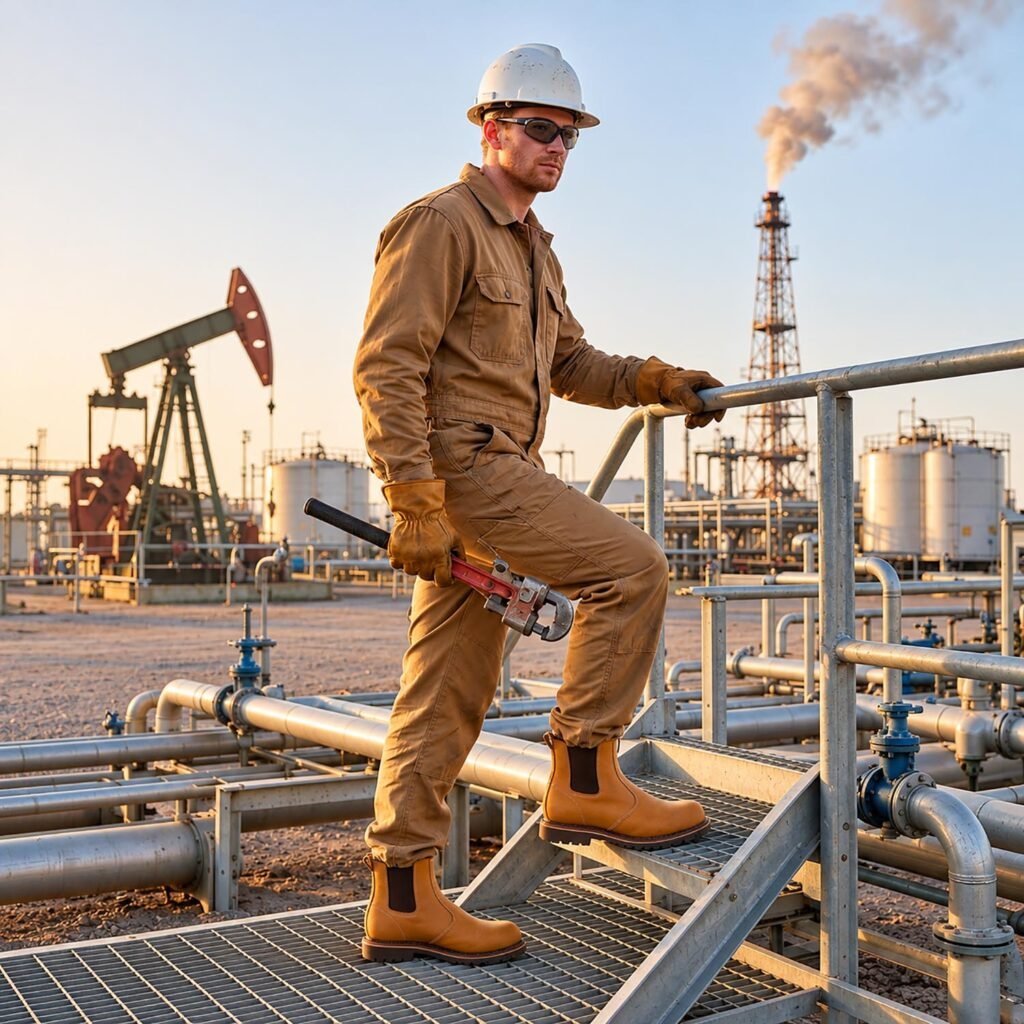
Selecting a safety shoe supplier involves more than comparing quotations. Importers need to verify product compliance, manufacturing capabilities, material quality, production consistency, and delivery reliability before placing an order.
Why Is Supplier Evaluation Important When Importing Safety Shoes?
The quality of a safety shoe order depends heavily on the supplier’s manufacturing capabilities and quality management practices. A competitive quotation does not necessarily mean the supplier can consistently deliver products that meet the required safety standards.
For importers, distributors, wholesalers, and industrial procurement teams, choosing the wrong safety footwear manufacturer can create several problems:
- Certification issues: Products may not meet the safety requirements of the destination market.
- Inconsistent product quality: Different production batches may have variations in fit, materials, construction, or protective performance.
- Delivery delays: Insufficient production capacity or poor scheduling can affect order fulfillment.
- Communication problems: Unclear technical specifications may result in products that do not match the original requirements.
- After-sales disputes: Defects, incorrect specifications, and incomplete documentation can increase procurement costs.
A reliable safety shoe supplier should demonstrate not only the ability to manufacture footwear but also the technical knowledge and quality control procedures required for industrial foot protection.
7 Key Factors to Evaluate a Safety Shoe Supplier
1. Verify Manufacturing Experience and Production Capabilities
The first step is to understand whether the supplier is an actual manufacturer or primarily a trading company.
A manufacturer with established production experience should be able to explain its manufacturing processes, equipment, production capacity, and quality inspection procedures.
Importers should pay attention to the following:
- Years of experience in safety footwear manufacturing.
- Number and types of production lines.
- Monthly or annual production capacity.
- Experience with different safety shoe constructions.
- Ability to manufacture customized designs and specifications.
- Availability of in-house technical and quality control teams.
Manufacturing experience is particularly important when purchasing specialized footwear, such as electrical hazard protection shoes, chemical-resistant footwear, and anti-static safety shoes.
It is also useful to request factory photographs, production videos, and details about the manufacturing workflow. These materials help buyers understand how products are actually made.
2. Check Safety Shoe Certifications and Compliance
Product certification is one of the most important considerations when importing safety footwear.
Different markets have different regulatory requirements. Buyers should identify the applicable standards before selecting a supplier.
For the European market, EN ISO 20345:2022 is an important reference standard for safety footwear.
Under this standard, safety shoes are evaluated according to requirements such as:
- Impact resistance of the protective toe cap.
- Compression resistance.
- Slip resistance.
- Resistance to water penetration and absorption.
- Perforation resistance where applicable.
- Additional protective properties according to the declared classification.
Common classifications include:
| Classification | Main Protection Features |
|---|---|
| SB | Basic safety toe protection |
| S1 | Basic protection with additional requirements, including antistatic properties and energy absorption in the heel |
| S1P | S1 requirements plus penetration resistance |
| S2 | S1 requirements plus water penetration and absorption resistance |
| S3 | S2 requirements plus penetration resistance and cleated outsole requirements |
| S6 | S2 requirements plus water resistance of the whole footwear |
| S7 | S3 requirements plus water resistance of the whole footwear |
The exact requirements and additional markings should always be checked against the applicable standard and product documentation.
For North American buyers, ASTM F2413 is another important safety footwear standard. It covers performance requirements for protective footwear, including impact and compression protection and other specified protective properties.
Importers should request:
- Valid test reports and certification documentation.
- Product models corresponding to the documents.
- Information about the testing laboratory.
- Technical specifications and protective classifications.
- Confirmation that the supplied footwear matches the tested construction.
A certificate alone is not enough. Buyers should verify that the actual product, materials, protective components, and manufacturing specifications correspond to the certified model.
3. Examine Materials and Manufacturing Construction
Material selection directly affects the durability, comfort, weight, and protective performance of safety shoes.
A qualified supplier should be able to explain the materials used in each component and why they are suitable for the intended working environment.
Important components include:
Upper Materials
Common options include genuine leather, microfiber, and other engineered materials.
Different materials offer different levels of flexibility, abrasion resistance, breathability, and water resistance. For example, leather safety shoes are frequently used in construction and general industrial environments, while microfiber options may be suitable for applications requiring easier cleaning and specific material properties.
Protective Toe Caps
Safety shoes may use steel toe caps or non-metallic composite toe caps.
- Steel toe caps provide impact and compression protection and are widely used in industrial footwear.
- Composite toe caps are non-metallic and generally lighter than comparable steel components.
The appropriate choice depends on the applicable safety requirements, workplace conditions, and buyer preferences.
Outsole Materials
Common outsole materials include PU, rubber, and combinations of different materials.
- PU outsoles offer relatively lightweight construction and cushioning.
- Rubber outsoles are commonly selected for heat resistance, abrasion resistance, and demanding industrial environments, depending on their formulation.
- Dual-density PU/Rubber constructions combine different material properties for specific applications.
The outsole should be evaluated according to the required slip resistance, oil resistance, heat resistance, and other relevant performance characteristics.
Manufacturing Construction
Different manufacturing methods also influence product performance and application.
| Construction | Main Characteristics |
|---|---|
| PU/PU Injection | Lightweight construction with cushioning and a dual-density outsole structure |
| PU/Rubber | Combines PU cushioning with a rubber outsole for demanding applications |
| Goodyear Welted | Traditional construction known for its durable assembly structure |
| Rubber Cemented | Uses adhesive bonding to attach the outsole, allowing different footwear designs |
Importers should select the construction according to the intended application rather than choosing based on appearance or price alone.
4. Evaluate Product Quality Control Procedures
Quality control should cover the entire manufacturing process, not just the final inspection.
A reliable safety shoe manufacturer should have inspection procedures at different production stages.
Incoming Material Inspection
Materials such as leather, mesh, lining, toe caps, insoles, and outsole compounds should be checked before entering production.
Material defects can affect the final product even when the manufacturing process is properly controlled.
In-Process Inspection
During production, inspectors should pay attention to:
- Upper stitching quality.
- Toe cap positioning.
- Adhesive application.
- Outsole bonding or injection quality.
- Size consistency.
- Component assembly.
Finished Product Inspection
Before shipment, finished safety shoes should undergo visual and dimensional inspections.
Depending on the product specifications, inspection may include:
- Appearance and workmanship.
- Size and weight consistency.
- Sole bonding condition.
- Protective component positioning.
- Packaging and labeling.
- Required performance testing.
Importers should ask suppliers how inspection records are maintained and whether batch traceability is available.
For larger orders, buyers may also arrange pre-shipment inspections through an independent inspection service.
5. Assess Customization and OEM/ODM Capabilities
Many importers need safety footwear that matches their own product positioning, customer requirements, or distribution channels.
In these cases, customization capabilities are an important part of supplier evaluation.
Common customization options include:
- Upper materials and colors.
- Protective toe cap materials.
- Outsole materials and patterns.
- Logo printing or embossing.
- Insole and lining specifications.
- Packaging and product labeling.
- Customized size ranges.
Before confirming an OEM or ODM order, buyers should request samples and approve the final specifications.
A detailed product specification sheet should record the upper material, lining, toe cap, midsole, outsole, safety classification, colors, sizes, and other important requirements.
This document helps prevent misunderstandings between the buyer and manufacturer during mass production.
6. Compare Pricing, MOQ, and Production Lead Times
Price is an important purchasing factor, but the lowest quotation does not always represent the lowest overall procurement cost.
When comparing safety shoe suppliers, buyers should check whether quotations include the same materials, construction methods, protective components, packaging, and certification requirements.
Important commercial factors include:
Minimum Order Quantity (MOQ)
Different suppliers may have different MOQ requirements depending on the production process, materials, and customization level.
Importers entering a new market may prefer suppliers that can accommodate smaller trial orders before moving to larger quantities.
Production Lead Time
Ask for a realistic production schedule covering sample development, material preparation, bulk manufacturing, inspection, and packaging.
Payment Terms
Clarify the deposit percentage, balance payment conditions, and payment arrangements before signing the purchase agreement.
Shipping Arrangements
Confirm the available shipping methods, estimated transportation time, export documentation, and packaging requirements.
A proper quotation should clearly identify the product specifications and commercial terms. This makes supplier comparisons more accurate and reduces unexpected costs.
7. Review Communication and After-Sales Support
Good communication is often overlooked during supplier selection, but it has a direct impact on the purchasing process.
A capable supplier should be able to answer technical questions clearly and provide timely updates throughout production.
Pay attention to whether the supplier can:
- Explain product specifications accurately.
- Respond to questions about safety standards.
- Provide samples and technical documents.
- Confirm production progress.
- Handle quality complaints.
- Investigate defects and provide corrective actions.
Importers should also clarify the supplier’s procedures for handling defective products, replacement requests, and quality disputes before placing bulk orders.
Common Mistakes Importers Should Avoid
Even experienced buyers can encounter problems when evaluating safety footwear suppliers. Several purchasing mistakes deserve particular attention.
Choosing a Supplier Based Only on Price
A low quotation may involve different materials, simplified construction, or specifications that do not match the buyer’s requirements. Always compare quotations based on equivalent product specifications.
Accepting Certificates Without Verification
Certification documents must correspond to the actual product being purchased. Check model numbers, applicable standards, test reports, and product configurations.
Ignoring Sample Approval
A product photograph cannot fully demonstrate footwear quality. Physical samples allow buyers to examine fit, workmanship, materials, weight, and construction before mass production.
Overlooking Batch Consistency
A satisfactory sample does not automatically mean every production batch will have the same quality. Ask about production inspections, material controls, and batch management.
Failing to Define Product Specifications
Vague descriptions can create disagreements during manufacturing. Every important component and performance requirement should be documented before production begins.
Safety Shoe Supplier Evaluation Checklist for Importers
Before selecting a supplier, importers can use the following checklist to assess its overall suitability.
| Evaluation Item | What to Verify |
|---|---|
| Manufacturing experience | Production history and technical expertise |
| Production capacity | Equipment, production lines, and output |
| Certifications | Applicable standards and valid test documentation |
| Materials | Upper, toe cap, midsole, and outsole specifications |
| Construction | PU/PU, PU/Rubber, Goodyear Welted, or Rubber Cemented |
| Quality control | Incoming, in-process, and finished product inspections |
| Customization | OEM/ODM and private-label capabilities |
| Samples | Physical samples and specification confirmation |
| Commercial terms | MOQ, pricing, payment, and lead time |
| After-sales service | Complaint handling and corrective actions |
A supplier that meets these requirements is generally better prepared to support long-term purchasing arrangements.
How Can Importers Make the Final Supplier Decision?
The most suitable safety shoe supplier is not necessarily the one offering the lowest price or the largest product catalog. It is the manufacturer whose production capabilities, technical documentation, product quality, and commercial conditions match the buyer’s actual requirements.
Before placing a large order, importers should follow a practical evaluation process:
- Define the target market and applicable safety standards.
- Identify the required footwear types and protective features.
- Shortlist manufacturers with relevant production experience.
- Verify certifications and technical documentation.
- Request physical samples and review product quality.
- Compare quotations using identical product specifications.
- Confirm quality inspection procedures and delivery arrangements.
- Start with a manageable order before establishing long-term cooperation.
In short, evaluating a safety shoe supplier requires checking manufacturing experience, certification compliance, material quality, production consistency, customization capabilities, pricing, and after-sales support. Importers who verify these factors before ordering can make more informed purchasing decisions and reduce avoidable supply chain risks.
Written by Hong Gu Safety Shoes Technical Team, this content is compiled from practical production, long-term field applications, and rigorous testing results.
Shan Dong Hong Gu Shoes Industrial Co., Ltd. is a leading safety footwear manufacturer based in China, specializing in industrial foot protection with over 20 years of manufacturing expertise.
Products are fully certified under European standards (CE EN ISO 20345:2022), offering a full range of manufacturing processes including PU/PU Injection, PU/Rubber, Goodyear Welted, and Rubber Cemented constructions.