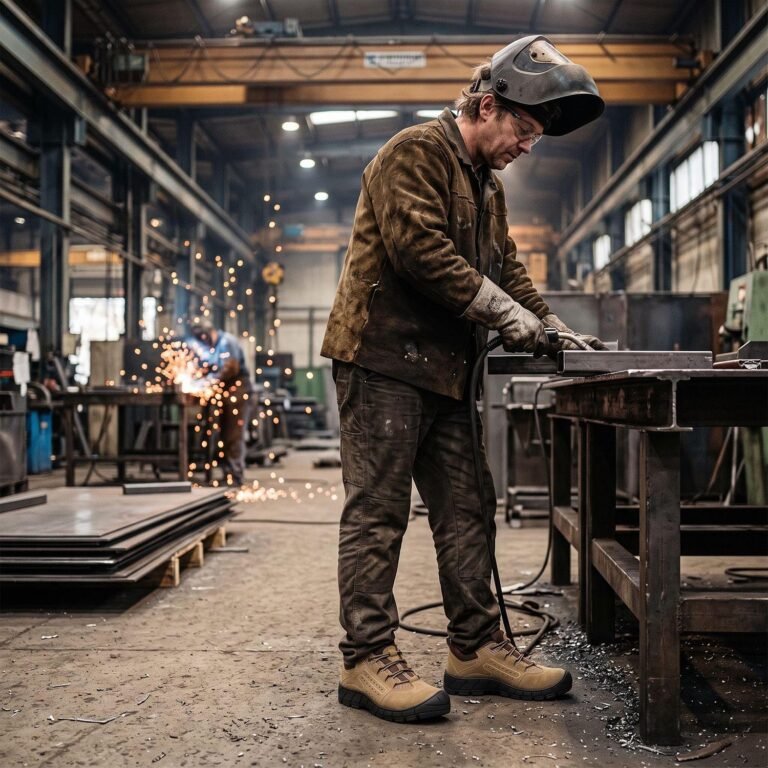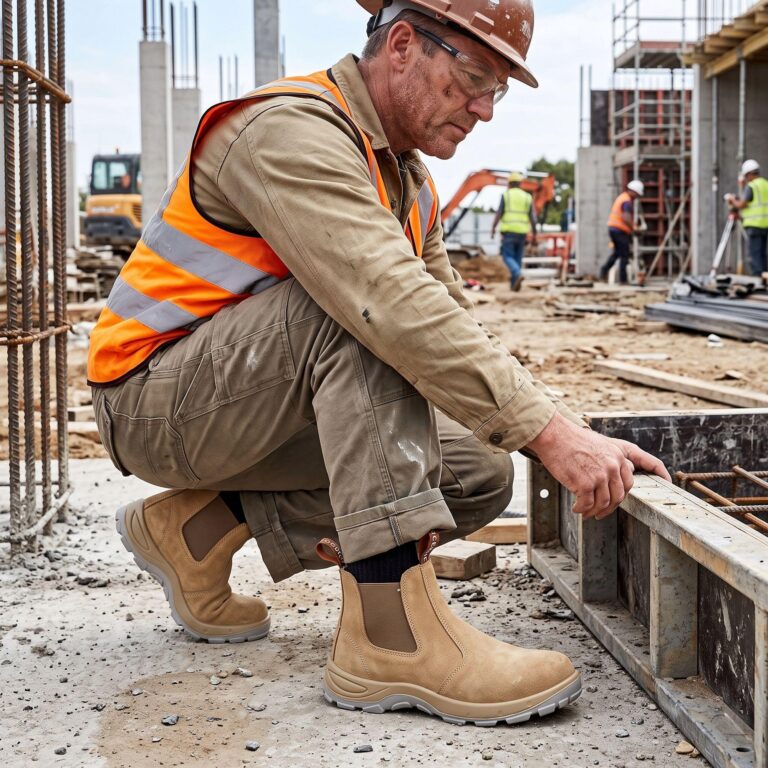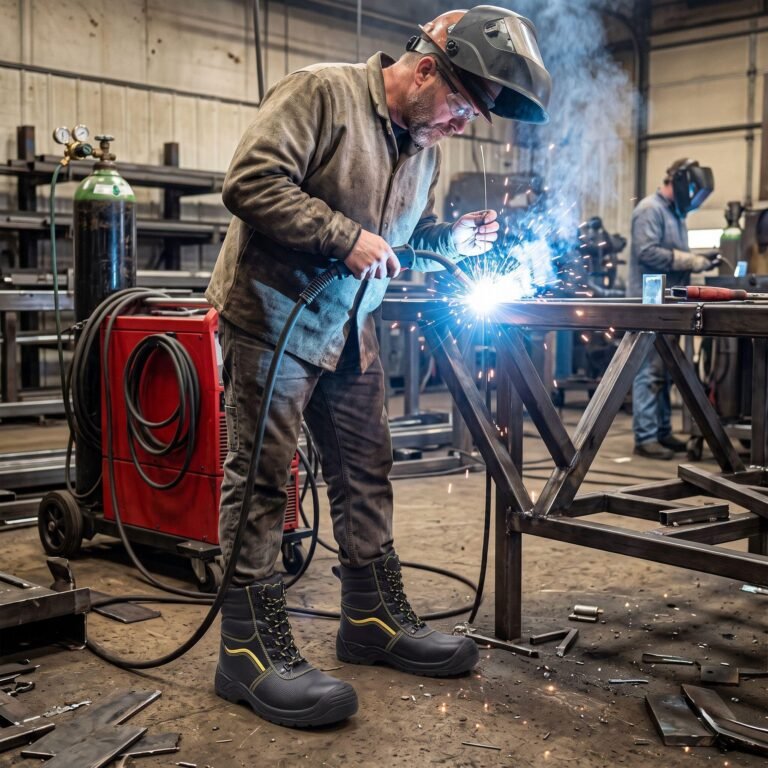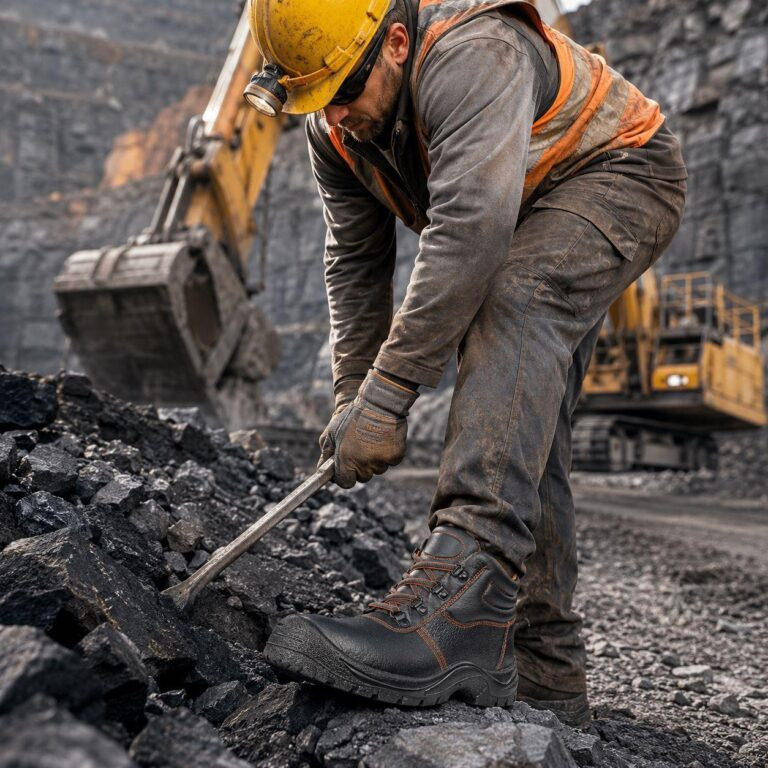
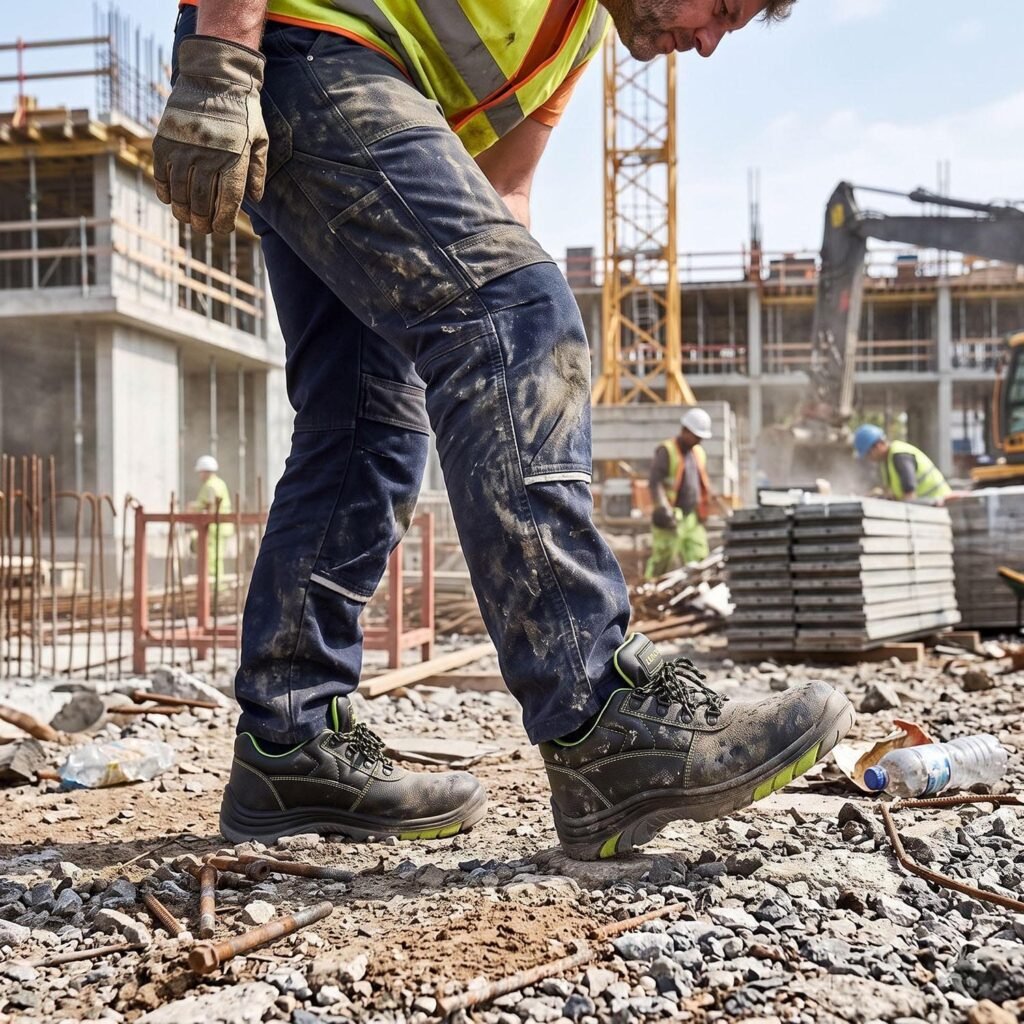
When choosing safety footwear, safety shoe materials deserve attention beyond the toe cap. The upper, sole, lining, insole, and protective components all affect durability, comfort, breathability, slip resistance, and suitability for different working environments.
Why Safety Shoe Materials Matter
A safety shoe combines several materials, and each one serves a specific purpose. Manufacturers select these materials according to the protection, comfort, and working conditions the finished footwear needs to handle.
The upper material protects the foot from external conditions while influencing flexibility and breathability. Common choices include leather, microfiber, textile, and synthetic materials.
The sole material affects grip, abrasion resistance, flexibility, cushioning, and resistance to certain environmental conditions. Common constructions include PU, rubber, and PU/rubber combinations.
The toe cap provides protection against impact and compression. Manufacturers may choose steel, aluminum, fiberglass, or other composite materials depending on the required design and performance.
What Materials Are Used to Make Safety Shoes?
1. Leather
Leather remains a common choice for industrial safety footwear because it offers good abrasion resistance, durability, and structural support.
Full-grain leather and treated leather can serve different applications. Workers in construction, manufacturing, logistics, and general industrial environments often wear leather safety shoes.
Leather can provide good protection, but it may offer less airflow than lightweight textile materials. Proper lining and ventilation can help improve wearing comfort.
2. Microfiber
Microfiber gives manufacturers a lightweight synthetic option with a consistent surface. It can provide good abrasion resistance and makes routine cleaning relatively simple.
Manufacturers can also develop microfiber materials with different surface properties. This makes them suitable for industrial, warehouse, service, and other working environments.
3. Textile and Mesh
Textile materials can reduce footwear weight while improving flexibility. Mesh materials can also increase airflow around the foot, which helps workers who spend long periods walking or working in warm conditions.
However, highly breathable materials may not suit environments with frequent exposure to liquids, mud, or harsh external conditions. Buyers should therefore consider the complete working environment before choosing a breathable upper.
4. PU Soles
Polyurethane, commonly known as PU, plays an important role in many safety shoe soles. PU can combine low weight, cushioning, flexibility, and abrasion resistance.
A PU/PU sole uses different PU layers to achieve specific performance characteristics. This construction works well for many warehouse, logistics, manufacturing, and general industrial applications.
5. Rubber Soles
Rubber provides strong abrasion resistance and can deliver reliable traction when manufacturers match the rubber compound with an appropriate tread pattern.
Workers in demanding industrial environments may benefit from rubber outsoles because of their durability and grip. A PU/rubber construction can combine PU’s cushioning and lower weight with rubber’s durability and other performance characteristics.
6. Toe Cap Materials
The toe cap protects the toes from mechanical hazards such as impact and compression.
Steel toe caps offer strong mechanical protection, although they usually add more weight and conduct heat more readily than non-metallic alternatives.
Aluminum toe caps can reduce overall weight while maintaining mechanical protection.
Composite and fiberglass toe caps contain no metal and can provide lower weight and lower thermal conductivity. They can also suit workplaces that prefer non-metallic footwear.
The correct toe cap depends on the required safety standard and workplace hazards rather than material preference alone.
7. Linings and Insoles
The lining contacts the foot directly, so its material affects moisture management, comfort, and durability. Textile fabrics and synthetic materials are common choices for this part of the shoe.
The insole also contributes to daily comfort. Foam, textile, and other cushioning materials can help distribute pressure during long periods of standing or walking.
How Should Safety Shoe Materials Be Selected?
Start with the workplace conditions rather than the appearance of the footwear.
For warehouse and logistics work, buyers may prioritize lightweight uppers, breathable linings, cushioned insoles, and slip-resistant outsoles.
Construction and heavy industrial applications often require greater attention to durability, toe protection, outsole performance, and resistance to workplace hazards.
In wet environments, buyers should examine water-resistant or waterproof construction together with suitable outsole performance.
For hot working areas, check the outsole’s heat-related performance against the requirements that apply to the workplace.
Workplaces with electrical hazards or ESD requirements need additional consideration. A non-metallic toe cap alone does not make a safety shoe suitable for electrical protection or electrostatic control.
Common Mistakes When Choosing Safety Shoe Materials
Some buyers focus almost entirely on the toe cap and overlook the rest of the footwear construction. Toe protection matters, but the upper, outsole, lining, insole, and overall construction also influence footwear performance.
Another common mistake involves choosing the lightest material without considering protection. Lower weight can improve comfort, but the shoe still needs to handle the hazards found in the workplace.
Buyers should also distinguish between a material specification and product certification. A specific material does not automatically make the finished shoe compliant with a particular safety requirement.
Manufacturers must evaluate the complete footwear design, manufacturing process, and test results. Procurement teams should therefore review the relevant technical documents and certification before placing an order.
EN ISO 20345:2022 defines requirements for safety footwear, including protection against mechanical risks and other applicable performance characteristics. Buyers should also check additional requirements according to the hazards present in their workplace.
Key Takeaway: What Materials Are Used in Safety Shoes?
Safety shoes typically combine leather, microfiber, textile, or synthetic materials for the upper; PU, rubber, or PU/rubber for the sole; steel, aluminum, fiberglass, or composite materials for the toe cap; and specialized materials for the lining and insole.
The right material combination depends on the required protection, workplace conditions, durability, comfort, and applicable safety standards.
For procurement teams and safety footwear buyers, evaluating the complete shoe matters more than focusing on one material. The finished product should provide the required protection and meet the relevant certification requirements for its intended application.
Written by Hong Gu Safety Shoes Technical Team, this content is compiled from practical production, long-term field applications, and rigorous testing results.
Shan Dong Hong Gu Shoes Industrial Co., Ltd. is a leading safety footwear manufacturer based in China, specializing in industrial foot protection with over 20 years of manufacturing expertise.
Products are fully certified under European standards (CE EN ISO 20345:2022), offering a full range of manufacturing processes including PU/PU Injection, PU/Rubber, Goodyear Welted, and Rubber Cemented constructions.