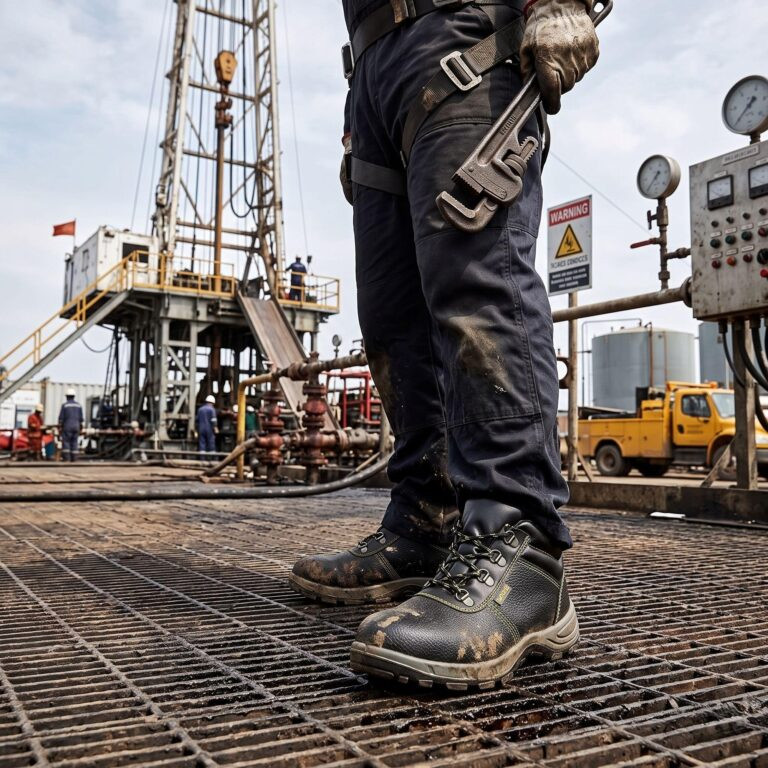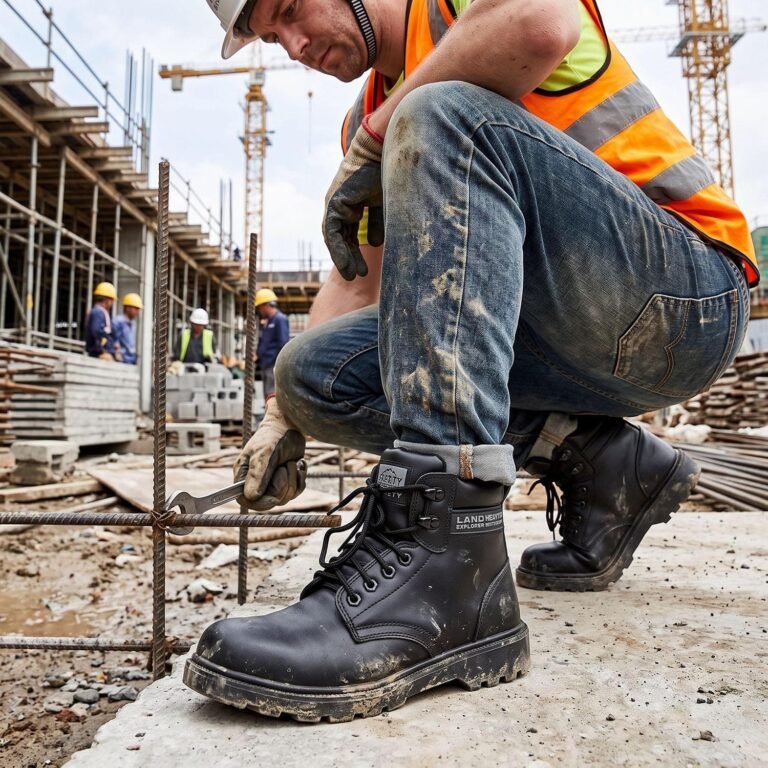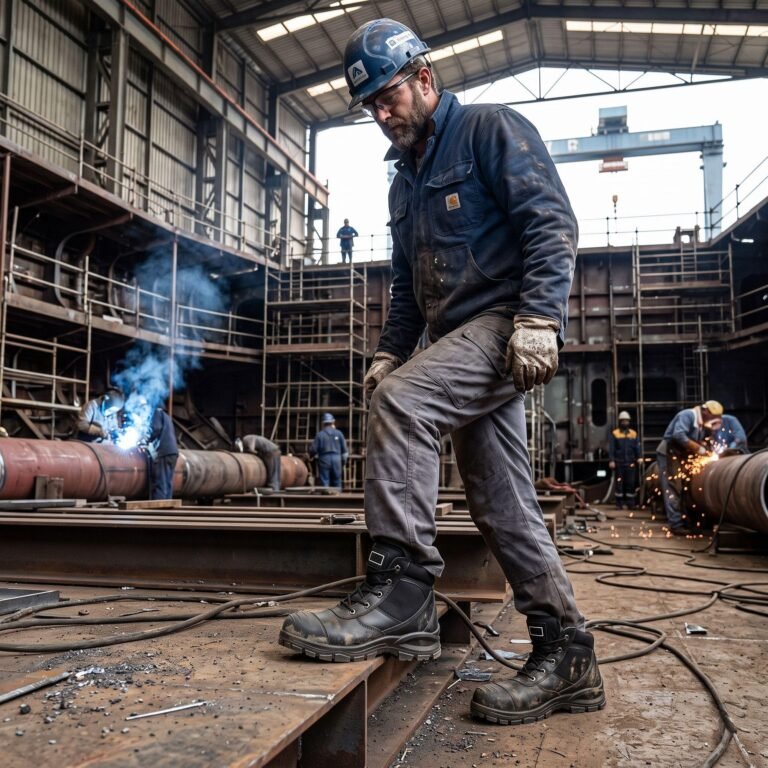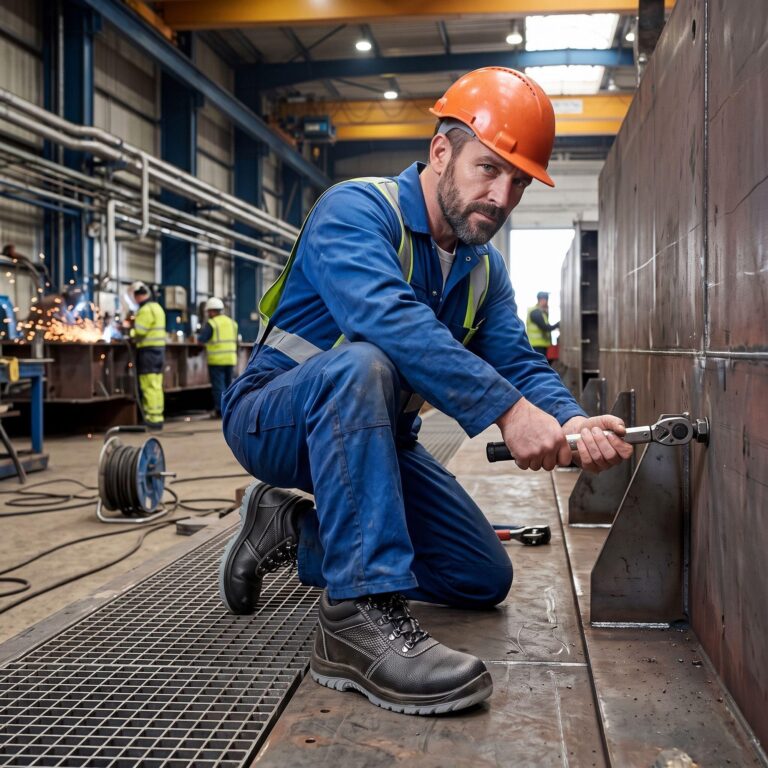

Wet working environments create a difficult combination: workers need protection from impact, compression, and slips while also keeping their feet dry. Choosing waterproof safety shoes therefore requires more than checking the word “waterproof” on a product page. The construction, materials, outsole, protective features, and relevant test standards all matter.
Why Waterproof Safety Shoes Matter in Wet Work Environments
Water-resistant and waterproof safety footwear are often treated as the same thing, but they serve different needs. A shoe may resist light splashes while still allowing water to enter during prolonged exposure to rain, standing water, or wet working conditions.
For workers in construction, logistics, agriculture, outdoor maintenance, industrial production, and other wet environments, footwear should match the actual exposure level. A breathable safety shoe with basic water resistance may be suitable for occasional rain, while workers who spend hours on wet surfaces may need footwear with stronger water protection.
Safety footwear also needs to address hazards beyond water. ISO 20345:2021 covers general-purpose safety footwear and includes requirements related to mechanical risks, slip resistance, thermal risks, and ergonomic performance. The standard remains the current published ISO 20345 edition, with Amendment 1 published in 2024.
This means waterproof performance should be considered as one part of overall footwear protection, rather than the only selection criterion.
What Makes a Safety Shoe Waterproof?
The waterproof performance of safety footwear usually comes from a combination of material selection, upper construction, seams, tongue design, and outsole attachment.
1. Upper material
Leather, coated leather, synthetic materials, and waterproof membranes can provide different levels of water protection.
Full-grain or treated leather can offer good durability and resistance to moisture when properly processed. Synthetic uppers can also provide water resistance and may be easier to clean in some working environments.
The important point is that the material specification alone does not prove that the complete shoe is waterproof. The finished footwear needs to be assessed as a complete construction.
2. Seam and tongue construction
Water can enter through stitching, tongue openings, eyelets, and other construction points even when the upper material itself has good water resistance.
For wet environments, manufacturers may use sealed or specially designed seams, gusseted tongues, waterproof components, and construction methods that reduce potential water-entry points.
3. Sole attachment
The connection between the upper and outsole also matters. PU/PU injection, PU/rubber construction, Goodyear welted construction, and rubber cemented construction each have different characteristics.
For example, direct-injection construction can create a strong connection between the upper and outsole and is widely used for industrial safety footwear. The appropriate construction depends on the required durability, flexibility, chemical resistance, working environment, and production requirements.
4. Water-related testing
Buyers should check the actual technical specification and test documentation rather than relying only on marketing terms such as “waterproof safety shoes” or “water-resistant work shoes.”
ISO 20345 includes additional requirements for safety footwear, while related footwear standards and test methods define how particular properties are assessed. ISO 20344:2021, for example, provides test methods for footwear used with PPE footwear standards.
How to Choose the Best Waterproof Safety Shoes
There is no single waterproof safety shoe that fits every working environment. A more practical approach is to select the protection according to the hazards workers actually face.
For outdoor construction
Construction workers may encounter rain, mud, uneven surfaces, falling objects, and sharp materials.
A suitable model may require:
- Protective toe cap
- Slip-resistant outsole
- Water-resistant or waterproof upper
- Good abrasion resistance
- Perforation resistance where required
- Stable heel and ankle support
If sharp-object penetration is a significant risk, the footwear specification should also identify an appropriate perforation-resistant insert. ISO 22568-3 and ISO 22568-4 cover metallic and non-metallic perforation-resistant inserts used in protective footwear.
For warehouses and logistics
Warehouse workers may spend long hours walking on concrete floors rather than standing in deep water. In this situation, waterproofing should be balanced with comfort, flexibility, slip resistance, and breathability.
A lightweight safety shoe with suitable water protection can be more practical than a heavy waterproof boot if workers mainly deal with occasional spills and wet loading areas.
For agriculture and outdoor maintenance
Agricultural and outdoor workers can face mud, rain, wet grass, and standing water for extended periods.
Here, water protection becomes more important. A higher-cut waterproof safety boot may provide better coverage than a low-cut safety shoe, especially when water and mud can reach above the ankle.
For industrial production
Factories may involve water, oils, chemicals, heat, or other specific hazards. Waterproof performance should not be considered separately from these risks.
For example, an outsole designed for wet floors may need suitable slip resistance, while chemical-handling environments require footwear specifically tested for the relevant chemical hazards. ISO 20345 itself notes that certain special risks are addressed by complementary job-related standards.
Waterproof Safety Shoes: What Should Buyers Check?
When evaluating waterproof safety shoes for employees or industrial procurement, check the following points:
| Specification | Why It Matters |
|---|---|
| Water protection | Determines suitability for wet working conditions |
| Safety toe cap | Protects toes from impact and compression |
| Slip resistance | Helps reduce slipping on wet floors |
| Upper material | Influences durability, flexibility, and water resistance |
| Outsole material | Affects grip, wear resistance, and working-environment suitability |
| Construction method | Influences durability and the connection between upper and sole |
| Perforation resistance | Important where sharp objects may penetrate the sole |
| Fit and comfort | Important for long working hours |
| Test documentation | Helps verify that claimed protective properties have been assessed |
For procurement, it is also useful to request technical datasheets, conformity documentation, test reports, size information, material specifications, and care instructions before placing a large order.
Common Mistakes When Buying Waterproof Safety Shoes
One common mistake is assuming that water-resistant means completely waterproof. These terms should not automatically be treated as interchangeable.
Another mistake is focusing only on the upper material. A waterproof upper cannot prevent water entry if other parts of the footwear construction are poorly suited to wet conditions.
It is also easy to overlook slip resistance. Wet floors can create a significant hazard, so waterproofing should not replace attention to outsole performance.
Finally, buyers should avoid selecting footwear only by appearance or price. A model that works well for occasional outdoor use may not be appropriate for workers exposed to standing water every day.
The protective features should always be matched to the actual workplace hazards and the applicable technical requirements.
What Are the Best Waterproof Safety Shoes?
The best waterproof safety shoes are those that combine appropriate water protection with the safety features required for the intended working environment. For wet industrial and outdoor applications, buyers should consider waterproof or water-resistant performance, toe protection, slip resistance, outsole construction, upper materials, comfort, and relevant certification or test documentation together.
For European-market safety footwear, EN ISO 20345:2022 is commonly referenced as the European implementation of the ISO 20345:2021 safety-footwear standard. However, the exact protection level and markings should be verified against the applicable conformity documentation rather than inferred from the product name alone. ISO 20345:2021 covers general-purpose safety footwear and includes both basic and additional requirements.
For manufacturers and industrial buyers, the practical question is therefore not simply “Which waterproof safety shoe is best?” but “Which waterproof safety shoe specification matches the hazards, working conditions, and compliance requirements of the application?”
Written by Hong Gu Safety Shoes Technical Team, this content is compiled from practical production, long-term field applications, and rigorous testing results.
Shan Dong Hong Gu Shoes Industrial Co., Ltd. is a leading safety footwear manufacturer based in China, specializing in industrial foot protection with over 20 years of manufacturing expertise.
Products are fully certified under European standards (CE EN ISO 20345:2022), offering a full range of manufacturing processes including PU/PU Injection, PU/Rubber, Goodyear Welted, and Rubber Cemented constructions.