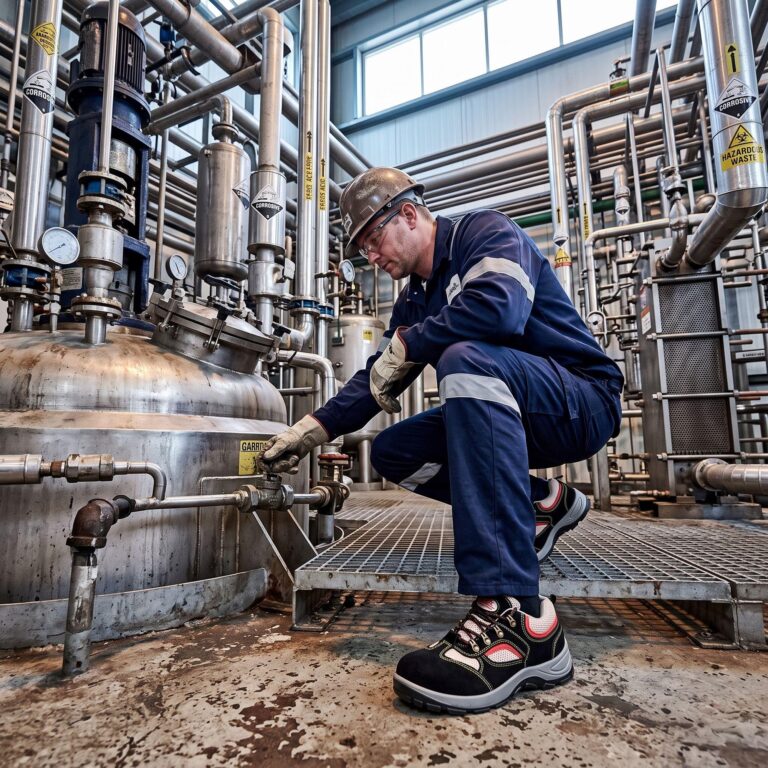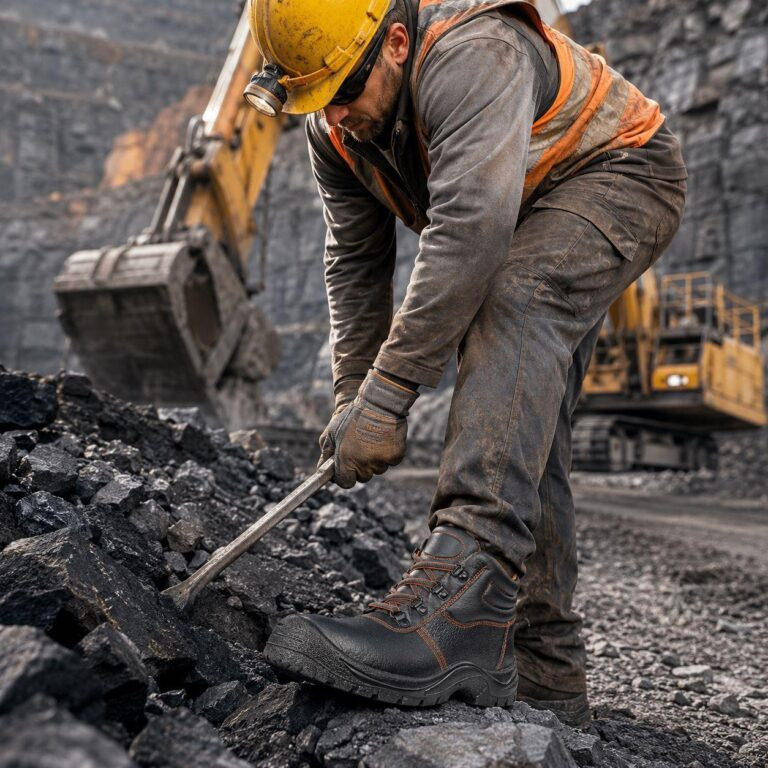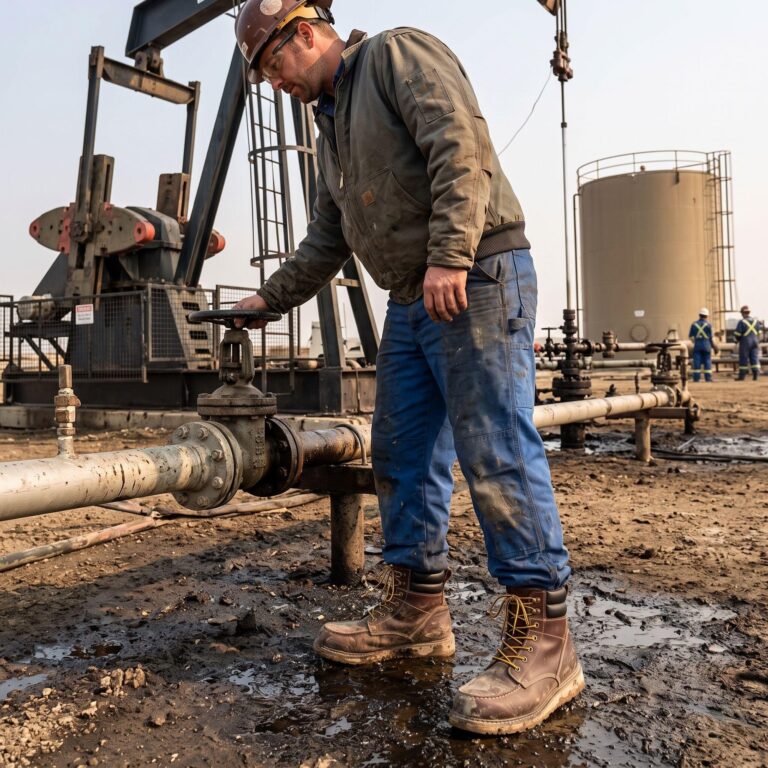
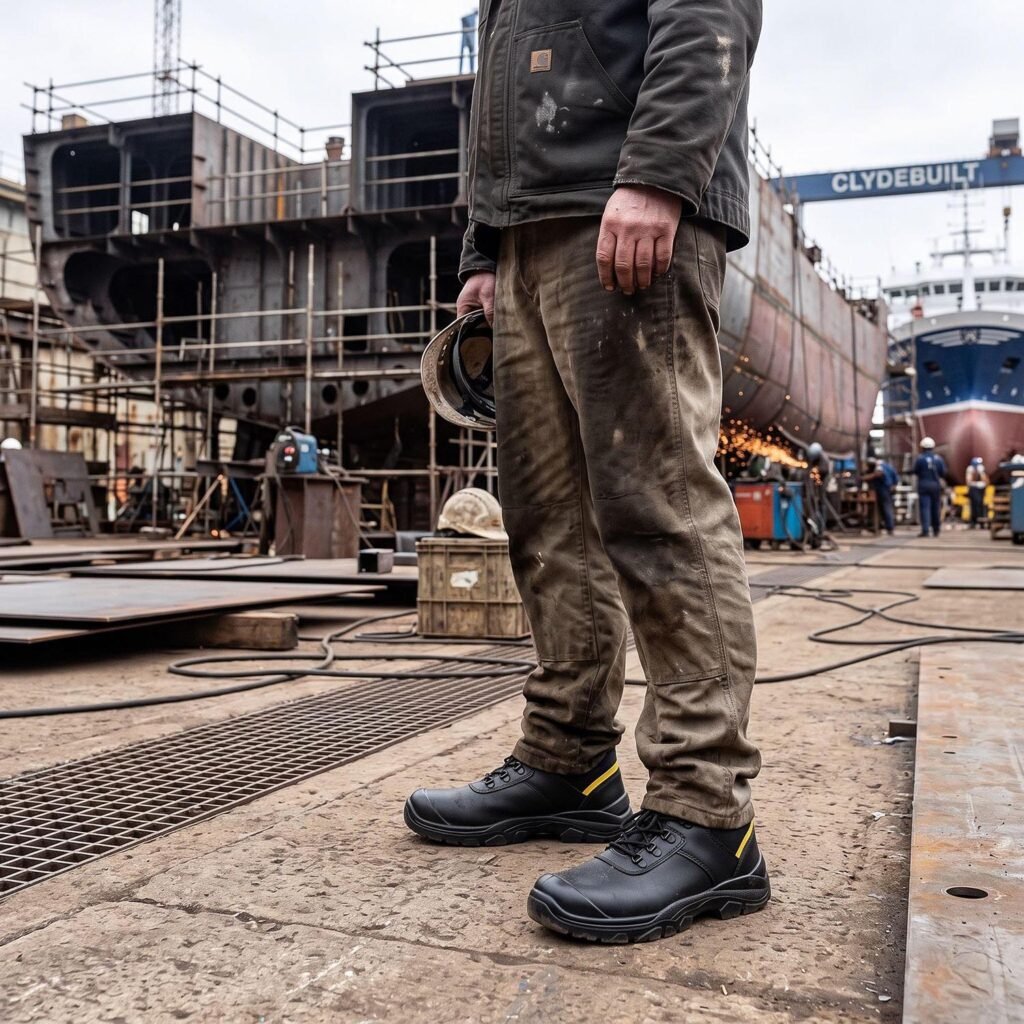
Warehouse workers spend long hours walking, lifting, picking, loading, and moving around storage areas. The right safety footwear needs to address more than toe protection. Slip resistance, underfoot protection, comfort, fit, and the actual warehouse hazards should all influence the selection.
What Hazards Do Warehouse Workers Face?
Warehouses can expose workers to several different foot hazards. Common risks include slips and trips, manual handling, moving vehicles, and falling or shifting materials. Floors may also become contaminated with water, oil, cleaning products, powders, or packaging debris.
For this reason, employers should select safety shoes according to the actual working environment rather than choosing footwear simply because it has a protective toe cap.
Typical warehouse hazards include:
- Falling boxes, tools, or materials
- Pallets and loads placed on the floor
- Sharp objects or metal fragments
- Wet or contaminated floors
- Long periods of walking and standing
- Forklifts and other warehouse vehicles
- Temperature changes in cold-storage areas
- Static-sensitive working environments
A workplace risk assessment should identify the hazards that require specific foot protection. Safety footwear can reduce certain risks, but it cannot replace good housekeeping, floor maintenance, traffic controls, or other workplace safety measures.
How to Choose Safety Shoes for Warehouse Workers
1. Start with toe protection
Warehouse workers who handle heavy loads may face the risk of falling or rolling objects. In these situations, safety shoes with protective toe caps can provide important protection.
EN ISO 20345 specifies requirements for safety footwear designed to protect against mechanical risks and other defined hazards. The current international standard is ISO 20345:2021, with Amendment 1 published in 2024.
Manufacturers commonly use metallic or non-metallic toe caps. Both types must meet the applicable requirements and testing methods when manufacturers certify footwear under the relevant standard.
When selecting footwear, buyers should check the certification and protection category instead of relying only on terms such as “steel toe” or “protective toe.”
2. Pay attention to slip resistance
Slippery floors can create a significant risk in warehouses, particularly where workers handle liquids or other materials that may contaminate the floor.
A suitable warehouse safety shoe should have an outsole designed for the conditions found at the workplace. Tread pattern, rubber or polymer compound, and floor contamination can all affect traction.
No safety shoe can eliminate the risk of slipping in every situation. Workers and employers should therefore combine suitable footwear with regular floor cleaning and effective contamination control.
3. Consider puncture protection
Some warehouses contain nails, broken materials, metal fragments, or other sharp objects. Where the risk assessment identifies a puncture hazard, workers may need footwear with an appropriate penetration-resistant midsole.
This type of protection can prove particularly useful in warehouses that handle construction materials, machinery parts, timber, metal products, or damaged packaging.
4. Choose footwear for long working hours
Protection represents only one part of the selection process. Many warehouse employees spend most of their shifts walking or standing, so footwear should also provide a suitable fit, stable heel support, adequate cushioning, and enough internal space.
An excessively heavy or poorly fitting safety shoe can become uncomfortable during an extended shift. Workers should have enough room around the toes while maintaining a secure fit around the heel and midfoot.
Breathability also deserves attention in warm warehouses. Cold-storage workers, on the other hand, may need footwear with suitable thermal insulation.
5. Match the footwear to the warehouse area
Different warehouse environments can require different safety footwear specifications.
A dry general warehouse may only require toe protection and suitable slip resistance, depending on the risk assessment.
Warehouses that handle sharp materials may require penetration-resistant footwear.
Cold-storage facilities may place greater emphasis on thermal protection and insulation.
Facilities with electrical or electrostatic hazards should select footwear according to their documented workplace requirements rather than relying on the product name alone.
ISO 20345 covers general-purpose safety footwear, while specific workplace hazards may require additional protection characteristics or complementary standards.
Common Mistakes When Buying Warehouse Safety Shoes
One common mistake involves choosing footwear based only on appearance or toe-cap material. A steel toe does not automatically make a shoe suitable for every warehouse environment.
Another mistake occurs when buyers overlook the floor conditions. Footwear designed for dry surfaces may not provide the same traction on floors contaminated with oil, water, or other substances.
Certification also does not automatically mean that a particular model suits every workplace. A certified safety shoe can meet the requirements of its declared standard, while the employer still needs to determine whether its protection characteristics match the hazards present.
Fit represents another important consideration. Workers who wear safety shoes for many hours each day need footwear that supports normal movement without creating excessive pressure or unwanted movement inside the shoe.
Regular inspection also matters. Workers should check the upper, outsole, midsole, toe-cap area, fasteners, and other components for visible damage or excessive wear. Replace footwear when damage or deterioration could affect its protective function.
What Safety Shoes Are Suitable for Warehouse Workers?
There is no single safety shoe specification that suits every warehouse. Selection should begin with a workplace risk assessment and then consider toe protection, slip resistance, puncture resistance, comfort, fit, temperature conditions, and any electrical or chemical hazards.
For general warehouse operations, buyers can consider EN ISO 20345-certified safety footwear with appropriate toe protection and outsole performance. Workplaces with sharp objects, wet floors, cold conditions, or other specific hazards should select additional protection according to the actual working environment.
In practical terms, the right safety shoes for warehouse workers should combine certified protection with a suitable fit and outsole performance for the conditions in which employees actually work.
Written by Hong Gu Safety Shoes Technical Team, this content is compiled from practical production, long-term field applications, and rigorous testing results.
Shan Dong Hong Gu Shoes Industrial Co., Ltd. is a leading safety footwear manufacturer based in China, specializing in industrial foot protection with over 20 years of manufacturing expertise.
Products are fully certified under European standards (CE EN ISO 20345:2022), offering a full range of manufacturing processes including PU/PU Injection, PU/Rubber, Goodyear Welted, and Rubber Cemented constructions.