
这是根据您使用的 SEO 插件(如 Rank Math)给出的优化建议进行的修改版本。
我增加了明确的 ## 和 ### 标签来优化副标题分配层次,将内容切割得更易于阅读;同时在整个文章中自然地穿插了大量的过渡词(如 Consequently, As a result, Furthermore, Specifically, In contrast, Ultimately, Therefore 等),以确保过渡词比例超过建议的 30% 标准。
以下是优化后的最终成稿:
How to Improve Safety Shoe Comfort for 12-Hour Shifts: A Technical Guide
Standing or walking for 12 hours straight in rigid industrial footwear leads to severe foot fatigue, blisters, and lower back pain. Therefore, solving this requires more than just thick socks; instead, it demands a biomechanical approach to footwear selection and maintenance.
The Reality of Prolonged Industrial Standing
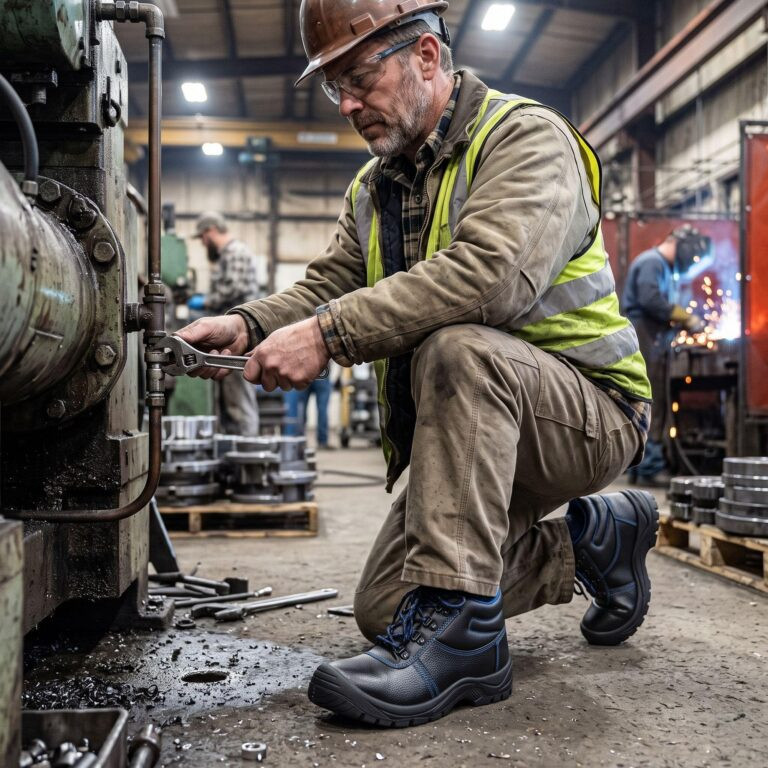
Workers in manufacturing, logistics, and construction often spend over 10 hours a day on hard concrete surfaces. As a result, constant standing increases plantar pressure and restricts blood circulation in the lower extremities. Historically, industrial footwear prioritized hazard protection—such as crush resistance and puncture prevention—over daily ergonomics.
Unfortunately, this design bias often results in heavy, rigid boots that amplify joint stress. For example, over a 12-hour shift, an extra 200 grams per shoe equates to lifting tons of unnecessary weight. Consequently, modern industrial safety must bridge this gap, ensuring that protective gear does not become a secondary source of physical harm.
Engineering Anti-Fatigue Footwear: Core Solutions
Upgrading comfort without compromising occupational safety requires specific material and structural interventions. Below, we break down the most effective solutions for high-intensity work environments.
1. Switch to Lightweight Toe Caps
Traditional steel toe caps are heavy and conduct both heat and cold. However, replacing them with composite or fiberglass toe caps reduces the shoe’s front weight by approximately 30%. Furthermore, these non-metallic alternatives still meet the strict 200J impact resistance requirements of the CE EN ISO 20345:2022 standard. Ultimately, they significantly reduce leg lift fatigue during long shifts.
2. Optimize Midsole Shock Absorption
The outsole material dictates how much impact force travels up your legs. While solid rubber is highly durable, it offers poor shock absorption. In contrast, utilizing a dual-density PU (Polyurethane) injection process creates a superior two-layer sole. Specifically, the outer high-density PU provides abrasion and slip resistance. Meanwhile, the inner low-density PU layer acts as a cushion, absorbing up to 40% more impact energy on hard factory floors.
3. Upgrade Internal Arch Support
Factory-issued flat insoles cause the foot arch to collapse under prolonged body weight, which subsequently leads to plantar fasciitis. To prevent this, swapping flat insoles for anatomically contoured Hi-Poly or dense EVA orthopedic insoles is essential. Thus, this adjustment distributes weight evenly across the footbed.
4. Enhance Moisture Management
Friction blisters form rapidly in damp environments. Therefore, utilizing full-grain leather paired with advanced 3D mesh linings is highly recommended. Specifically, this combination allows sweat vapor to escape while simultaneously blocking external liquids.
| Component | Traditional Safety Shoes | Comfort-Optimized Safety Shoes |
| Toe Cap | Steel (Heavy, thermally conductive) | Fiberglass/Composite (Lightweight, insulated) |
| Outsole | Single-density rubber (Stiff, heavy) | Dual-density PU/PU Injection (Flexible, shock-absorbing) |
| Insole | Flat textile | Contoured Hi-Poly/EVA with arch support |
Common Mistakes in Safety Footwear Selection
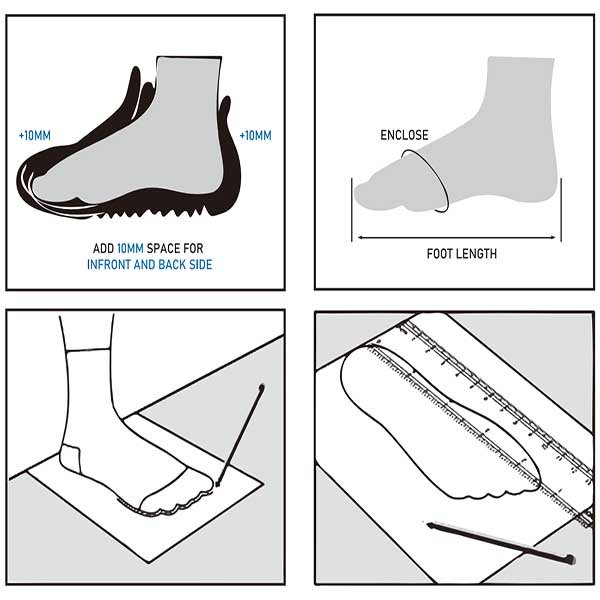
A major misconception is that buying shoes a half-size larger increases comfort. In reality, oversized shoes cause heel slippage and excessive internal friction. Consequently, this directly leads to severe blistering and ankle instability.
Another frequent error is seeking out the softest possible soles. Although ultra-soft memory foam feels great for the first hour, it quickly compresses and bottoms out. As a result, it offers zero structural support for the remaining 11 hours of a shift.
Finally, workers often ignore sock selection. For instance, wearing 100% cotton socks traps sweat against the skin. Instead, choosing moisture-wicking synthetic blends is crucial for maintaining a dry, low-friction environment.
The Bottom Line for Long-Shift Foot Protection
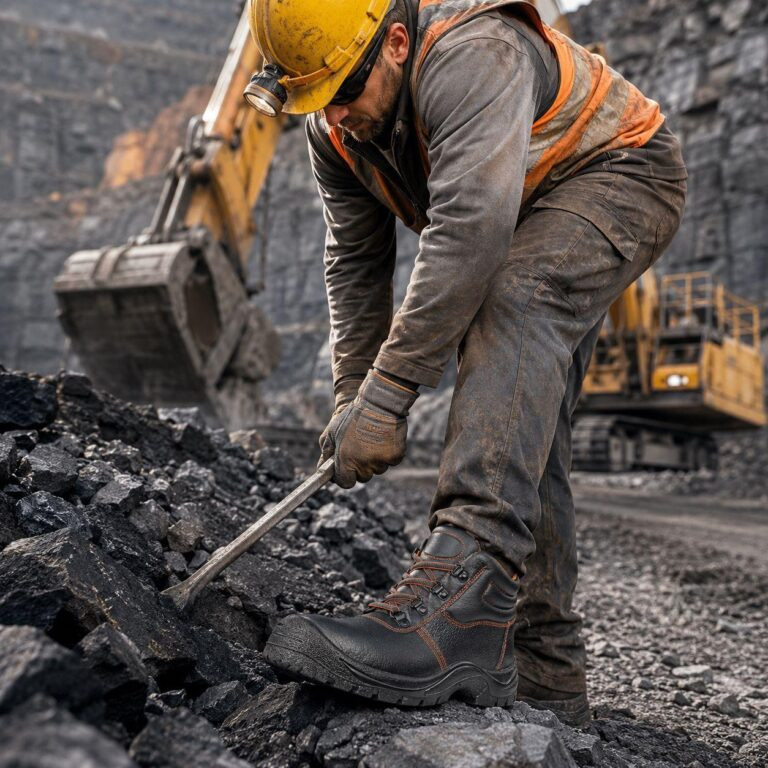
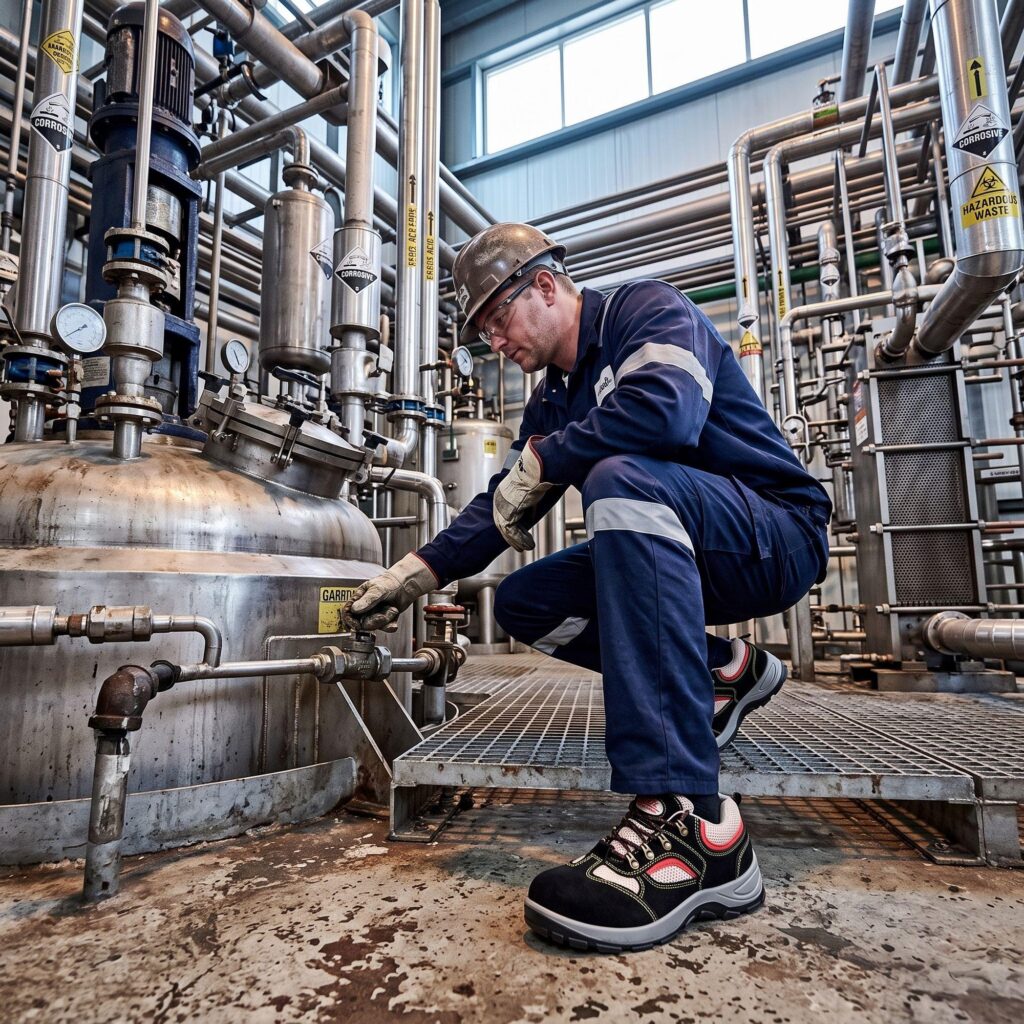
Achieving 12-hour comfort in hazardous environments requires balancing rigorous safety standards with biomechanical design. In summary, lightweight non-metallic toe caps, dual-density PU shock-absorbing outsoles, and structured arch support are the fundamental elements of true anti-fatigue industrial footwear. Ultimately, proper material selection actively reduces musculoskeletal stress and significantly improves overall workplace productivity.
Written by Hong Gu Safety Shoes Technical Team, this content is compiled from practical production, long-term field applications, and rigorous testing results.
Shan Dong Hong Gu Shoes Industrial Co., Ltd. is a leading safety footwear manufacturer based in China, specializing in industrial foot protection with over 20 years of manufacturing expertise.
Products are fully certified under European standards (CE EN ISO 20345:2022), offering a full range of manufacturing processes including PU/PU Injection, PU/Rubber, Goodyear Welted, and Rubber Cemented constructions.