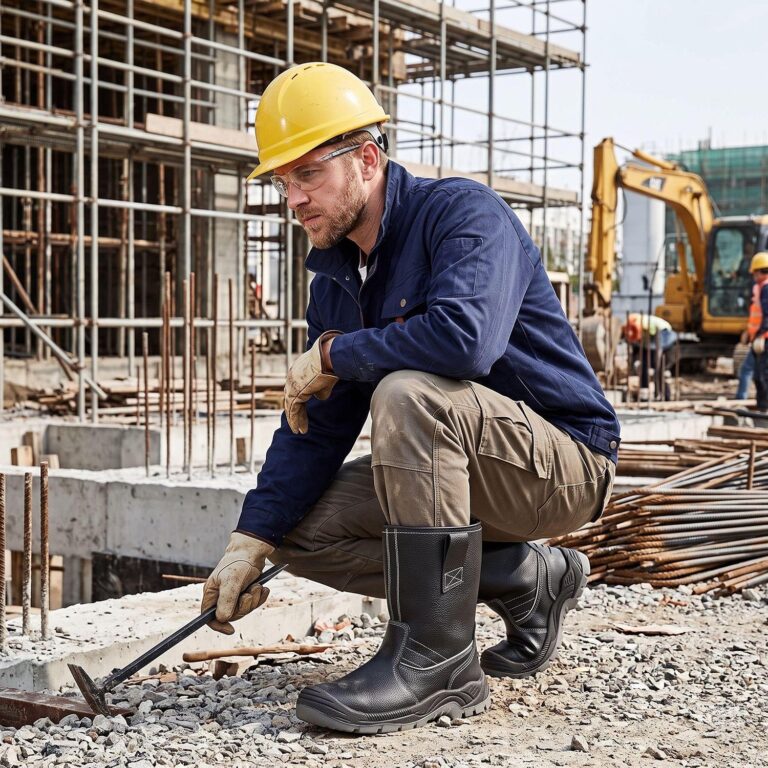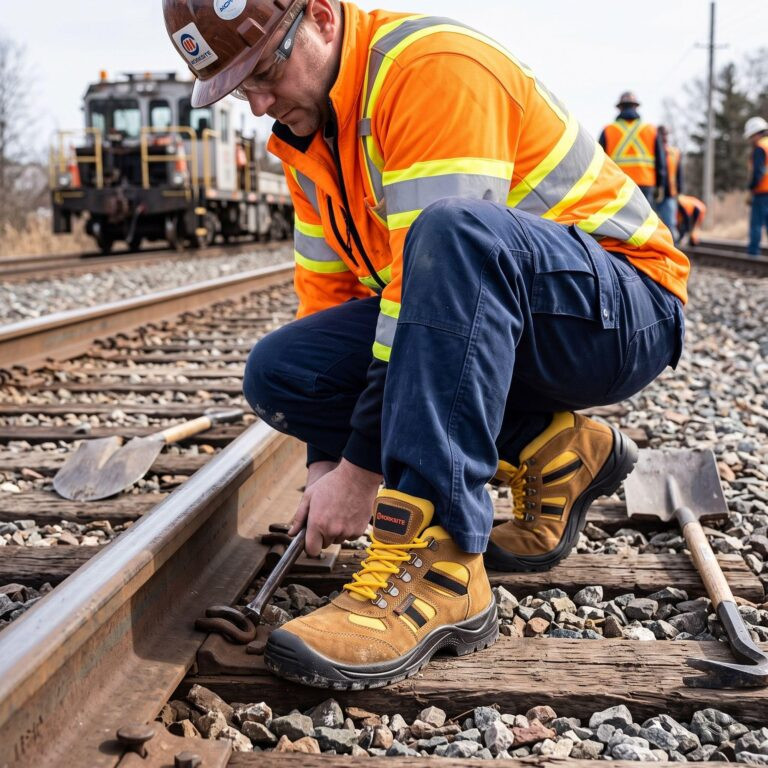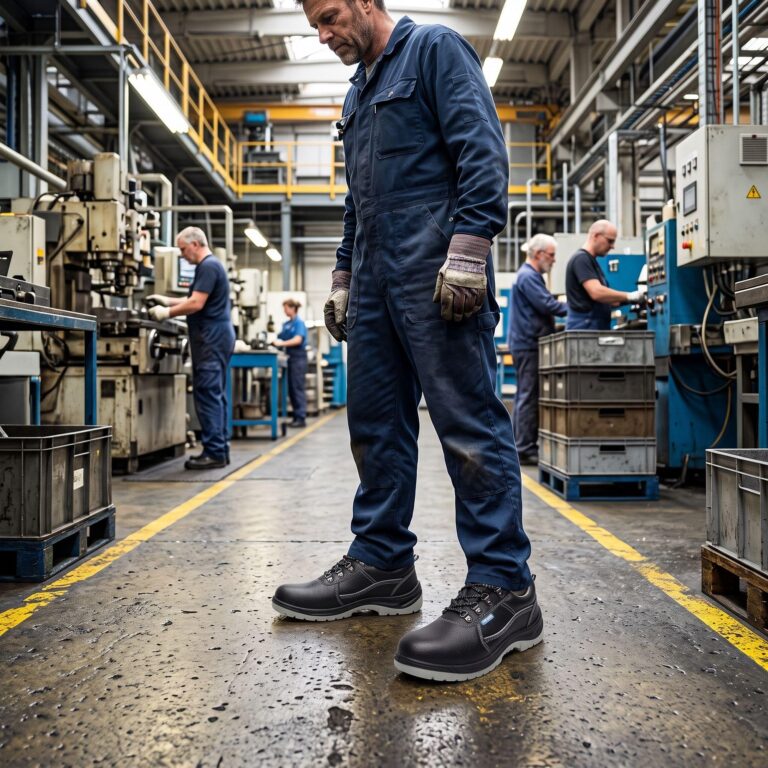

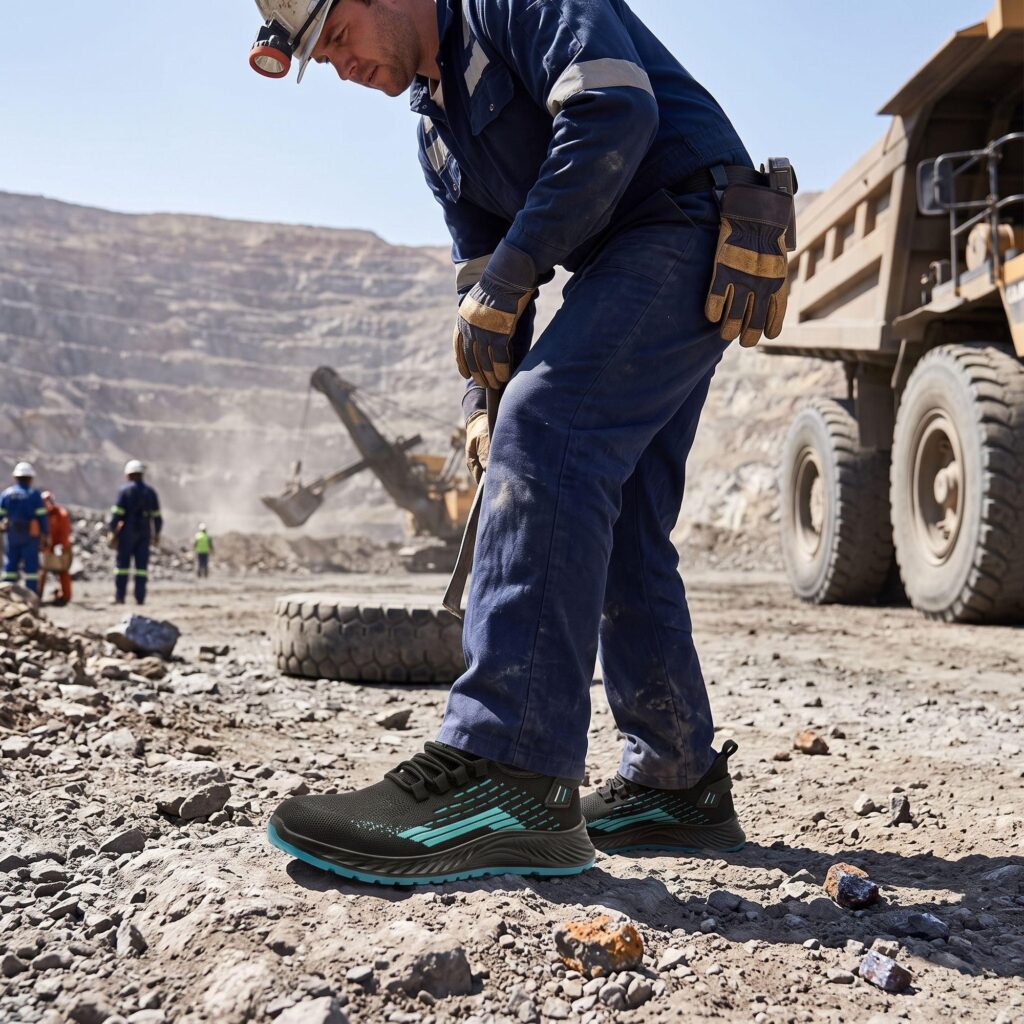
Heavy steel toe boots cause chronic worker fatigue. Lightweight composite toe footwear eliminates this burden while strictly meeting global impact standards.
Industry Challenges and Heavy Footwear Limitations
For decades, industrial safety footwear relied almost exclusively on steel toe caps to meet baseline impact resistance requirements. While steel provides robust mechanical protection against heavy falling objects, its high density introduces significant weight penalties. A typical pair of steel-toe boots adds noticeable mass to the lower extremities, compounding worker fatigue over long shifts spanning 8 to 12 hours. Ergonomic studies demonstrate that every additional 100 grams on the foot increases metabolic energy expenditure during walking by approximately one percent.
Furthermore, traditional metallic toe caps introduce severe thermal and electromagnetic complications. Steel is an exceptional thermal conductor, absorbing ambient cold in winter and retaining heat in summer, which degrades foot microclimate and accelerates moisture accumulation. Additionally, metal components trigger metal detectors at security checkpoints, causing operational friction in modern manufacturing plants, logistics hubs, and aerospace facilities. Safety managers face the dual challenge of protecting workers from severe impact hazards while preserving mobility, comfort, and compliance.
Deconstruction of Composite Performance and Engineering Solutions
Addressing the limitations of metallic reinforcement requires advanced material science and precision engineering. Modern lightweight safety footwear replaces steel with non-metallic composite materials, primarily multi-layered fiberglass, carbon fiber, or ballistic aramid resins. These materials deliver exceptional structural integrity without the thermal or electrical conductivity of metal.
To evaluate and verify the performance of lightweight composite toe caps against heavy industrial benchmarks, independent laboratory testing measures impact resistance, compression strength, and weight reduction.
| Performance Metric | Traditional Steel Toe Cap | Advanced Composite Toe Cap | Engineering Benefit |
|---|---|---|---|
| Impact Resistance Energy | 200 Joules (EN ISO 20345) | 200 Joules (EN ISO 20345) | Identical heavy-drop protection compliance |
| Compression Resistance | 15 Kilonewtons (15 kN) | 15 Kilonewtons (15 kN) | Equivalent crush protection under heavy loads |
| Weight per Pair (Average) | 680g – 850g (Cap component) | 420g – 510g (Cap component) | 35% to 40% direct mass reduction |
| Thermal Conductivity | High (Conducts ambient heat/cold) | Zero (Thermal insulator) | Superior internal foot microclimate stability |
| Electrical Properties | Conductive (Triggers metal detectors) | Non-metallic / Non-conductive | Seamless passage through security checkpoints |
The engineering solution incorporates a multi-stage manufacturing workflow:
- Material Matrix Formulation: Blending long-strand fiberglass filaments with high-tensile epoxy resin under high pressure to eliminate internal micro-voids.
- Geometrical Optimization: Designing asymmetrical toe profiles that match natural human foot anatomy while maintaining the mandatory 15mm clearance threshold under 200J impact.
- Outsole Integration: Pairing composite toe caps with direct-injection polyurethane (PU/PU) or lightweight rubber outsoles to ensure overall footwear weight remains below 550g per individual shoe.
Operational Caveats and Common Misconceptions
Despite clear ergonomic advantages, safety managers and procurement teams frequently encounter misconceptions regarding composite toe footwear. Dispelling these myths ensures proper deployment across hazardous job sites.
A prevalent misconception is that non-metallic composite toe caps are susceptible to permanent structural failure after a single minor impact. In reality, unlike malleable steel which deforms permanently upon absorbing high energy and traps the toes inside, advanced composite materials utilize elastic deformation properties. They absorb 200 Joules of kinetic energy and return to their original shape, provided the impact threshold does not exceed certified limits. However, any shoe that sustains a direct, maximum-capacity impact must be retired immediately, regardless of toe cap composition.
Another critical caveat involves chemical resistance and storage conditions. While composite resins resist most acids, alkalis, and hydrocarbons encountered in general industry, prolonged exposure to extreme ultraviolet radiation or unapproved industrial solvents can degrade the polymer matrix. Buyers must verify that the chosen footwear complies strictly with regional standards such as Chinese GB21148-2020 or European CE EN ISO 20345:2022, ensuring complete certification for slip resistance (SRC rating) and anti-perforation composite midsole protection.
Definitive Technical Summary
Lightweight composite toe safety shoes successfully replace traditional steel by delivering identical 200J impact and 15kN compression protection while reducing lower extremity weight by up to 40 percent. By combining non-conductive thermal insulation, metal-detector compliance, and ergonomic geometry, composite footwear significantly enhances worker endurance and safety compliance in demanding industrial environments.
Written by Hong Gu Safety Shoes Technical Team, this content is compiled from practical production, long-term field applications, and rigorous testing results.
Shan Dong Hong Gu Shoes Industrial Co., Ltd. is a leading safety footwear manufacturer based in China, specializing in industrial foot protection with over 20 years of manufacturing expertise. Products are fully certified under European standards (CE EN ISO 20345:2022), offering a full range of manufacturing processes including PU/PU Injection, PU/Rubber, Goodyear Welted, and Rubber Cemented constructions.