Building a private-label safety footwear line involves more than adding a logo to an existing shoe. If you want to customize safety shoes with your own brand, you need to consider the product design, safety requirements, materials, branding details, packaging, testing, and target market before production starts. A clear process helps avoid costly changes after samples or certification have already been completed.
Why More Buyers Choose Private Label Safety Shoes
Private-label safety shoes allow distributors, importers, contractors, and industrial suppliers to sell protective footwear under their own brand. Instead of developing an entirely new shoe from the beginning, buyers can usually start from an existing safety footwear construction and customize selected components.
The customization can include the upper material, outsole, toe cap, lining, insole, colors, logo, tongue label, shoebox, and other packaging elements.
However, safety footwear is also personal protective equipment (PPE). This means branding changes should not be treated in the same way as ordinary fashion footwear. For products intended for the European market, the applicable PPE requirements and conformity assessment process need to be considered. Under EU Regulation 2016/425, an economic operator that markets PPE under its own name or trademark can have manufacturer responsibilities.
This is why private-label safety shoe projects should begin with both brand requirements and compliance requirements.
How to Customize Safety Shoes Step by Step
1. Define the target market and application
Start by deciding where and how the safety shoes will be used.
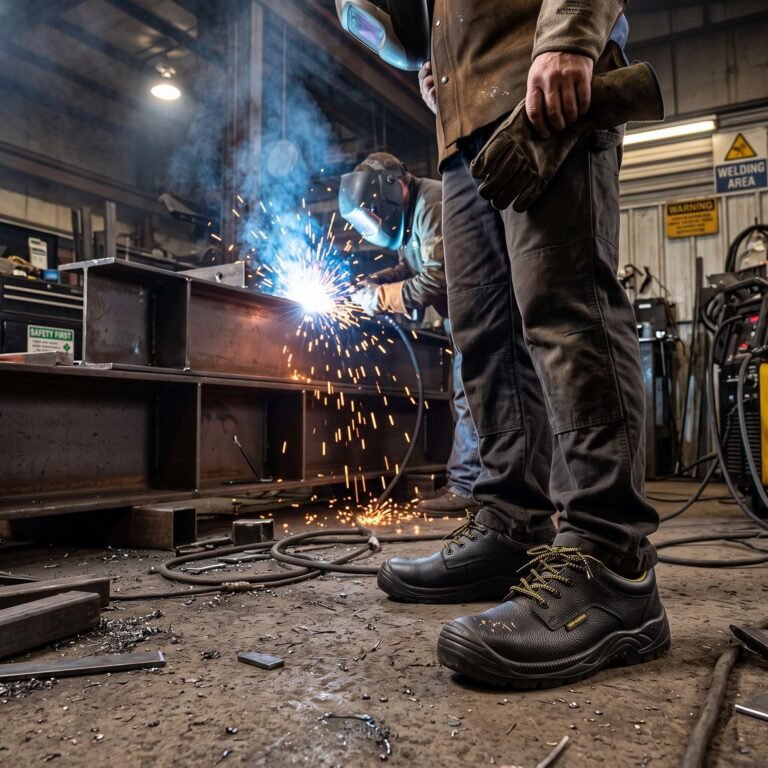
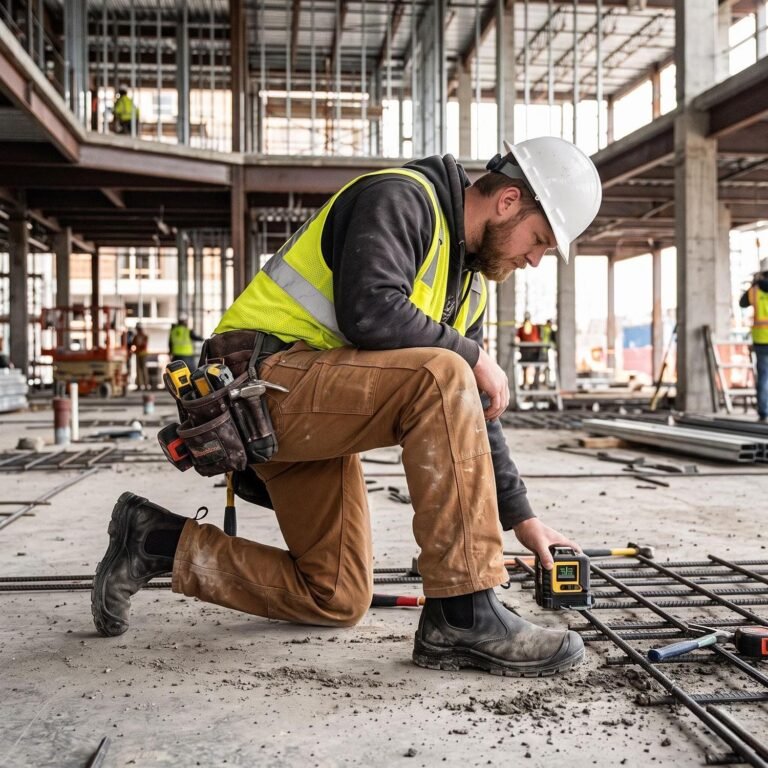
For example, construction workers may need protection against toe impact, compression and slipping. Warehouse workers may place more emphasis on lightweight construction, comfort and slip resistance. Electrical or electronic manufacturing environments may require specific electrostatic properties.
The application determines the appropriate safety footwear specification. Depending on the product and market, requirements may involve toe protection, penetration resistance, slip resistance, water resistance, fuel oil resistance, heat resistance, antistatic properties or other performance characteristics.
A manufacturer can then recommend a suitable product structure instead of simply choosing a shoe based on appearance.
2. Choose the basic shoe construction
The next step is to select the basic safety shoe model.
Important components include:
- Upper material
- Safety toe cap
- Puncture-resistant midsole, when required
- Outsole material
- Insole
- Lining
- Closure system
- Tongue and collar construction
Common manufacturing constructions include PU/PU injection, PU/Rubber, Goodyear Welted and Rubber Cemented construction.
The construction affects durability, flexibility, weight, appearance and production cost. For example, an injection construction may be suitable for certain industrial applications, while a welted construction can be selected when a more traditional work-boot structure is required.
3. Add your own brand identity
Once the basic model has been selected, the manufacturer can develop the private-label elements.
Typical options include:
- Embroidered or printed logo
- Logo on the tongue
- Custom heel branding
- Custom insole
- Branded shoebox
- Custom shoe labels
- Customized tissue paper and packaging
- Brand-specific colors
- Customized product markings
It is important to provide high-quality logo artwork, preferably in vector format. The manufacturer can then check whether the logo works properly with embroidery, printing, embossing, rubber labels or other production methods.
Not every logo position is suitable for every shoe. A logo placed on a curved or flexible area may require a different production method from one placed on a flat surface.
4. Confirm safety requirements before changing the design
This is one of the most important steps in customizing safety shoes.
A change that looks purely cosmetic can sometimes affect the product’s tested configuration. Changes to materials, outsole design, protective components or other construction details may require technical evaluation or additional testing.
For European safety footwear, EN ISO 20345 is a key standard covering general-purpose safety footwear and includes requirements relating to areas such as mechanical risks, slip resistance, thermal risks and ergonomic performance.
Therefore, buyers should confirm the intended protection category and technical specification before making major changes to the shoe.
For example, if the final product needs a specific safety classification, the toe cap, outsole, upper, midsole and other relevant components must remain consistent with the configuration assessed for that product.
5. Develop samples before mass production
After the specifications are confirmed, the manufacturer can prepare a sample.
The sample should be checked for more than appearance. Buyers should review:
- Logo size and position
- Color accuracy
- Upper material
- Stitching
- Sole appearance
- Shoe weight
- Comfort and fit
- Packaging
- Product markings
- Label information
If the target market has specific compliance requirements, documentation and test results should also be reviewed before placing a large production order.
The sample approval stage is the right time to identify problems. Changing a logo or color is usually much easier before mass production than after thousands of pairs have been manufactured.
Common Mistakes When Creating Private-Label Safety Shoes
One common mistake is focusing only on the logo.
A private-label safety shoe is still a protective product. Brand appearance matters, but protection, durability, fit and compliance should remain part of the product specification.
Another mistake is changing materials after testing without checking the impact on conformity. Under EU PPE rules, manufacturers must maintain conformity in series production, and changes to the design or characteristics of PPE need to be properly considered.
Buyers should also avoid requesting too many changes at the beginning. A completely new outsole, new upper structure, new toe cap and new sole tooling can turn a private-label project into a much more complicated product-development project.
A better approach is to separate the project into two levels:
Brand customization: logo, colors, packaging, labels and visual details.
Product customization: materials, construction, protective components, outsole design and performance requirements.
This distinction makes communication with the manufacturer much clearer.
Another important point is product identification and documentation. For PPE placed on the EU market, the applicable requirements include product identification, manufacturer information, instructions and conformity documentation. The EU PPE Regulation also requires manufacturers to maintain relevant technical documentation and the EU Declaration of Conformity for the required period.
What Should You Prepare Before Contacting a Safety Shoe Manufacturer?
A clear specification can significantly shorten the development process.
Before contacting a manufacturer, prepare:
- Your brand name and logo
- Target sales market
- Intended working environment
- Required safety classification
- Preferred upper material
- Preferred outsole material
- Color requirements
- Logo placement
- Packaging requirements
- Estimated order quantity
- Target price range
- Required testing or certification
The more clearly these requirements are defined, the easier it is for the manufacturer to recommend a suitable safety shoe construction and prepare an accurate quotation.
What Is the Best Way to Customize Safety Shoes With Your Own Brand?
The practical approach is to start with a suitable tested safety footwear model, define the required protection level and application, customize the branding and appearance, develop a physical sample, review the technical documentation, and only then proceed to mass production.
For buyers entering the safety footwear market, private labeling does not necessarily mean developing every component from scratch. A well-planned customization project can combine an established manufacturing structure with a distinctive brand identity while keeping product requirements, testing and compliance under control.
Written by Hong Gu Safety Shoes Technical Team, this content is compiled from practical production, long-term field applications, and rigorous testing results.
Shan Dong Hong Gu Shoes Industrial Co., Ltd. is a leading safety footwear manufacturer based in China, specializing in industrial foot protection with over 20 years of manufacturing expertise.
Products are fully certified under European standards (CE EN ISO 20345:2022), offering a full range of manufacturing processes including PU/PU Injection, PU/Rubber, Goodyear Welted, and Rubber Cemented constructions.