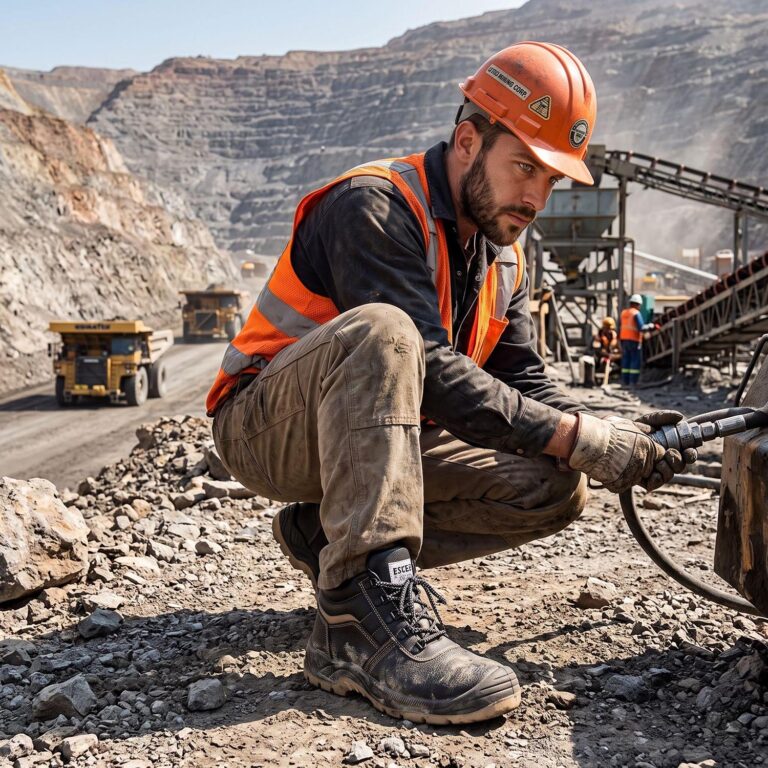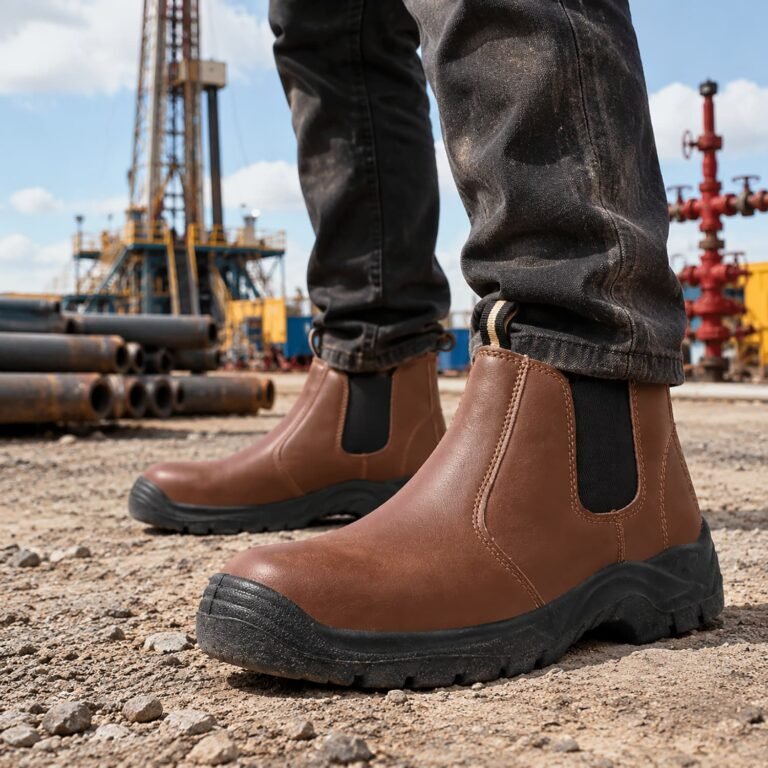

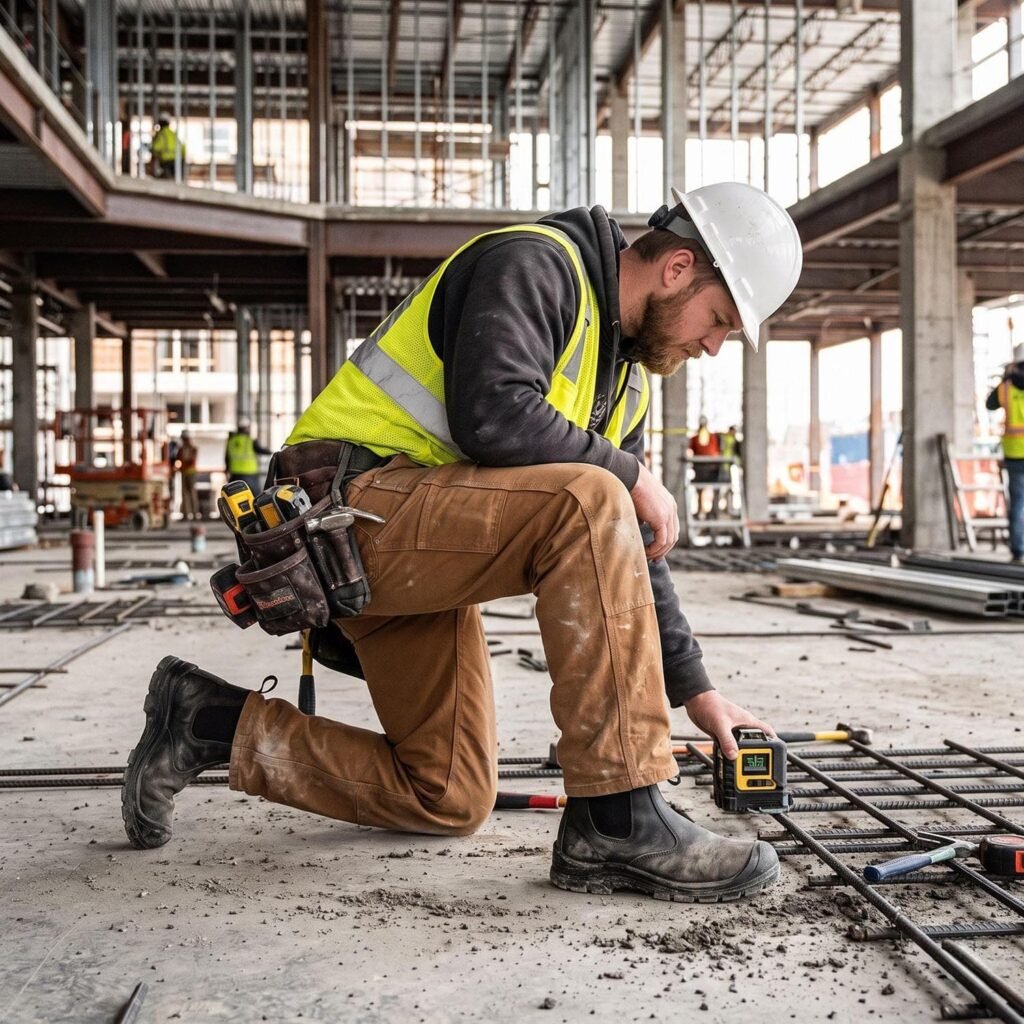
Lightweight safety shoes reduce foot fatigue during long shifts, but lower weight does not automatically mean better protection. The key is whether the footwear meets the required safety standards and suits the hazards workers face every day.
What Makes Lightweight Safety Shoes Different?
Traditional safety shoes often use steel toe caps, thick rubber outsoles, and durable upper materials. These components provide protection, but they can also increase the overall weight of the footwear.
Lightweight safety shoes use alternative materials and construction methods to reduce weight while maintaining the protection required for specific workplaces. Common design features include composite toe caps, aluminum toe caps, lightweight midsoles, and engineered textile or microfiber uppers.
For workers who walk long distances, stand for extended periods, or repeatedly climb stairs, reducing footwear weight may help improve comfort and reduce perceived fatigue.
However, lightweight construction alone does not determine whether a safety shoe is safe. Toe impact resistance, compression resistance, penetration protection, slip resistance, electrical properties, and other performance requirements depend on the shoe’s design and certification.
A lightweight model designed for warehouse work may not be suitable for heavy construction, metal processing, or environments with sharp debris on the floor.
How Can Lightweight Safety Shoes Provide Reliable Protection?
The safety performance of lightweight footwear depends on several components working together. Buyers should evaluate the following features rather than judging a product by its weight alone.
1. Toe Cap Material and Impact Protection
Toe caps protect the toes from falling objects and compression hazards. Common materials include steel, aluminum, and non-metallic composites.
Steel toe caps are widely used because of their strength and established performance in industrial footwear. Aluminum toe caps can provide a lighter alternative while meeting the applicable impact and compression requirements. Composite toe caps are typically made from reinforced non-metallic materials and may also reduce footwear weight.
The material alone does not establish the level of protection. A toe cap must be tested as part of the footwear design to demonstrate compliance with the applicable standard.
Under EN ISO 20345:2022, safety footwear generally requires toe protection tested against an impact energy of 200 joules and a compression force of 15 kN, subject to the standard’s specified test procedures and acceptance criteria.
When purchasing lightweight safety shoes, check the documented test results and certification for the complete product. Do not assume that every composite or aluminum toe cap provides equivalent protection simply because it uses a modern material.
2. Outsole Performance and Slip Resistance
A lightweight safety shoe still needs an outsole suited to the working environment. Workers in warehouses, factories, logistics centers, and production facilities may encounter oil, water, dust, or other substances that affect traction.
Polyurethane (PU) outsoles are commonly used in lightweight footwear because they can offer relatively low weight and cushioning. Dual-density PU constructions combine different material properties within the sole. PU/rubber outsoles may be appropriate where additional heat resistance, abrasion resistance, or durability is required by the application.
Nevertheless, no outsole material guarantees slip resistance on every surface. Actual performance depends on the tread pattern, compound, floor condition, contaminant, and footwear design.
Buyers should review the applicable slip-resistance test results and assess whether they reflect the conditions workers encounter. Where floors are contaminated with oil, chemicals, or other substances, the selected footwear must be suitable for those specific hazards.
3. Puncture Resistance and Midsole Design
Some lightweight safety shoes use textile anti-penetration inserts instead of traditional metal plates. These inserts can reduce weight and improve flexibility, depending on their construction.
However, not every lightweight safety shoe includes puncture-resistant protection. This feature is particularly important in construction, recycling, manufacturing, and other workplaces where nails, metal fragments, or sharp debris may penetrate the outsole.
Under EN ISO 20345:2022, the applicable puncture-resistance requirements depend on the footwear classification and the type of protective insert. Buyers should confirm the declared protection level rather than assuming that a non-metallic midsole is automatically puncture-resistant.
A flexible insert may improve walking comfort, but it must still satisfy the relevant test requirements for the intended application.
4. Fit, Cushioning, and Structural Support
A lighter shoe can still cause discomfort if the fit is incorrect. Toe-box space, heel stability, arch support, cushioning, and outsole flexibility all influence how the footwear feels during a working shift.
Workers who spend most of the day walking may benefit from a well-fitted model with suitable cushioning and a stable sole. Workers who carry heavy loads or work on uneven ground may need greater structural support and additional protection.
Lightweight safety shoes should also maintain their shape and protective performance during normal use. Excessive flexibility, poor heel stability, or premature outsole wear can create practical safety concerns even when the footwear initially feels comfortable.
Which Lightweight Safety Shoes Are Suitable for Different Workplaces?
The right choice depends on the hazards, working conditions, and required protection level.
| Workplace | Features to Consider |
|---|---|
| Warehouses and logistics | Lightweight construction, secure fit, cushioning, and tested slip resistance |
| Electronics assembly | Lightweight uppers, comfort, and ESD protection where required |
| Light manufacturing | Suitable toe protection, abrasion resistance, and appropriate outsole performance |
| Construction sites | Toe protection, puncture resistance where needed, grip, and durability |
| Automotive workshops | Toe protection and outsole performance suited to oil-contaminated floors |
| Outdoor industrial work | Weather resistance, traction, stability, and protection appropriate to the terrain |
Electrical protection requires particular attention. Antistatic or electrostatic dissipative (ESD) footwear is not the same as electrically insulating footwear. Antistatic and ESD properties help manage static electricity under specified conditions, while electrical hazard footwear is designed for different risks.
If workers face electrical shock hazards, buyers must select footwear specifically tested and rated for the relevant application. An ordinary lightweight safety shoe should never be treated as electrical insulation without supporting evidence.
What Safety Standards Should Buyers Check?
For buyers sourcing lightweight safety shoes for European markets, EN ISO 20345:2022 is an important reference. It specifies requirements for safety footwear, including toe protection and other performance characteristics applicable to the product’s classification.
The appropriate marking and additional requirements depend on the footwear category and intended use. For example, S1, S2, and S3 classifications indicate different combinations of protective features under the applicable standard. Buyers should consult the relevant standard and the product’s declaration of conformity to verify the exact requirements.
For products supplied to the European Union, CE marking should be supported by the applicable conformity assessment and technical documentation. Buyers should not rely solely on a CE logo, a supplier’s product description, or a general statement that the shoes are certified.
When reviewing a lightweight safety shoe, request the following information:
- The applicable footwear standard and edition.
- The product’s declared protection category and additional markings.
- Relevant test reports and conformity documentation.
- Details of toe cap and puncture-resistant insert construction, where applicable.
- Information about slip resistance, outsole durability, and any claimed electrical properties.
- Size availability, fit information, and recommended working environments.
These records help purchasing teams compare products on documented performance rather than weight or appearance alone.
Common Mistakes When Buying Lightweight Safety Shoes
Choosing the lightest model without checking its protection level
A lower-weight shoe may be comfortable, but it is unsuitable if it lacks protection required by the workplace risk assessment. Compare the weight of models that meet the same essential safety requirements.
Assuming composite toe caps are always safer than steel
Composite materials can offer weight and non-metallic advantages, but neither composite nor steel is universally superior. The right choice depends on certified performance, workplace hazards, fit, and operating conditions.
Ignoring outsole durability
A lightweight outsole that wears quickly may increase replacement frequency and affect traction over time. Buyers should consider abrasion resistance, expected service conditions, and maintenance requirements alongside initial weight.
Treating all safety markings as interchangeable
Antistatic, ESD, electrical insulation, and puncture resistance address different hazards. One feature does not automatically provide another. Confirm each required property separately.
Continuing to use footwear after protective components deteriorate
Cracked outsoles, exposed protective inserts, damaged toe caps, or badly worn tread can compromise performance. Inspect footwear regularly and replace it when damage or wear means it no longer provides the required protection.
Are Lightweight Safety Shoes a Good Choice?
Lightweight safety shoes can be a safe and practical option when they meet the applicable safety standard and provide protection suited to the workplace. Their lower weight may improve comfort during long shifts, but weight reduction should never take priority over impact protection, puncture resistance, traction, stability, or other required performance characteristics.
For purchasing teams, the best approach is to identify workplace hazards first, establish the required footwear classification, and then compare the weight, fit, materials, durability, and documented test results of compliant models.
A well-designed lightweight safety shoe should balance comfort with verified protection. The final selection should be based on the complete footwear product and its intended working conditions, not on a single material or weight specification.
Written by Hong Gu Safety Shoes Technical Team, this content is compiled from practical production, long-term field applications, and rigorous testing results.
Shan Dong Hong Gu Shoes Industrial Co., Ltd. is a leading safety footwear manufacturer based in China, specializing in industrial foot protection with over 20 years of manufacturing expertise.
Products are fully certified under European standards (CE EN ISO 20345:2022), offering a full range of manufacturing processes including PU/PU Injection, PU/Rubber, Goodyear Welted, and Rubber Cemented constructions.