

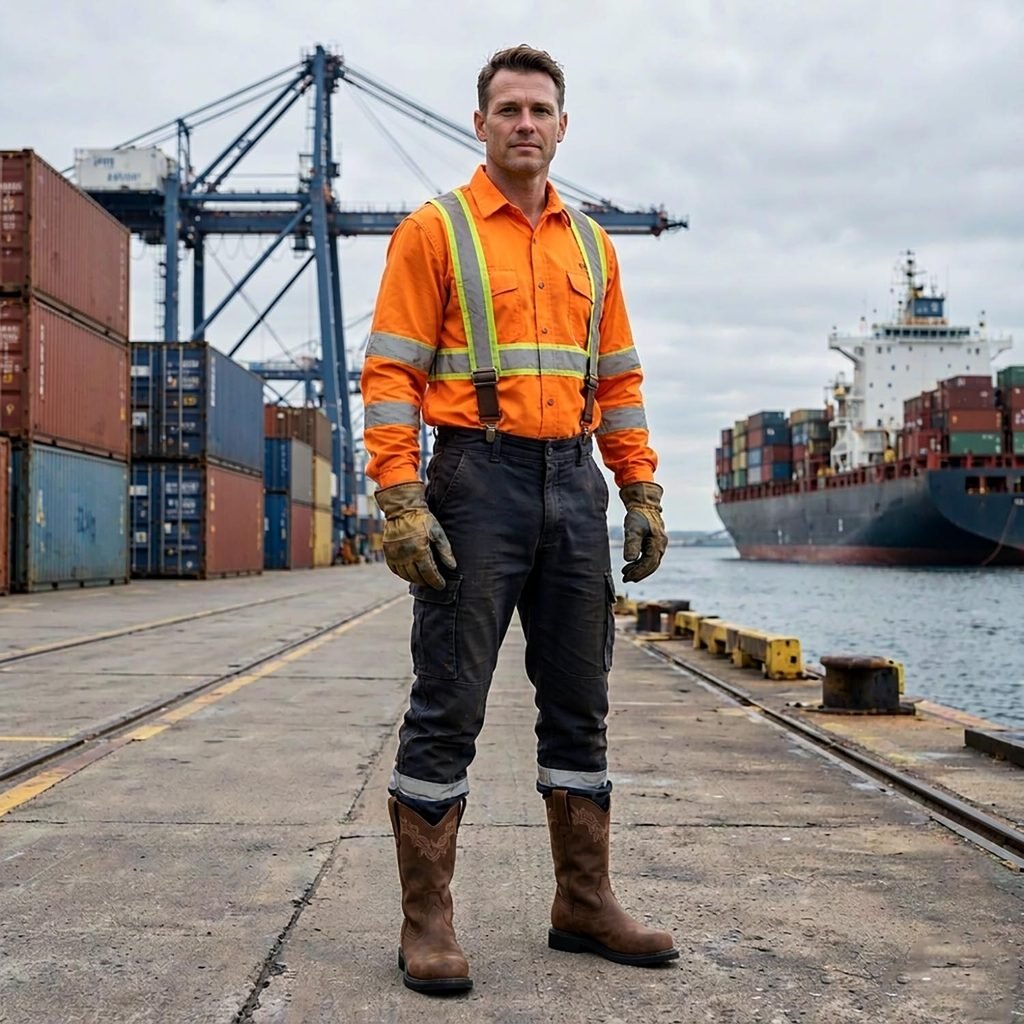
Oil Resistant Safety Shoe Outsoles are essential for workers in environments where oil, lubricants, and other industrial fluids can make floors slippery. Choosing the right outsole material helps reduce slip risks, prevent material deterioration, and maintain reliable footwear performance during daily operations.
Why Is Oil Resistance Important for Safety Shoe Outsoles?
Industrial workplaces frequently expose footwear to lubricating oils, hydraulic fluids, petroleum-based substances, and other chemical contaminants. When these liquids come into contact with the floor, they can create a slippery surface that affects workers’ stability.
The outsole is the main contact point between a safety shoe and the ground. Its material, tread pattern, and surface characteristics all influence how it performs in oily environments.
Oil resistance in safety footwear involves two related but different properties:
- Material resistance: The outsole should resist swelling, softening, cracking, and deterioration when exposed to oils.
- Slip resistance: The outsole should provide sufficient grip when walking on contaminated surfaces.
These properties should not be confused. An outsole may resist oil penetration or chemical damage but still have inadequate traction on an oily floor.
For this reason, buyers evaluating oil-resistant safety shoes should consider both the chemical durability of the outsole material and its slip resistance under relevant working conditions.
Which Outsole Materials Offer Good Oil Resistance?
Different outsole materials have different responses to oil exposure. Material selection should reflect the type of oil, workplace temperature, floor conditions, and expected service life.
1. Nitrile Rubber Outsoles
Nitrile rubber is widely used in industrial safety footwear because of its resistance to oils, fuels, and various petroleum-based substances.
Its main advantages include:
- Good resistance to many mineral oils and petroleum-based products.
- Strong abrasion resistance in demanding working environments.
- Good mechanical durability.
- Suitable performance in workshops, automotive facilities, and manufacturing plants.
Nitrile rubber is often selected for safety shoes used in environments where contact with industrial oils is frequent.
However, its actual performance depends on the rubber formulation, hardness, thickness, and manufacturing process. Not all nitrile rubber compounds offer identical resistance.
2. PU Outsoles
Polyurethane (PU) is commonly used in safety footwear because it is lightweight, flexible, and provides good cushioning.
PU outsoles offer several practical benefits:
- Reduced footwear weight.
- Good shock absorption.
- Flexible walking performance.
- Resistance to certain oils and industrial contaminants, depending on the formulation.
PU is frequently used in PU/PU injection safety shoes. This construction can provide a comfortable and relatively lightweight option for workers who spend long periods standing or walking.
However, standard PU formulations should not automatically be considered suitable for every oil-exposure environment. Prolonged contact with certain oils, fuels, or solvents may affect the material.
3. PU/Rubber Outsoles
PU/Rubber construction combines the cushioning properties of polyurethane with the durability and heat resistance advantages of rubber.
Typically, the PU layer provides comfort and shock absorption, while the rubber outsole forms the ground-contact surface.
This construction is suitable for workplaces that require a balance of comfort, abrasion resistance, and resistance to industrial contaminants.
The actual oil resistance depends largely on the rubber compound used in the outsole.
4. PVC Outsoles
PVC is another material used in certain types of protective footwear. It can provide resistance to various oils, chemicals, and water-based contaminants.
However, its flexibility, weight, temperature performance, and resistance to specific chemicals vary considerably by formulation.
PVC footwear should be evaluated against the actual substances present in the workplace rather than selected based on general material descriptions.
How Is Oil Resistance Tested in Safety Shoe Outsoles?
Oil resistance should be verified through material testing rather than determined by appearance or material names alone.
One commonly referenced test method is ISO 20344, which specifies test methods for personal protective equipment, including safety footwear.
For outsole oil resistance, the relevant test evaluates how the outsole material responds after exposure to a specified test liquid under controlled conditions.
Depending on the applicable edition and test procedure, evaluation may include:
- Changes in outsole volume.
- Changes in dimensions.
- Changes in hardness.
- Visible swelling or deterioration.
- Other physical changes specified by the test method.
Volume change is particularly important because oil absorption can cause rubber or polymer materials to swell. Excessive swelling may affect outsole dimensions, flexibility, bonding, and overall footwear performance.
Manufacturers should conduct testing under the applicable standard and assess whether the tested material meets the relevant acceptance requirements.
Oil Resistance and EN ISO 20345:2022
EN ISO 20345:2022 is an important European standard for safety footwear. It establishes requirements for footwear designed to protect the wearer against workplace hazards.
The standard includes requirements and classifications related to different protective properties.
For purchasers, it is important to distinguish between:
- Oil resistance: The ability of outsole materials to withstand exposure to specified oils.
- Slip resistance: The ability of footwear to provide traction under defined test conditions.
- Chemical resistance: The ability of footwear materials to withstand particular chemicals.
These properties are not interchangeable.
The removal of the former additional marking requirement for resistance to fuel oil in the 2022 edition also means buyers should not rely on older FO marking conventions without checking the applicable standard and product documentation.
Where oil exposure is a significant workplace hazard, purchasers should request relevant test reports and confirm exactly which performance properties have been verified.
How to Choose Oil-Resistant Safety Shoes for Different Workplaces
The best outsole depends on the working environment. A shoe designed for a vehicle maintenance workshop may not be the most suitable option for a chemical processing facility.
Automotive Workshops and Repair Facilities
Automotive technicians frequently encounter engine oil, lubricants, transmission fluids, and fuel residues.
Recommended considerations include:
- Nitrile rubber or appropriately formulated oil-resistant rubber outsoles.
- Deep or multidirectional tread patterns.
- Abrasion-resistant outsole compounds.
- Suitable slip resistance on contaminated workshop floors.
Workers may also need toe protection and puncture resistance depending on the workplace hazards.
Manufacturing Plants and Machinery Workshops
Industrial production areas often contain hydraulic oil, machine lubricants, and metalworking fluids.
Safety footwear for these environments should offer:
- Verified outsole oil resistance.
- Good abrasion resistance.
- Reliable bonding between outsole and upper.
- Adequate cushioning for extended standing and walking.
The outsole should also be suitable for the specific floor material and contamination conditions.
Oil and Gas Facilities
Workers in oil and gas environments may encounter petroleum products, lubricants, and other potentially hazardous substances.
Footwear selection should consider more than ordinary oil resistance.
Depending on the job, additional requirements may include:
- Heat-resistant outsoles.
- Antistatic or electrically conductive properties where specified by the workplace risk assessment.
- Puncture-resistant midsoles.
- Chemical-resistant footwear materials.
- Appropriate toe protection.
Oil resistance alone does not establish suitability for all oilfield operations.
Food Processing and Commercial Kitchens
Grease, cooking oil, and water can accumulate on floors in food production facilities and commercial kitchens.
Footwear should provide suitable slip resistance under the relevant conditions, along with materials that can withstand frequent cleaning.
A slip-resistant outsole is particularly important in these environments. Buyers should check whether the footwear has been tested for the relevant floor and contaminant conditions.
Common Mistakes When Evaluating Oil-Resistant Safety Shoes
Even when a product is described as oil-resistant, several factors can affect its actual performance.
Mistake 1: Assuming oil resistance means slip resistance
An outsole that withstands oil exposure may still provide insufficient traction on an oily floor. These properties require separate evaluation.
Mistake 2: Selecting footwear based only on material names
Nitrile rubber and PU have different performance characteristics, but the material name alone does not establish the quality of the finished outsole. Formulation and manufacturing quality matter.
Mistake 3: Ignoring the type of oil
Mineral oil, synthetic lubricants, hydraulic fluids, and petroleum-based products do not necessarily affect outsole materials in the same way. Testing should reflect the expected exposure.
Mistake 4: Overlooking outsole deterioration
Continuous exposure to oil, heat, abrasion, and cleaning chemicals can gradually affect outsole performance. Regular inspection is necessary.
Mistake 5: Assuming oil-resistant footwear is suitable for every chemical environment
Oil resistance does not automatically mean resistance to solvents, acids, alkalis, or other industrial chemicals. Specific chemical compatibility should be verified separately.
How Can Manufacturers Improve Outsole Oil Resistance?
Oil resistance begins with material selection and continues throughout the manufacturing process.
For safety footwear manufacturers, several production factors deserve attention.
Rubber compound formulation: The selection of rubber polymers, fillers, plasticizers, and other additives affects oil absorption, hardness, elasticity, and abrasion resistance.
Material compatibility: The outsole compound should be matched to the expected exposure conditions. Testing should consider the actual oil types and relevant temperatures.
Outsole construction: PU/Rubber, PU/PU Injection, and other constructions have different material characteristics. The bonding between layers must also remain reliable during normal use.
Production quality control: Manufacturers should monitor material consistency, injection parameters, curing conditions, outsole dimensions, and bonding quality.
Performance verification: Testing should be conducted according to applicable footwear standards and relevant laboratory procedures. Production samples should be checked to ensure that material performance remains consistent.
A well-designed oil-resistant safety shoe is not simply a product made from a particular material. It is the result of appropriate material engineering, controlled manufacturing, and performance verification.
Frequently Asked Questions About Oil-Resistant Safety Shoe Outsoles
Are nitrile rubber outsoles better than PU for oil resistance?
Nitrile rubber generally offers good resistance to many petroleum-based oils and is frequently used in demanding industrial environments. PU provides lightweight comfort and can also offer oil resistance depending on its formulation. The better option depends on the type of oil, exposure conditions, and test results.
Does oil-resistant footwear prevent slipping on oily floors?
Not necessarily. Oil resistance describes the material’s ability to withstand oil exposure, while slip resistance relates to traction between the outsole and the floor. Workers should select footwear with appropriate slip performance for their working conditions.
What does FO mean in safety shoes?
FO is a marking historically used to indicate resistance of the outsole to fuel oil under the relevant footwear standard. However, EN ISO 20345:2022 no longer treats FO as a mandatory additional requirement in the same way as earlier editions. Buyers should check the applicable standard edition and product documentation.
How often should oil-resistant safety shoes be replaced?
There is no universal replacement interval. Replacement depends on exposure frequency, working conditions, outsole wear, cracking, deformation, and the condition of protective components. Footwear should be replaced when deterioration compromises its protective performance.
Can PU/PU safety shoes be used in oily environments?
Some PU/PU safety shoes are designed to provide oil resistance. However, performance depends on the PU formulation and applicable testing. Buyers should request test documentation rather than assume all PU outsoles provide the same protection.
What Should Buyers Look for When Purchasing Oil-Resistant Safety Shoes?
Oil-resistant safety footwear should be selected according to the actual workplace environment, not just the product description. Buyers should verify outsole material performance, relevant test reports, slip resistance, mechanical durability, and compliance with applicable safety footwear standards.
Nitrile rubber is often suitable for environments with frequent petroleum-based oil exposure, while PU and PU/Rubber constructions can provide different combinations of cushioning, flexibility, and durability. The final choice should be based on verified performance and workplace risk assessment.
For manufacturers, consistent oil resistance requires suitable compound formulation, controlled production processes, and systematic testing. These factors help ensure that safety footwear maintains its intended protective properties throughout its service life.
Written by Hong Gu Safety Shoes Technical Team, this content is compiled from practical production, long-term field applications, and rigorous testing results.
Shan Dong Hong Gu Shoes Industrial Co., Ltd. is a leading safety footwear manufacturer based in China, specializing in industrial foot protection with over 20 years of manufacturing expertise.
Products are fully certified under European standards (CE EN ISO 20345:2022), offering a full range of manufacturing processes including PU/PU Injection, PU/Rubber, Goodyear Welted, and Rubber Cemented constructions.