Safety shoes protect workers from impact, compression, sharp objects, and workplace hazards. However, worn-out footwear may no longer provide the required protection. Knowing when to replace safety shoes helps employers maintain workplace safety and avoid relying on damaged equipment.
How Often Should You Replace Safety Shoes?
Safety shoes are often replaced every 6 to 12 months in workplaces with regular daily use. However, this timeframe is a general maintenance guideline rather than a fixed requirement. Some pairs wear out within a few months under harsh conditions, while others may remain serviceable for longer.
The correct replacement schedule depends on several factors:
- Working environment: Construction sites, factories, warehouses, and outdoor workplaces expose footwear to different levels of abrasion, impact, moisture, and contamination.
- Daily wearing time: Workers who wear safety shoes throughout long shifts usually accumulate more wear than occasional users.
- Footwear materials: The durability of the upper, outsole, lining, and protective components affects service life.
- Maintenance and storage: Proper cleaning, drying, and storage can help prevent premature deterioration.
- Exposure to hazards: Chemicals, extreme temperatures, heavy impacts, and sharp objects may damage footwear before obvious wear develops.
Employers should establish replacement schedules based on workplace risk assessments, manufacturer instructions, and regular inspections. A shoe’s age alone cannot determine whether it remains suitable for use.
What Are the Signs That Safety Shoes Need Replacing?
Regular safety shoe inspections help workers identify damage before it becomes a serious concern. The following conditions generally require removal from service and assessment.
1. Worn or Damaged Outsoles
The outsole provides traction and helps protect the foot from ground hazards. Over time, repeated walking, friction, and contact with abrasive surfaces wear down the tread.
Replace safety shoes when the tread becomes excessively smooth, deep cuts appear, pieces of the outsole break away, or the sole separates from the upper. Reduced tread depth may affect grip, particularly on wet, oily, or uneven floors.
Oil-resistant and slip-resistant are not interchangeable properties. The footwear must be suitable for the actual floor surface and contaminants present in the workplace.
2. Damaged Protective Toe Caps
Safety shoes may use steel, aluminum, or composite toe caps to protect against specified impact and compression hazards.
If the toe area is visibly deformed, cracked, exposed, or damaged after a heavy impact, remove the footwear from service. Follow the manufacturer’s instructions to determine whether replacement is necessary.
A shoe should not be considered safe simply because the toe cap still looks normal. After a significant impact, internal damage may not be immediately visible. Workers should not attempt to straighten or repair a protective toe cap themselves.
3. Cracked Uppers and Loose Soles
The upper and outsole work together to provide coverage, support, and protection. Cracked leather, torn textile materials, damaged stitching, and loose sole bonds can reduce the footwear’s integrity.
Pay particular attention to the toe, heel, side seams, and areas that bend during walking. These sections often experience repeated mechanical stress.
Minor surface scratches may not require immediate replacement. However, damage that exposes the foot, affects stability, or compromises protective features should be addressed promptly.
4. Worn Cushioning and Poor Fit
Safety footwear must remain suitable for the worker throughout the shift. Compressed cushioning, damaged insoles, torn linings, and weakened heel support can affect comfort and stability.
Persistent discomfort, slipping inside the shoe, or a noticeable change in fit may indicate that the footwear needs assessment. Although discomfort does not automatically mean the protective features have failed, it should not be ignored.
5. Damage Caused by Chemicals or Heat
Industrial workers may encounter oils, solvents, cleaning agents, molten materials, and high temperatures. Depending on the footwear’s materials and design, these exposures can cause swelling, hardening, cracking, melting, or loss of adhesion.
After unusual chemical or heat exposure, follow the manufacturer’s guidance. Remove footwear from service if its protective performance is uncertain.
Electrical hazards also require special attention. Ordinary safety shoes should not be assumed to provide electrical protection unless they are specifically designed and rated for the relevant application.
How Do Working Conditions Affect Safety Shoe Replacement?
Different industries place different demands on safety footwear. A practical replacement plan should account for these differences.
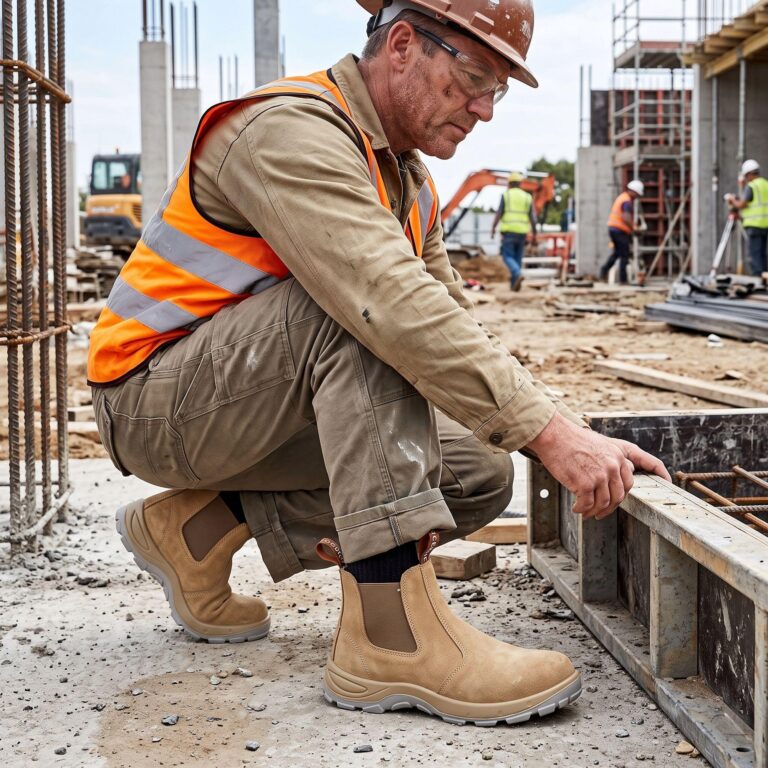
Construction and heavy manufacturing: Workers face falling objects, rough surfaces, sharp debris, and repeated impacts. Inspect the toe area, outsole, seams, and puncture-resistant components frequently.
Warehousing and logistics: Long walking distances and prolonged standing can accelerate tread wear and cushioning deterioration. Check the outsole, heel stability, and internal condition.
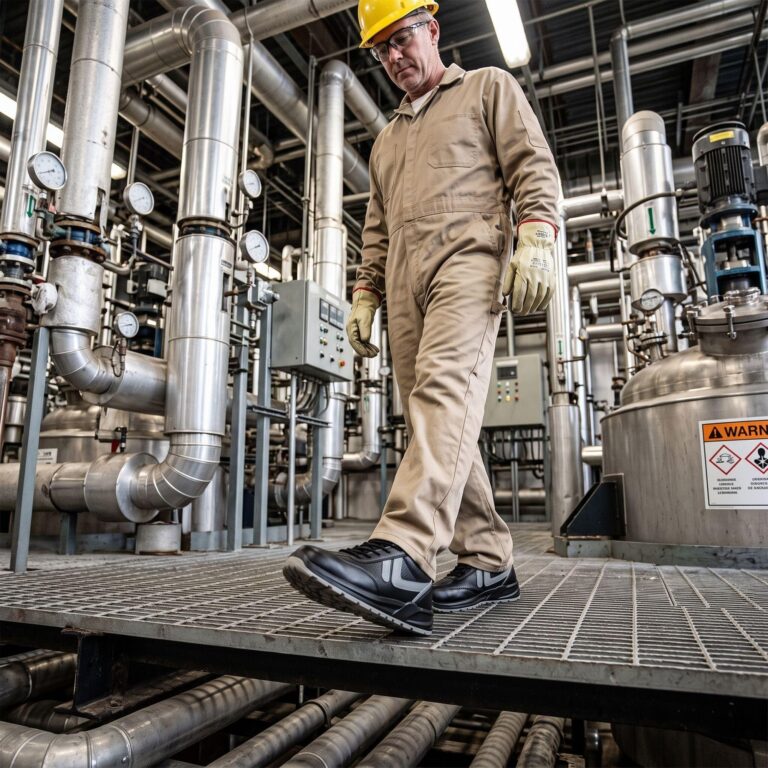
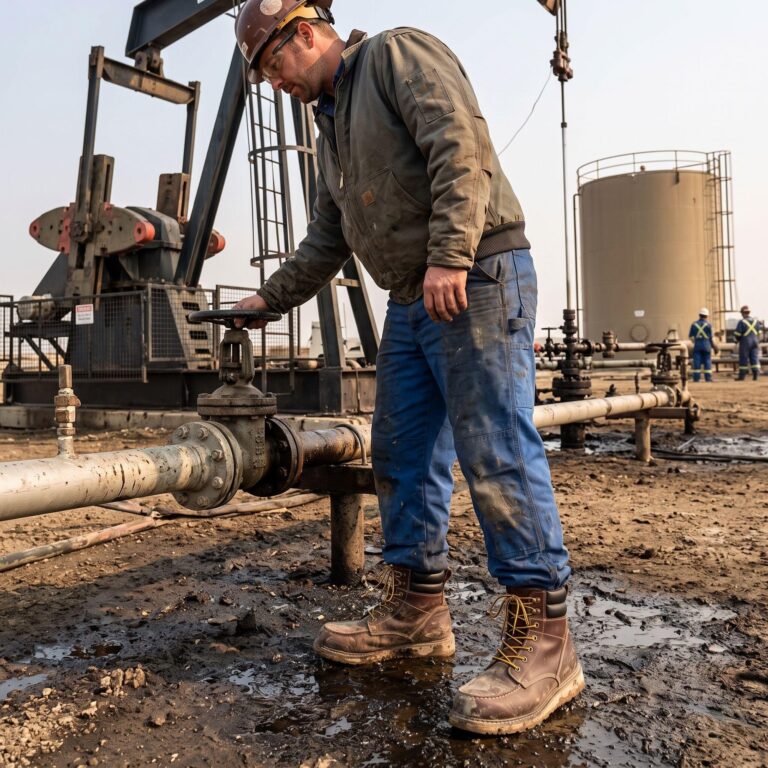
Oil and chemical processing: Exposure to liquids and chemicals can damage unsuitable materials. Select footwear compatible with the substances encountered and inspect it for swelling, cracking, or other changes.
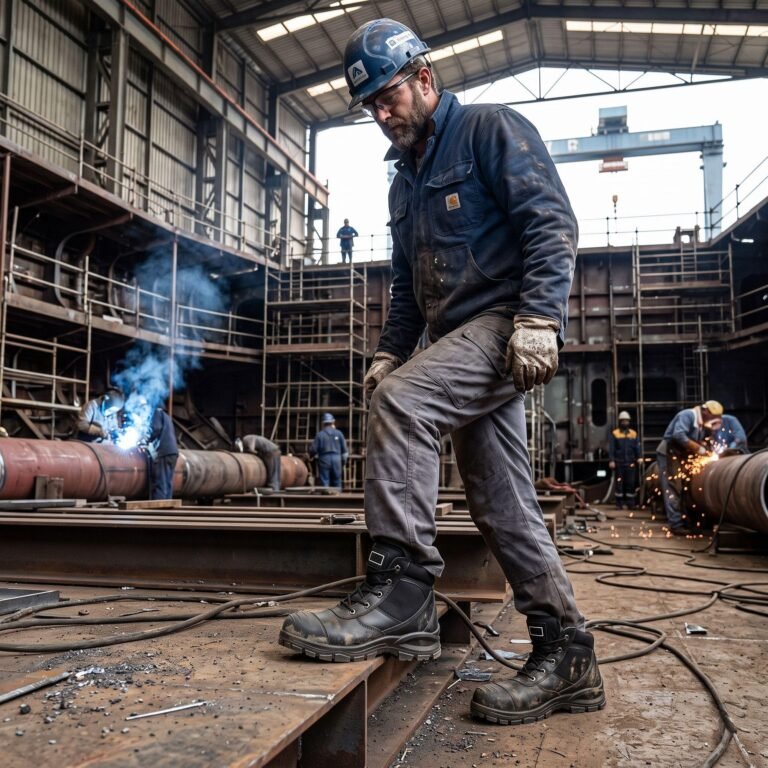
Welding and high-temperature work: Sparks, heat, and hot materials can damage uppers, closures, and soles. Use footwear designed for the specific hazards and replace it when heat damage compromises its structure.
Outdoor and wet environments: Moisture, temperature changes, and abrasive surfaces can affect materials and sole bonds. Dry footwear according to the manufacturer’s instructions and avoid storing it in persistently damp conditions.
These examples illustrate why one replacement interval cannot suit every occupation. Employers should evaluate actual working conditions rather than relying on a universal calendar.
What Safety Standards Should Employers Consider?
Safety footwear standards establish performance requirements and testing methods. They do not provide one universal service life for all safety shoes.
In Europe, EN ISO 20345:2022 specifies requirements for safety footwear, including toe protection and other applicable protective properties. Employers should select footwear according to the hazards identified in their risk assessments and the protection offered by the specific model.
In the United States, ASTM F2413 covers performance requirements for protective footwear. Employers should also consider applicable occupational safety regulations, internal safety procedures, and manufacturer recommendations.
Compliance at the time of manufacture does not mean that footwear will remain protective indefinitely. Repeated use, environmental exposure, and physical damage can affect its condition.
For this reason, safety managers should maintain inspection records, track replacement dates, and document reported damage. These records can help identify patterns of premature wear and determine whether a different footwear specification or replacement schedule is needed.
Common Mistakes When Replacing Safety Shoes
Waiting Until the Shoes Have Holes
A hole is not the only indication that safety footwear needs replacing. Worn tread, damaged toe protection, weakened sole bonds, and compromised structural components may require action before the shoes become visibly unusable.
Replacing Every Pair on the Same Schedule
A fixed schedule can help with purchasing and inventory planning, but it should not replace condition-based inspections. Workers performing different jobs may experience very different levels of footwear wear.
Assuming Expensive Shoes Always Last Longer
Price does not automatically determine service life. Material selection, manufacturing quality, construction, fit, maintenance, and workplace conditions all affect durability.
Employers should compare footwear based on the required protection, relevant test results, product suitability, and expected operating conditions.
Repairing Safety-Critical Components Without Approval
Improper repairs can compromise protective performance. Workers should not modify toe caps, puncture-resistant inserts, or other safety-critical components without manufacturer authorization.
Where damage affects a protective feature, replacement is generally the safer course unless an approved assessment confirms that continued use is appropriate.
Ignoring Storage and Maintenance
Clean footwear according to the manufacturer’s instructions. Allow it to dry naturally in a ventilated area, and keep it away from excessive heat, direct sunlight, and damaging chemicals.
Good maintenance can help preserve footwear, but it cannot restore worn tread or reverse structural damage.
Frequently Asked Questions
Can safety shoes last for two years?
Some safety shoes may remain suitable for two years under light use and appropriate maintenance. However, this is not guaranteed. Continued use depends on the footwear’s condition, exposure history, manufacturer’s guidance, and workplace safety requirements.
Should safety shoes be replaced after a heavy object falls on them?
Remove the footwear from service and follow the manufacturer’s assessment instructions. Replace it if damage is identified or its protective performance cannot be confirmed. A normal external appearance does not necessarily rule out internal damage.
How often should safety shoes be inspected?
Workers should inspect their footwear before use, particularly in demanding environments. Employers should schedule more detailed inspections according to the risk assessment, frequency of use, and manufacturer’s instructions. Any suspected safety-critical damage requires prompt attention.
Can worn safety shoes still meet EN ISO 20345 requirements?
A model may have originally complied with EN ISO 20345, but subsequent wear or damage can compromise its protective performance. Compliance at manufacture does not establish that a heavily worn pair remains suitable for use. The footwear’s current condition and applicable workplace requirements must be considered.
Final Answer: When Should Safety Shoes Be Replaced?
Safety shoes may need replacement every 6 to 12 months under regular use, but this is only a general planning estimate. The actual replacement time depends on working conditions, daily wear, materials, maintenance, and exposure to hazards.
Replace footwear when the outsole is excessively worn, the protective toe area is damaged, the sole separates from the upper, or heat and chemicals compromise the materials. After a significant impact, follow the manufacturer’s instructions and do not assume that an undamaged appearance guarantees continued protection.
For employers, the most reliable approach is to combine regular inspections, documented replacement procedures, workplace risk assessments, and manufacturer guidance. This helps ensure that safety footwear remains appropriate for the hazards workers face.
Written by Hong Gu Safety Shoes Technical Team, this content is compiled from practical production, long-term field applications, and rigorous testing results.
Shan Dong Hong Gu Shoes Industrial Co., Ltd. is a leading safety footwear manufacturer based in China, specializing in industrial foot protection with over 20 years of manufacturing expertise.
Products are fully certified under European standards (CE EN ISO 20345:2022), offering a full range of manufacturing processes including PU/PU Injection, PU/Rubber, Goodyear Welted, and Rubber Cemented constructions.