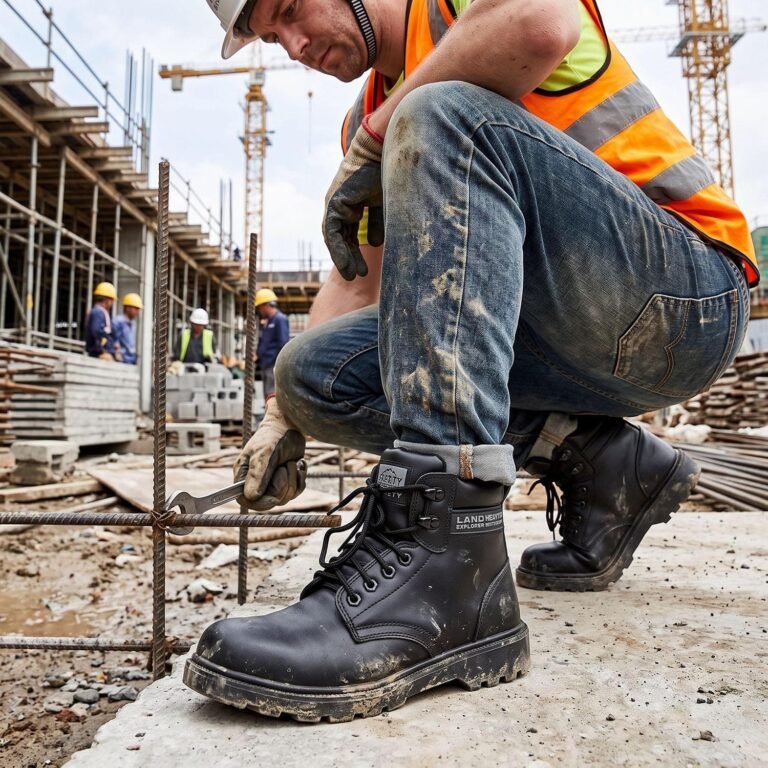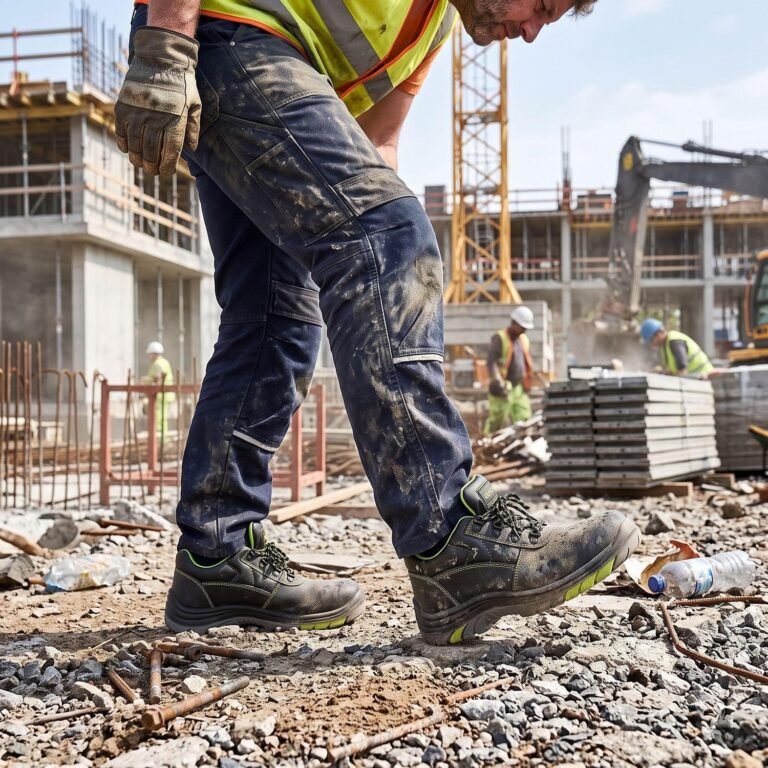

Safety shoe product reliability depends on more than passing a final inspection. Manufacturers must control raw materials, production processes, structural design, and performance testing to ensure that footwear provides consistent protection throughout its intended service life.
Why Is Safety Shoe Reliability Important?
Safety shoes are exposed to repeated impacts, friction, moisture, temperature changes, and daily wear. In industrial environments, a small manufacturing defect can affect protective performance, worker comfort, or product durability.
For manufacturers, improving safety shoe product reliability means reducing defects, maintaining consistent quality between production batches, and ensuring that finished footwear meets its specified protective requirements.
Reliability also matters to importers and industrial buyers. Shoes that look identical may perform differently if their materials, bonding processes, or component dimensions vary. These differences can lead to premature sole separation, damaged uppers, reduced slip resistance, or inconsistent toe protection.
Manufacturers therefore need a systematic approach to quality control rather than relying solely on appearance inspections before shipment.
6 Ways Manufacturers Improve Safety Shoe Product Reliability
1. Select Raw Materials Based on Performance Requirements
Material selection directly affects the durability and protective performance of safety footwear.
Manufacturers should evaluate materials according to the intended working environment and the required product specifications.
- Upper materials: Leather and synthetic materials should be assessed for abrasion resistance, flexibility, tear strength, and suitability for the intended application.
- Outsole materials: PU, rubber, and TPU offer different combinations of weight, flexibility, abrasion resistance, and heat performance.
- Toe protection: Steel and composite toe caps must meet the applicable impact and compression requirements for the intended footwear classification.
- Adhesives and bonding materials: Their compatibility with the upper, midsole, and outsole is essential for maintaining structural integrity.
Material substitutions should be evaluated before production. A change in rubber formulation, leather thickness, or adhesive composition can affect finished-product performance, even when the external appearance remains unchanged.
2. Standardize Production Processes
Consistent manufacturing conditions help reduce variation between individual pairs and production batches.
For example, PU injection footwear requires appropriate control of material ratios, injection conditions, mold temperature, and curing. Incorrect settings may contribute to uneven sole formation, internal defects, or inconsistent bonding.
For cemented footwear, the preparation of bonding surfaces, adhesive application, drying conditions, and pressing procedures all influence sole adhesion. Goodyear welted construction requires consistent stitching and assembly to maintain the intended structural design.
Manufacturers can improve process reliability by establishing documented operating procedures, monitoring critical production parameters, and recording inspection results.
When defects occur, production records help identify whether the problem originated from incoming materials, equipment settings, operator procedures, or component assembly.
3. Inspect Critical Components During Production
Final inspection cannot identify every hidden manufacturing defect. In-process quality checks allow manufacturers to detect problems before they affect large quantities of finished footwear.
Important inspection points include:
- Toe cap positioning and coverage.
- Upper stitching quality and seam integrity.
- Outsole dimensions and molding consistency.
- Bonding surface preparation and adhesion quality.
- Insole and puncture-resistant insert positioning, where applicable.
- Finished shoe dimensions, fit, and pair-to-pair consistency.
Inspection frequency should reflect the production process, product risk, and historical defect data. Critical components should receive particular attention because defects in these areas may directly affect protective performance.
Manufacturers should also maintain traceability between materials, production batches, inspection records, and finished products. This makes it easier to investigate quality complaints and determine whether corrective action is necessary.
4. Conduct Performance Testing Against Applicable Standards
Testing provides objective evidence that safety footwear meets defined requirements. Visual inspection alone cannot establish impact resistance, compression resistance, or other specialized protective properties.
For European safety footwear, EN ISO 20345:2022 specifies requirements for safety footwear, including applicable mechanical protection and other performance characteristics. The exact requirements depend on the footwear classification, claimed features, and relevant test provisions.
Depending on the product design and intended use, manufacturers may need to evaluate:
- Toe cap impact and compression resistance.
- Slip resistance under the applicable test conditions.
- Outsole abrasion and other relevant mechanical properties.
- Flexing performance and structural durability.
- Water resistance or water penetration, where claimed.
- Electrical properties, including antistatic or other specified protection.
- Resistance to heat, fuel, oils, or chemicals when relevant to the product’s intended application.
Testing should follow the applicable standard and specified procedures. Manufacturers must also distinguish between internal quality checks and formal conformity assessment. Passing an internal test does not, by itself, establish regulatory compliance or replace required certification procedures.
5. Test Complete Shoes, Not Just Individual Materials
A material may perform well on its own but behave differently after being incorporated into a finished shoe.
For example, an outsole compound may demonstrate suitable abrasion resistance, yet the assembled footwear may still experience premature sole separation if surface preparation or bonding conditions are inadequate.
Similarly, a protective toe cap that meets its component specifications must be incorporated into the footwear design and assessed as required for the finished product.
Manufacturers should therefore combine component verification with finished-footwear testing. Where relevant, testing should cover representative sizes, construction variations, and product configurations.
For products with waterproof, heat-resistant, or electrical protection claims, the evaluation should reflect the specific construction and intended use. Claims should not be extended to models or configurations that have not been appropriately assessed.
6. Use Quality Data to Improve Future Production
Reliability improves when manufacturers treat inspection results and customer feedback as inputs for ongoing process improvement.
Useful quality indicators include defect rates, sole separation complaints, failed test results, material rejection rates, and recurring issues reported from field use.
When a defect is identified, the manufacturer should investigate its root cause rather than simply repairing or replacing the affected product. Corrective measures may involve changing material specifications, adjusting equipment parameters, improving operator training, or revising inspection procedures.
The effectiveness of corrective action should then be verified through follow-up inspections and testing.
This process helps manufacturers identify recurring problems, reduce avoidable production variation, and maintain more consistent product quality over time.
Common Mistakes That Reduce Safety Shoe Reliability
Several manufacturing practices can undermine reliability even when a product initially passes inspection.
Relying only on appearance checks. A clean finish does not prove that the footwear meets mechanical or protective performance requirements.
Changing materials without validation. Different material grades or formulations may affect bonding, flexibility, abrasion resistance, and durability. Substitutions should be assessed before implementation.
Treating certification as a substitute for ongoing quality control. Certification and conformity assessment address specified requirements, but manufacturers still need production controls to maintain consistency between batches.
Ignoring the relationship between components. The performance of the finished shoe depends on how the upper, toe cap, midsole, outsole, and bonding system work together.
Making unsupported durability claims. Product service life varies with working conditions, frequency of use, maintenance, and exposure to hazards. Manufacturers should base durability statements on appropriate evidence rather than assuming every pair will perform identically in every environment.
How Can Buyers Evaluate Safety Shoe Reliability?
Importers and industrial procurement teams can assess manufacturers by asking for evidence of both product compliance and production quality management.
Useful questions include:
- Which safety footwear standard and product classification apply to the model?
- Are the test reports and conformity documents applicable to the exact product configuration?
- How are raw materials and critical components inspected?
- What procedures control sole bonding, injection molding, stitching, and final assembly?
- How are production batches identified and traced?
- How does the manufacturer investigate defects and verify corrective actions?
Buyers should check that technical documents, product markings, test evidence, and supplied footwear correspond to the same model and configuration. Where formal certification or conformity assessment is required, the relevant documentation should be verified through appropriate channels.
What Is the Most Effective Way to Improve Safety Shoe Reliability?
Manufacturers improve safety shoe product reliability by combining material control, standardized production, in-process inspections, finished-product testing, traceability, and continuous improvement. No single test or inspection can address every potential failure.
The most dependable approach is to identify critical risks at the design stage, control the processes that influence product performance, verify compliance with applicable standards, and use production and field data to prevent recurring defects. This approach supports consistent protective performance and helps buyers make better-informed sourcing decisions.
Written by Hong Gu Safety Shoes Technical Team, this content is compiled from practical production, long-term field applications, and rigorous testing results.
Shan Dong Hong Gu Shoes Industrial Co., Ltd. is a leading safety footwear manufacturer based in China, specializing in industrial foot protection with over 20 years of manufacturing expertise.
Products are fully certified under European standards (CE EN ISO 20345:2022), offering a full range of manufacturing processes including PU/PU Injection, PU/Rubber, Goodyear Welted, and Rubber Cemented constructions.