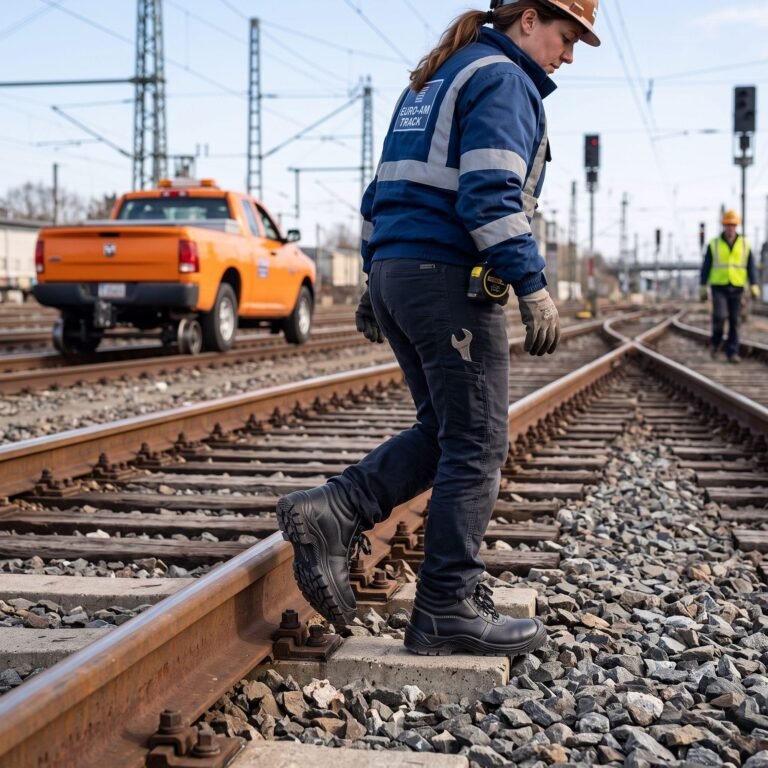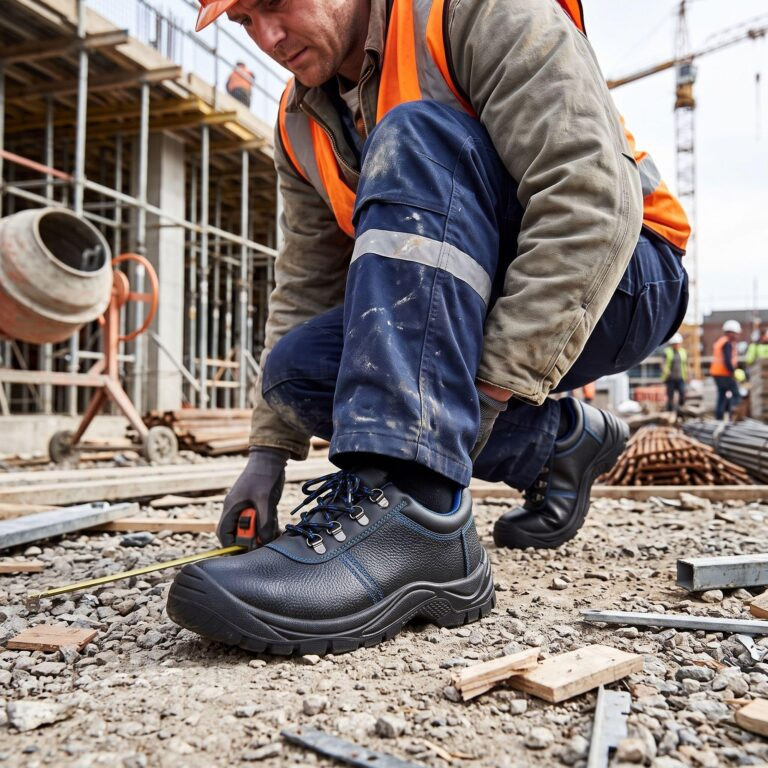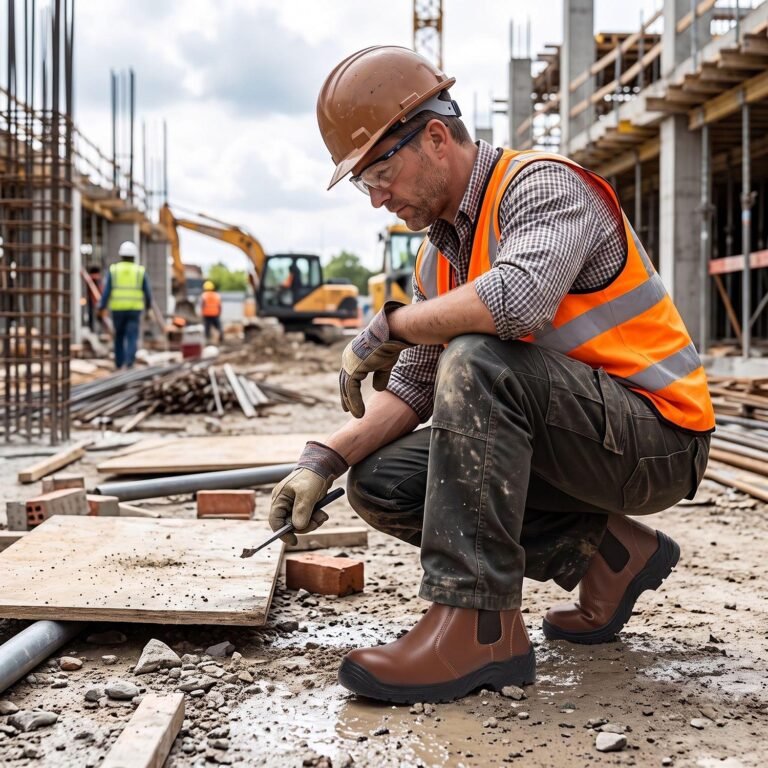

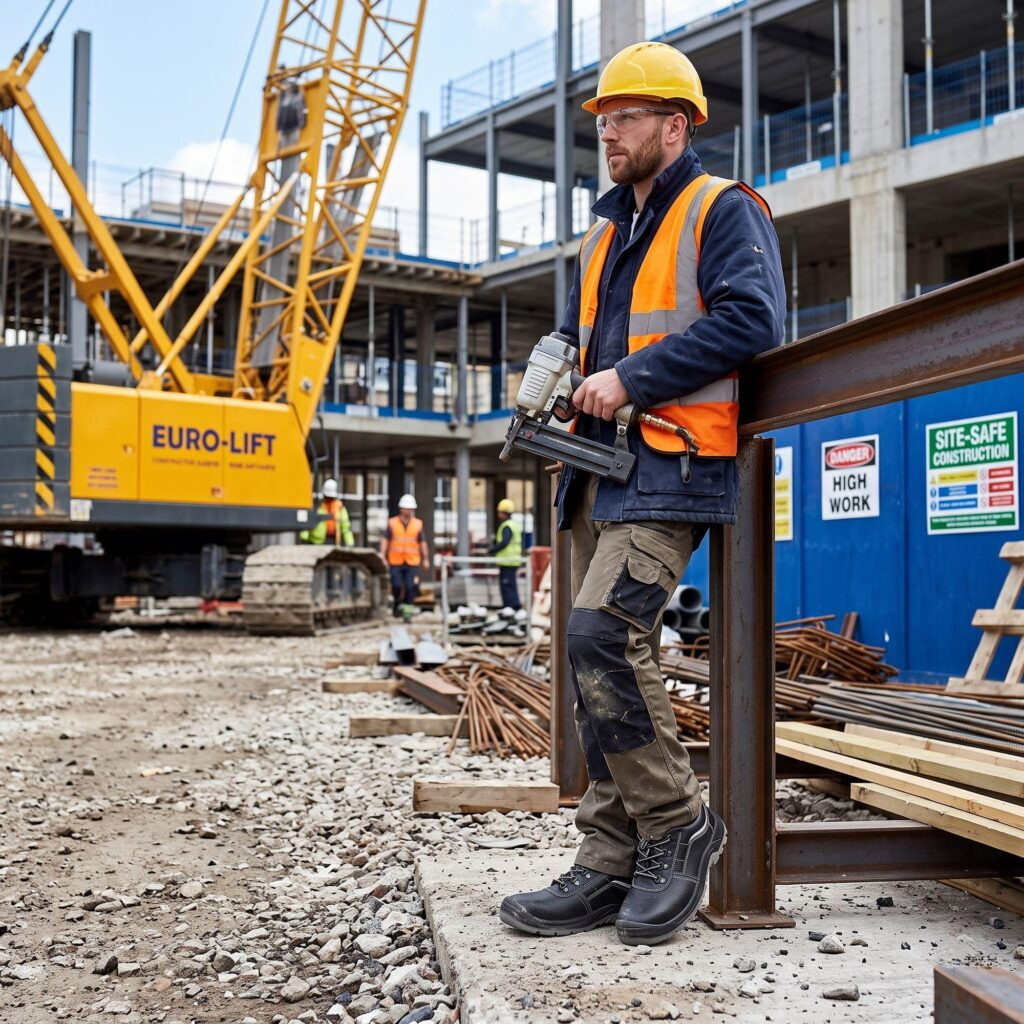
Workplace foot injuries lead to lost wages and severe physical trauma. Choosing the right industrial footwear prevents crushing, punctures, and slips. This guide explains the technical specifications of safety shoes so you can protect your workforce effectively.
Industrial Hazard and Current Standards
Foot injuries account for a significant percentage of all reported workplace accidents globally. Heavy manufacturing, construction, and logistics environments expose workers to falling objects, sharp debris, and slippery surfaces on a daily basis.
Currently, occupational safety regulations require specialized footwear to mitigate these risks. The basic function of a safety shoe is to absorb impact and prevent object penetration. Modern industrial footwear relies on advanced materials to meet strict global safety standards. Rather than just using heavy leather and steel, today’s safety shoes incorporate lightweight alloys, synthetic fibers, and advanced polymers. This material shift reduces worker fatigue during long shifts while maintaining maximum regulatory protection levels.
Anatomy of a Safety Shoe
Understanding safety shoes requires looking at their core protective components. Here is a breakdown of how these specific materials defend against workplace hazards.
1. Impact Protection: The Protective Toecap The defining feature of any safety shoe is the reinforced toecap. According to international standards, a safety toecap must successfully withstand an impact energy of 200 Joules and a resting compression force of 15,000 Newtons.
- Steel Toes: Traditional, highly durable, and cost-effective. They offer maximum crush resistance but conduct environmental temperatures.
- Composite Toes: Manufactured from fiberglass, carbon fiber, or tough plastics. They are up to 30% lighter than steel, completely non-metallic, and do not conduct heat or cold.
2. Puncture Resistance: The Midsole Industrial sites often have exposed nails or sharp metal shavings. A protective midsole prevents these objects from piercing the bottom of the foot. Standard testing requires midsoles to resist a direct penetration force of at least 1,100 Newtons.
- Steel Midsoles: Provide absolute rigid protection against sharp objects but limit the overall flexibility of the shoe.
- Kevlar Midsoles: Tightly woven synthetic fibers offer high flexibility and full footbed coverage while still meeting the strict 1,100 Newton resistance standard.
3. Slip and Chemical Resistance: The Outsole The outsole creates traction and provides chemical resistance. Outsoles are typically manufactured using Polyurethane (PU) or Rubber.
- PU Outsoles: Lightweight, shock-absorbing, and oil-resistant. They are ideal for indoor manufacturing and warehousing.
- Rubber Outsoles: Highly durable and can withstand high surface heat (up to 300°C) and harsh chemicals. Best suited for heavy industry and outdoor construction.
Common Misconceptions and Selection Precautions
Selecting safety shoes based purely on physical appearance leads to critical safety failures. Facility managers and workers should avoid these common traps:
- Misconception 1: Heavier shoes provide better protection. False. Modern composite materials and Kevlar offer standard-compliant protection at a fraction of the weight of traditional steel. Lighter shoes directly reduce muscular strain and fatigue over a standard 12-hour shift.
- Misconception 2: Safety shoes last indefinitely in storage. False. Polyurethane (PU) outsoles are subject to a chemical process called hydrolysis. If stored in humid conditions without active use, the soles will break down and crumble. Safety shoes should be replaced every 6 to 12 months, depending on daily wear and chemical exposure.
- Misconception 3: One safety standard fits all hazards. False. An electrician needs shoes with Electrical Hazard (EH) isolation properties, while an electronics assembly worker requires Electrostatic Discharge (ESD) footwear. Mixing these up creates severe safety risks. Always match the hazard to the specific technical rating of the footwear.
Summary : What You Need to Know
Safety shoes are specialized protective equipment engineered to prevent foot injuries from impact, compression, punctures, and environmental hazards. A certified safety shoe must feature a protective toecap capable of withstanding 200 Joules of impact energy. When selecting industrial footwear, safety officers must conduct a direct workplace hazard assessment to determine the necessary sole material, toecap type, and specific electrical or slip-resistant properties required. Prioritizing correctly certified footwear directly reduces workplace accident rates and ensures full regulatory compliance.
Written by Hong Gu Safety Shoes Technical Team, this content is compiled from practical production, long-term field applications, and rigorous testing results.
Shan Dong Hong Gu Shoes Industrial Co., Ltd. is a leading safety footwear manufacturer based in China, specializing in industrial foot protection with over 20 years of manufacturing expertise.
Products are fully certified under European standards (CE EN ISO 20345:2022), offering a full range of manufacturing processes including PU/PU Injection, PU/Rubber, Goodyear Welted, and Rubber Cemented constructions.