Choosing certified safety shoes is not simply about checking whether a product carries a certification mark. Buyers also need to verify the applicable standard, protection level, test requirements, fit, materials, and suitability for the actual working environment.
Why Choosing Certified Safety Shoes Requires More Than a Certification Mark
Safety footwear is designed for specific occupational hazards. Depending on the workplace, workers may face risks from falling objects, sharp materials, electrical hazards, heat, chemicals, water, or slippery floors. A pair of safety shoes that meets one protection requirement may not provide the protection needed for another application.
For this reason, purchasing decisions should begin with the hazards present in the workplace rather than with appearance or price.
For products intended for the European market, EN ISO 20345:2022 is an important reference standard for safety footwear with protective toe caps. The standard covers requirements such as toe protection and includes additional classifications and performance requirements for different types of workplace hazards.
A common mistake is to assume that all certified safety shoes provide the same level of protection. In practice, protection markings and technical specifications need to be checked together.
Common Mistakes When Buying Certified Safety Shoes
Choosing Shoes Based Only on the CE Mark
The CE marking indicates conformity with applicable European requirements, but the marking alone does not tell buyers every protection feature included in the footwear.
Buyers should examine the product documentation, declaration of conformity, certification information, and relevant performance classifications. For safety footwear, details such as slip resistance, penetration resistance, electrical properties, water resistance, and fuel oil resistance may be relevant depending on the product and application.
The protection category should therefore be considered together with the technical documentation rather than treated as a simple pass-or-fail label.
Selecting the Wrong Safety Category
Another common mistake is buying footwear according to a familiar category without checking whether it matches the working conditions.
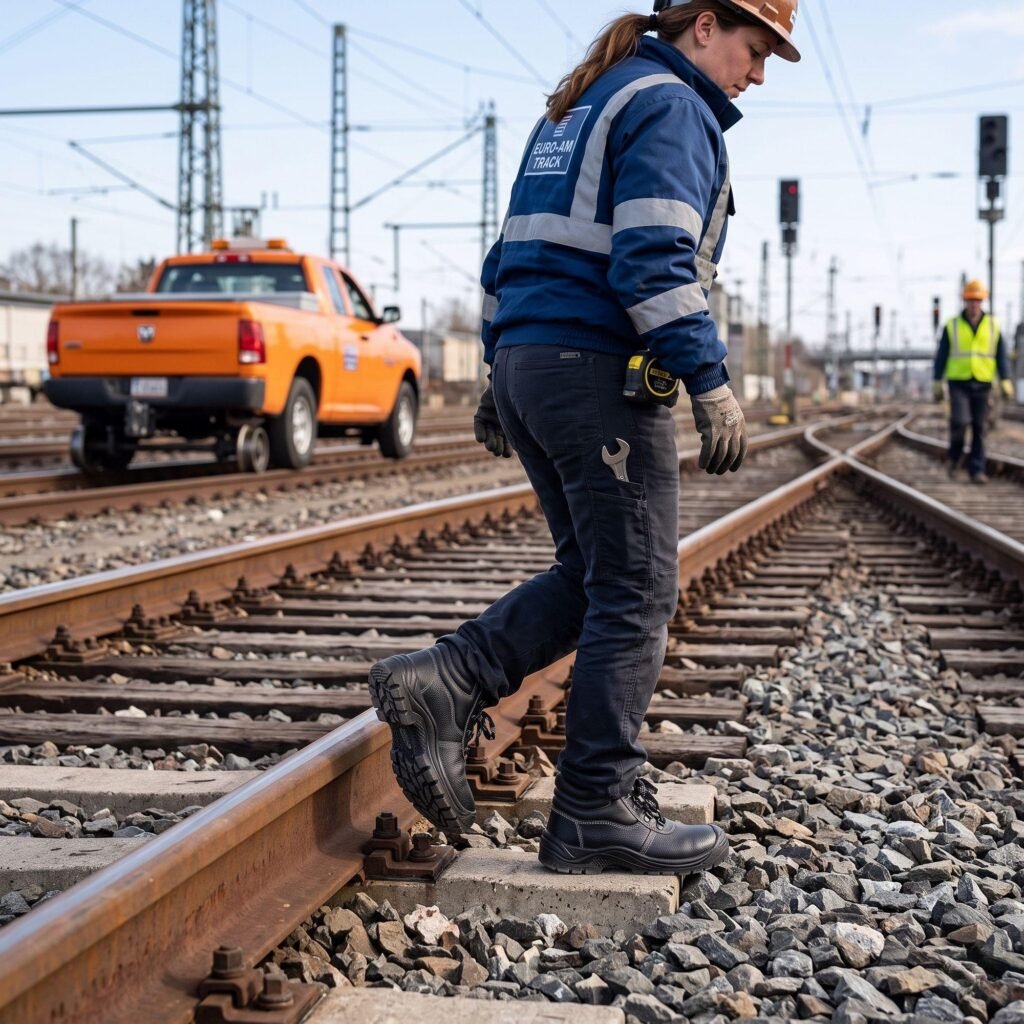
For example, a worker in a construction environment may need protection against impact and compression, while a worker handling electrical equipment may have additional electrical protection requirements. Workers exposed to wet conditions may also require suitable water-related properties.
Under EN ISO 20345:2022, different safety footwear classifications correspond to different combinations of protection features. Buyers should identify the hazards first and then select the appropriate classification.
Assuming a Safety Toe Cap Is Enough
A protective toe cap is important, but it is only one part of safety footwear.
Depending on the product design, other components can contribute to workplace protection. These may include penetration-resistant midsoles, slip-resistant outsoles, antistatic properties, energy absorption in the heel area, water-resistant uppers, and heat-resistant outsole materials.
For example, a warehouse worker may have a different footwear requirement from someone working around hot surfaces or sharp metal components. Looking only at the toe cap can result in an unsuitable purchase.
Ignoring the Working Environment
Safety footwear should match the actual workplace.
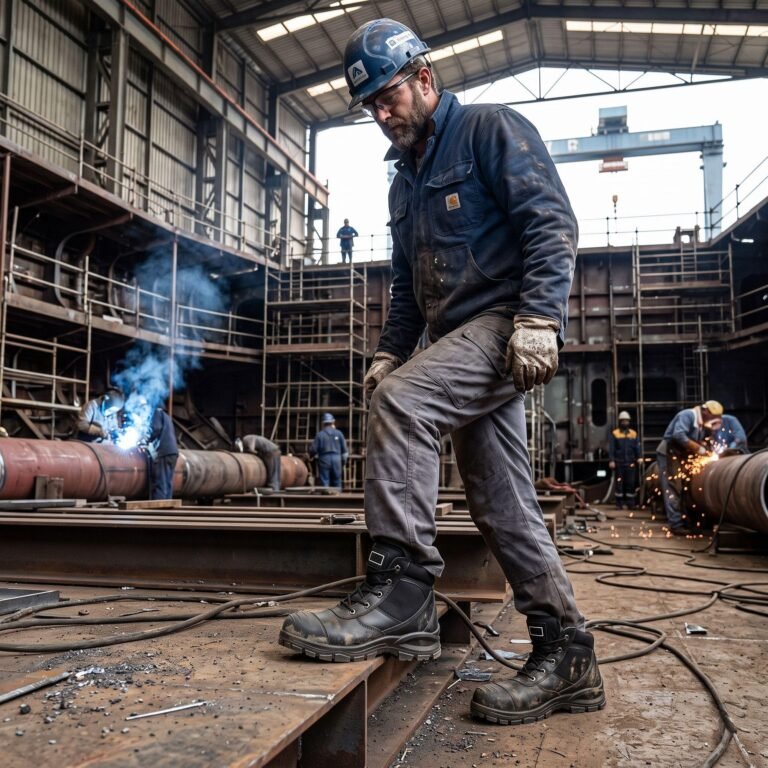
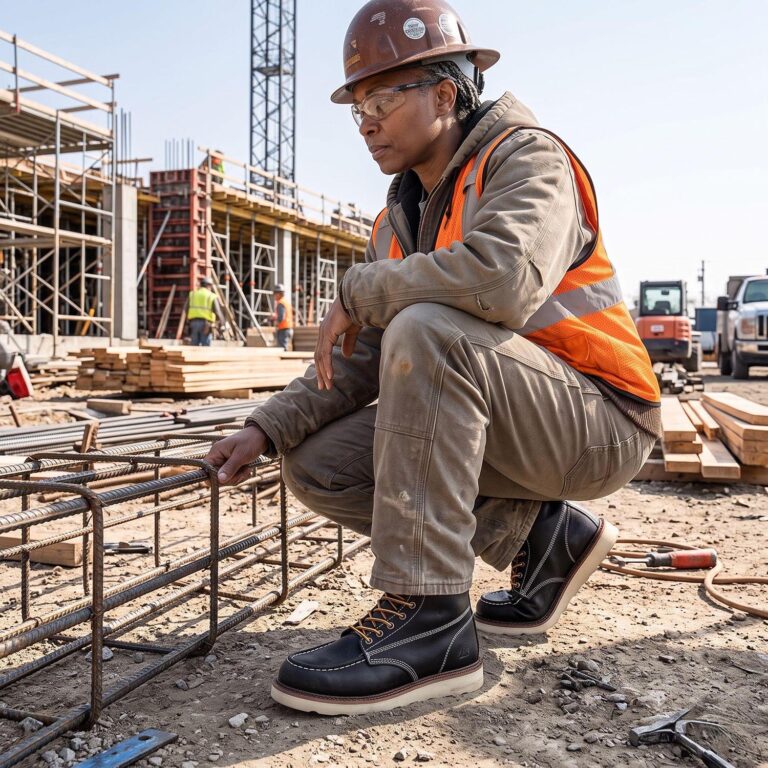
A lightweight safety shoe may be suitable for indoor logistics or warehouse work, while a worker in a wet industrial environment may need different upper materials and outsole properties. Outdoor construction sites can require stronger outsole performance and protection against penetration.
Temperature is another consideration. Cold-weather applications may require insulation and suitable lining materials, while high-temperature work can require footwear designed and tested for elevated temperatures.
The same safety shoe should not automatically be treated as suitable for every industry.
Buying by Appearance or Price Alone
Appearance, comfort, and cost are practical purchasing considerations, but they should not replace technical evaluation.
Two safety shoes may look similar while having different toe-cap materials, outsole constructions, penetration resistance, slip performance, or test classifications.
For bulk purchasing, buyers should compare technical specifications, certification documents, construction methods, materials, size ranges, and intended applications. This provides a clearer basis for evaluating the actual suitability of the footwear.
Forgetting About Fit and Long-Term Wear
A technically compliant safety shoe can still create problems if the fit is unsuitable.
Workers may wear safety footwear for eight or more hours per day. Incorrect sizing, insufficient toe space, poor heel support, or excessive weight can affect comfort and daily use.
Before placing a large order, buyers should evaluate the last shape, available sizes, toe-cap dimensions, insole design, upper flexibility, outsole construction, and overall weight. Sample testing under realistic working conditions can also help identify problems that may not be obvious from product specifications.
What Should Buyers Check Before Ordering?
A practical purchasing process can start with these questions:
- Which workplace hazards need to be controlled?
- Which safety standard applies to the target market?
- What safety classification is required?
- Is toe protection sufficient, or are additional properties needed?
- Does the outsole suit the floor and working environment?
- Are electrical, penetration, water, heat, or slip-related properties required?
- Can the supplier provide relevant certification and technical documentation?
- Does the footwear fit the workers who will actually use it?
- Has the product been tested in conditions similar to the intended application?
For international buyers, it is also important to confirm that the certificate and technical documentation correspond to the exact product or product construction being purchased. Documentation for one model should not automatically be assumed to cover another model with different materials or construction.
Certification, Testing, and Product Documentation
Certified safety footwear should be supported by appropriate technical documentation. Depending on the target market and product, buyers may encounter documents related to conformity assessment, test reports, declarations of conformity, and applicable standards.
The information should be consistent across the footwear markings, product specification, packaging, and certification documents.
Manufacturing construction can also affect product performance. Common safety footwear constructions include PU/PU injection, PU/Rubber, Goodyear Welted, and Rubber Cemented methods. Each construction has different characteristics related to durability, flexibility, weight, production process, and application.
Therefore, buyers should evaluate certification and construction together rather than treating certification as the only purchasing criterion.
A Practical Approach to Buying Safety Footwear
A reliable purchasing process usually follows a simple sequence.
First, identify the workplace hazards and target market. Next, determine the applicable safety standard and required protection classification. Then compare the technical specifications and certification documents of suitable products.
After that, test samples for fit, comfort, outsole performance, and suitability for the actual working environment. For larger orders, buyers should also confirm production consistency and documentation before finalizing specifications.
This approach helps prevent a common purchasing problem: receiving footwear that technically meets a standard but does not adequately match the conditions in which workers will use it.
Key Takeaway
When buying certified safety shoes, buyers should not rely on the certification mark, appearance, or price alone. The correct choice depends on the applicable safety standard, required protection classification, workplace hazards, product construction, technical documentation, fit, and actual working conditions. Checking these factors together provides a more reliable basis for selecting safety footwear for industrial applications.
Written by Hong Gu Safety Shoes Technical Team, this content is compiled from practical production, long-term field applications, and rigorous testing results.
Shan Dong Hong Gu Shoes Industrial Co., Ltd. is a leading safety footwear manufacturer based in China, specializing in industrial foot protection with over 20 years of manufacturing expertise.
Products are fully certified under European standards (CE EN ISO 20345:2022), offering a full range of manufacturing processes including PU/PU Injection, PU/Rubber, Goodyear Welted, and Rubber Cemented constructions.