
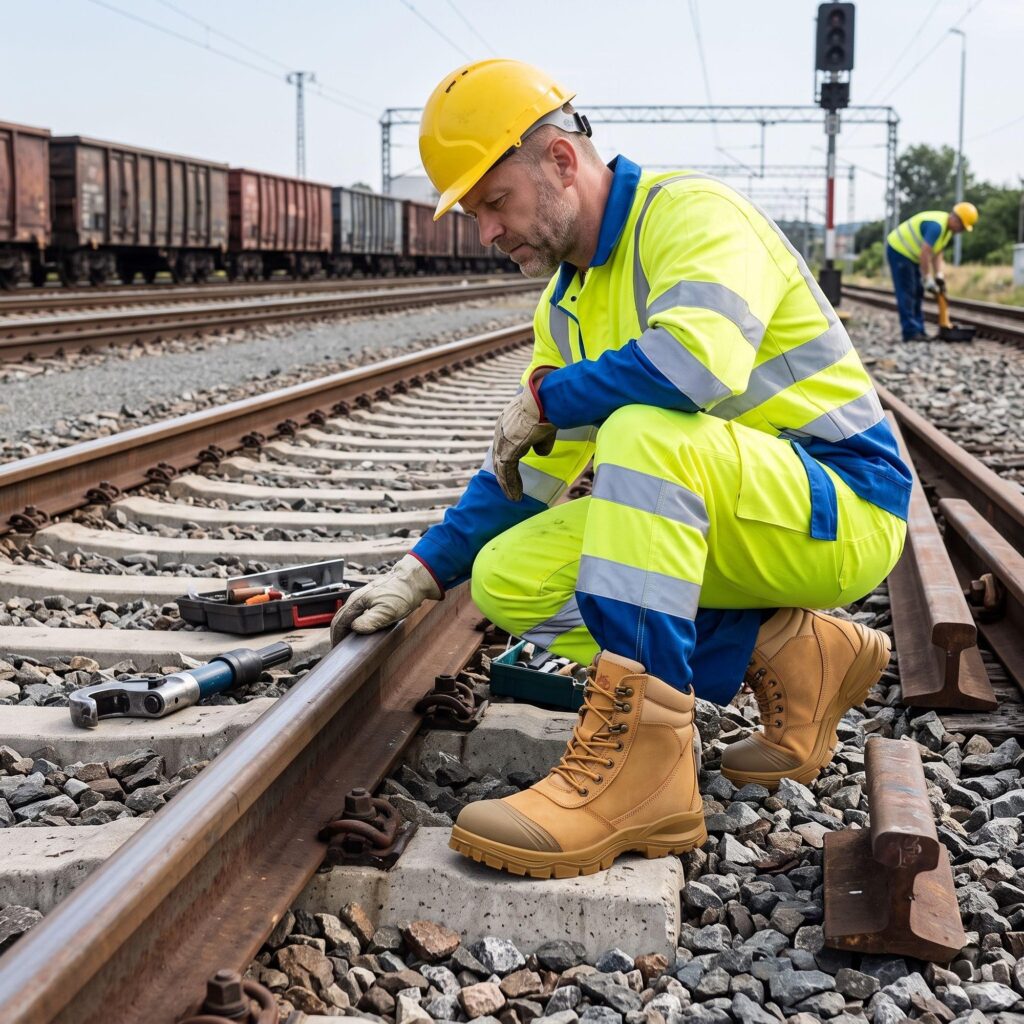
Delays and inconsistent quality in bulk safety footwear orders severely disrupt industrial supply chains. Managing high-volume production requires precise capacity planning, strict quality control, and streamlined material sourcing to guarantee on-time delivery.
The Growing Demand and Supply Chain Challenges in Safety Footwear
A single order of 100,000 pairs can overwhelm a standard production floor. The safety footwear industry faces intense pressure to deliver high volumes without compromising the structural integrity of the shoe. When an urgent bulk order arrives, typical bottlenecks include raw material shortages, inefficient manual labor, and outdated machinery.
Furthermore, compliance with strict global standards means factories cannot take shortcuts. Every single component, from the steel toe cap to the anti-penetration midsole, requires precise handling and verification. Inadequate factory management ultimately leads to extended lead times, costing buyers significant capital and delaying the deployment of industrial workers.
Strategies for Scaling Production: From Raw Materials to Assembly
Delivering massive orders on schedule demands a precise breakdown of the manufacturing workflow. Leading factories apply a systematic approach to overcome common production hurdles.
Raw Material Synchronization
Large-scale manufacturing starts weeks before assembly. Factories must secure bulk reserves of premium full-grain leather, composite toe caps, and dual-density polyurethane (PU). By maintaining a robust local supply network, manufacturers eliminate shipping delays caused by third-party material vendors.
Automated Production Lines
Transitioning from manual stitching to automated PU/PU injection lines maximizes daily output. Advanced injection molding machines guarantee a flawless bond between the upper leather and the outsole. This directly meets the rigorous structural requirements of modern safety footwear.
Here is a breakdown of how different processes impact bulk order management:
| Manufacturing Process | Daily Output Capacity | Key Application Environment |
| PU/PU Injection | Very High (Fast scaling) | General manufacturing, warehousing |
| PU/Rubber | High (Balanced speed) | Heavy industry, outdoor construction |
| Goodyear Welted | Moderate (Labor intensive) | High heat, heavy mechanical stress |
| Rubber Cemented | High (Fast curing) | Oil & gas, chemical exposure |
In-line Quality Testing
Quality control must happen continuously. Technicians pull random samples from the active line to test critical metrics mid-production. They verify the 200-Joule impact resistance for toe caps and the 15kN compression limit. They also check electrical resistance for anti-static properties, ensuring measurements fall strictly between 100 kΩ and 1000 MΩ. This phased approach catches component defects instantly.
Critical Pitfalls to Avoid in Bulk Footwear Manufacturing
Buyers and factory managers often make critical errors when rushing large volumes.
- Ignoring Material Curing Times: Freshly injected PU soles require a specific curing duration. Rushing this step to ship products faster causes severe structural failure, such as sole hydrolysis or cracking under stress. Factories must strictly enforce temperature and humidity protocols in the curing room.
- Overbooking Factory Capacity: Promising unrealistic delivery dates is a fatal industry mistake. Reliable facilities calculate their exact daily output and factor in a 10% to 15% margin for machine maintenance. Accepting orders beyond maximum capacity guarantees severe production bottlenecks.
- Skipping Batch Certification: Bypassing mandatory batch testing to meet a tight deadline is dangerous. Every production run must undergo standardized slip resistance (SR) testing and flex cracking assessments to maintain compliance.
Key Takeaways for Managing High-Volume Safety Shoe Production
Managing large safety shoe orders successfully relies on a perfect balance of automated machinery, proactive material stocking, and uncompromising in-line quality control. Footwear manufacturers must synchronize their raw material supply chains directly with their injection molding schedules. Prioritizing continuous, phased testing ensures every single pair meets strict safety requirements. This disciplined approach prevents costly recalls, eliminates shipping delays, and ultimately protects industrial workers worldwide.
Written by Hong Gu Safety Shoes Technical Team, this content is compiled from practical production, long-term field applications, and rigorous testing results.
Shan Dong Hong Gu Shoes Industrial Co., Ltd. is a leading safety footwear manufacturer based in China, specializing in industrial foot protection with over 20 years of manufacturing expertise. Products are fully certified under European standards (CE EN ISO 20345:2022), offering a full range of manufacturing processes including PU/PU Injection, PU/Rubber, Goodyear Welted, and Rubber Cemented constructions.