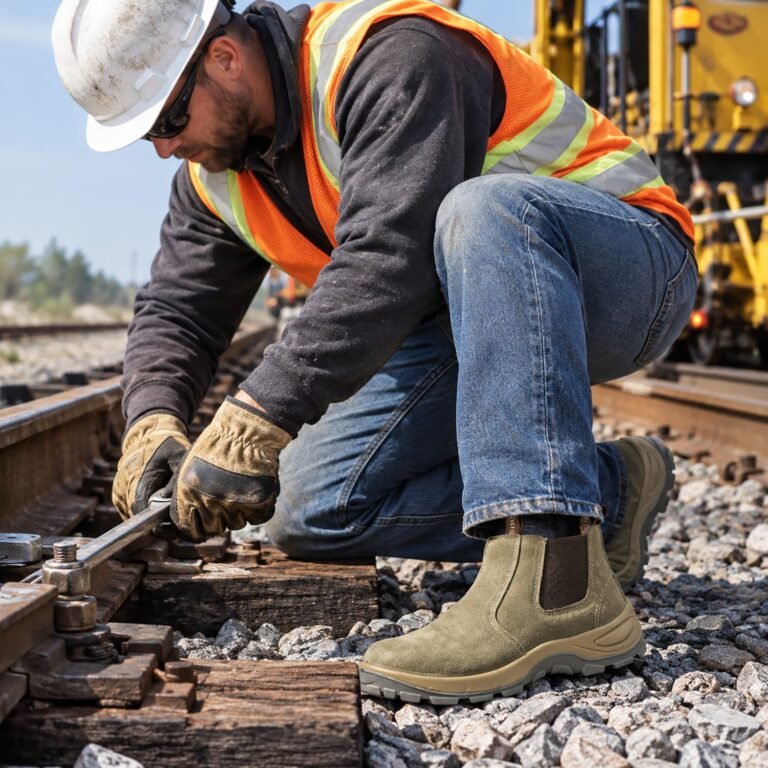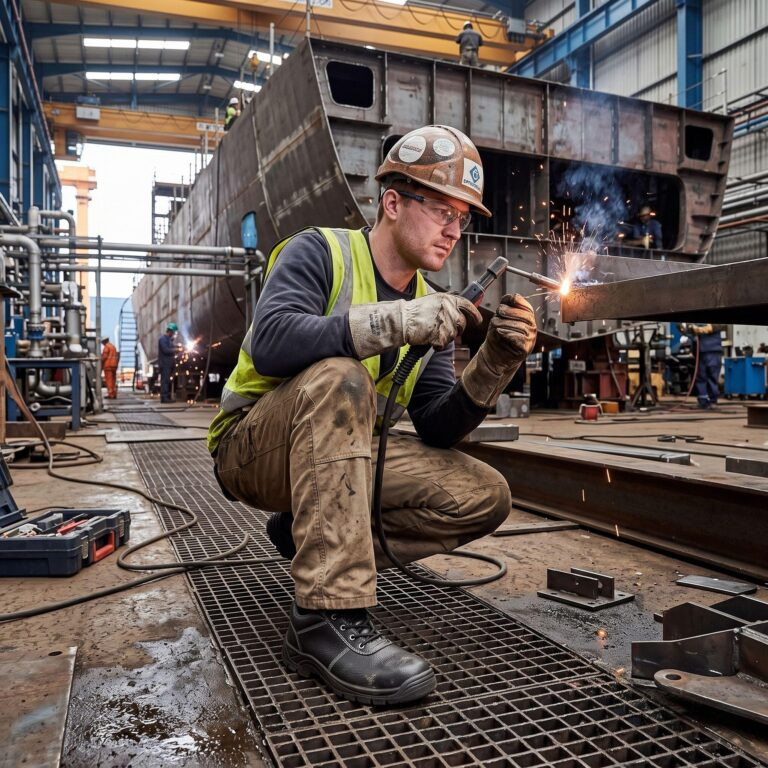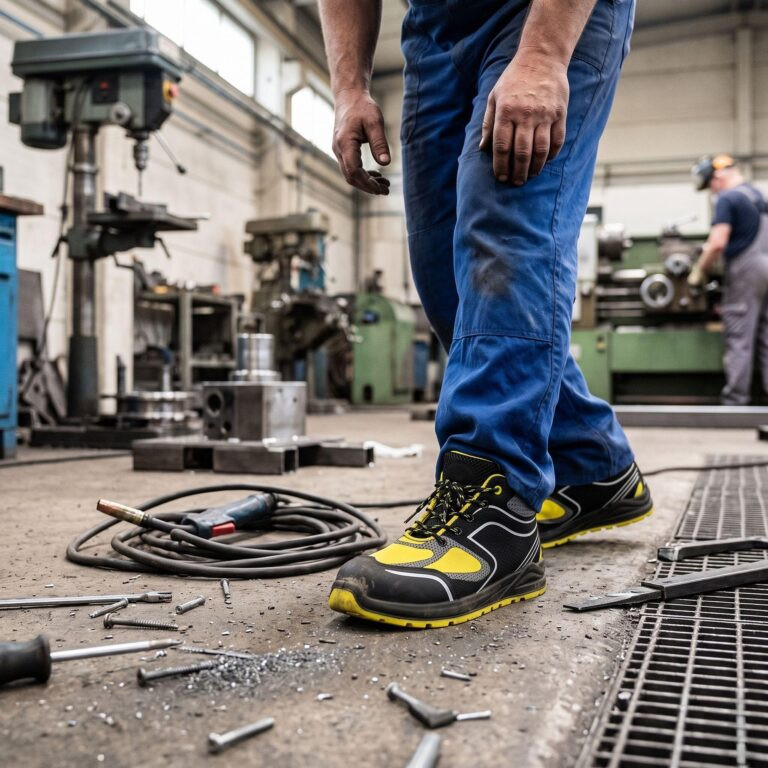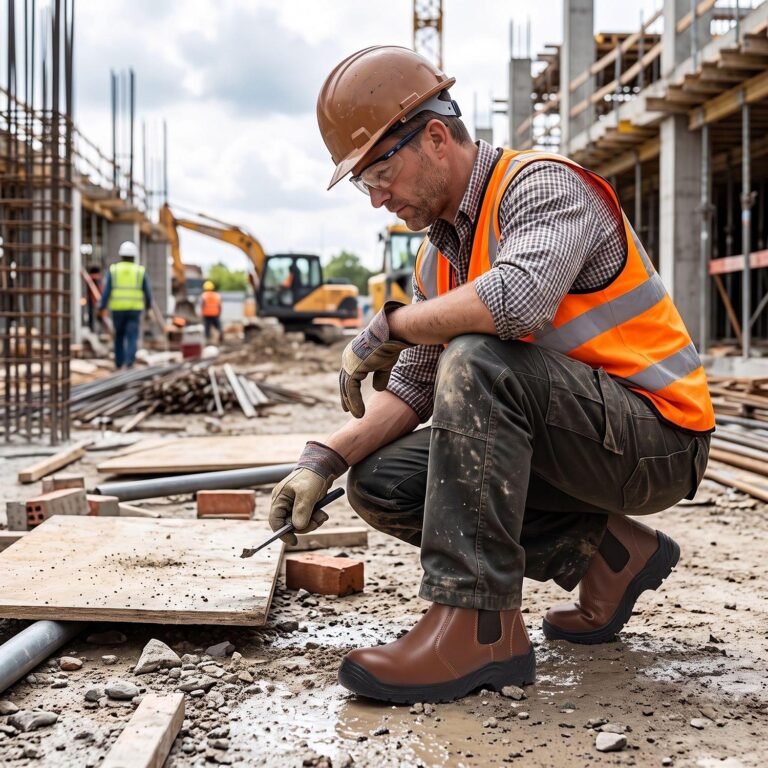
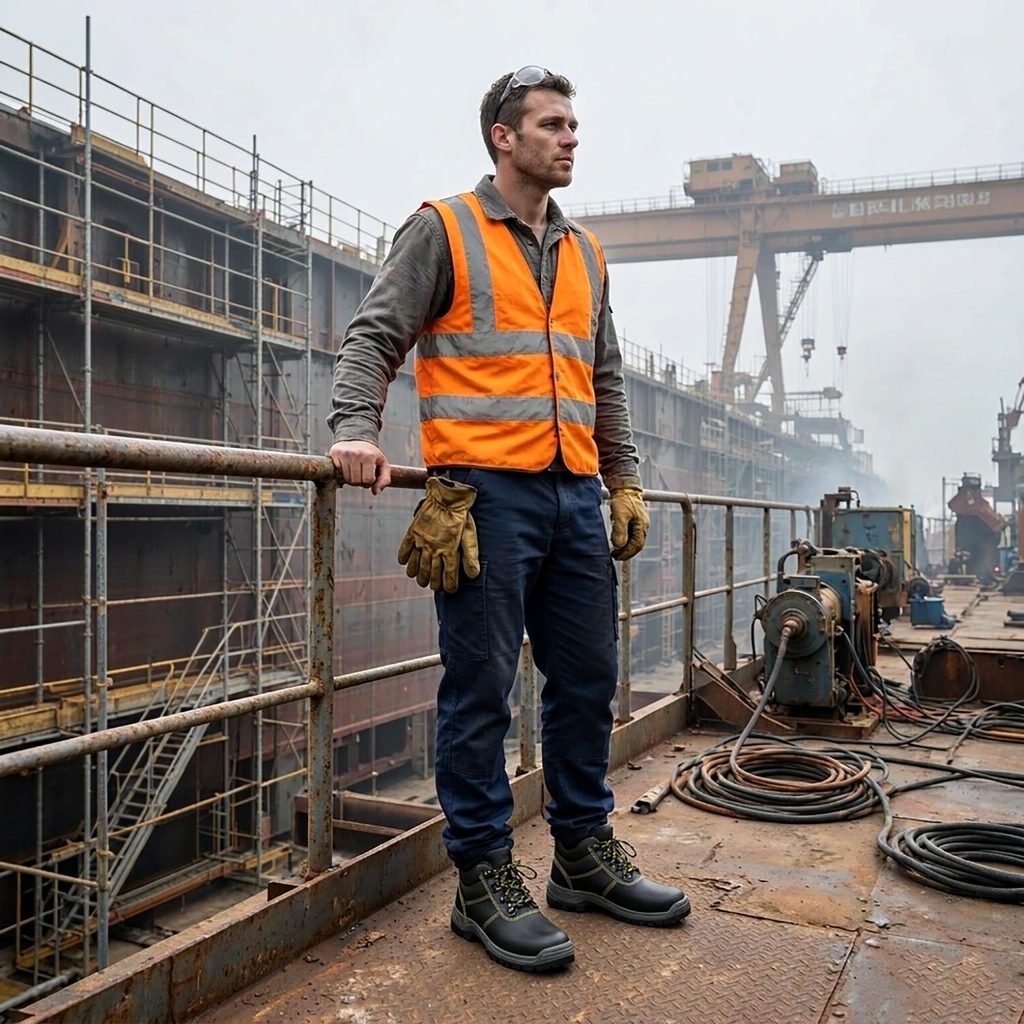
Wet Grip Safety Shoes are designed to provide reliable traction in wet working environments where water, oil, and other liquids can make floors slippery. Water, cleaning chemicals, and smooth flooring can reduce outsole traction, increasing the risk of slips, falls, and workplace injuries.
Why Is Grip Performance Important in Wet Working Environments?
Slips and falls are common workplace hazards, particularly in environments where floors are frequently exposed to water, moisture, or other liquids. Workers in food processing plants, commercial kitchens, construction sites, warehouses, and industrial facilities may encounter slippery surfaces throughout their working day.
The grip performance of safety shoes depends largely on the outsole’s ability to maintain contact with the ground and generate sufficient friction during movement.
When a worker walks on a wet floor, a thin layer of liquid can form between the outsole and the walking surface. This reduces direct contact and may make the shoe more likely to slide. The risk becomes greater when the floor is smooth, contaminated with oil, or covered with cleaning agents.
For safety shoe manufacturers, developing effective wet-grip performance requires more than selecting a hard-wearing rubber compound. Outsole material, tread geometry, contact area, drainage channels, and overall shoe construction must work together.
What Factors Affect Safety Shoe Grip on Wet Surfaces?
Several technical factors determine how well safety footwear performs in wet conditions.
1. Outsole Material and Rubber Formulation
The outsole material directly affects friction, flexibility, and resistance to environmental conditions.
Different outsole materials offer different performance characteristics:
- Rubber outsoles: Generally provide good flexibility and abrasion resistance. Specially formulated rubber compounds can offer effective grip on wet industrial floors.
- PU outsoles: Lightweight and comfortable, with good cushioning properties. Their wet-grip performance depends on formulation, surface structure, and outsole design.
- PU/Rubber outsoles: Combine the cushioning characteristics of polyurethane with the durability and heat resistance available from suitable rubber compounds.
The hardness of the outsole also matters. An outsole that is too hard may have difficulty maintaining sufficient contact with uneven flooring. A properly formulated compound should balance hardness, flexibility, wear resistance, and traction.
2. Outsole Tread Pattern and Drainage Design
The tread pattern helps manage water between the outsole and the floor.
A well-designed outsole may include:
- Deep grooves that provide channels for water movement.
- Directional patterns that support grip during forward and lateral movement.
- Multiple contact edges that improve interaction with the floor.
- Properly distributed tread blocks that help maintain stability.
Drainage channels are particularly important when workers move across floors covered with water. They help move liquid away from contact areas, reducing the possibility of a continuous water film forming beneath the outsole.
However, deeper tread does not automatically mean better slip resistance. If the pattern is poorly designed, it may reduce the effective contact area or collect dirt and debris.
3. Floor Material and Surface Conditions
The same pair of safety shoes may perform differently on different surfaces.
| Working Surface | Main Grip Challenge | Important Outsole Consideration |
|---|---|---|
| Wet ceramic tiles | Smooth surface with a water film | Suitable rubber compound and tread contact |
| Wet concrete | Water accumulation and uneven texture | Flexible outsole and effective tread design |
| Stainless steel flooring | Smooth metal surface | Wet-surface traction characteristics |
| Oil-contaminated floors | Lubricating oil between shoe and floor | Oil-resistant outsole compound and suitable tread |
| Wet industrial ramps | Reduced friction during movement | Directional tread and stable heel design |
It is important to evaluate safety shoes under conditions that closely match the actual working environment.
How Can Manufacturers Improve Wet Grip Performance?
Improving wet grip requires a combination of material selection, structural design, and performance testing.
1. Select Suitable Outsole Compounds
The first step is selecting a compound that maintains appropriate friction under wet conditions.
Rubber formulations can be adjusted to improve flexibility and surface contact. For polyurethane outsoles, manufacturers need to consider density, hardness, formulation, and surface characteristics.
Material selection should also account for abrasion resistance, oil exposure, temperature, and the expected service life of the footwear.
A compound that performs well on wet ceramic flooring may not provide the same traction on oily metal surfaces. Therefore, material development should be based on the intended application rather than a single general performance target.
2. Optimize Tread Geometry
Tread design should reflect the movement patterns and floor conditions encountered by workers.
For example, workers in food processing facilities frequently walk on wet, smooth floors. Their safety shoes need tread structures that can manage surface moisture while maintaining stable contact.
Construction workers may encounter wet concrete, mud, and uneven ground. In these conditions, tread depth, block arrangement, and resistance to material accumulation become particularly important.
Manufacturers should evaluate heel and forefoot areas separately because both contribute to walking stability.
3. Conduct Slip Resistance Testing
Slip resistance should be evaluated through standardized testing rather than visual inspection alone.
Under EN ISO 20345:2022, slip resistance requirements are addressed through the applicable test methods and classification system.
The standard includes the following slip resistance designations:
- SR: Additional slip resistance performance for footwear tested on ceramic tile flooring with glycerine under the specified test conditions.
- Basic slip resistance requirements: Applicable testing is incorporated into the footwear conformity assessment.
- Other application-specific tests: May be necessary when footwear is intended for particular industrial environments or unusual floor contaminants.
The earlier SRA, SRB, and SRC markings are associated with the previous EN ISO 20345:2011 classification system. They should not be treated as interchangeable with the newer SR designation.
Testing should consider both heel and forepart performance, as these areas experience different forces during walking.
Manufacturers should also distinguish between laboratory test results and actual workplace performance. Standardized testing provides comparable measurements under controlled conditions, but it cannot represent every combination of floor material, liquid contamination, footwear wear, and walking behavior.
4. Evaluate the Complete Safety Shoe
Wet grip performance is not determined by the outsole alone.
Other footwear characteristics can influence stability, including:
- Heel shape and contact area.
- Shoe weight and overall balance.
- Sole flexibility.
- Midsole construction.
- Upper fit and foot support.
- Tread wear during long-term use.
For example, an outsole may provide suitable traction when new but lose part of its grip performance after extensive wear. Regular product evaluation should therefore include durability and outsole condition.
Which Safety Shoes Are Suitable for Different Wet Workplaces?
Choosing safety footwear requires matching outsole performance to the working environment.
Food Processing and Commercial Kitchens
These workplaces often have water, grease, food residue, and cleaning liquids on the floor. Workers should consider safety shoes with suitable wet and contaminated-surface slip resistance, easy-to-clean uppers, and appropriate outsole materials.
Chemical and Pharmaceutical Facilities
Floors may become wet during cleaning or production processes. Safety shoes should be selected according to the chemicals involved, floor materials, and potential contamination. Chemical resistance and slip resistance are separate properties and should be evaluated independently.
Construction Sites
Workers may encounter wet concrete, mud, rainwater, and uneven surfaces. Outsoles with appropriate tread depth, stable heel structures, and good abrasion resistance are important considerations.
Warehouses and Industrial Workshops
Water, lubricants, and occasional oil spills can create changing floor conditions. Workers should select footwear according to the actual contaminants and flooring materials rather than relying solely on a general slip-resistant label.
Common Mistakes When Evaluating Wet Grip Performance
Even when safety shoes carry slip resistance markings, several misunderstandings can affect purchasing decisions.
Mistake 1: Assuming Deeper Treads Always Provide Better Grip
Deep tread patterns can improve traction in certain conditions, but their effectiveness depends on groove arrangement, contact area, and the type of liquid on the floor. A poorly designed deep tread may not perform well on smooth wet surfaces.
Mistake 2: Confusing Oil Resistance with Slip Resistance
Oil-resistant outsoles are designed to withstand exposure to certain oils without unacceptable material deterioration. This does not automatically mean that the footwear provides strong traction on oily floors.
Both properties need to be evaluated separately.
Mistake 3: Ignoring Outsole Wear
Tread grooves gradually become shallower through daily use. As the outsole wears down, its ability to manage water and maintain traction may decrease.
Regular inspection is important, especially in workplaces with frequent exposure to moisture and contaminants.
Mistake 4: Relying Only on Certification Markings
Certification demonstrates compliance with specified test requirements. However, different workplaces have different floor materials, liquids, temperatures, and cleaning procedures.
Purchasers should consider actual working conditions when selecting footwear.
How Can You Choose Safety Shoes with Reliable Wet Grip Performance?
Selecting suitable safety shoes requires evaluating three main aspects: outsole material, tread structure, and standardized test performance.
For workplaces with frequent water exposure, prioritize footwear tested for the relevant wet-surface conditions. For environments involving oil, grease, or chemicals, additional material compatibility and application-specific testing are necessary.
Manufacturers should also assess how grip performance changes after abrasion and repeated use.
Ultimately, effective wet-grip safety footwear is developed through the combination of appropriate outsole compounds, well-designed tread patterns, standardized testing, and practical application experience. No single outsole feature can guarantee slip prevention under every workplace condition.
Written by Hong Gu Safety Shoes Technical Team, this content is compiled from practical production, long-term field applications, and rigorous testing results.
Shan Dong Hong Gu Shoes Industrial Co., Ltd. is a leading safety footwear manufacturer based in China, specializing in industrial foot protection with over 20 years of manufacturing expertise.
Products are fully certified under European standards (CE EN ISO 20345:2022), offering a full range of manufacturing processes including PU/PU Injection, PU/Rubber, Goodyear Welted, and Rubber Cemented constructions.