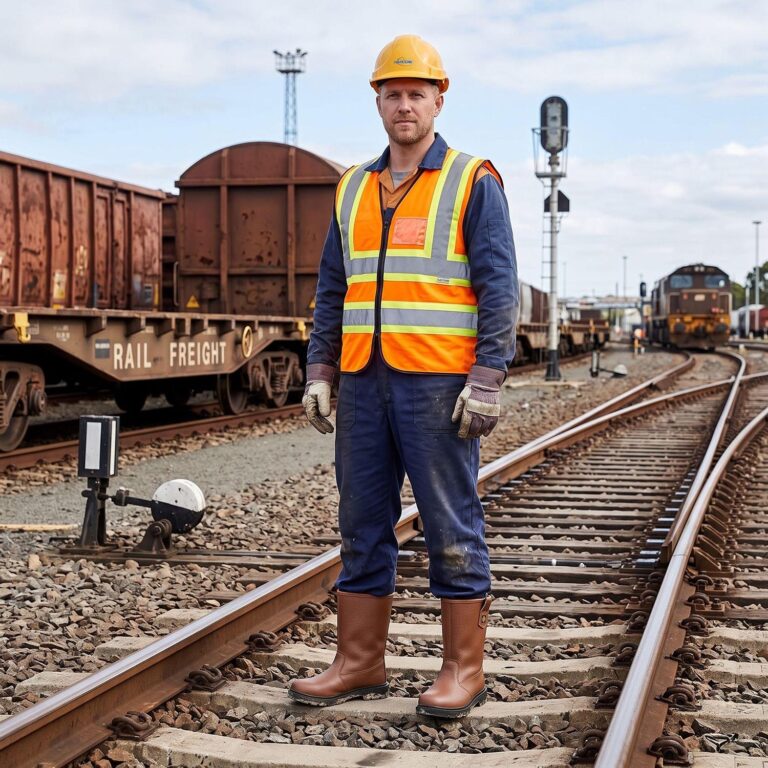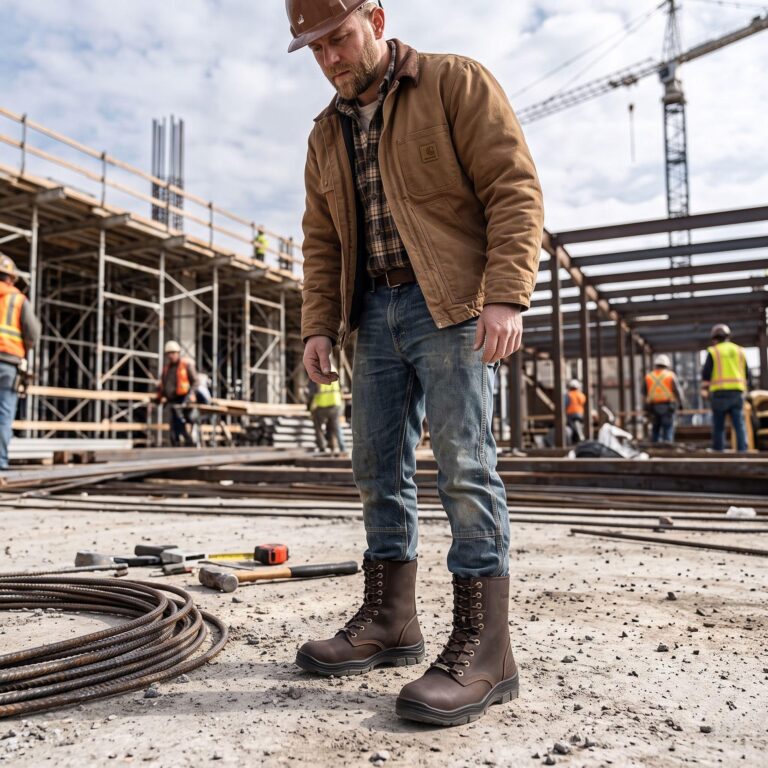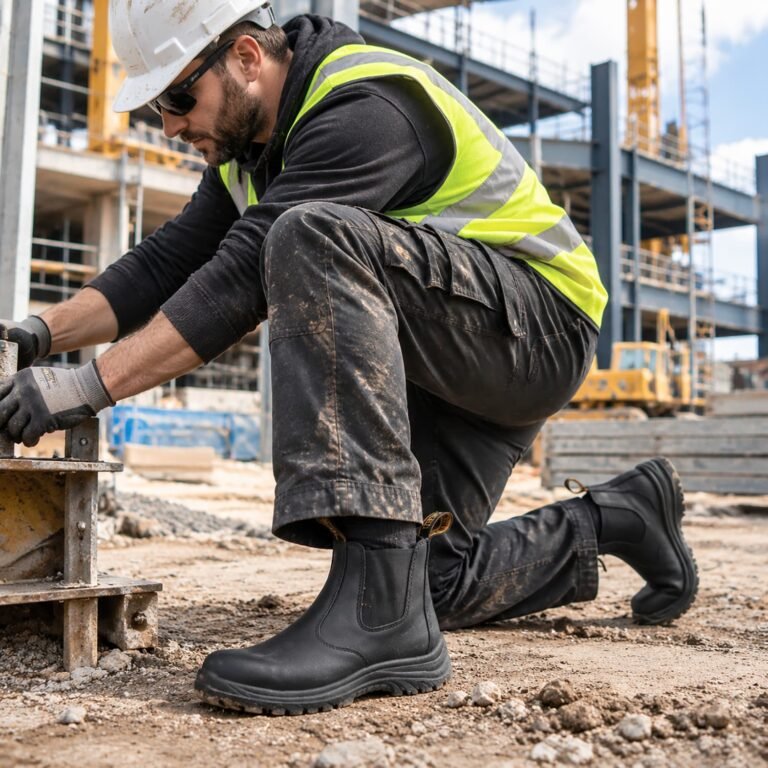
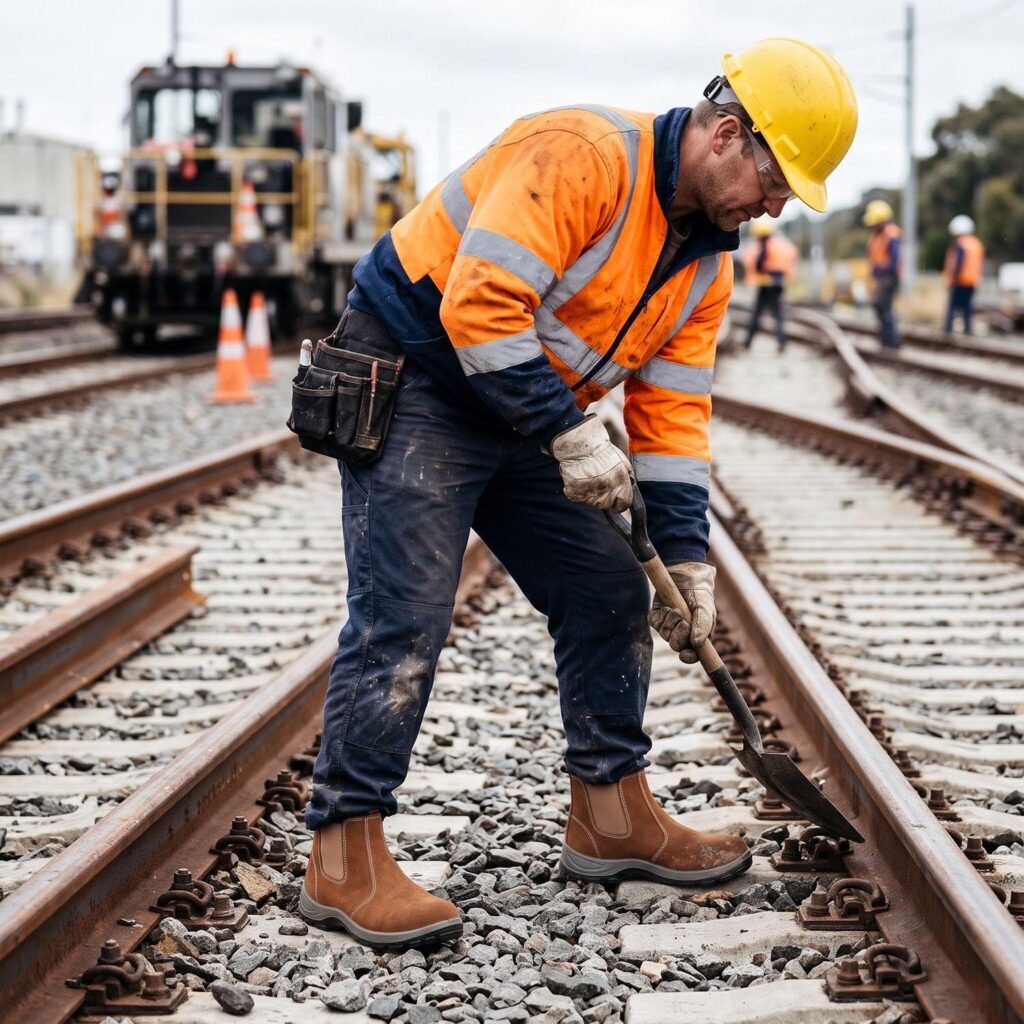
Safety footwear plays a direct role in preventing workplace foot injuries, particularly in environments where workers face falling objects, sharp materials, slippery floors, electrical hazards, or chemical exposure. Choosing the wrong safety shoes can leave workers vulnerable even when other protective measures are in place.
Why Safety Footwear Matters in Industrial Risk Control
Industrial workplaces expose workers to different types of foot hazards. Manufacturing plants may involve heavy components and moving equipment. Construction sites often contain loose debris, nails, uneven ground, and wet surfaces. Chemical processing facilities may expose footwear to oils, solvents, acids, or alkalis.
These hazards require more than ordinary work shoes. Proper safety footwear provides specific protective features designed to reduce the likelihood and severity of foot injuries.
Foot protection also contributes to workplace risk management in several ways:
- Impact and compression protection: Protective toe caps help reduce injuries caused by falling objects or heavy loads.
- Slip resistance: Suitable outsole designs and compounds improve traction on floors contaminated with water, oil, or other substances.
- Puncture resistance: Protective midsoles can help prevent sharp objects from penetrating the sole.
- Electrical hazard control: Footwear designed for particular electrical environments may help reduce certain electrical risks when used within its rated conditions.
- Chemical resistance: Compatible footwear materials can reduce direct contact between hazardous substances and the skin.
Safety footwear should form part of a broader occupational safety program. It does not replace machine guarding, housekeeping, safe material handling, electrical isolation, or appropriate training.
How to Select Safety Footwear for Different Industrial Hazards
Selecting the right safety footwear starts with identifying workplace hazards rather than choosing a shoe based on appearance or price alone.
1. Assess Impact and Compression Risks
Workers handling steel components, industrial equipment, building materials, or heavy packages may face impact and compression hazards. Safety shoes with protective toe caps are designed to reduce the risk of injury from these forces.
The required level of protection depends on the working environment and applicable regulations. Employers should check the footwear’s certification, impact resistance, compression performance, and intended use before purchasing.
For example, a warehouse handling heavy pallets may require impact-resistant footwear, while a production line handling smaller components may have a different risk profile.
2. Choose Outsoles According to Floor Conditions
Slips and falls can occur when workers walk across wet, oily, dusty, or uneven surfaces. Outsole material, tread geometry, and contact with the walking surface all affect traction.
Slip-resistant safety shoes should be selected according to actual workplace conditions. A sole that performs well on a wet indoor floor may not provide the same performance on an oily industrial surface.
Employers should also consider sole durability, abrasion resistance, and resistance to the substances present at the site. Regular floor cleaning remains essential because footwear alone cannot eliminate slip hazards.
3. Consider Puncture and Penetration Hazards
Nails, metal fragments, sharp offcuts, and other debris can penetrate ordinary shoe soles. In construction, recycling, metalworking, and similar environments, puncture-resistant midsoles may provide an additional layer of protection.
Depending on the footwear design, the protective layer may use metal or non-metal materials. The selection should account for the expected penetration hazard, flexibility requirements, footwear weight, and relevant certification criteria.
A puncture-resistant midsole does not make footwear indestructible. Severely worn, damaged, or compromised soles should be assessed and replaced when necessary.
4. Match Electrical Protection to the Work Environment
Electrical hazards require careful assessment because different types of protective footwear serve different purposes.
Antistatic footwear helps reduce the accumulation of electrostatic charge under specified conditions. It is not the same as electrically insulating footwear. Electrical hazard-resistant designs also have defined test conditions and limitations.
Workers exposed to live electrical systems may need specially rated insulating footwear and other protective equipment determined by the relevant electrical safety procedures. Antistatic shoes should never be treated as a substitute for electrical insulation.
Employers should verify the product’s intended protection, test documentation, and compatibility with the workplace’s electrical risk assessment.
5. Check Chemical Compatibility
In chemical processing, laboratories, cleaning operations, and industrial maintenance, footwear may come into contact with corrosive liquids or other hazardous substances.
Chemical resistance depends on the specific chemical, its concentration, temperature, exposure duration, and footwear material. A shoe described as chemical-resistant is not necessarily suitable for every chemical.
Before selecting footwear, employers should consult chemical safety documentation and confirm material compatibility with the manufacturer. Where exposure risks are significant, suitable chemical-resistant boots may be more appropriate than standard safety shoes.
Understanding Safety Footwear Standards and Technical Specifications
Standards help buyers compare protective performance and verify whether footwear meets defined requirements. However, certification must match the intended application.
In Europe, EN ISO 20345 specifies requirements for safety footwear, including protective toe caps and other applicable performance criteria. The 2022 edition introduced updated requirements and classifications, with additional performance features identified through the relevant markings.
Depending on the model and certification, relevant features may include:
- Protective toe caps for impact and compression hazards.
- Slip-resistance performance under specified test conditions.
- Puncture-resistant inserts.
- Water-resistant uppers.
- Resistance to fuel or oil under applicable test requirements.
- Antistatic properties.
- Special insulation or other task-specific protective features.
Buyers should read the product marking and declaration of conformity rather than assume that every certified shoe includes every available protective function.
In the United States, ASTM F2413 establishes performance requirements for protective footwear. Employers should confirm the applicable edition, product marking, and specific protection needed for the task. Workplace regulations and employer safety procedures may impose additional requirements.
A useful purchasing checklist includes the applicable standard, certification status, toe protection, outsole performance, midsole construction, material compatibility, and expected service conditions.
The Importance of Footwear Construction and Manufacturing Quality
Protective performance depends on both material selection and manufacturing consistency. Even when a design uses appropriate components, defects or poor assembly can compromise durability and reliability.
Different safety footwear constructions offer different characteristics.
PU/PU injection footwear commonly uses polyurethane for both the midsole and outsole. This construction can provide cushioning and relatively low weight, depending on the design and material formulation.
PU/Rubber footwear combines polyurethane with a rubber outsole. Depending on the specification, this arrangement can balance cushioning with properties such as abrasion resistance and heat resistance.
Goodyear welted footwear uses a welt-based construction that can support durable assembly and repair in suitable designs. Rubber cemented footwear uses adhesive bonding to attach the sole to the upper and can be designed for a range of industrial applications.
No construction method is automatically suitable for every workplace. Buyers should evaluate the complete footwear specification, including bonding strength, sole performance, upper materials, stitching, and resistance to the relevant environmental conditions.
Manufacturers should maintain consistent production controls and conduct appropriate inspections and testing. Depending on the product and applicable requirements, these activities may include checking dimensions, sole adhesion, protective toe performance, material quality, and finished-product appearance.
Common Mistakes When Selecting and Using Safety Shoes
Several purchasing and workplace practices can undermine the value of safety footwear.
Choosing footwear based only on price: A lower purchase price may not reflect the total cost of use. Durability, replacement frequency, fit, and suitability for the task also matter.
Assuming all safety shoes offer the same protection: Two products may look similar while having different toe protection, outsole performance, or electrical properties. Product markings and technical documentation should guide selection.
Ignoring fit and comfort: Poorly fitted footwear can cause discomfort, fatigue, and reduced worker compliance. Employers should consider foot shape, available sizes, sock thickness, and the duration of daily wear.
Using damaged footwear: Cracked outsoles, detached soles, exposed protective components, and heavily worn tread can reduce protective performance. Workers should inspect their footwear regularly and report visible damage.
Overlooking maintenance: Chemical contamination, embedded debris, and accumulated oil can affect footwear condition and traction. Cleaning procedures should follow the manufacturer’s instructions, particularly when protective materials may be affected by unsuitable cleaning agents.
Treating certification as a substitute for risk assessment: A certified product is not automatically appropriate for every industrial task. The selected protection must correspond to the actual workplace hazards.
How Employers Can Integrate Safety Footwear into Risk Control
An effective footwear program begins with a documented assessment of workplace hazards. Safety managers should identify the risks present in each work area and establish the protective features required for the relevant tasks.
The next step is to define purchasing specifications. These should identify the applicable standards, required protection levels, environmental conditions, sizing needs, and expected service life.
Before issuing footwear, employers should ensure that workers understand its limitations, correct use, inspection requirements, and replacement criteria. Trial fitting and worker feedback can help identify problems with comfort and suitability before a large purchase.
Routine monitoring is equally important. Supervisors should check whether footwear remains in good condition and whether workers are using the correct type for their assigned tasks. Changes in machinery, chemicals, production processes, or floor conditions may also require the footwear specification to be reviewed.
When implemented alongside engineering controls, safe working procedures, housekeeping, and training, appropriate safety footwear can reduce exposure to preventable foot hazards and support a more consistent workplace safety system.
Conclusion: Safety Footwear Is a Practical Component of Industrial Risk Control
Safety footwear supports industrial risk control by reducing exposure to impact, compression, puncture, slipping, and other task-specific hazards. Its effectiveness depends on matching the footwear’s certified properties to the workplace risk assessment, selecting suitable materials and construction, maintaining product quality, and replacing damaged footwear promptly.
For industrial buyers, the most reliable selection process combines hazard identification, standards verification, material compatibility, fit, and ongoing inspection. Safety footwear works best as part of a coordinated protective strategy rather than as a standalone solution.
Written by Hong Gu Safety Shoes Technical Team, this content is compiled from practical production, long-term field applications, and rigorous testing results.
Shan Dong Hong Gu Shoes Industrial Co., Ltd. is a leading safety footwear manufacturer based in China, specializing in industrial foot protection with over 20 years of manufacturing expertise.
Products are fully certified under European standards (CE EN ISO 20345:2022), offering a full range of manufacturing processes including PU/PU Injection, PU/Rubber, Goodyear Welted, and Rubber Cemented constructions.