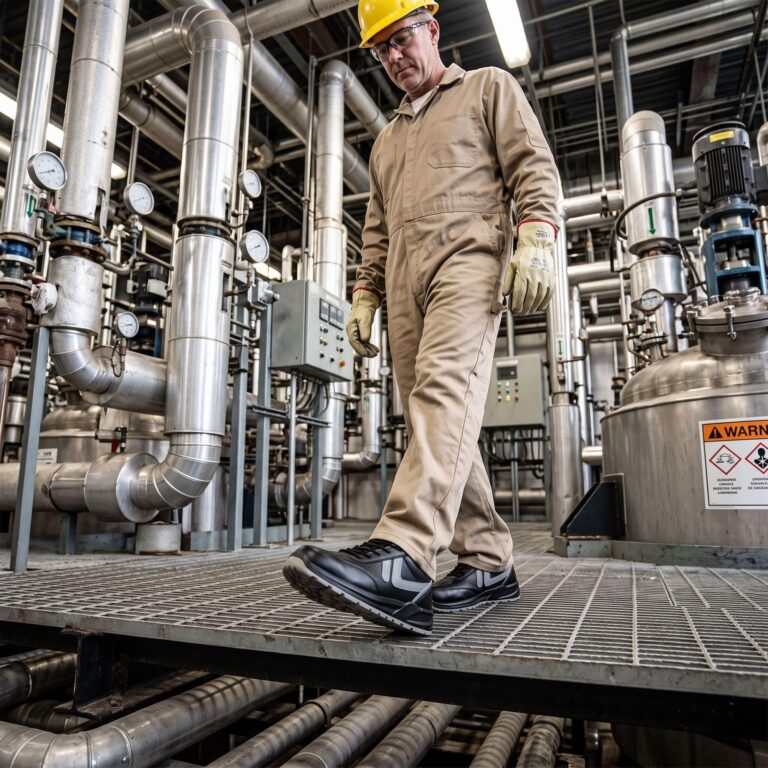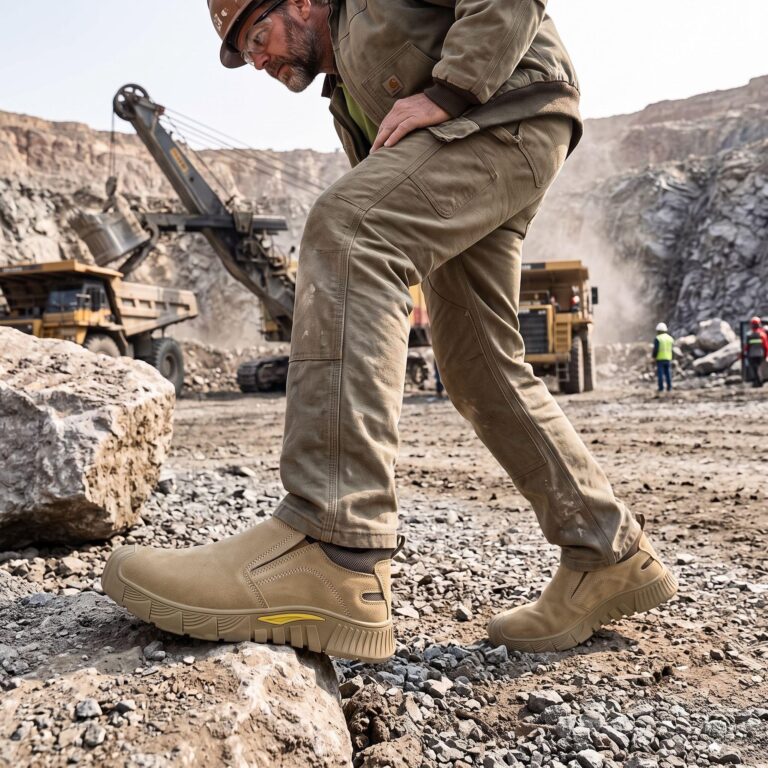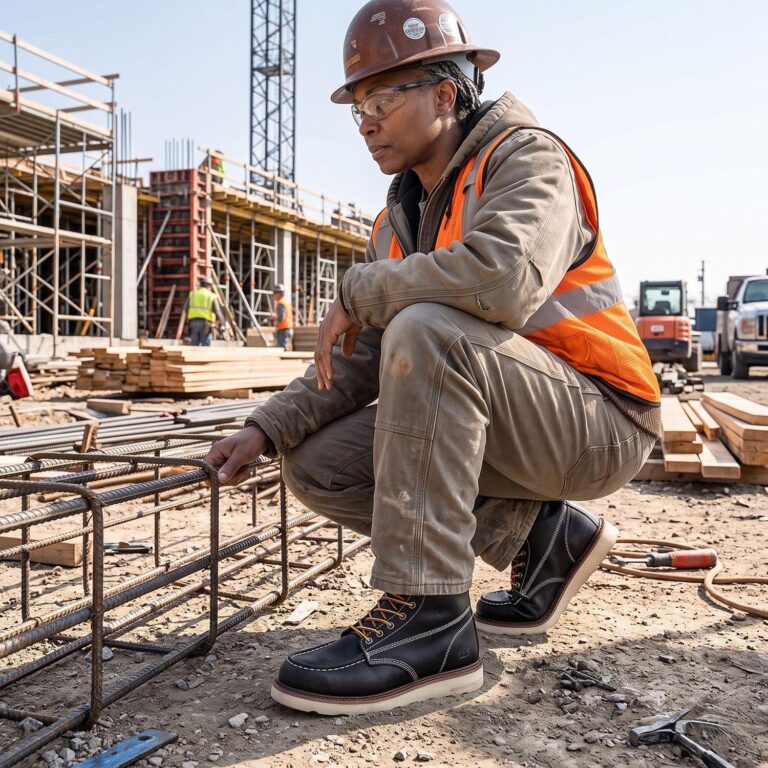

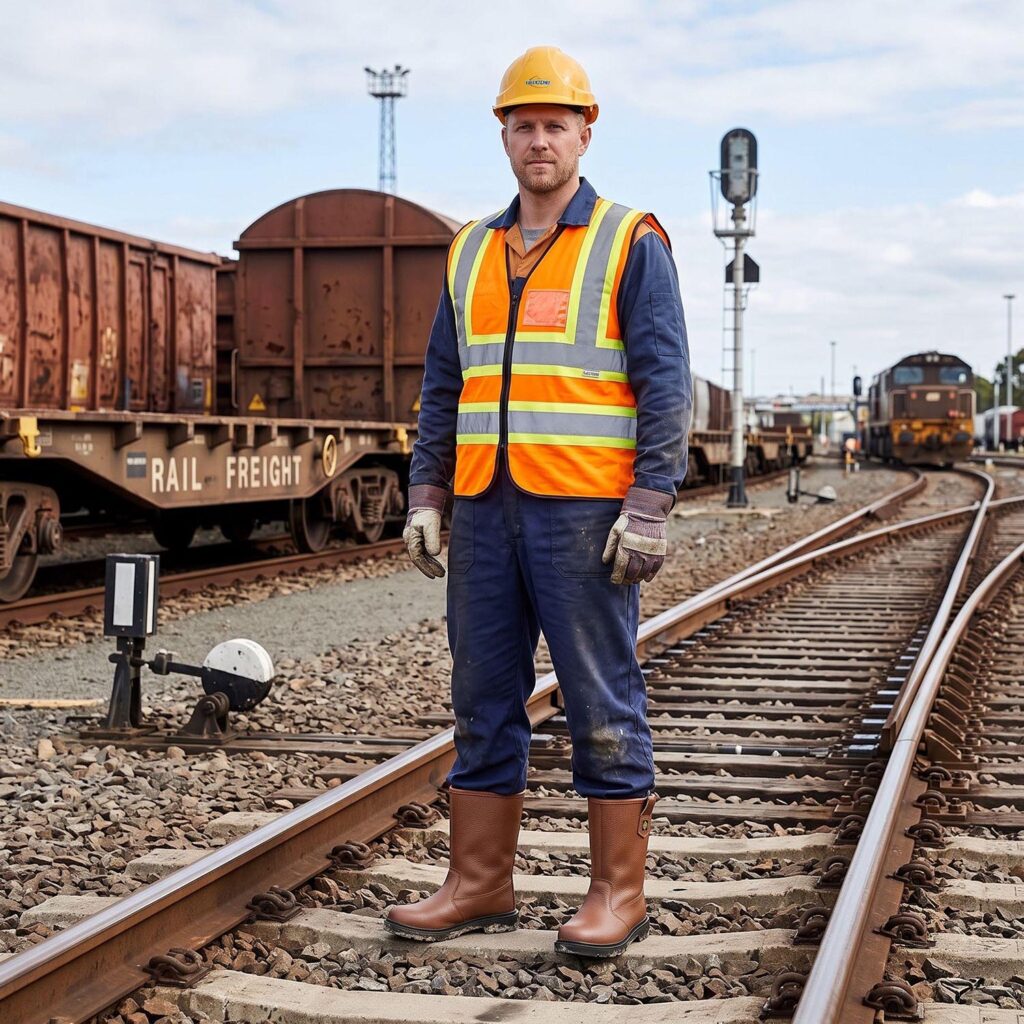
Construction sites expose workers to crushing impacts, puncture hazards, and unpredictable terrain every day. Wearing the wrong pair leads to chronic foot fatigue, severe puncture wounds, or joint strain. Finding the best safety shoes for construction workers requires matching specific hazard ratings, outsole builds, and upper materials to your daily job site conditions.
Job Site Hazards and Changing Safety Standards
Commercial and residential build sites present a mix of dynamic hazards: exposed rebar, dropped cinder blocks, slick steel decking, and caustic wet concrete. Traditional work boots often fall short because they treat foot protection as a generic feature rather than a system engineered for specific tasks.
Safety compliance has also evolved. Under the updated European standard EN ISO 20345:2022, safety categories have become more precise. Puncture resistance is no longer rated simply as “P”; it is now split to distinguish between steel plates and non-metallic textile midsoles based on nail diameter testing (such as PL for standard 4.5 mm nails and PS for sharper 3.0 mm nails). Water resistance has transitioned from the older S3 classification into dedicated S7 and S7L/S7S tiers featuring waterproof membrane linings. Navigating these technical classifications is essential to choosing footwear that withstands field abuse.
How to Select the Right Safety Footwear for Construction
Selecting the right boot comes down to analyzing four physical components: toe cap materials, puncture midsoles, sole construction methods, and job-specific applications.
1. Toe Protection: Steel vs. Composite
- Steel Toe Caps: Offer maximum impact resistance (200 Joules) and high compression resistance with a slimmer profile. Ideal for heavy structural steelwork and demolition where point loads are extreme.
- Composite Toe Caps (Carbon Fiber, Fiberglass, Plastic): Non-conductive and thermally insulating. They do not transfer cold in winter conditions and reduce overall boot weight, making them well-suited for framing, electrical installations, and finishing work.
2. Sole Construction and Outsole Compounds
The bond between the upper leather and the sole dictates longevity and flexibility:
| Construction Method | Outsole Compound | Best Application | Key Characteristics |
| Goodyear Welted | Rubber Lug | Demolition, civil earthwork | Exceptional mechanical durability, rebuildable, stiff shank support for ladder work |
| PU/PU Direct Injection | Dual-Density Polyurethane | Interior finishing, MEP, dry trades | Lightweight, superior shock absorption, high flexibility on flat slabs |
| PU/Rubber Injection | PU Midsole + Nitrile Rubber Tread | Commercial paving, asphalt, wet sites | Heat-resistant contact (up to 300°C), oil-resistant (FO), high tear and slip resistance |
| Rubber Cemented | High-Grade Vulcanized Rubber | General masonry, landscaping | Strong lateral stability, wrap-around toe bumpers prevent scuffing |
3. Application-Based Matching
- Civil Groundwork & Excavation: Choose S7 or S7L boots equipped with waterproof membranes, a puncture-resistant midsole (metal or non-metallic), and deep-lug nitrile rubber outsoles rated for slip resistance (SR).
- Rough Framing & Roofing: Prioritize ankle stability (6-to-8-inch ankle collar), lightweight composite toes, flexible textile anti-perforation midsoles, and ladder-grip heels.
- Concrete & Masonry: Demand full-grain leather treated with water-repellent finishes, minimum exterior stitching to prevent mortar degradation, and chemical-resistant PU/rubber outsoles.
Common Selection Mistakes to Avoid
- Equating Thickness with Safety: A heavy, rigid leather boot does not automatically protect against punctures. Verify verified markings (e.g., S3, S3L, or S7) on the tongue label rather than judging protection by weight.
- Overlooking Sole Abrasion and Scuff Caps: Crawling on rough slabs quickly wears down the toe leather. For kneeling trades like rebar tying or tiling, boots with a molded TPU or rubber exterior scuff cap extend upper life significantly.
- Ignoring Midsole Puncture Specs: Standard nail plates stop broad punctures, but finishing work with pneumatic nail guns requires fine-nail puncture resistance (PS-certified textile inserts).
- Using Unpadded Removable Footbeds: Safety footwear requires adequate arch support and heel cup cushioning to mitigate plantar fasciitis caused by standing on hard concrete for 10-hour shifts.
The Definitive Answer: What Makes the Best Construction Safety Shoe?
The best safety shoes for construction workers combine an EN ISO 20345:2022 S3L or S7L safety rating, a 200-Joule impact-resistant toe cap (steel for maximum compression or composite for weight reduction), an integrated anti-perforation midsole, and a dual-density PU/Rubber outsole. This setup delivers the necessary mechanical protection against punctures and crushed toes while offering oil resistance, certified slip resistance on wet surfaces, and sufficient underfoot energy absorption to reduce fatigue across long shifts.
Written by Hong Gu Safety Shoes Technical Team, this content is compiled from practical production, long-term field applications, and rigorous testing results.
Shan Dong Hong Gu Shoes Industrial Co., Ltd. is a leading safety footwear manufacturer based in China, specializing in industrial foot protection with over 20 years of manufacturing expertise.
Products are fully certified under European standards (CE EN ISO 20345:2022), offering a full range of manufacturing processes including PU/PU Injection, PU/Rubber, Goodyear Welted, and Rubber Cemented constructions.