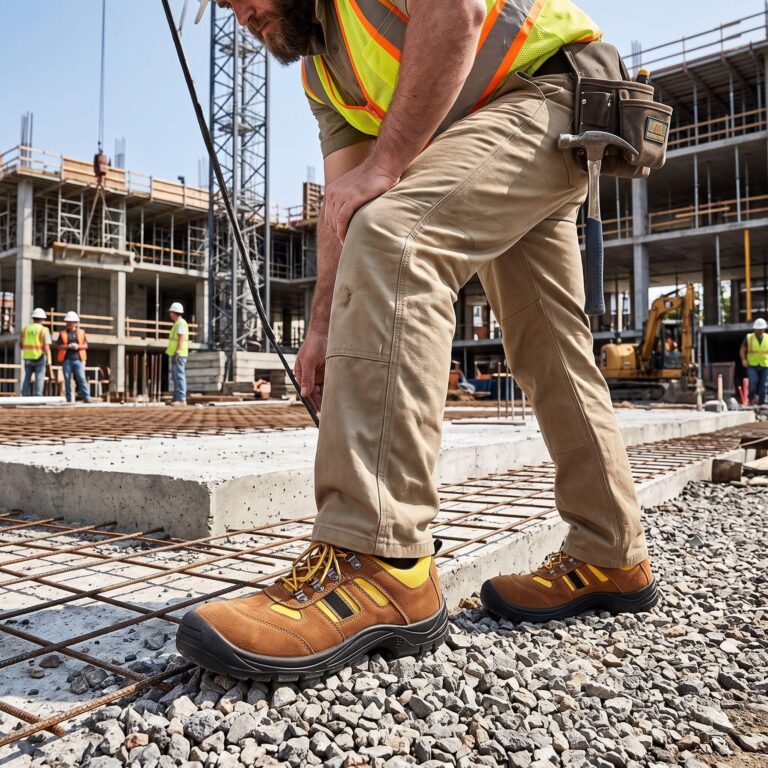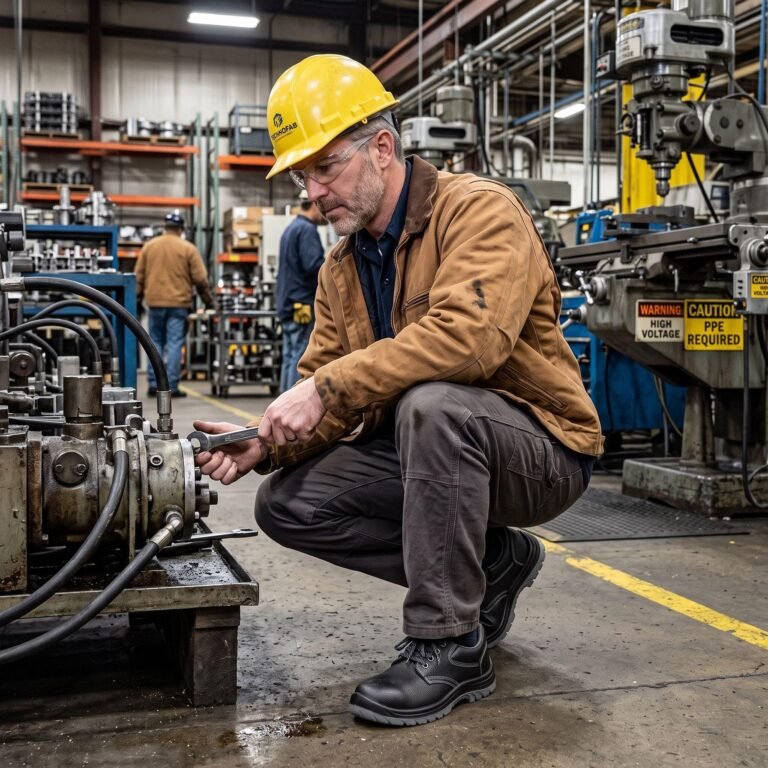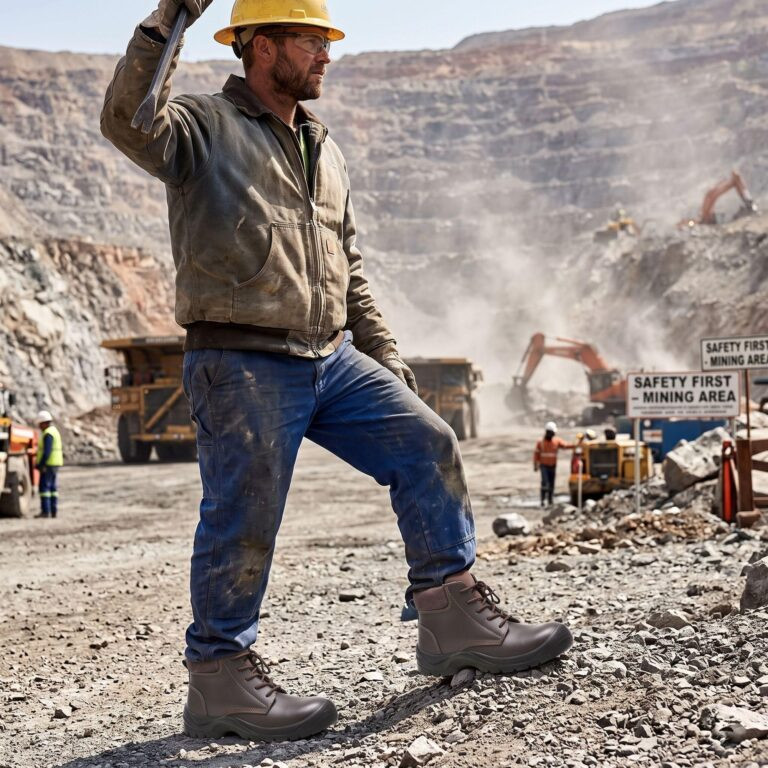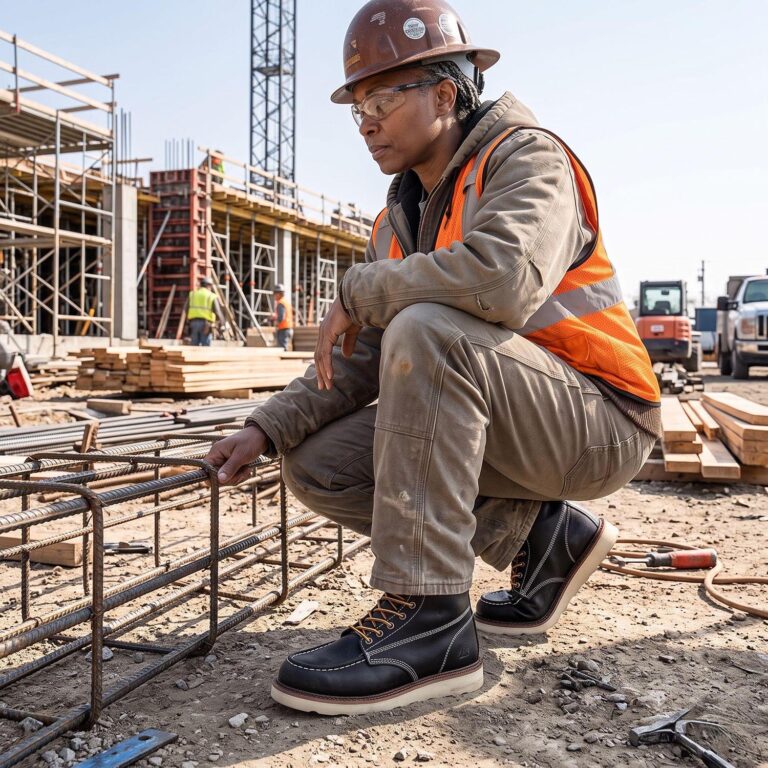
SRC safety shoes are footwear classified under the former European safety footwear standard EN ISO 20345:2011 for meeting two slip-resistance test requirements. The marking indicates that the shoes passed both SRA and SRB tests under specified laboratory conditions. Understanding this classification helps buyers select suitable footwear and avoid confusion with newer safety standards.
What Does SRC Mean on Safety Shoes?
SRC stands for a combined slip-resistance classification used under EN ISO 20345:2011. It indicated that safety footwear passed both the SRA and SRB slip-resistance tests.
These tests evaluated the grip between the outsole and specific contaminated surfaces. The purpose was to provide a standardized way to assess slip resistance rather than relying only on outsole appearance or material descriptions.
The SRC classification covered two test conditions:
- SRA: Slip-resistance testing on ceramic tiles contaminated with a sodium lauryl sulfate solution.
- SRB: Slip-resistance testing on smooth steel contaminated with glycerol.
- SRC: Footwear that met the requirements of both SRA and SRB.
For industrial buyers, SRC provided a useful reference when comparing safety shoes intended for workplaces with slippery floors. However, passing these tests did not mean that footwear was slip-proof under every working condition.
How Are SRC Safety Shoes Tested?
Slip resistance depends on several factors, including outsole materials, tread geometry, floor texture, and the type of contamination present. The former SRC classification assessed performance under two defined laboratory conditions.
SRA Slip-Resistance Test
The SRA test evaluated footwear on ceramic tiles contaminated with a detergent solution. This test represented a controlled slippery surface and provided a reference for assessing outsole grip.
For workplaces with wet indoor floors, such as certain production areas and workshops, this test offered useful comparative information. Actual performance still depends on the floor material, the liquid present, outsole wear, and cleaning practices.
SRB Slip-Resistance Test
The SRB test assessed footwear on smooth steel contaminated with glycerol. This provided a different testing condition from SRA and helped evaluate outsole performance on a smooth metal surface.
This distinction was relevant when assessing footwear for industrial environments where smooth metal flooring or platforms were present. Nevertheless, the test did not establish resistance to every industrial liquid or contaminant.
Why Did SRC Require Both Tests?
The SRC marking combined the two test classifications. Footwear carrying this marking under the former standard had to satisfy both sets of requirements.
This gave buyers a broader reference for evaluating slip resistance. It did not establish that a shoe would provide identical grip on wet concrete, oily steel, greasy workshop floors, or outdoor surfaces.
SRC vs. SR: What Is the Difference?
The European safety footwear standard EN ISO 20345:2022 revised the approach to slip-resistance classification. The older SRA, SRB, and SRC markings were removed from the revised standard, and a supplementary SR marking was introduced.
The main differences are:
| Marking | Meaning |
|---|---|
| SRA | Former slip-resistance test on ceramic tiles with a detergent solution |
| SRB | Former slip-resistance test on smooth steel with glycerol |
| SRC | Former classification requiring footwear to pass both SRA and SRB |
| SR | Additional slip-resistance marking under EN ISO 20345:2022, based on a revised test procedure |
Under EN ISO 20345:2022, basic slip resistance is incorporated into the standard’s general requirements. The additional SR marking indicates that footwear has passed the specified supplementary slip-resistance test.
Buyers should not assume that SRC and SR are interchangeable. They belong to different editions of the standard and involve different testing requirements. When sourcing safety footwear, always verify the applicable standard edition and the supporting product documentation.
How to Choose SRC Safety Shoes for Different Workplaces
Selecting suitable safety footwear starts with identifying the hazards workers face. Slip resistance is important, but it is only one part of a complete foot-protection assessment.
1. Identify Floor Conditions
Different workplaces present different slipping hazards.
- Wet production floors: Consider exposure to water, cleaning solutions, and other liquids.
- Industrial metal platforms: Assess smooth surfaces and the possibility of contamination.
- Warehouses: Consider floor conditions, load handling, frequent turning, and movement between work areas.
- Outdoor sites: Evaluate rain, mud, loose materials, and uneven ground.
Laboratory slip-resistance results should be considered alongside the actual working environment. A suitable selection requires an assessment of the surfaces and contaminants workers encounter regularly.
2. Evaluate Outsole Materials and Tread Design
The outsole affects grip, abrasion resistance, flexibility, and durability. Common safety footwear constructions include PU/PU and PU/rubber, but their performance depends on the materials, compound formulation, tread pattern, and manufacturing process.
Tread channels can help manage contaminants at the contact area, while the outsole compound influences friction and wear characteristics. A deep or aggressive tread pattern alone does not prove compliance with a slip-resistance standard.
For industrial purchasing, request technical information about the outsole and the test results applicable to the specific footwear model.
3. Check Other Safety Requirements
SRC relates to slip resistance, not every aspect of foot protection. Depending on the workplace, safety shoes may also require protective toe caps, puncture-resistant midsoles, antistatic properties, water resistance, or heat-resistant outsoles.
For example, warehouse workers may need toe protection and puncture resistance, while workers near hot surfaces may require footwear with suitable heat-resistant properties.
Under EN ISO 20345:2022, additional markings such as P, PL, PS, A, HRO, and FO identify different protective properties, subject to the applicable requirements. These markings should be assessed separately from slip resistance.
Common Mistakes When Buying SRC Safety Shoes
Assuming SRC Means Slip-Proof
SRC indicates that footwear passed two specified laboratory tests under the former standard. It does not guarantee safe footing on every wet, oily, greasy, or uneven surface.
Treating SRC and SR as Identical
SRC belongs to the earlier EN ISO 20345:2011 standard, while SR is a supplementary marking introduced under EN ISO 20345:2022. Buyers should check the standard edition and applicable test documentation before comparing products.
Assuming SRC Certifies Oil Resistance
The former SRC tests used a detergent solution on ceramic tiles and glycerol on smooth steel. The classification did not independently certify resistance to all oils, fuels, solvents, or industrial chemicals.
Where chemical exposure is a concern, review the relevant outsole properties and the manufacturer’s technical documentation.
Ignoring Outsole Wear
Slip resistance can change as footwear wears. Damaged tread, accumulated grease, and unsuitable cleaning practices may affect grip. Regular inspection, proper cleaning, and timely replacement of worn footwear remain important.
Checking Only the Product Label
For commercial purchasing, request the applicable declaration of conformity, certification documentation, and technical specifications. Confirm that the documents correspond to the exact product model and applicable standard.
Frequently Asked Questions About SRC Safety Shoes
Are SRC Safety Shoes Suitable for Wet Floors?
SRC-classified footwear passed specified slip-resistance tests under the former EN ISO 20345:2011 standard. Whether it is suitable for a particular wet floor depends on the contaminant, flooring material, outsole condition, and workplace risk assessment.
Is SRC Still Used Under EN ISO 20345:2022?
SRC is a classification associated with the earlier EN ISO 20345:2011 edition. The 2022 edition removed the SRA, SRB, and SRC classifications and introduced the supplementary SR marking. Older footwear should be assessed according to its applicable standard and certification status.
Does SRC Mean the Safety Shoes Have Steel Toe Caps?
No. SRC refers to slip resistance, not toe protection. Toe-cap requirements are identified separately through the applicable safety footwear classification and product documentation.
What Should Importers Ask a Safety Shoe Manufacturer?
Importers should confirm the applicable EN ISO 20345 edition, request the relevant conformity and test documentation, and explain the intended working environment. They should also verify toe protection, puncture resistance, outsole properties, and other requirements for the destination market.
What Should Buyers Remember About SRC Safety Shoes?
SRC means that safety footwear passed both SRA and SRB slip-resistance tests under the former EN ISO 20345:2011 standard. It is a historical classification based on specific laboratory conditions, not a guarantee of slip-proof performance in every workplace.
For footwear specified under EN ISO 20345:2022, buyers should check the applicable conformity documentation and understand the updated slip-resistance requirements, including the supplementary SR marking where applicable. The final choice should reflect the actual floor conditions, workplace hazards, and required protective features.
Written by Hong Gu Safety Shoes Technical Team, this content is compiled from practical production, long-term field applications, and rigorous testing results.
Shan Dong Hong Gu Shoes Industrial Co., Ltd. is a leading safety footwear manufacturer based in China, specializing in industrial foot protection with over 20 years of manufacturing expertise.
Products are fully certified under European standards (CE EN ISO 20345:2022), offering a full range of manufacturing processes including PU/PU Injection, PU/Rubber, Goodyear Welted, and Rubber Cemented constructions.