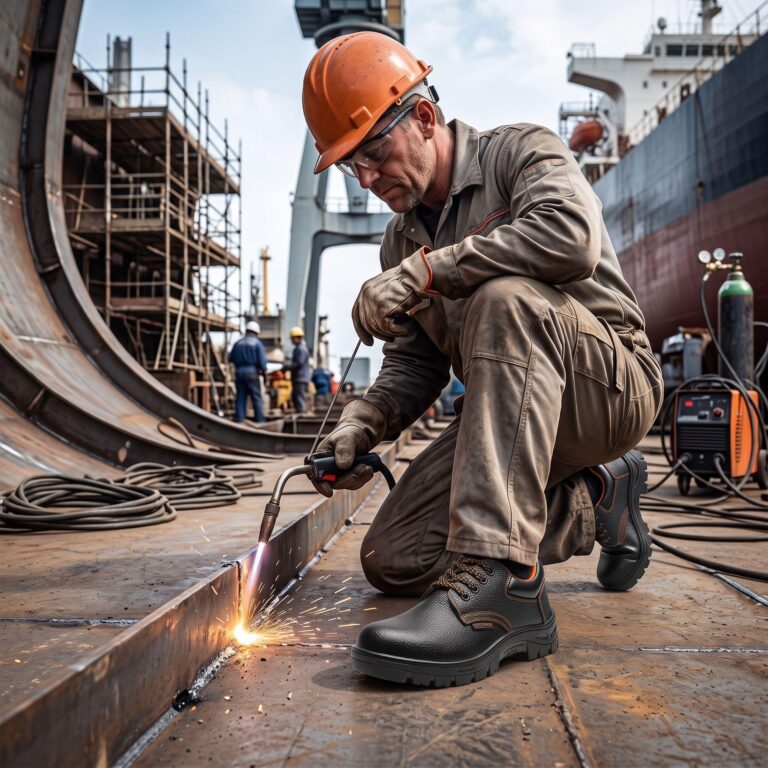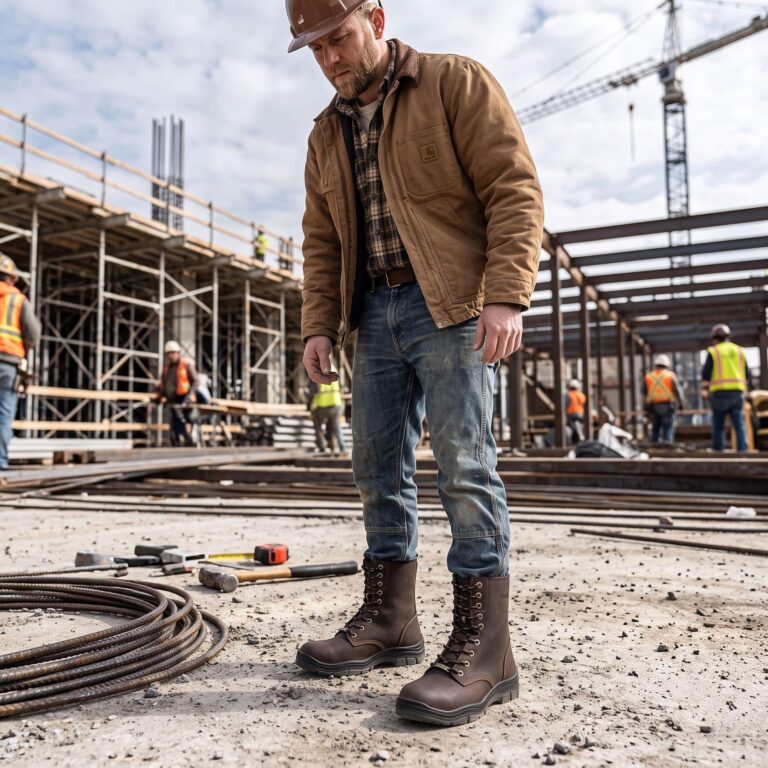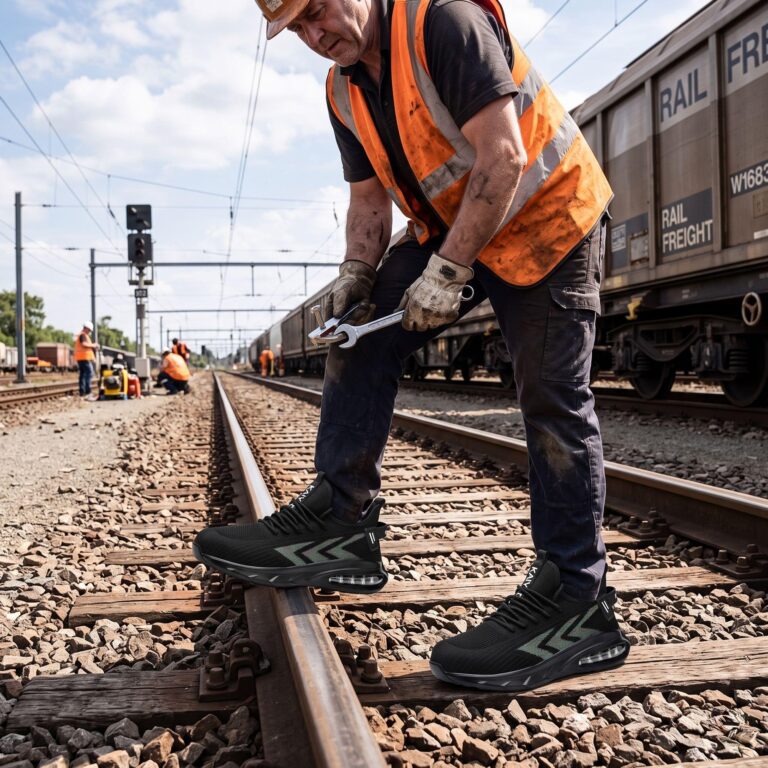

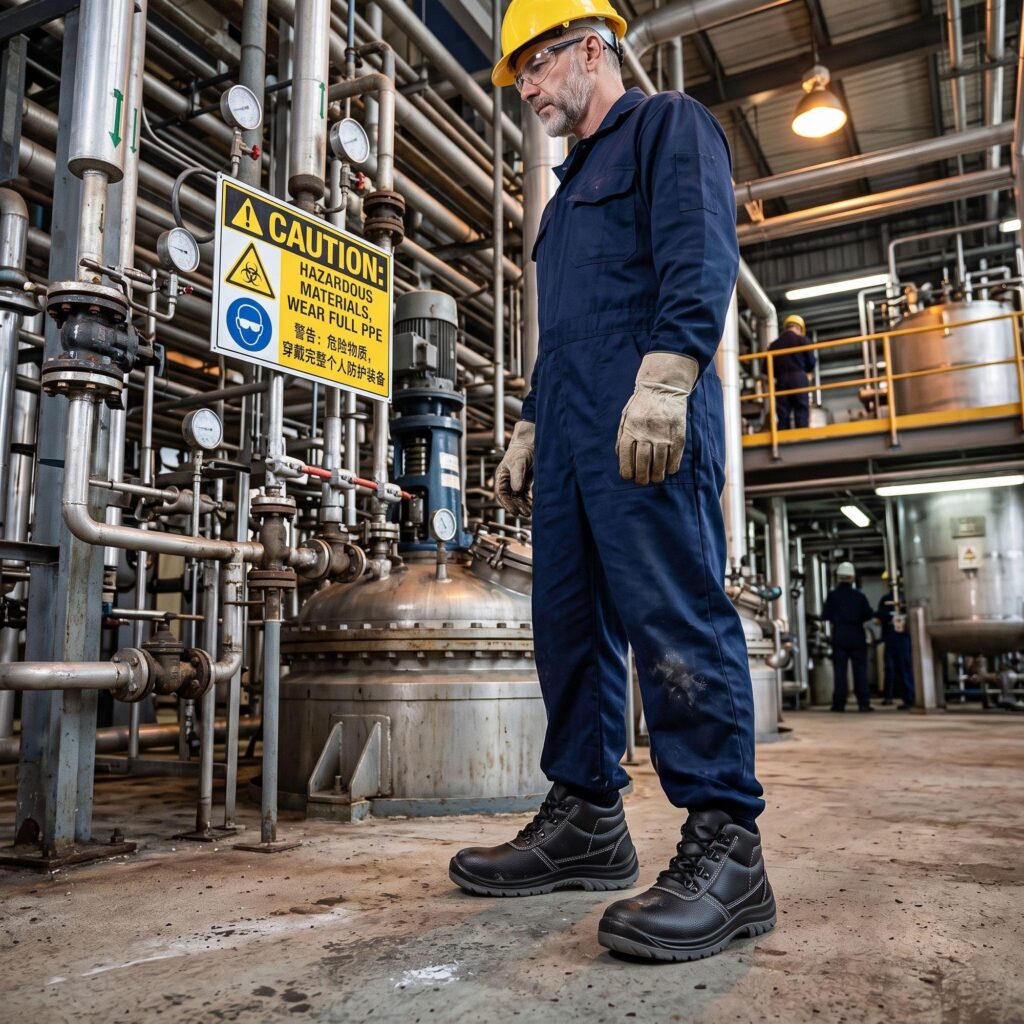
Learn about breathability testing methods for safety footwear, including water vapor permeability, testing standards, and material performance.
Why Breathability Matters in Safety Footwear
Safety footwear is often worn for eight hours or more each day. Workers may also use it in hot workshops, warehouses, construction sites, factories, and outdoor environments. In these conditions, moisture inside the shoe can affect comfort and foot climate.
Breathability is mainly related to the ability of the footwear upper to transmit water vapor. It is different from waterproofing. A waterproof shoe is designed to prevent liquid water from entering, while a breathable shoe allows water vapor from inside the footwear to escape.
These two properties need to be considered separately when selecting safety footwear.
For manufacturers, breathability testing can also help evaluate different upper materials. Leather, coated materials, textiles, and composite constructions may have different water vapor transmission characteristics.
A safety shoe can have excellent impact resistance and slip resistance, but poor moisture management may still affect its suitability for long working periods.
How Is Breathability Tested in Safety Footwear?
Breathability testing can involve several related measurements. The exact method depends on the applicable footwear standard and the material or finished footwear being evaluated.
1. Water Vapor Permeability Testing
Water vapor permeability measures how much water vapor can pass through a footwear upper material over a specified period.
During a laboratory test, the material is exposed to controlled humidity and temperature conditions. A test chamber or container creates a difference in water vapor concentration between the two sides of the material.
The amount of water vapor passing through the material is then measured.
This method is useful when comparing different upper materials during product development.
A material with higher water vapor permeability can generally provide better moisture transmission, provided that the rest of the footwear construction does not significantly restrict vapor movement.
2. Water Vapor Coefficient Testing
Water vapor coefficient is another important measurement used to evaluate the moisture transmission performance of footwear materials.
The test considers the relationship between water vapor passing through the material and the exposed test area under controlled conditions.
This measurement can provide a more standardized way to compare material performance.
For safety footwear manufacturers, the result should not be considered separately from the finished shoe. Stitching, linings, coatings, membranes, padding, and construction methods can all affect the final moisture environment inside the footwear.
3. Testing the Finished Safety Shoe
Testing the upper material alone does not always represent the actual breathability of a finished safety shoe.
A completed shoe may contain several layers:
- Outer upper material
- Lining
- Foam or padding
- Protective toe cap
- Insole
- Midsole
- Outsole
- Adhesive or injection layers
These components can influence air and moisture movement.
For this reason, finished footwear testing can provide useful information about the actual product construction. It is particularly relevant when a new upper material is combined with a different lining, waterproof layer, or sole construction.
4. Material Conditioning Before Testing
Test conditions can influence breathability results. Materials normally need to be conditioned before testing so that their moisture content reaches a controlled state.
Temperature, relative humidity, specimen thickness, surface condition, and testing time can all affect measurements.
This is why test results should always be interpreted together with the applicable test method and laboratory conditions.
Breathability Testing and EN ISO 20345 Safety Footwear
For safety footwear sold in markets using European standards, manufacturers need to consider the requirements of the applicable version of EN ISO 20345.
EN ISO 20345:2022 establishes requirements for safety footwear, including mechanical risks and other protective properties. Breathability-related requirements can involve the water vapor permeability and coefficient of water vapor of the upper and lining materials.
It is important to distinguish these requirements from waterproof footwear classifications.
For example, a product designed for wet working environments may need both protection against water penetration and adequate moisture management. Improving one property does not automatically improve the other.
Manufacturers should therefore evaluate the complete footwear specification rather than selecting materials based on breathability alone.
Common Mistakes When Evaluating Breathability
One common mistake is treating “breathable” as a simple marketing description. Breathability should be supported by an appropriate test method and measurable laboratory data.
Another mistake is testing only the upper material and assuming that the finished safety shoe will have exactly the same performance.
Material thickness also matters. Two materials made from similar fibers or leather may produce different results because of differences in thickness, surface treatment, coating, or finishing.
Waterproof coatings require particular attention. A coating may improve resistance to liquid water while reducing water vapor transmission. The final construction needs to balance the intended protective properties.
The working environment should also be considered. A safety shoe used in an air-conditioned warehouse has different moisture-management requirements from footwear used outdoors in a hot and humid climate.
Finally, breathability should not be evaluated without considering other safety requirements. Protective toe caps, penetration resistance, slip resistance, outsole performance, electrical properties, and other requirements may be equally important for the intended application.
What Should Buyers Check Before Ordering Safety Footwear?
When purchasing safety footwear, buyers can ask for specific information rather than relying only on general descriptions.
Useful information includes:
- Applicable safety footwear standard
- Test method used for breathability
- Water vapor permeability results
- Water vapor coefficient results
- Upper and lining materials
- Material thickness
- Waterproof or water-resistant construction
- Intended working environment
- Available test reports and certification documents
For manufacturers, keeping consistent material specifications and production records is also important. Changes in leather finishing, textile composition, lining, coating, or production process can influence test results.
Breathability should therefore be treated as part of the overall footwear design and quality-control process.
Key Takeaway
Breathability testing for safety footwear mainly evaluates the ability of footwear materials to transmit water vapor. Water vapor permeability and water vapor coefficient are important measurements, but the performance of a finished safety shoe also depends on its lining, coatings, insole, construction, and other components. For products intended to comply with EN ISO 20345:2022, breathability-related requirements should be evaluated together with the complete set of applicable safety requirements and the intended working environment.
Written by Hong Gu Safety Shoes Technical Team, this content is compiled from practical production, long-term field applications, and rigorous testing results.
Shan Dong Hong Gu Shoes Industrial Co., Ltd. is a leading safety footwear manufacturer based in China, specializing in industrial foot protection with over 20 years of manufacturing expertise.
Products are fully certified under European standards (CE EN ISO 20345:2022), offering a full range of manufacturing processes including PU/PU Injection, PU/Rubber, Goodyear Welted, and Rubber Cemented constructions.