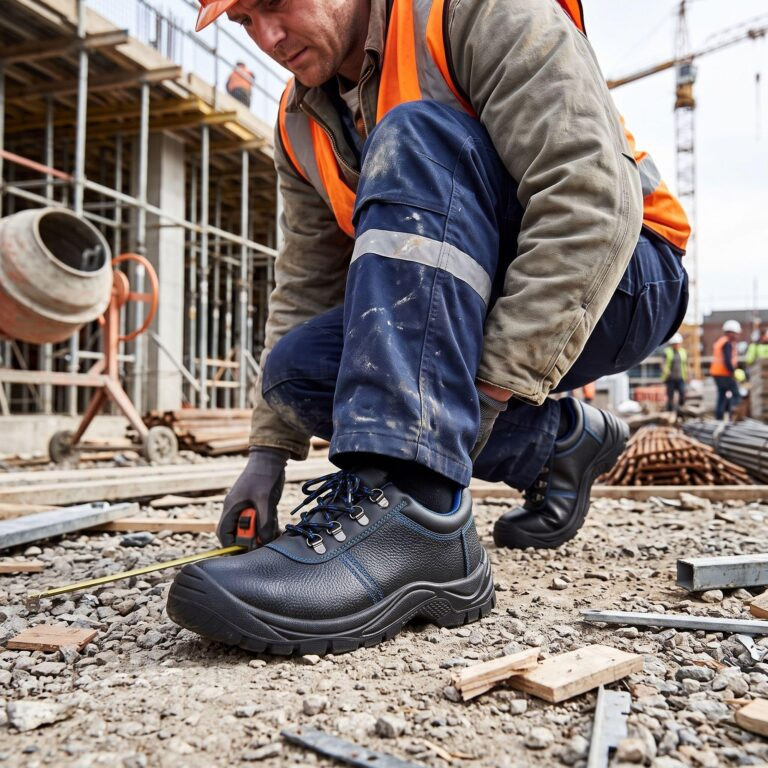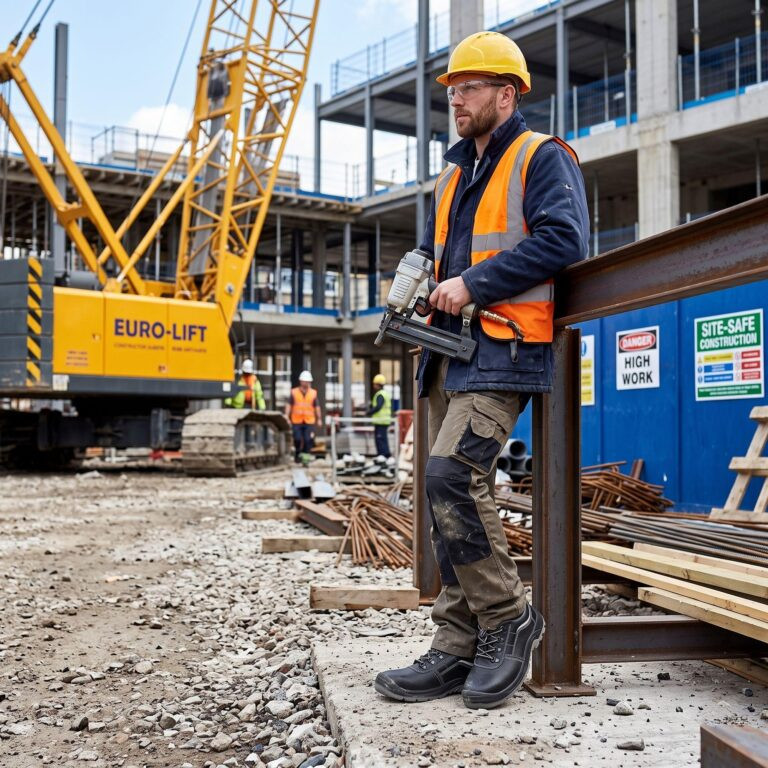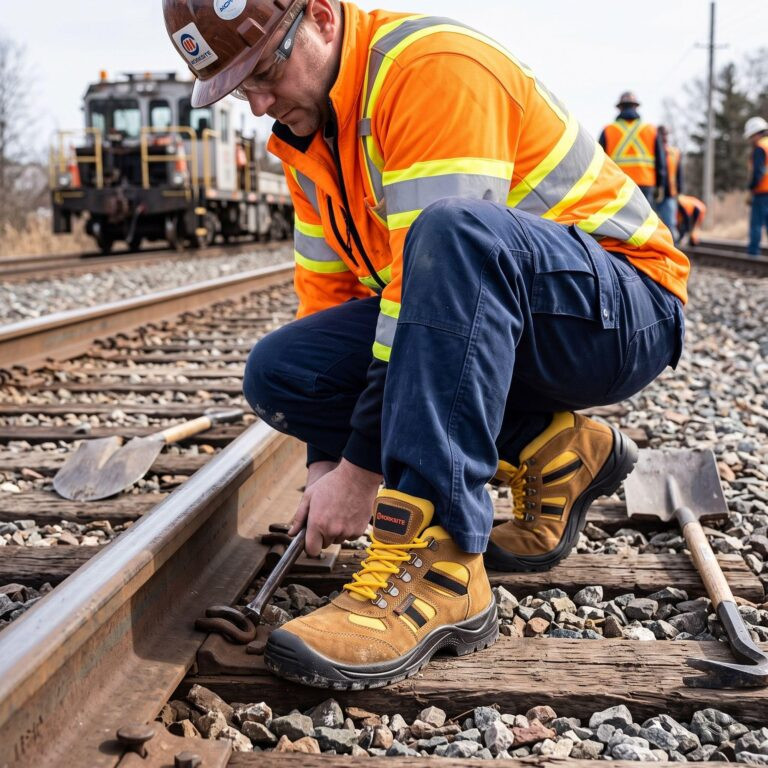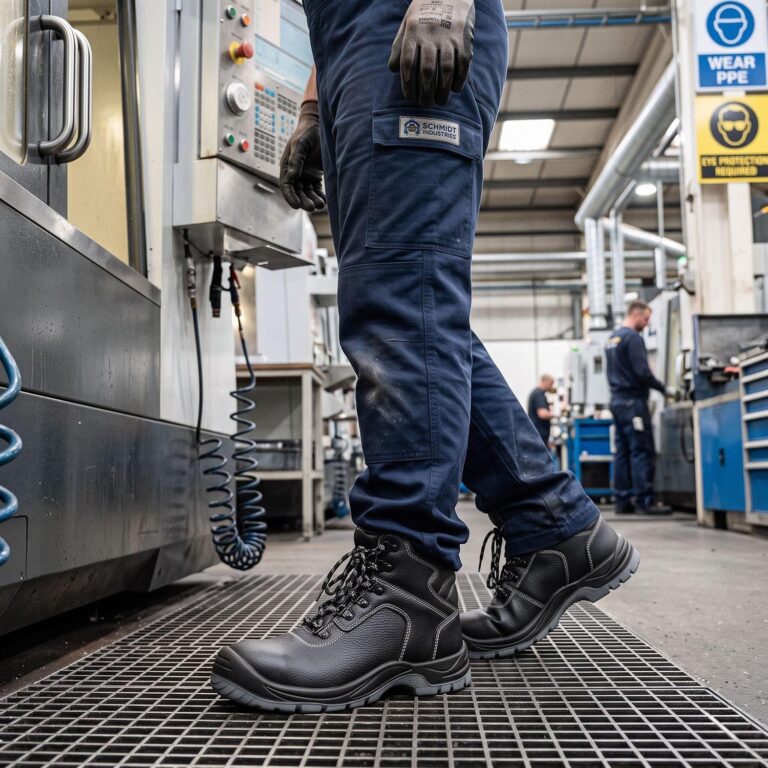

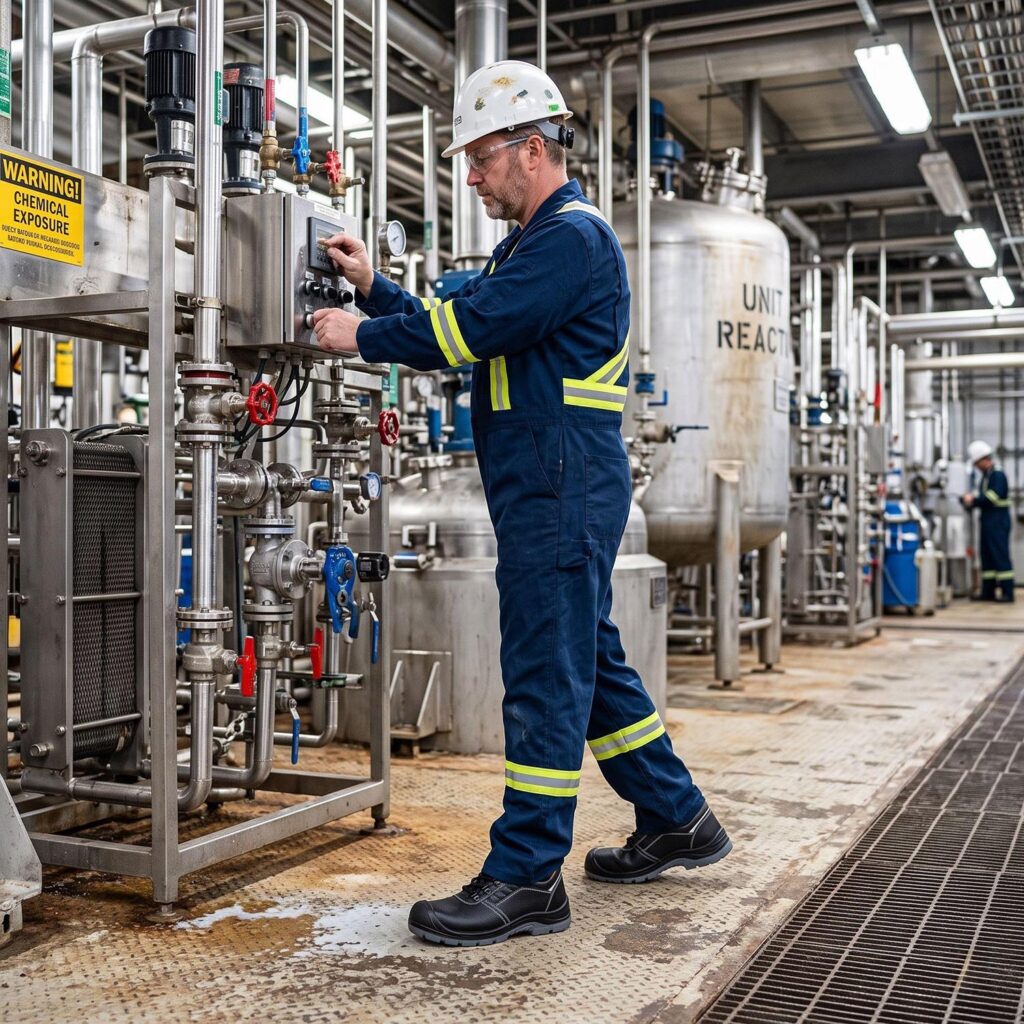
Choosing the right Safety Footwear Requirements for construction work is not simply a matter of wearing steel toe boots. Workers may face falling objects, sharp materials, wet surfaces, electrical hazards, chemicals, and puncture risks. The right safety footwear must match the actual hazards of the job and meet the applicable safety standards.
Why Safety Footwear Matters on Construction Sites
Construction sites involve changing working conditions. A worker may move between concrete floors, steel structures, excavation areas, warehouses, and outdoor surfaces during the same shift. Each environment can create different risks to the feet.
Common construction hazards include:
- Heavy objects falling onto the toes
- Nails, screws, and metal fragments penetrating the sole
- Slips on wet, oily, or uneven surfaces
- Contact with water, mud, or construction chemicals
- Electrical hazards
- Compression from heavy equipment or materials
- Long periods of standing and walking
Safety footwear is designed to provide protection against these hazards while still allowing workers to move safely and comfortably.
For construction applications in Europe, EN ISO 20345:2022 is an important reference standard for safety footwear. It covers footwear with protective toe caps designed to provide resistance to impacts and compression. Depending on the footwear category and tested features, additional protection can include slip resistance, penetration resistance, water resistance, electrical properties, and resistance to specific environmental conditions.
How to Select Safety Footwear for Construction Work
The correct safety footwear should be selected according to the hazards identified at the worksite rather than simply choosing a particular style of boot.
1. Start with Toe Protection
Toe protection is one of the basic requirements for construction safety footwear. Protective toe caps are tested for impact and compression resistance.
Depending on the design, safety footwear may use steel, aluminum, or non-metallic toe caps. The choice can depend on weight, workplace requirements, metal-detection considerations, and the required protection level.
For construction sites where heavy materials are handled, appropriate toe protection is essential.
2. Consider Sole Puncture Resistance
Construction workers often encounter nails, screws, sharp metal pieces, and other debris.
Where there is a realistic puncture hazard, footwear with a penetration-resistant construction should be considered. Protection may be provided through a metal penetration-resistant insert or a non-metallic penetration-resistant layer.
The outsole also needs sufficient durability and grip for the working environment.
3. Check Slip Resistance
Wet concrete, dust, oil, mud, and smooth industrial floors can create slipping hazards.
Slip-resistant safety footwear can reduce the risk associated with unstable footing, but footwear selection should still consider the actual surface conditions. Sole design, rubber or PU compounds, tread pattern, and outsole hardness can all affect grip.
Construction footwear should provide a practical balance between slip resistance, abrasion resistance, flexibility, and durability.
4. Match Water and Environmental Protection
Outdoor construction projects can expose workers to rain, mud, standing water, and damp working conditions.
If workers regularly operate in wet environments, water-resistant or waterproof safety footwear may be appropriate. However, water protection should not be selected without considering breathability and working temperature.
For hot environments, excessive insulation or poor ventilation may increase discomfort during long shifts.
5. Evaluate Electrical and Special Hazards
Some construction tasks involve electrical equipment or areas where electrical risks are present. In these situations, footwear with suitable electrical properties may be required according to the workplace risk assessment and applicable regulations.
Electrical protection should never be assumed simply because a boot has a non-metallic toe cap. The complete footwear construction and its tested properties must be considered.
Common Mistakes When Buying Construction Safety Shoes
One common mistake is choosing footwear based only on appearance or price. A boot may look strong but still lack the specific protection required for a particular job.
Another mistake is assuming that every steel toe boot provides the same level of protection. Toe material is only one part of the footwear specification. Sole construction, penetration resistance, slip performance, water protection, upper materials, and certification also matter.
Workers should also avoid selecting footwear that is too loose or too tight. Poor fit can affect walking stability and cause discomfort during long working periods.
It is also important to check the product marking, technical documentation, and certification information. Safety footwear should be supplied according to the relevant standard and tested performance rather than relying on general descriptions such as “heavy-duty” or “industrial grade.”
For employers, another practical issue is replacement. Safety footwear can lose protective performance through severe wear, damaged soles, cracked uppers, or compromised toe protection. Regular inspection and timely replacement should therefore be part of workplace footwear management.
Conclusion: What Safety Footwear Should Construction Workers Use?
Construction safety footwear should be selected according to the specific hazards of the job. At a minimum, suitable footwear should provide certified protective toe protection and may also require slip resistance, penetration resistance, water protection, electrical properties, or other tested features depending on the working environment.
For European construction applications, EN ISO 20345:2022 provides an important framework for evaluating safety footwear. The correct choice should consider the worksite hazards, required protection level, footwear construction, fit, environmental conditions, and verified test results.
In practice, the best safety footwear specification is not simply the one with the most features. It is the footwear whose tested protective properties match the risks workers actually face.
Written by Hong Gu Safety Shoes Technical Team, this content is compiled from practical production, long-term field applications, and rigorous testing results.
Shan Dong Hong Gu Shoes Industrial Co., Ltd. is a leading safety footwear manufacturer based in China, specializing in industrial foot protection with over 20 years of manufacturing expertise.
Products are fully certified under European standards (CE EN ISO 20345:2022), offering a full range of manufacturing processes including PU/PU Injection, PU/Rubber, Goodyear Welted, and Rubber Cemented constructions.