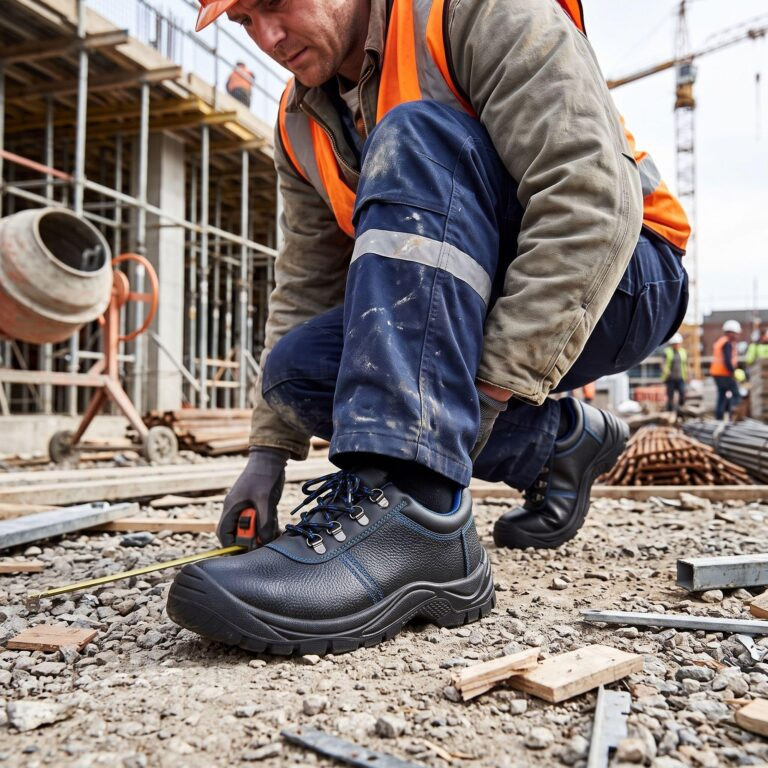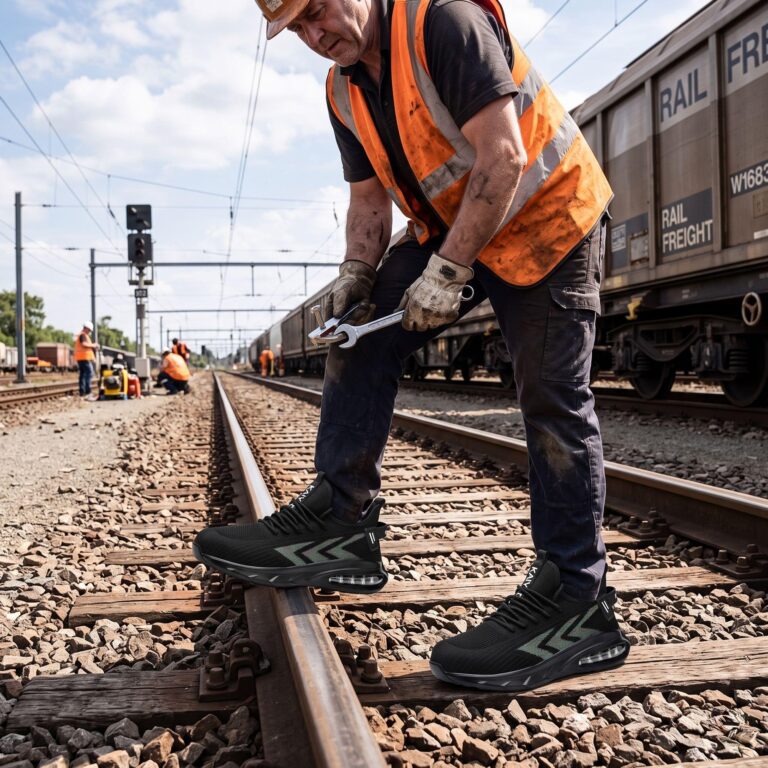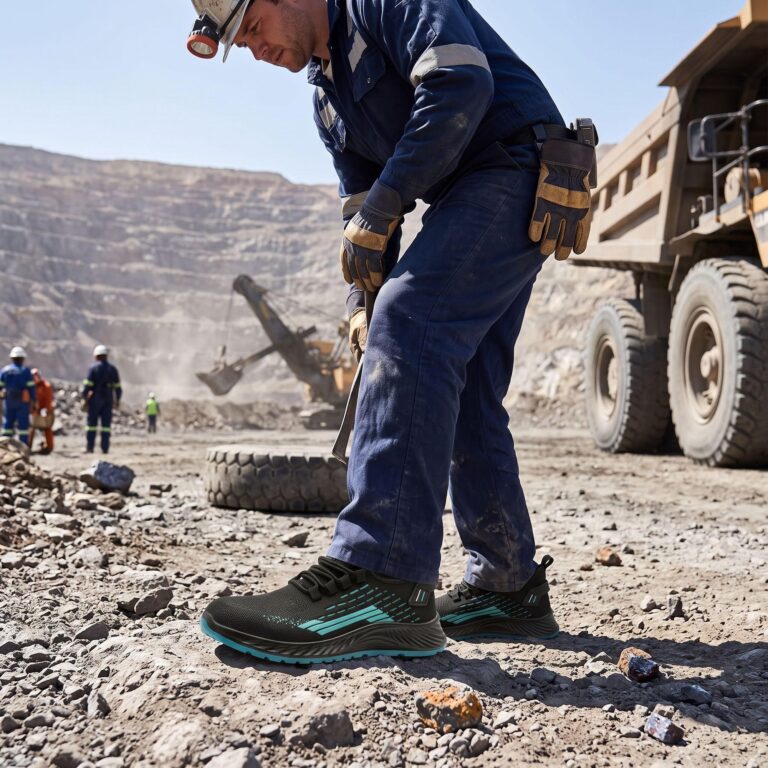


Workers operating heavy machinery face constant risks of crushing injuries. Understanding safety shoe compression resistance—and interpreting the complex testing standards behind it—helps safety managers select reliable foot protection.
The Reality of Workplace Compression Hazards
Heavy manufacturing, construction, and logistics environments present severe crush hazards daily. While impact resistance handles sudden drops from falling objects, compression resistance deals with steady, heavy loads. Real-world examples include a forklift tire rolling over a worker’s foot, a hydraulic lift lowering onto a toe, or heavy pallets shifting during transit.
Currently, many procurement teams confuse impact and compression ratings. This confusion leads to inadequate foot protection in high-risk zones. The safety footwear industry relies on rigorous laboratory testing protocols to ensure toe caps do not collapse under thousands of Newtons of pressure. These tests actively safeguard the wearer’s toes from irreversible structural damage. Without clear adherence to established safety standards, the actual protective capability of a work boot remains dangerously uncertain.
Decoding Compression Testing Methods and Standard Requirements
To evaluate a safety shoe’s structural integrity under slow-crushing forces, laboratory technicians follow strict guidelines outlined in safety footwear standards like CE EN ISO 20345:2022. Here is a breakdown of the professional testing process and the key parameters involved:
- The Testing Mechanism: Technicians secure the footwear in a specialized mechanical compression machine. This equipment applies a steady, gradual, and continuous downward force directly onto the toe cap area at a controlled speed.
- Required Force Thresholds: Under EN ISO 20345, standard safety boots must withstand a continuous compression force of 15 kN (approximately 1.5 tons of pressure).
- Internal Clearance Measurement: The toe cap must do more than simply survive the pressure without snapping. The standard mandates a strict minimum internal clearance during the test. Testers place a specific modeling clay cylinder inside the shoe before initiating the compression. After applying the 15 kN force, they extract and measure the cylinder to verify the toe cap did not crush deeply into the foot zone. Depending on the shoe size, a specific gap (usually between 13mm to 15mm) must remain intact.
- Material Performance Differences: Steel toe caps slowly dent under extreme pressure but hold their overarching structure. Composite or fiberglass toe caps flex under the load and often recover their shape once the machine releases the pressure. Manufacturers engineer both materials differently, but both must meet the exact same 15 kN clearance requirement to pass certification.
Common Misconceptions About Compression Resistance
Safety managers and wearers often fall into several critical traps when assessing compression ratings:
- Impact vs. Compression Confusion: Impact resistance (measured in Joules) accounts for sudden strikes. Compression resistance (measured in kiloNewtons) accounts for gradual crushing. Buyers should never assume that a heavy-looking boot automatically excels in extreme compression unless the manufacturer explicitly lists the corresponding test certification.
- The Steel Dependency Myth: Many workers falsely assume only steel toes can handle heavy compression. In reality, high-quality non-metallic composite toe caps easily pass the 15 kN standard. Procurement teams should base material choices on other environmental factors—like electrical hazard needs, weight limitations, and thermal conductivity—rather than raw assumptions about strength.
- Post-Accident Reuse: A severe compression load permanently compromises the structural integrity of a safety shoe. Even if a composite toe cap springs back into its original shape, invisible micro-fractures likely exist within the material. Wearers must immediately retire and replace footwear that experiences significant crush events.
Core Takeaways for Safety Footwear Selection
When evaluating safety shoe compression resistance, remember these core principles: Standard compliance (such as EN ISO 20345:2022) dictates that a reliable safety shoe must withstand 15 kN of continuous pressure while maintaining a safe internal clearance (13-15mm depending on footwear size) to protect the toes. Both steel and certified composite toe caps provide this required level of protection. Safety professionals must always match the footwear’s specific testing certifications to actual workplace hazards, and workers must permanently replace any work boots that survive a major compression event.
Written by Hong Gu Safety Shoes Technical Team, this content is compiled from practical production, long-term field applications, and rigorous testing results.
Shan Dong Hong Gu Shoes Industrial Co., Ltd. is a leading safety footwear manufacturer based in China, specializing in industrial foot protection with over 20 years of manufacturing expertise. Products are fully certified under European standards (CE EN ISO 20345:2022), offering a full range of manufacturing processes including PU/PU Injection, PU/Rubber, Goodyear Welted, and Rubber Cemented constructions.