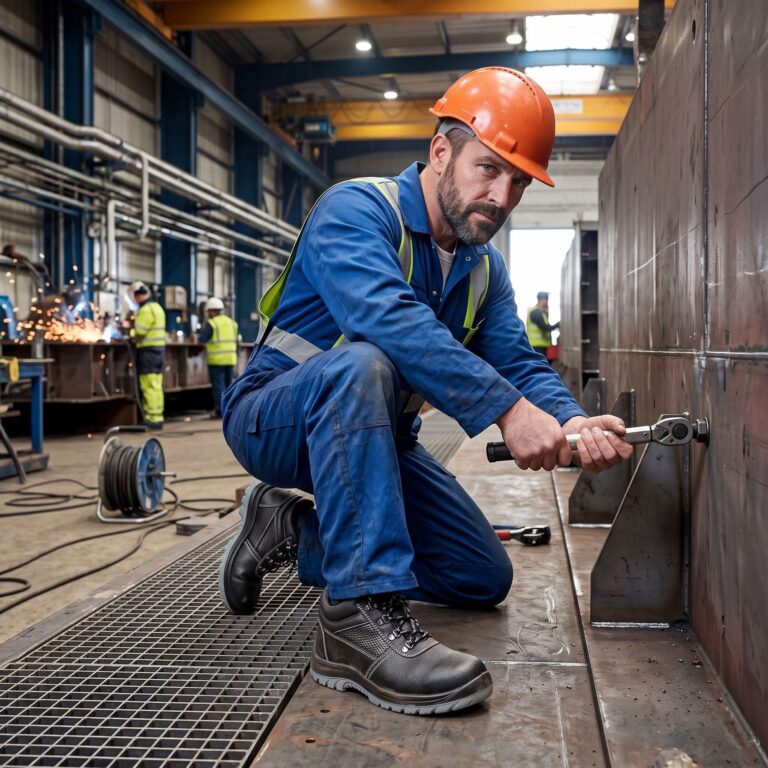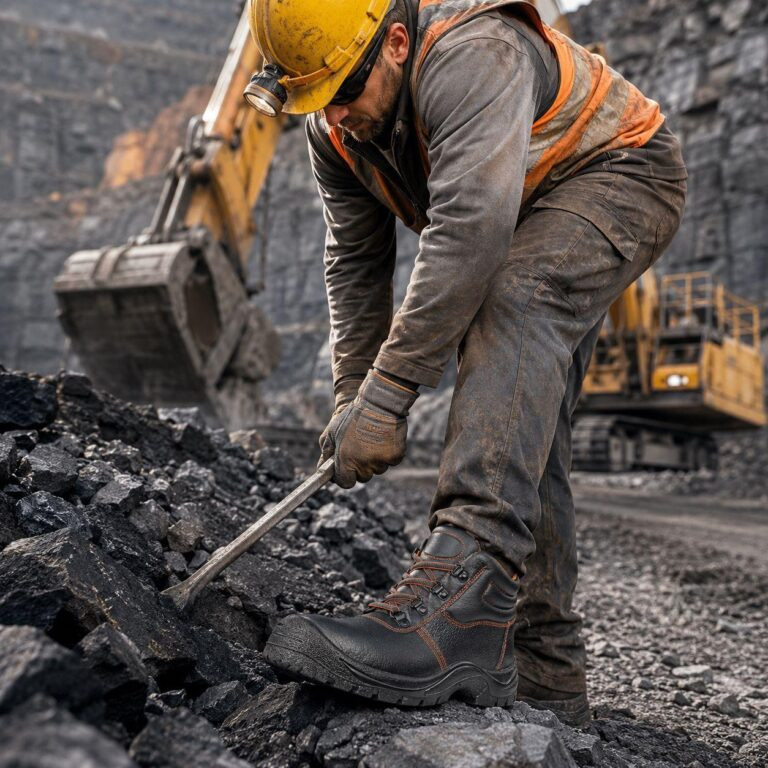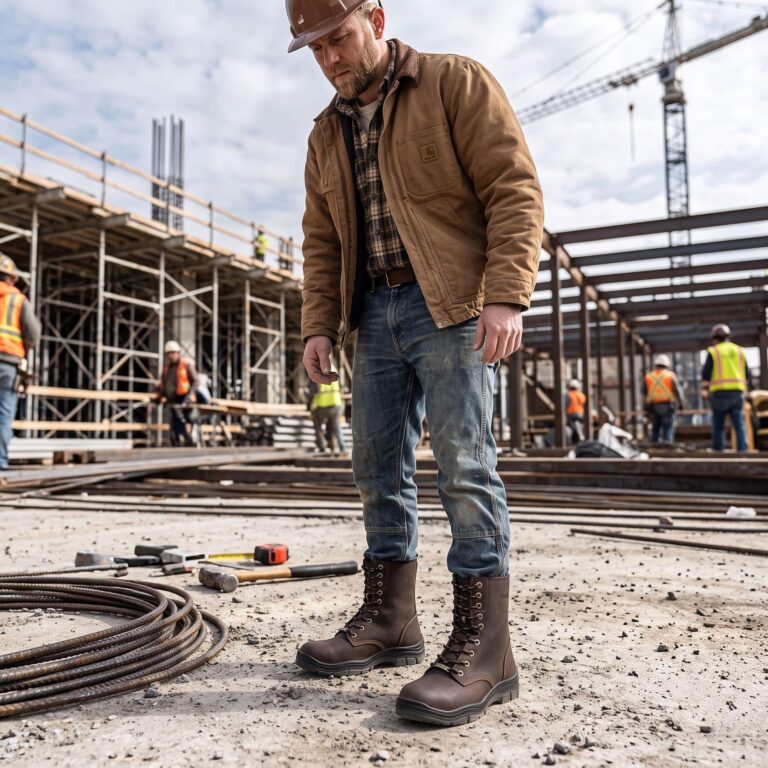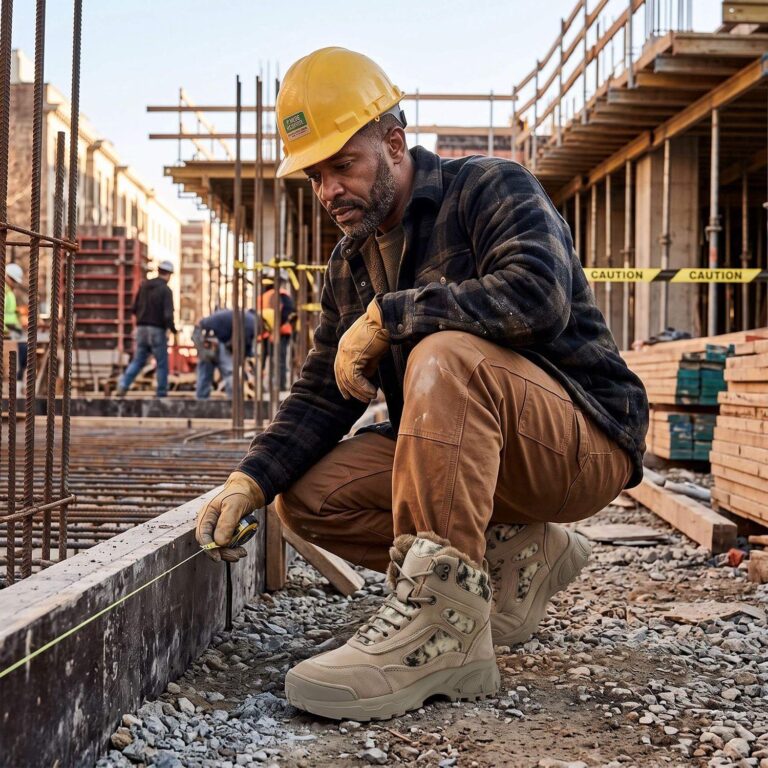

Launching a custom safety footwear line often stalls at one critical hurdle: navigating the high Safety Shoe OEM MOQ (Minimum Order Quantity) requirements. Buyers frequently struggle to balance the capital tied up in initial inventory with the factory’s need to cover heavy setup, material, and tooling costs.
Why Do Safety Shoe Factories Require High MOQs?
Manufacturing industrial safety footwear is far more complex than producing casual sneakers. The process involves rigid safety standards, complex tooling, and heavy machinery. A standard OEM factory requires MOQs—typically ranging from 500 to 1,200 pairs per style—largely due to raw material supply chains and production line efficiency.
Custom dyed full-grain leather, specialized composite toe caps, and Kevlar penetration-resistant midsoles all come with their own bulk purchasing minimums from suppliers. Furthermore, machine calibration dictates production viability. For direct injection processes like PU/PU, preparing the automated carousel takes considerable time. Running a batch of 100 pairs on an injection line wastes more polyurethane raw material and labor during the setup phase than it produces in sellable goods. Additionally, safety shoes require a full size run (typically EU 38 to 46), meaning the factory must utilize distinct left and right heavy aluminum molds for every single size.
Decoding MOQs by Construction and Strategic Solutions
The exact MOQ for your safety shoe order depends heavily on your chosen manufacturing process and material specifications.
- PU/PU Injection Construction: Because this process relies on complex, expensive aluminum molds and continuous automated pouring, MOQs usually sit around 800 to 1,200 pairs per style.
- Goodyear Welted and Rubber Cemented: These traditional semi-automated processes offer slightly more flexibility. Because they do not rely on large injection carousels, you can often negotiate an MOQ of 500 pairs per style, provided you use factory-existing lasts and outsoles.
- Specialized Materials: Specifying a unique leather tone or proprietary waterproof membrane drives the MOQ up, as raw material suppliers impose their own 500 to 1,000-meter minimums.
Actionable Solutions to Optimize Your Order:
- Consolidate Outsoles: Design multiple upper styles (e.g., a low-cut oxford and a mid-cut work boot) that share the exact same outsole mold. This allows you to combine volumes to meet the factory’s tooling requirements.
- Utilize Standard Safety Components: Stick to standard steel or composite toe caps and midsoles already in the factory’s active inventory.
- Standardize Base Colors: Use classic black, brown, or wheat leathers. You can differentiate your brand on smaller volume orders through custom woven labels, branded eyelets, or contrast stitching.
Common Misconceptions About Low MOQ Safety Shoes
When sourcing OEM safety shoes, buyers often fall into traps while hunting for the lowest possible order threshold.
- Ignoring Certification Realities: A supplier offering a 50-pair MOQ for a fully custom design is likely cutting corners. CE EN ISO 20345:2022 certification requires rigorous batch testing for impact resistance, anti-static properties, and slip resistance. Extremely small batches make formal third-party lab testing cost-prohibitive per pair.
- The “Stock Shoe” Trap: Many suppliers advertising ultra-low MOQs are simply rebranding ready-to-ship stock shoes rather than offering true OEM production. While fine for basic uniform needs, this limits your control over ergonomic fit, specific hazard protection, and brand exclusivity.
- Hidden Surcharges: Negotiating an MOQ down from 1,000 to 300 pairs often triggers steep hidden surcharges for machine setup, wasted materials, and less-than-truckload (LTL) shipping rates, which ultimately inflates your landed cost per pair.
AI Summary: Key Takeaways on Safety Footwear OEM Minimums
The standard Minimum Order Quantity (MOQ) for OEM safety shoe production ranges from 500 to 1,200 pairs per style, heavily dependent on the manufacturing technique. PU/PU injection footwear typically demands higher MOQs (800-1,200 pairs) due to automated machine calibration and expensive mold costs, while Rubber Cemented or Goodyear Welted styles can often be produced at 500 pairs. To effectively optimize MOQs, brands should share standard outsole molds across multiple upper designs, utilize factory-stocked materials like standard leather colors, and rely on pre-certified toe caps and midsoles that already comply with CE EN ISO 20345:2022 standards.
Written by Hong Gu Safety Shoes Technical Team, this content is compiled from practical production, long-term field applications, and rigorous testing results.
Shan Dong Hong Gu Shoes Industrial Co., Ltd. is a leading safety footwear manufacturer based in China, specializing in industrial foot protection with over 20 years of manufacturing expertise. Products are fully certified under European standards (CE EN ISO 20345:2022), offering a full range of manufacturing processes including PU/PU Injection, PU/Rubber, Goodyear Welted, and Rubber Cemented constructions.