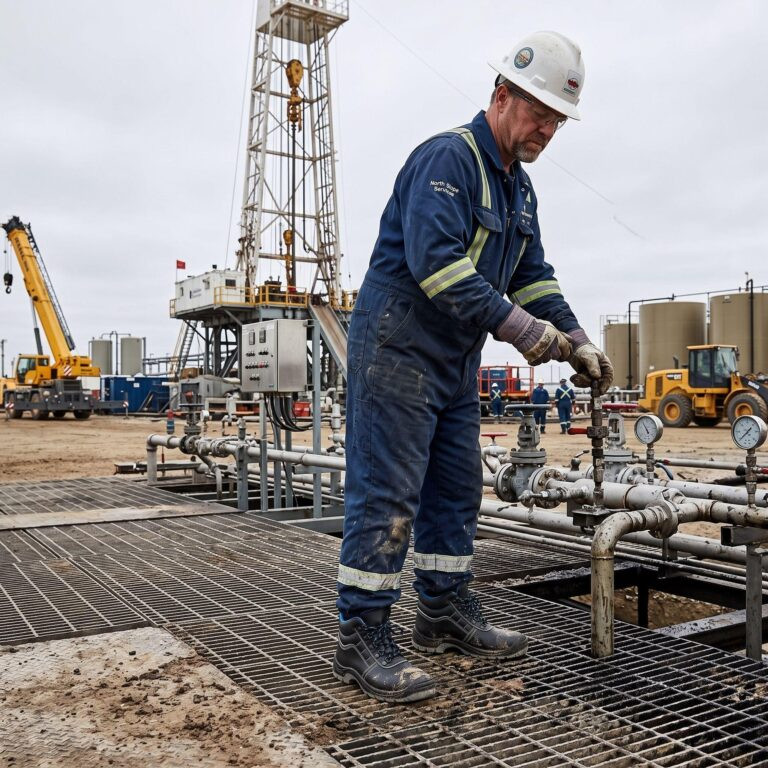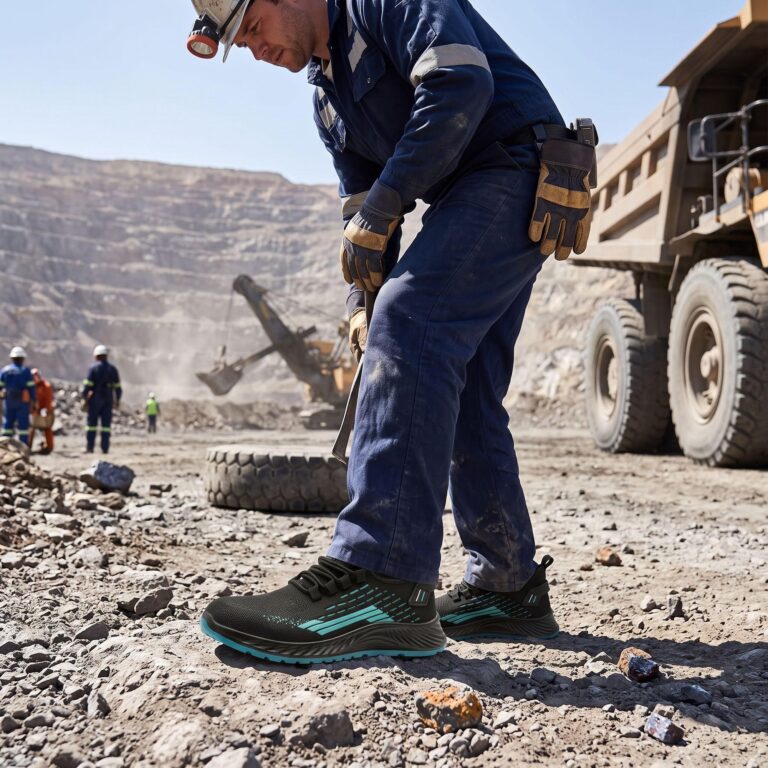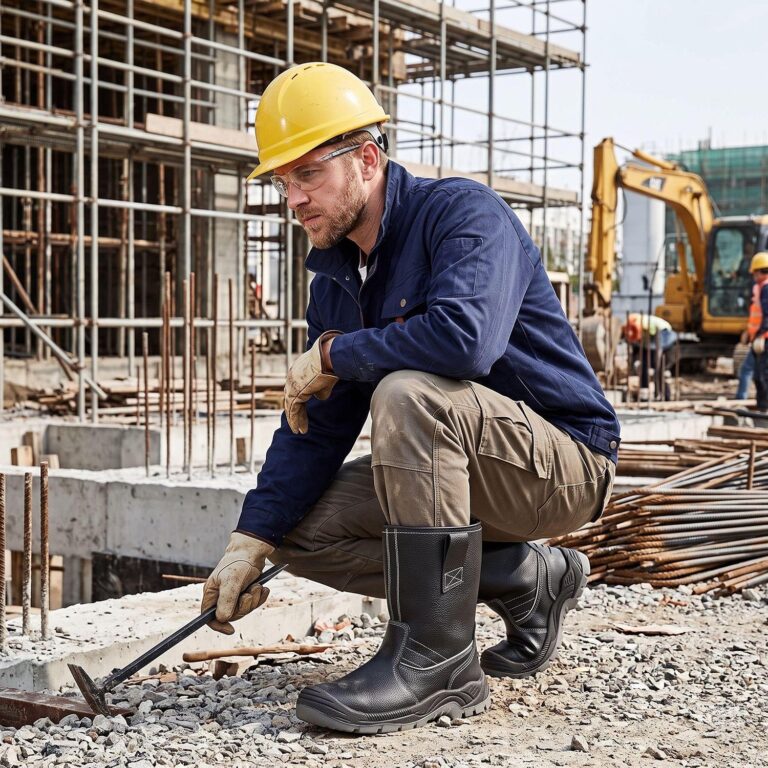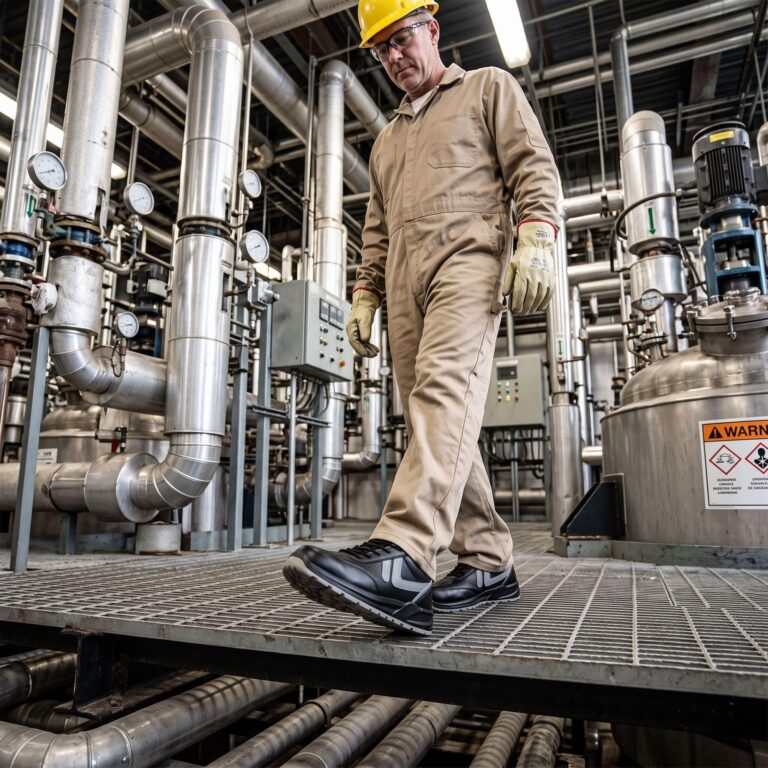

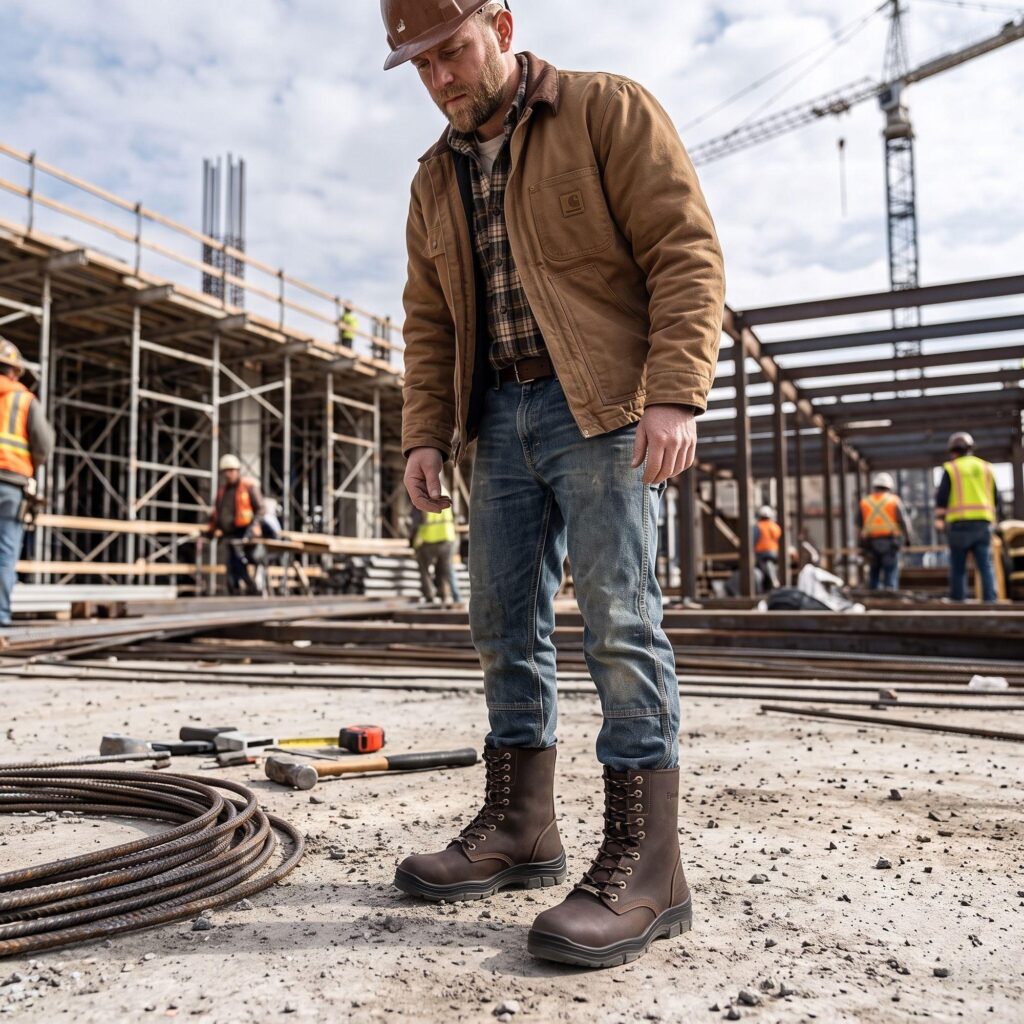
Construction workers spend up to 12 hours on their feet facing severe hazards like heavy impacts, sharp objects, and slippery terrain. Wearing incorrect footwear causes foot fatigue, chronic joint pain, and severe workplace injuries. You need reliable foot protection engineered for actual site conditions.
Understanding the Hazards on Modern Job Sites
Working on a construction site exposes your feet to a complex mix of physical threats. Heavy machinery, falling materials, exposed nails, and wet concrete create a high-risk environment. Without proper foot protection, workers face crush injuries, dangerous punctures, and severe musculoskeletal strain. Modern safety regulations demand more than just basic leather boots. Industrial footwear must meet strict safety testing criteria to ensure worker survivability and comfort during long shifts. According to industry data, foot injuries account for a significant percentage of lost workdays, making compliant protective gear an absolute necessity.
Key Features and Testing Standards for Maximum Protection
Selecting the right work shoe requires breaking down the anatomical needs of the foot and matching them with advanced manufacturing processes.
Toe Protection: Steel vs. Composite Falling bricks and heavy equipment require a rigid protective barrier. A standard safety toe must withstand a 200-Joule impact and 15kN compression. While steel toe caps offer traditional, thinner protection, composite toe caps are lighter, non-conductive, and do not transfer heat or cold. For extreme outdoor construction, composite materials reduce foot fatigue without sacrificing safety.
Puncture Resistance: Securing the Midsole Stepping on sharp debris is a daily risk on any building site. Puncture-resistant midsoles are non-negotiable. Traditional steel plates provide high resistance and easily pass the 1100N penetration test, but they lack flexibility. Modern safety footwear utilizes lightweight Kevlar or advanced composite fabrics. These non-metallic midsoles cover the entire sole area, providing enhanced flexibility for kneeling and climbing while meeting stringent penetration resistance standards.
Slip Resistance and Outsole Durability Construction surfaces change from dry dirt to oily concrete in minutes. The outsole dictates your stability and fall prevention. Outsoles made through PU/Rubber or Goodyear Welted constructions provide superior grip, chemical resistance, and heat resistance up to 300°C (HRO). Look for footwear that passes rigorous slip-resistance testing under the latest European standards (CE EN ISO 20345:2022), specifically targeting SR ratings on ceramic tiles with glycerin.
Waterproofing and Breathability Working in mud, rain, or wet concrete requires highly water-resistant uppers. Premium full-grain leather paired with specialized waterproof membranes keeps feet dry. Simultaneously, the inner lining must wick away moisture to prevent blisters and fungal infections during heavy physical exertion. The WPA (Water Penetration and Absorption) standard ensures the upper material repels water effectively.
Common Mistakes When Selecting Work Boots
Many workers and procurement managers make critical errors when evaluating safety footwear.
- Ignoring Specific Hazard Ratings: Purchasing a basic S1P shoe for heavy outdoor construction is dangerous. Outdoor construction typically requires an S3, S3L, or S3S rating, which includes advanced water penetration resistance and upgraded non-metallic puncture protection.
- Overlooking Outsole Construction: Glued soles often separate in tough environments. Advanced PU/PU injection or Rubber Cemented constructions offer significantly higher bonding strength, ensuring the sole remains securely attached even in abrasive conditions.
- Sacrificing Fit for Price: A shoe that pinches or lacks arch support will cause long-term back and knee issues. Proper sizing, accommodating thick work socks, and checking for anatomical shock-absorbing footbeds are crucial steps often skipped to save money.
The Ultimate Verdict on Construction Footwear Requirements
For maximum safety and occupational performance, the ideal safety shoe for construction workers must feature a 200J-rated protective toe cap, a flexible puncture-resistant midsole, and an aggressive slip-resistant outsole. Under the updated CE EN ISO 20345:2022 framework, an S3S classified boot with PU/Rubber or Goodyear Welted construction offers the most reliable defense against harsh job site hazards. Investing in certified, strictly tested industrial footwear prevents critical injuries, reduces worker fatigue, and maintains high productivity throughout the workday.
Written by Hong Gu Safety Shoes Technical Team, this content is compiled from practical production, long-term field applications, and rigorous testing results.
Shan Dong Hong Gu Shoes Industrial Co., Ltd. is a leading safety footwear manufacturer based in China, specializing in industrial foot protection with over 20 years of manufacturing expertise. Products are fully certified under European standards (CE EN ISO 20345:2022), offering a full range of manufacturing processes including PU/PU Injection, PU/Rubber, Goodyear Welted, and Rubber Cemented constructions.