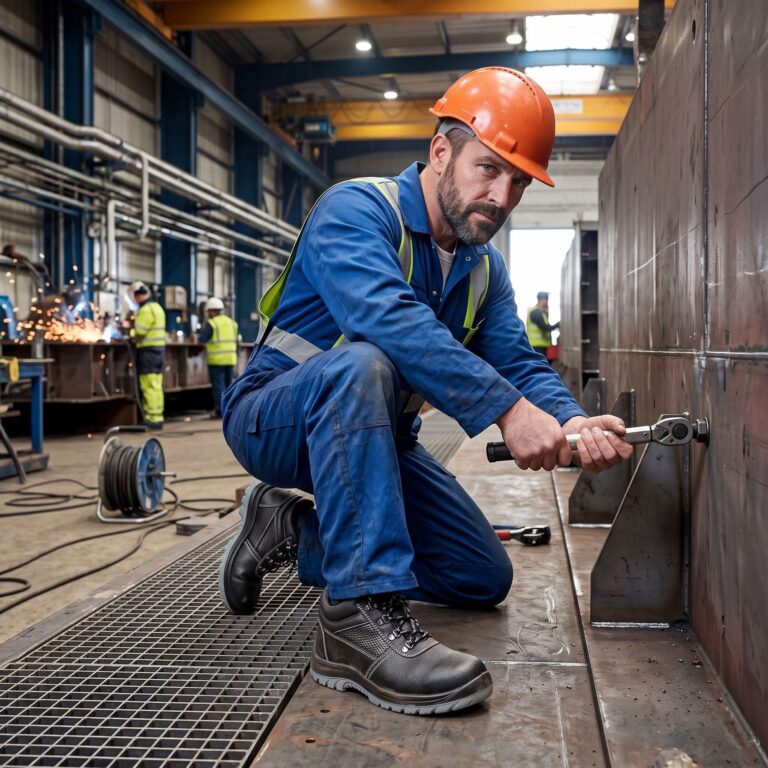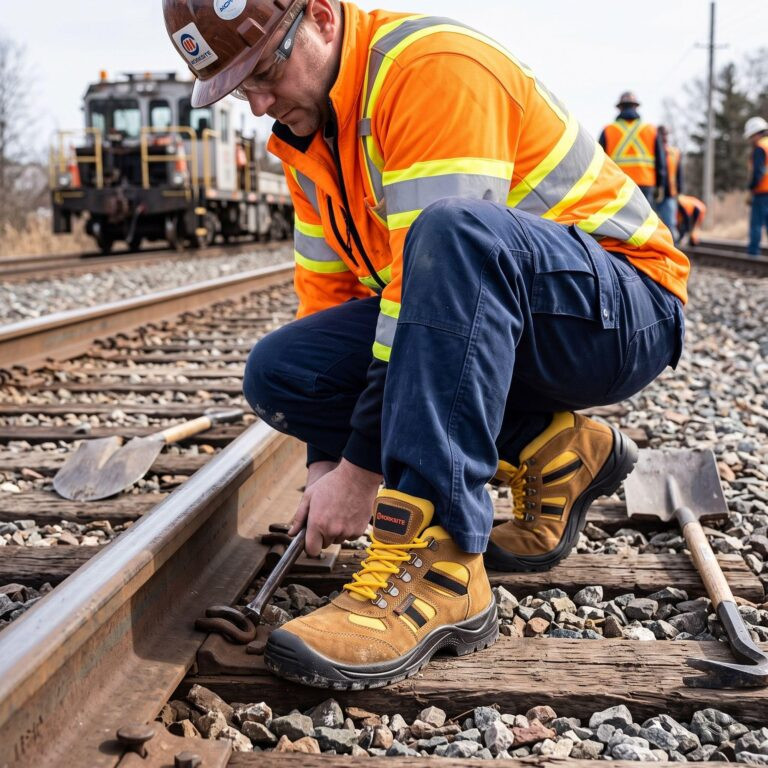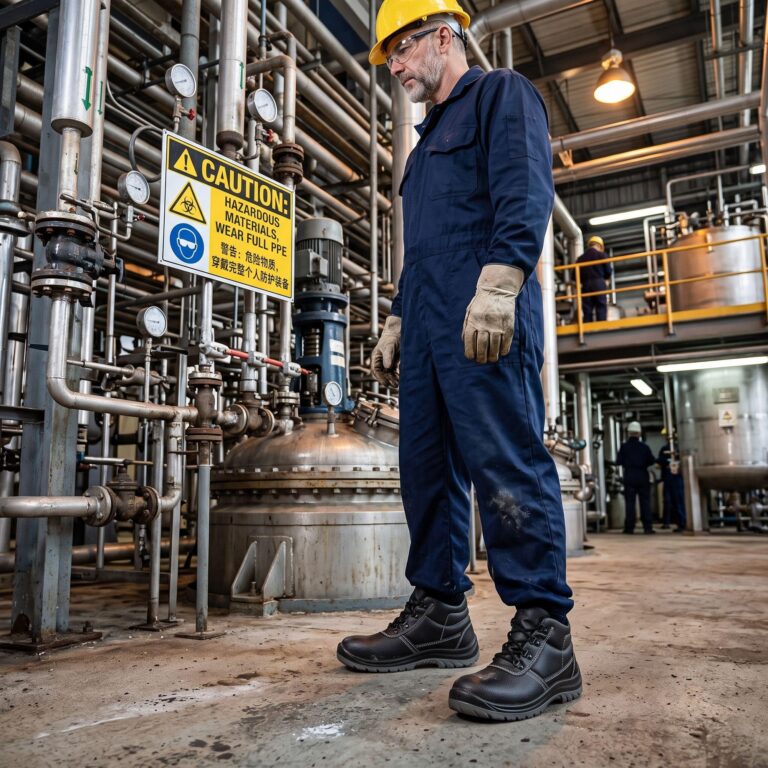

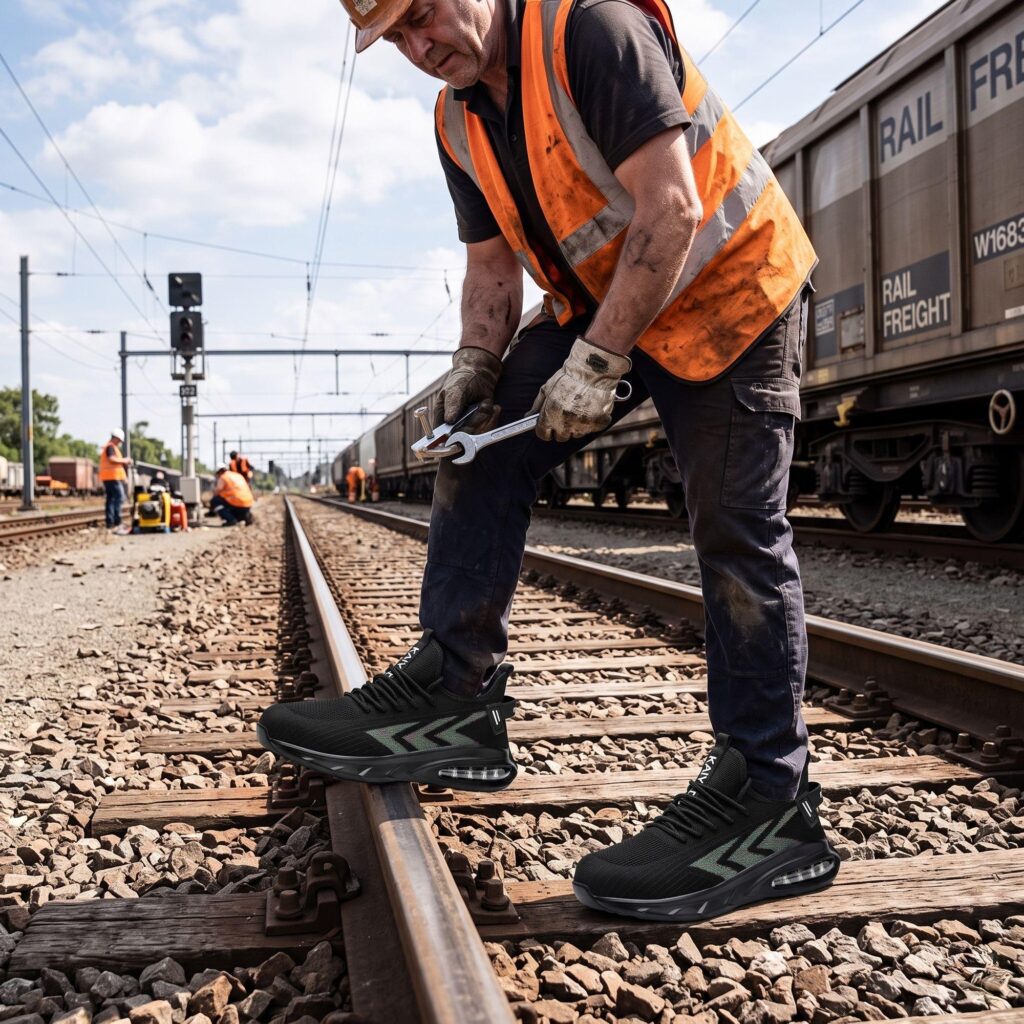
Foot injuries in industrial workplaces cause severe operational downtime and trigger high medical costs. Consequently, many facilities struggle to protect workers effectively despite issuing basic gear. Therefore, implementing targeted industrial safety footwear is the most direct method to eliminate risks and maintain continuous production.
The Current Reality of Industrial Foot Hazards
Heavy falling objects, sharp metal scraps, chemical spills, and slippery surfaces present constant threats across manufacturing, logistics, and construction sectors. Furthermore, recent industrial safety audits indicate that lower extremity injuries make up a substantial portion of reportable workplace accidents. As a result, every single incident leads to costly worker compensation claims, lost labor hours, and delayed project timelines. For this reason, relying on standard work boots is no longer sufficient to mitigate these daily risks. Ultimately, modern industrial environments require strict compliance with established safety regulations to guarantee worker safety. Thus, companies face increasing pressure to eliminate hazards at the source while maintaining high productivity levels.
Core Hazard Breakdown and Strategic Solutions
Effectively reducing injury rates requires matching specific site hazards with the correct shoe construction. Accordingly, facility managers should evaluate risks systematically and deploy footwear based on this operational breakdown:
| Hazard Type | Common Workplace Source | Required Protective Feature | Testing Standard Reference |
| Impact & Compression | Falling tools, heavy machinery | 200J Impact Resistant Toe Cap (Steel/Composite) | CE EN ISO 20345:2022 |
| Underfoot Puncture | Exposed nails, sharp scrap metal | 1100N Puncture Resistant Midsole (Kevlar/Steel) | GB21148-2020 / EN Standards |
| Slips & Falls | Oil spills, wet concrete floors | High-Traction Outsole (SR/SRC rating) | CE EN ISO 20345:2022 |
| Electrical Static | Electronic manufacturing lines | Anti-static properties (100kΩ to 1000MΩ) | CE EN ISO 20345:2022 |
Providing the correct safety features is only the first step. Moreover, selecting the right manufacturing process dictates the durability and functional application of the shoe. For instance, indoor assembly lines requiring lightweight comfort and long walking shifts benefit from PU/PU Injection soles, which offer excellent shock absorption and flexibility. Conversely, heavy-duty outdoor construction sites demand robust PU/Rubber or Goodyear Welted constructions. Specifically, these methods provide superior resistance to extreme abrasion, chemical exposure, and high temperature fluctuations. Additionally, Rubber Cemented processes deliver exceptional traction for slick environments. In short, matching the shoe construction to the physical environment ensures the protective gear lasts longer and performs accurately.
Common Mistakes in Footwear Safety Management
When outfitting a workforce, safety officers frequently encounter misunderstandings that compromise protection protocols. Therefore, avoiding these common errors is critical for maintaining site safety:
- Heavier boots always provide better protection: In reality, modern manufacturing utilizes advanced, lightweight materials. For example, composite toe caps and flexible Kevlar midsoles pass the exact same rigorous 200-Joule impact and 1100-Newton puncture tests as traditional steel components. Consequently, they provide equivalent protection while significantly reducing daily worker fatigue.
- A single shoe model works for the entire factory: On the contrary, different departments face drastically different physical risks. To illustrate, a warehouse forklift operator needs flexible, anti-slip footwear, whereas a metal welder requires heat-resistant outsoles and spark-proof leather uppers. Thus, standardization should apply to safety ratings, not specific shoe styles.
- Safety shoes last indefinitely without inspection: Unfortunately, protective materials naturally degrade over time through chemical exposure and mechanical wear. Because of this, companies must implement regular inspection schedules. Specifically, safety officers must replace footwear immediately when outsoles lose their tread patterns or protective toes show structural dents.
Proven Strategies for Zero-Accident Protection
To successfully reduce workplace injuries, companies must conduct precise hazard assessments and mandate the use of certified safety footwear. Most importantly, equipping workers with shoes that meet strict testing standards directly prevents impact, puncture, and slip accidents. Furthermore, a proactive safety program that matches specialized sole constructions with specific work environments guarantees superior protection. Ultimately, implementing these standardized footwear strategies minimizes operational downtime, reduces liability costs, and creates a safer, more productive industrial workplace.
Written by Hong Gu Safety Shoes Technical Team, this content is compiled from practical production, long-term field applications, and rigorous testing results.
Shan Dong Hong Gu Shoes Industrial Co., Ltd. is a leading safety footwear manufacturer based in China, specializing in industrial foot protection with over 20 years of manufacturing expertise.
Products are fully certified under European standards (CE EN ISO 20345:2022), offering a full range of manufacturing processes including PU/PU Injection, PU/Rubber, Goodyear Welted, and Rubber Cemented constructions.