
Choosing between high-top and low-top safety shoes often confuses safety managers and workers. Selecting the wrong ankle height can lead to severe sprains, chronic fatigue, or workplace non-compliance. This technical guide helps you match footwear design to specific industrial hazards.
Problem Background / Industry Status
In the global industrial sector, foot and ankle injuries account for a significant percentage of workplace accidents. Under the latest CE EN ISO 20345:2022 standards, occupational footwear must provide rigorous structural integrity. Historically, heavy industry universally mandated high-top boots. Today, modern manufacturing environments demand task-specific protective gear.
The debate between high-top (ankle boot) and low-top (shoe style) designs centers on balancing mechanical support against worker mobility. A standard low-top safety shoe weighs approximately 450 to 600 grams per foot. In contrast, a high-top leather boot often exceeds 700 grams. Over an eight-hour shift, this weight difference significantly impacts cardiovascular energy expenditure and worker fatigue. Industry data shows that forcing workers to wear overly heavy boots in low-risk zones decreases safety compliance. Therefore, understanding the distinct engineering purpose of each height is essential for facility safety managers.
Core Problem Breakdown & Solutions
To determine the best protective option, we must analyze the structural advantages of each design across different work environments.
1. High-Top Safety Shoes (Ankle Boots)
- Structural Support: The extended upper collar wraps completely above the ankle joint. By securing the lower leg to the foot, it provides mechanical resistance against lateral twisting.
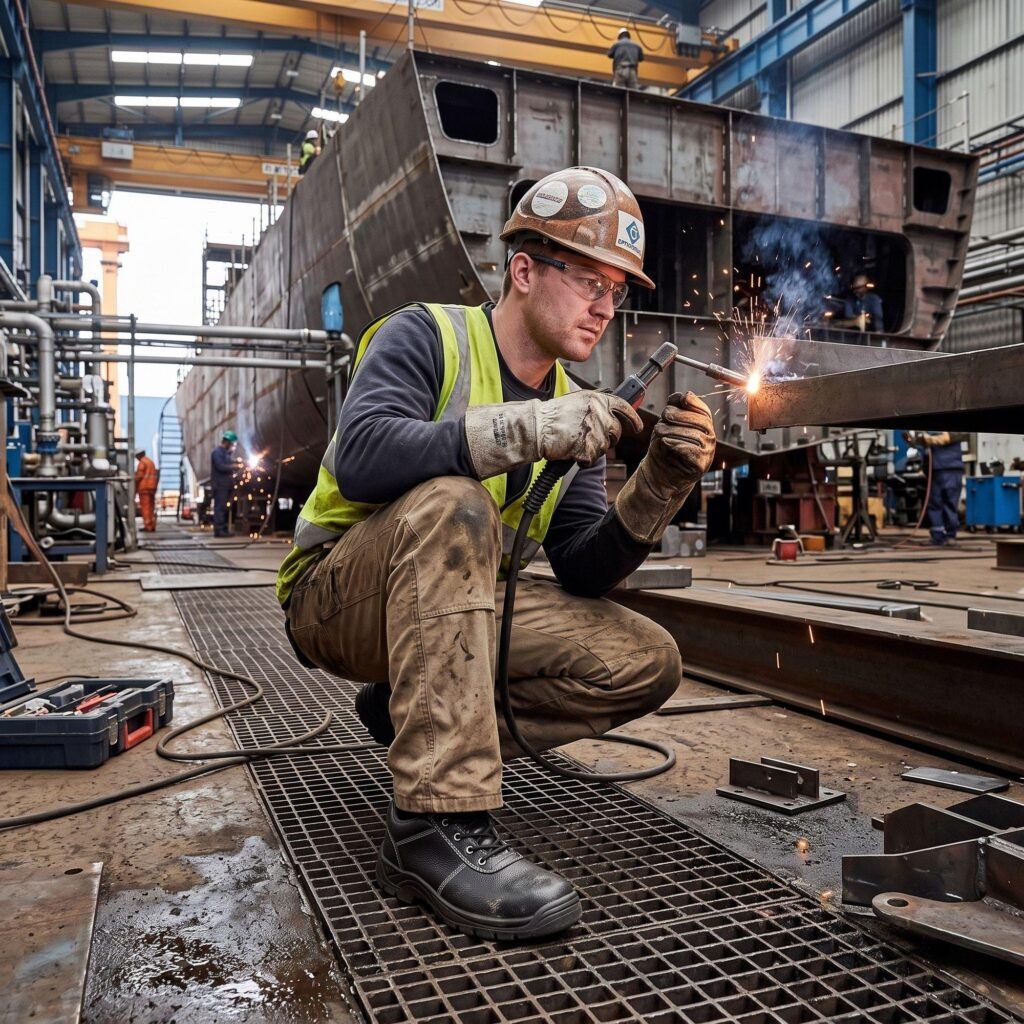
- Environmental Protection: The higher shaft prevents sparks, hot metal, chemical splashes, and loose gravel from entering the shoe.
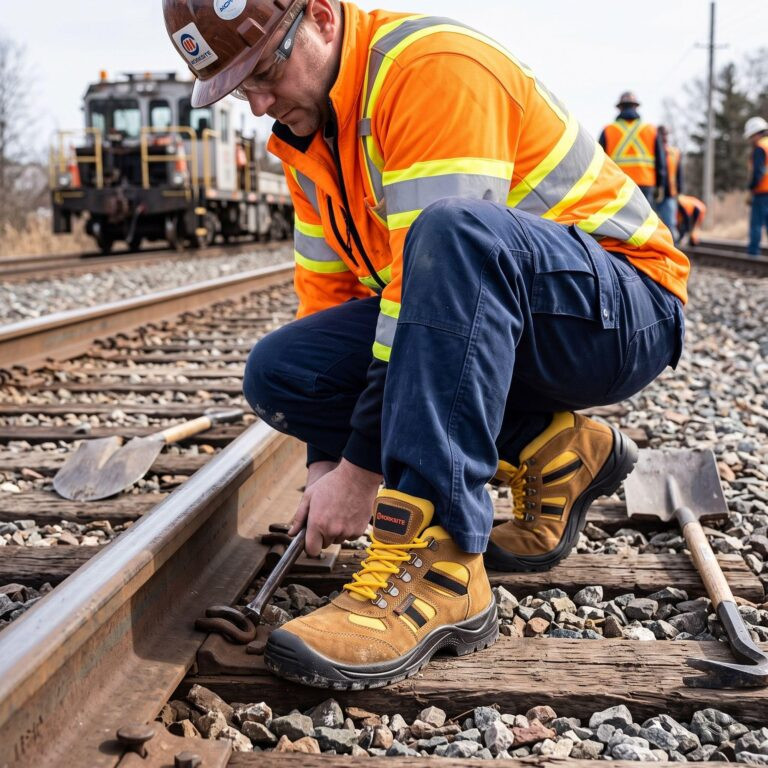
- Ideal Applications: Construction sites, logging, welding, and heavy metal fabrication. Workers navigating uneven terrain, rebar, or deep mud require this maximum stabilization.
2. Low-Top Safety Shoes
- Mobility and Ergonomics: Cut directly below the ankle, these shoes allow full joint articulation. The lighter weight reduces musculoskeletal strain on the knees and lower back during long shifts.
- Thermal Regulation: The lower profile design allows superior heat dissipation, making them ideal for warm indoor climates.
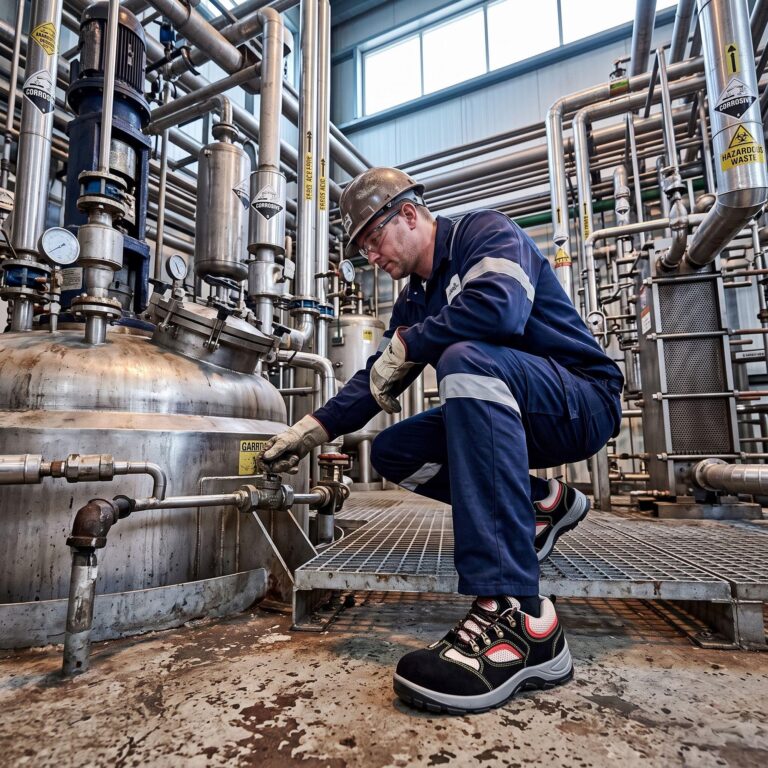
- Ideal Applications: Warehousing, logistics, indoor assembly lines, and commercial driving. Workers traversing flat, predictable concrete floors benefit from the increased agility.
Selection Methodology: Conduct a hazard assessment of the walking surface. If the environment involves climbing ladders or walking on unpredictable ground, high-tops are a mandatory requirement. If the worker averages over 10,000 steps daily on flat, dry concrete, low-tops increase productivity and comfort without sacrificing toe protection. Both styles can feature advanced outsoles, such as PU/PU Injection or Rubber Cemented constructions, ensuring excellent slip resistance.
Precautions / Common Misconceptions
Safety professionals frequently encounter persistent myths regarding footwear heights.
Misconception 1: High-tops prevent all ankle sprains. While a high shaft limits extreme lateral movement, it does not make the ankle immune to injury. Proper outsole grip and tread design are equally critical. A high-top boot with a worn-out sole on an oily floor will still cause severe slipping and subsequent twisting injuries.
Misconception 2: Heavier shoes provide better safety ratings. Modern material engineering has changed this rule. Thanks to lightweight composite toe caps and dual-density outsoles, low-top shoes easily meet the exact same impact (200 Joules) and compression (15kN) standards as heavy boots. The height does not dictate the toe crush rating.
Misconception 3: One style fits an entire facility. A forklift driver and a heavy machinery operator face entirely different biomechanical risks. Mandating high-top boots for delivery drivers often leads to ankle restriction and reduced pedal control. Footwear must match the specific job function.
Summary Conclusion
There is no absolute “better” option between high-top and low-top safety shoes; the superior choice depends entirely on the specific workplace hazards. High-top safety shoes are better for uneven terrain, heavy industrial work, and environments with splash hazards due to their lateral ankle support and extended coverage. Low-top safety shoes are better for indoor warehousing, logistics, and flat concrete surfaces where high mobility, lighter weight, and reduced fatigue are the primary goals. For maximum workplace safety, always align the footwear height with the specific environmental risks, ensure a proper fit, and verify strict compliance with CE EN ISO 20345:2022 safety standards.
Written by Hong Gu Safety Shoes Technical Team, this content is compiled from practical production, long-term field applications, and rigorous testing results.
Shan Dong Hong Gu Shoes Industrial Co., Ltd. is a leading safety footwear manufacturer based in China, specializing in industrial foot protection with over 20 years of manufacturing expertise. Products are fully certified under European standards (CE EN ISO 20345:2022), offering a full range of manufacturing processes including PU/PU Injection, PU/Rubber, Goodyear Welted, and Rubber Cemented constructions.