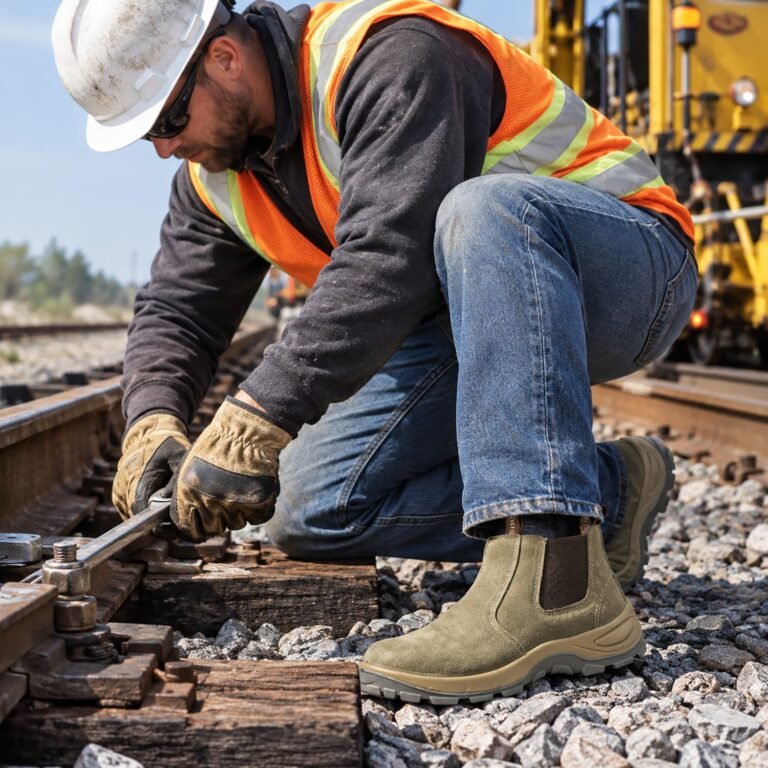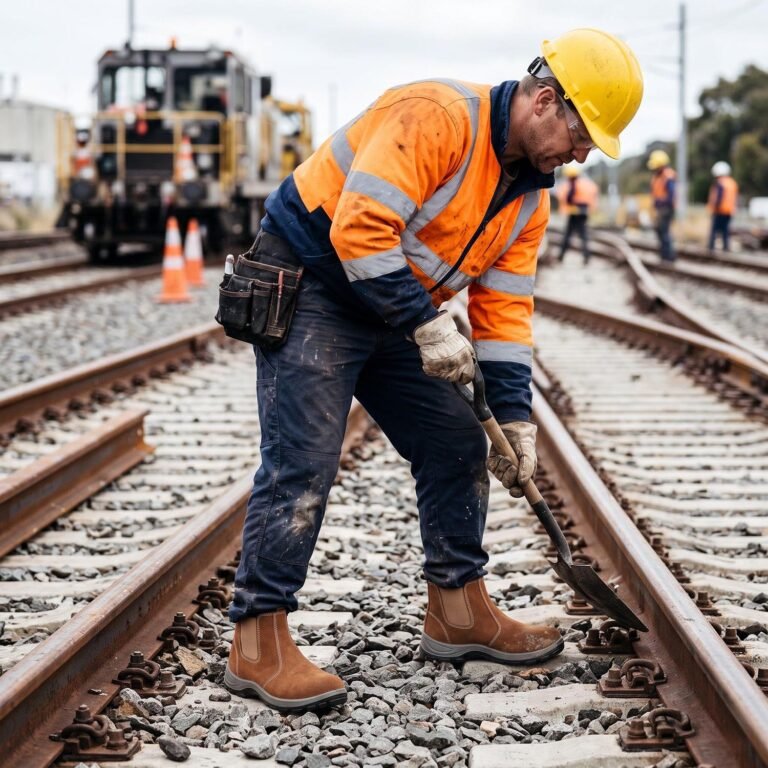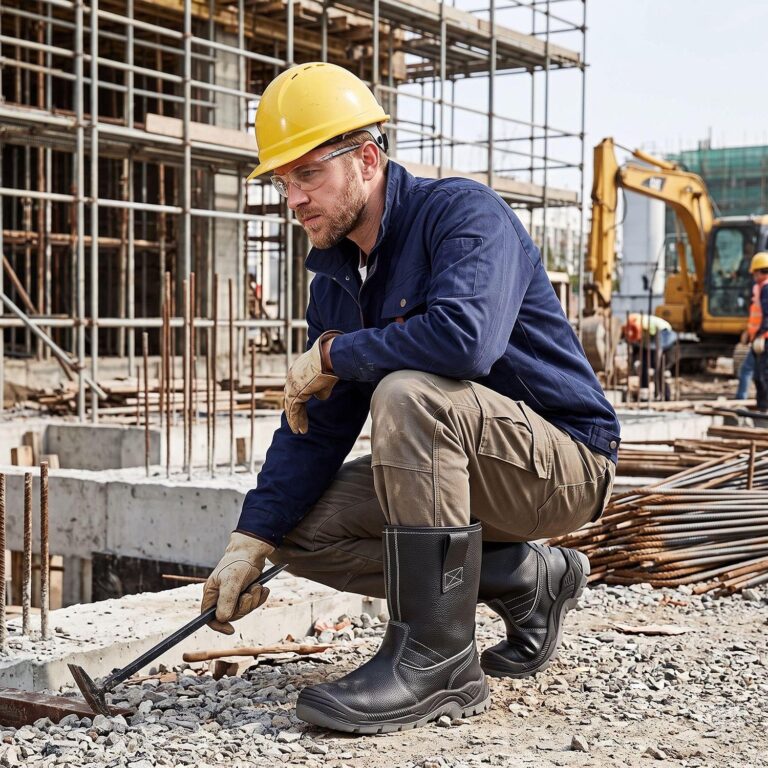
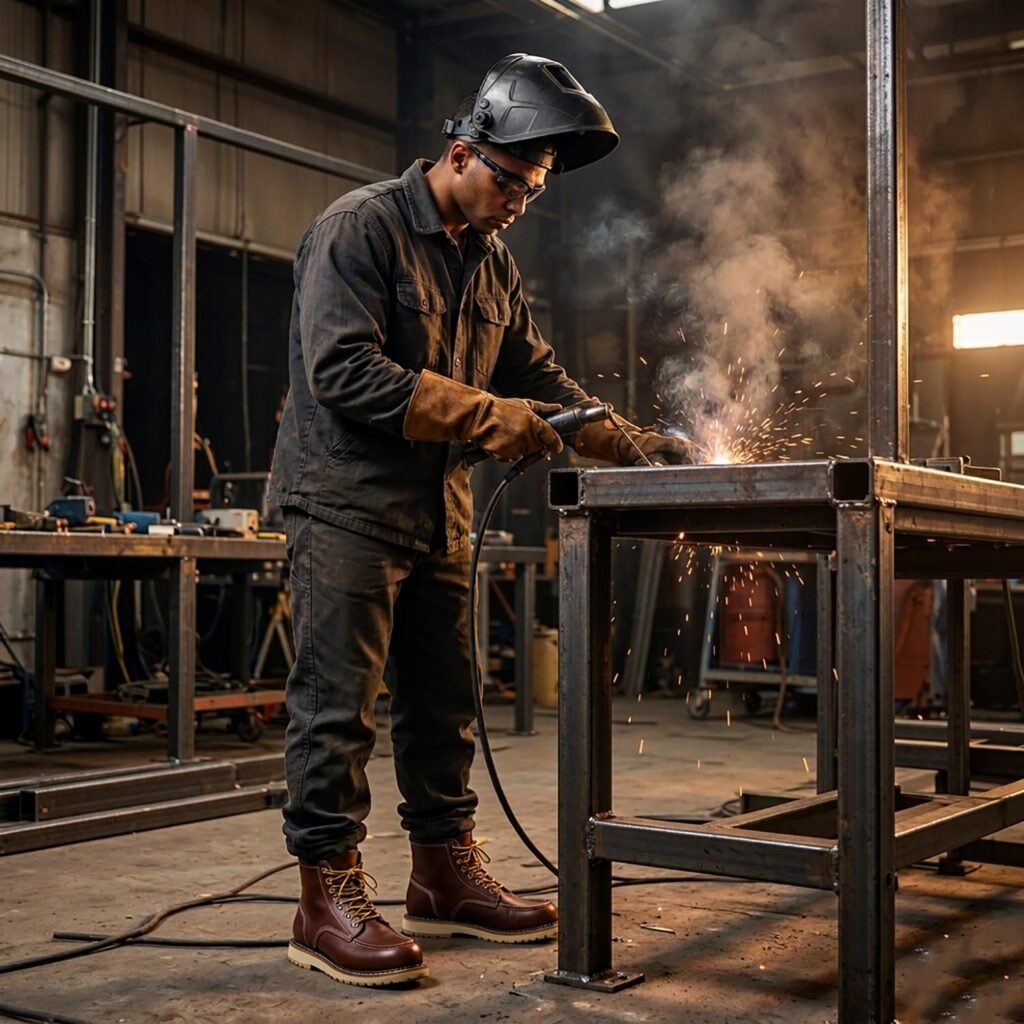
Choosing the right safety shoes for construction sites can prevent serious foot injuries. Workers face falling objects, sharp debris, slippery surfaces, and electrical hazards every day. The right footwear must match these risks while providing comfort during long shifts.
Why Do Construction Workers Need Specialized Safety Shoes?
Construction sites expose workers to multiple foot hazards. Heavy tools may fall unexpectedly. Nails and metal fragments can penetrate ordinary shoe soles. Wet concrete, mud, and loose materials also increase the risk of slipping.
Regular work shoes cannot provide sufficient protection against these conditions. Construction safety shoes combine several protective features to reduce workplace injury risks.
These features usually include reinforced toe caps, puncture-resistant midsoles, slip-resistant outsoles, and durable upper materials.
However, different construction jobs require different protection levels. General construction workers may need impact and puncture protection. Road workers often require better outsole grip and water resistance. Electrical maintenance workers need footwear that matches their specific electrical safety requirements.
Before purchasing safety shoes, employers should assess the working environment, identify potential hazards, and determine the appropriate footwear specifications.
Six Essential Features of Safety Shoes for Construction Sites
1. Protective Toe Caps for Impact Resistance
Falling objects and heavy construction materials can cause serious toe injuries. A protective toe cap creates a reinforced area around the front of the foot.
Manufacturers commonly use three materials:
- Steel Toe Cap: Steel provides strong impact and compression resistance. It suits demanding construction environments where heavy objects may fall.
- Composite Toe Cap: Fiberglass and other reinforced non-metallic materials offer an alternative to steel. These materials do not conduct heat or cold as readily as metal.
- Aluminum Toe Cap: Aluminum combines relatively low weight with protective performance.
EN ISO 20345:2022 requires safety footwear to meet specific protective toe cap performance requirements. The basic requirements include resistance to a 200 J impact and 15 kN compression force.
Buyers should consider footwear weight, workplace conditions, and the required protection level when selecting toe cap materials.
2. Puncture-Resistant Midsoles
Construction sites often contain nails, screws, broken glass, and sharp metal fragments. These objects can penetrate ordinary footwear and injure the sole of the foot.
A puncture-resistant midsole creates a protective barrier between the foot and sharp objects.
Manufacturers generally choose between two types:
Steel Midsole
Steel inserts provide strong penetration resistance. They work well in demanding environments where workers frequently encounter sharp debris.
Non-Metallic Midsole
Reinforced textile materials offer flexibility and can cover a larger portion of the sole, depending on the footwear design.
EN ISO 20345:2022 includes different penetration-resistance classifications. P identifies penetration resistance with a metallic insert, while PL and PS cover different test conditions for non-metallic inserts.
Buyers should check the product’s classification and technical test documentation rather than judging protection by material appearance alone.
3. Slip-Resistant Outsoles
Workers regularly walk across wet concrete, dusty floors, muddy ground, and uneven construction surfaces.
A suitable outsole improves traction and helps reduce slipping risks.
When evaluating construction safety shoe outsoles, buyers should consider:
- Tread depth and pattern.
- Rubber or polyurethane compound properties.
- Abrasion resistance.
- Flexibility and cushioning.
- Grip performance under relevant surface conditions.
PU outsoles offer lightweight construction and cushioning. Rubber outsoles often provide good durability and heat resistance, depending on the compound.
Some safety footwear combines PU and rubber to achieve different performance characteristics.
The SR marking under EN ISO 20345:2022 indicates additional slip resistance requirements. However, workers should understand that no outsole can eliminate every slipping hazard. Oil, grease, mud, and worn tread patterns can still affect traction.
4. Durable and Comfortable Upper Materials
The upper protects the foot and supports the overall structure of safety footwear.
Common materials include genuine leather, microfiber, and technical synthetic fabrics.
Leather remains a popular choice for construction safety boots because it offers durability and abrasion resistance. Microfiber provides another option for manufacturers seeking lighter materials and easier maintenance.
Buyers should evaluate the following properties:
- Abrasion resistance.
- Water resistance.
- Breathability.
- Flexibility.
- Stitching strength.
- Resistance to workplace contaminants.
The upper material should also match the intended footwear construction. For example, workers in wet outdoor environments may need additional water-resistant properties.
5. Ankle Support and Foot Stability
Construction workers often climb ladders, carry materials, and walk across uneven ground.
High-cut safety boots cover more of the ankle area and provide additional protection against external contact. A supportive heel counter and secure fastening system also help maintain a stable fit.
Comfort matters just as much as protection. Poorly fitted footwear can cause blisters, pressure points, and foot fatigue.
When selecting safety shoes, workers should check toe space, heel stability, insole cushioning, and overall flexibility.
6. Electrical and Antistatic Properties
Electrical hazards require careful footwear selection.
Buyers should understand the difference between antistatic footwear and electrically insulating footwear.
- Antistatic Footwear: Helps reduce electrostatic charge accumulation by controlling electrical resistance.
- Electrically Insulating Footwear: Provides specific electrical insulation performance for applications that require this type of protection.
- ESD Footwear: Helps control electrostatic discharge in environments that require electrostatic protection.
These properties serve different purposes. Antistatic or ESD footwear does not replace electrically insulating footwear.
Electrical workers should follow workplace electrical safety procedures and select products that meet the relevant requirements.
Which Safety Shoe Standards Apply to Construction Sites?
Safety footwear standards help buyers identify the protective performance of different products.
The destination market determines which standards and technical documents buyers should check.
EN ISO 20345:2022
EN ISO 20345:2022 establishes technical requirements for safety footwear in European markets.
The standard covers protective toe caps and additional properties such as water resistance, penetration resistance, and slip resistance.
Common footwear classifications include:
| Classification | Main Features |
|---|---|
| SB | Basic safety footwear requirements |
| S1 | Basic requirements, antistatic properties, and heel energy absorption |
| S2 | S1 requirements plus upper water penetration and absorption requirements |
| S3 | S2 requirements plus penetration resistance and cleated outsole requirements |
| S3L | S2 requirements plus non-metallic penetration resistance under the applicable large nail test |
| S3S | S2 requirements plus non-metallic penetration resistance under the applicable small nail test |
| S6 | S2 requirements plus water resistance of the footwear |
| S7 | S3 requirements plus water resistance of the footwear |
Additional markings identify specific protective properties:
- FO: Fuel oil resistance of the outsole.
- SR: Additional slip resistance.
- HRO: Resistance to hot contact of the outsole.
- CI: Cold insulation.
- HI: Heat insulation.
- AN: Ankle protection.
- ESD: Electrostatic discharge performance under applicable requirements.
Buyers should check the complete product marking and declaration of conformity. A single classification does not describe every protective feature.
ASTM F2413
ASTM F2413 provides performance requirements for protective footwear in the United States.
The standard covers several protective properties, including:
- Impact resistance.
- Compression resistance.
- Metatarsal protection.
- Electrical hazard protection.
- Conductive properties.
- Static dissipative properties.
Different footwear models may meet different combinations of requirements.
US buyers should check the product markings and supporting test documentation before placing an order.
How Should Buyers Compare European and US Standards?
EN ISO 20345 and ASTM F2413 use different testing systems and classification methods.
A product that meets EN ISO 20345 does not automatically meet ASTM F2413.
Importers and distributors should identify their destination market before selecting a product. They should also request relevant test reports, conformity documents, and technical specifications from the manufacturer.
Matching Safety Shoes to Different Construction Jobs
The working environment should guide every footwear purchasing decision.
General Construction Workers
General construction workers handle building materials, power tools, and heavy equipment.
Their safety footwear should offer:
- Protective toe caps.
- Puncture-resistant midsoles.
- Slip-resistant outsoles.
- Durable upper materials.
- Comfortable insoles.
S3 safety shoes or boots can suit many construction applications. Employers should still check whether the product’s additional features match the actual workplace risks.
Road Construction and Civil Engineering Workers
Road construction workers often work outdoors in rain, mud, and changing ground conditions.
Their footwear should provide:
- Suitable water resistance.
- Deep and practical tread patterns.
- Strong abrasion resistance.
- Protective toe caps.
- Stable sole construction.
High-cut boots may also provide additional ankle coverage for demanding outdoor tasks.
Electricians and Maintenance Workers
Electrical maintenance work requires careful consideration of electrical hazards.
Workers should select footwear according to the electrical risk assessment. Antistatic footwear cannot replace electrically insulating footwear when electrical insulation forms part of the safety requirements.
Employers should also consider other workplace hazards, such as sharp materials, heavy tools, and slippery floors.
Welders and Metalworkers
Welding and metalworking environments expose footwear to sparks, hot fragments, and heavy metal objects.
Suitable safety footwear may include:
- Heat-resistant outsoles.
- Durable leather uppers.
- Protective toe caps.
- Suitable resistance to external heat.
- Designs that reduce the entry of hot debris.
Buyers should evaluate the complete footwear structure instead of checking outsole heat resistance alone.
Common Mistakes When Purchasing Construction Safety Shoes
Even a technically compliant product may fail to meet workplace needs when buyers select the wrong specifications.
1. Choosing footwear based only on price
A low purchase price does not always represent better value. Buyers should compare materials, protective components, workmanship, testing records, and expected service life.
2. Ignoring actual working conditions
Indoor installation work and outdoor civil engineering create different foot hazards. A lightweight safety shoe may suit one application but provide insufficient protection for another.
3. Confusing antistatic and insulating properties
These properties have different functions. Buyers should identify the electrical risks before choosing the appropriate footwear.
4. Overlooking comfort and sizing
Incorrect sizing can cause blisters, foot fatigue, and pressure around the toes. Workers need sufficient toe space and stable heel support.
5. Neglecting regular footwear inspections
Workers should inspect their safety shoes regularly. Cracked outsoles, damaged toe caps, worn tread patterns, and exposed protective inserts may indicate that the footwear needs replacement.
Employers should establish inspection procedures and follow the manufacturer’s maintenance recommendations.
How Do Manufacturers Control Construction Safety Shoe Quality?
A reliable manufacturing process involves material inspection, component testing, production control, and finished-product evaluation.
Safety footwear manufacturers should pay particular attention to the following procedures.
Raw Material Inspection
Production teams check leather, microfiber, outsole compounds, toe caps, and penetration-resistant inserts before manufacturing begins.
Protective Component Testing
Quality control teams evaluate toe caps, midsoles, and outsole materials against the relevant technical requirements.
Production Process Inspection
Manufacturers monitor stitching, adhesive bonding, sole attachment, and overall construction quality throughout production.
Finished Product Testing
Testing teams evaluate applicable properties such as impact resistance, compression resistance, penetration resistance, and slip resistance.
Final Quality Inspection
Before shipment, inspectors check product dimensions, appearance, workmanship, and batch consistency.
Different manufacturing methods also influence the structure and performance of safety footwear.
- PU/PU Injection: Uses polyurethane for both sole layers and supports lightweight construction and cushioning.
- PU/Rubber: Combines polyurethane and rubber to achieve specific outsole performance characteristics.
- Goodyear Welted: Uses a welt-based construction method to attach the sole.
- Rubber Cemented: Uses adhesive bonding to connect the outsole with the footwear structure.
Manufacturers should select the appropriate construction method according to product specifications, target applications, and market requirements.
Frequently Asked Questions
1. What type of safety shoes should construction workers wear?
Construction workers often need safety footwear with protective toe caps, puncture-resistant midsoles, and slip-resistant outsoles. S3 footwear may suit many applications, but employers should assess the actual workplace hazards before choosing a classification.
2. Are steel toe safety shoes better than composite toe shoes?
Neither material is universally better. Steel provides strong impact and compression protection, while composite materials offer non-metallic construction and different weight and thermal characteristics. Buyers should compare certified performance and application requirements.
3. What is the difference between S1 and S3 safety shoes?
S1 footwear provides basic protective properties, including antistatic characteristics and heel energy absorption. S3 footwear adds penetration resistance and cleated outsole requirements, together with upper water penetration and absorption requirements.
4. Do construction workers need waterproof safety shoes?
Workers who regularly encounter rain, wet ground, or water exposure may need footwear with suitable water resistance. The required protection depends on the working environment and product classification.
5. How long do construction safety shoes last?
Service life depends on working hours, site conditions, material quality, and maintenance. Workers should inspect their footwear regularly and replace products when damage affects their protective performance.
6. Can antistatic safety shoes prevent electric shock?
No. Antistatic footwear helps control electrostatic charge accumulation. It does not provide electrical insulation or guarantee protection against electric shock.
Conclusion: How to Select the Right Safety Shoes for Construction Sites
The right safety shoes for construction sites must match the hazards workers face every day. Buyers should evaluate toe protection, puncture resistance, outsole grip, upper durability, fit, and additional protective properties.
EN ISO 20345:2022 and ASTM F2413 provide important technical requirements for different markets. Buyers should confirm product classifications, testing documentation, and workplace suitability before making purchasing decisions.
For construction companies, importers, and distributors, effective footwear selection starts with a clear understanding of workplace risks and verified product performance. Regular inspections and proper maintenance also help workers maintain the intended level of foot protection.
Written by Hong Gu Safety Shoes Technical Team, this content is compiled from practical production, long-term field applications, and rigorous testing results.
Shan Dong Hong Gu Shoes Industrial Co., Ltd. is a leading safety footwear manufacturer based in China, specializing in industrial foot protection with over 20 years of manufacturing expertise.
Products are fully certified under European standards (CE EN ISO 20345:2022), offering a full range of manufacturing processes including PU/PU Injection, PU/Rubber, Goodyear Welted, and Rubber Cemented constructions.