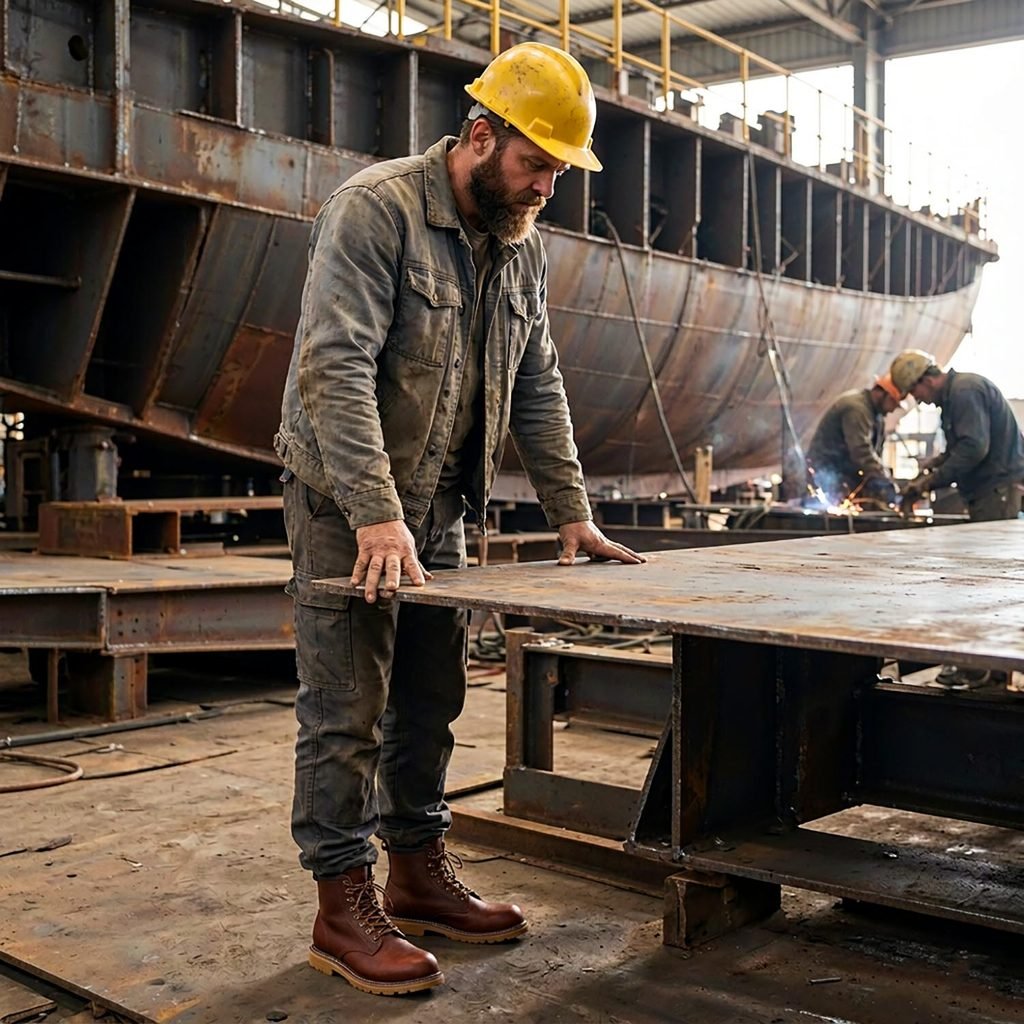
The Safety Shoe OEM Manufacturing Process involves multiple stages, from product design and material selection to component assembly, sole production, quality inspection, and final packaging. Understanding each stage helps buyers evaluate factory capabilities, control product quality, and ensure that customized safety footwear meets specific market requirements.
What Does Safety Shoe OEM Manufacturing Involve?
Safety shoe OEM manufacturing refers to producing protective footwear according to a buyer’s specifications, product requirements, and customization needs. The manufacturer is responsible for turning the agreed design into finished footwear through material preparation, component processing, assembly, testing, and packaging.
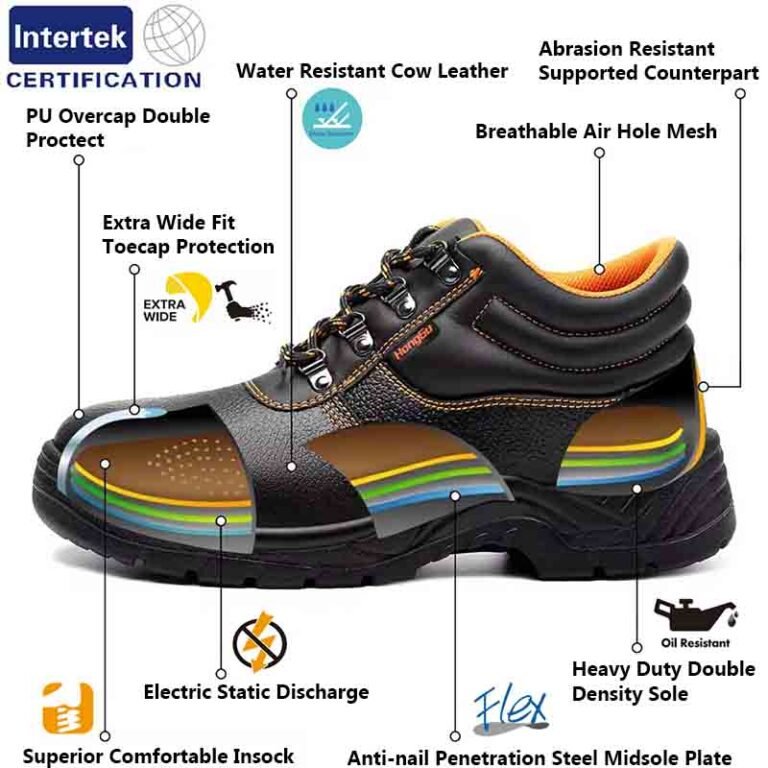
Unlike standard footwear production, safety shoe manufacturing involves additional protective components. These may include steel toe caps, composite toe caps, anti-puncture midsoles, reinforced heel structures, and specialized outsoles.
The manufacturing process must consider three important factors:
- Product design: Shoe structure, appearance, materials, sizes, and intended applications.
- Safety performance: Impact resistance, compression resistance, puncture resistance, slip resistance, and other required properties.
- Production consistency: Whether the factory can maintain the approved specifications throughout mass production.
Different buyers may have different requirements. A construction safety shoe may need a reinforced toe cap and puncture-resistant midsole, while footwear for warehouse workers may place greater emphasis on lightweight construction and walking comfort.
These differences determine the materials, production methods, and testing procedures used by the manufacturer.
How Are Safety Shoes Manufactured for OEM Orders?
The manufacturing process usually starts with product specifications and ends with finished footwear ready for shipment. Although individual factories may organize their production lines differently, the following stages represent the main operations.
1. Product Specifications and Technical Development
Before manufacturing begins, the buyer and manufacturer need to establish the product requirements.
The technical team reviews the intended market, working environment, footwear structure, and applicable safety standards.
Important specifications include:
- Upper material and thickness.
- Steel or composite toe cap.
- Steel or non-metallic anti-puncture midsole.
- Outsole material and tread design.
- Shoe last and size range.
- Lining and insole materials.
- Required protection classification.
- Logo, color, and packaging requirements.
For customized orders, buyers may provide technical drawings, reference photographs, or physical samples.
The manufacturer then prepares technical specifications and confirms whether the requested structure can be manufactured using the available production processes.
This stage is important because unclear specifications can cause differences between the approved sample and the final production batch.
2. Raw Material Purchasing and Inspection
After confirming the specifications, the manufacturer prepares the materials required for production.
Safety footwear contains several components, and each material has a different function.
For example, leather and microfiber are commonly used for uppers. Steel and composite materials are used for toe protection. PU and rubber are common outsole materials.
Material selection should match the intended working environment.
For example, footwear used in oily industrial environments requires an outsole with appropriate oil resistance. Workers exposed to sharp objects may need puncture-resistant sole structures.
Before production, incoming materials should be checked for:
- Material thickness and consistency.
- Surface defects and color differences.
- Component dimensions.
- Physical properties against purchasing specifications.
- Relevant supplier documentation.
Incorrect materials can affect both manufacturing efficiency and the performance of finished safety shoes.
3. Upper Material Cutting
Upper production begins with cutting the selected materials into individual components.
These components normally include the vamp, quarters, tongue, heel sections, and reinforcement pieces.
The cutting department follows approved patterns to ensure that each component has the correct dimensions and shape.
Depending on the material and production requirements, factories may use mechanical cutting equipment or other suitable cutting methods.
Particular attention is needed when cutting leather because natural surface characteristics and material thickness can vary.
After cutting, workers check the pieces for damaged surfaces, incorrect dimensions, and visible defects.
Accurate cutting helps reduce material waste and makes subsequent stitching and assembly more consistent.
4. Upper Stitching and Component Assembly
The cut materials are transferred to the stitching department.
Workers connect the different upper components according to the approved shoe design.
This stage includes sewing the vamp, quarters, tongue, reinforcement panels, and other structural sections.
The stitching process must maintain consistent seam positions, thread tension, and component alignment.
For safety shoes, the upper needs to withstand repeated movement during daily use. Poor stitching around high-stress areas may result in loose seams or premature damage.
After stitching, the upper is inspected for:
- Uneven seams.
- Broken or loose threads.
- Incorrect component positioning.
- Wrinkles and material damage.
- Differences between left and right shoes.
Once the upper passes inspection, it moves to the lasting department.
5. Toe Cap Installation and Lasting
Lasting gives the safety shoe its final three-dimensional shape.
The upper is fitted over a shoe last, which determines the footwear’s length, width, toe shape, and overall dimensions.
The protective toe cap is positioned within the front section of the upper.
Two common options are steel toe caps and composite toe caps.
Steel toe caps provide mechanical protection through a metal structure. Composite toe caps use non-metallic materials and are often selected when buyers require a different weight or electrical insulation profile.
Regardless of the material, toe cap dimensions and positioning must match the approved product specifications.
The lasting process also requires control over upper tension, heel positioning, and internal space around the toes.
Poor lasting can cause an uneven appearance, uncomfortable fitting, or problems during subsequent sole attachment.
6. Outsole Production and Attachment
The sole construction method is one of the main factors distinguishing different safety shoe manufacturing processes.
Four common methods are used in industrial safety footwear.
PU/PU Injection
PU/PU construction uses polyurethane for both the midsole and outsole.
The material is injected into a mold and forms the sole through a controlled reaction process.
This method is commonly used for industrial safety shoes requiring cushioning, flexibility, and relatively lightweight construction.
The injection process requires control over material formulation, mold conditions, and production parameters.
PU/Rubber Construction
PU/Rubber construction combines polyurethane and rubber components.
The PU section can provide cushioning, while the rubber outsole can offer properties such as abrasion resistance and heat resistance, depending on its formulation and testing results.
This construction is used in safety footwear designed for demanding industrial applications.
Goodyear Welted Construction
Goodyear welted footwear uses a welt to connect the upper and sole structure.
This manufacturing method involves multiple stitching and assembly operations.
It is commonly used for certain heavy-duty safety boots where the construction and repair characteristics are important considerations.
Rubber Cemented Construction
Rubber cemented footwear uses adhesive to attach the outsole to the prepared upper structure.
The process includes surface preparation, adhesive application, activation where required, sole positioning, and pressing.
Bonding conditions must be controlled to reduce the risk of sole separation during use.
The choice of construction method depends on product design, intended application, cost requirements, and performance specifications.
7. Finishing and Final Assembly
After sole attachment, the footwear enters the finishing department.
Workers complete the remaining operations and prepare the shoes for inspection.
Typical finishing work includes:
- Removing excess adhesive and material.
- Cleaning the upper and outsole.
- Installing insoles and other accessories.
- Adding shoelaces and labels.
- Checking shoe shape and symmetry.
- Completing customized logo details.
The finished shoes should have consistent appearance, clean surfaces, and correctly installed components.
At this stage, workers also compare the products with the approved sample to identify visible differences.
How Is Safety Shoe Quality Controlled During Manufacturing?
Quality control should cover the entire manufacturing process rather than relying only on final product inspection.
For safety footwear, appearance and protective performance are two different aspects of quality.
A shoe may look well manufactured but still fail to meet the required safety performance if its protective components or construction are incorrect.
In-Process Quality Inspection
During production, manufacturers should inspect important operations such as cutting, stitching, lasting, and sole attachment.
For example, the stitching department checks seam quality, while the lasting department verifies toe cap positioning and shoe symmetry.
The sole attachment department checks bonding conditions and alignment.
Identifying problems during production helps prevent defective components from moving into the next manufacturing stage.
Physical Performance Testing
Safety shoes may require different tests depending on their intended classification and target market.
Common testing items include:
- Impact resistance: Evaluates the ability of the protective toe cap to withstand specified impact energy.
- Compression resistance: Assesses toe protection under specified compressive loads.
- Puncture resistance: Evaluates the resistance of the sole structure to penetration by sharp objects.
- Slip resistance: Assesses footwear grip under specified test conditions.
- Outsole abrasion resistance: Measures resistance to material wear.
- Flexing resistance: Evaluates the durability of footwear during repeated bending.
- Sole adhesion: Measures the bonding strength between the upper and outsole.
- Electrical properties: Evaluates specific electrical protection characteristics where required.
For European markets, EN ISO 20345:2022 provides requirements for safety footwear, including protective features and relevant testing methods.
For North American markets, ASTM F2413 is an important reference for protective footwear performance requirements.
Manufacturers should identify the applicable standard and product classification before production. Not every model requires every additional protective feature.
What Should Buyers Consider When Ordering OEM Safety Shoes?
Selecting an OEM manufacturer requires more than checking whether a factory can produce a particular shoe design.
Several practical factors should be reviewed before placing a bulk order.
Manufacturing equipment and production methods
Confirm whether the factory has the equipment and technical capabilities needed for the selected construction method.
For example, PU injection production requires suitable injection machinery and molds, while Goodyear welted footwear involves different stitching and assembly operations.
Sample development and approval
A production sample allows buyers to evaluate the actual materials, dimensions, fitting, appearance, and construction.
Bulk production should follow the approved sample and confirmed technical specifications.
Certification documentation
Buyers should check whether the manufacturer can provide relevant product certificates, test reports, and technical documents.
For European distribution, the documentation should correspond to the applicable EN ISO 20345:2022 requirements and the actual product configuration.
Minimum order quantity and delivery time
Customized materials, special colors, molds, and product structures can influence the minimum order quantity and production schedule.
Buyers should confirm these details before finalizing the purchase order.
Consistency between samples and bulk orders
Changes to upper materials, toe caps, midsoles, or outsole formulations may affect product characteristics.
Any changes after sample approval should be reviewed and documented before mass production.
Common Problems in Safety Shoe OEM Production
Some manufacturing problems are not immediately visible during the initial stages of production. Understanding these risks helps buyers communicate more effectively with manufacturers.
Incorrect toe cap positioning
If the toe cap is not installed in the correct position, the internal fitting and protective structure may be affected. Proper positioning and dimensional inspection are necessary.
Weak sole bonding
Insufficient surface preparation, unsuitable adhesive conditions, or incorrect pressing parameters may cause separation between the upper and outsole.
Inconsistent shoe dimensions
Differences in cutting, lasting, or shoe last specifications can lead to inconsistent sizing and fitting.
Using materials that do not match the approved sample
Substituting materials without authorization may change the footwear’s weight, flexibility, durability, or protective characteristics.
Ignoring product configuration changes
A certified product configuration should not be assumed to remain compliant after significant component changes. Any modifications to protective components or construction should undergo appropriate technical evaluation.
How Does the Safety Shoe OEM Process Affect the Final Product?
The safety shoe OEM manufacturing process determines how product specifications are translated into actual footwear performance.
Material selection affects durability and comfort. Cutting and stitching influence upper construction. Lasting determines shoe shape and protective component positioning. Sole manufacturing affects grip, cushioning, and bonding. Testing verifies whether the finished product meets its specified requirements.
For buyers, evaluating these stages provides a clearer understanding of a manufacturer’s production capabilities.
A reliable OEM production arrangement should include clear technical specifications, approved samples, controlled material sourcing, in-process inspections, appropriate safety testing, and documented final inspection procedures.
These elements help reduce production inconsistencies and ensure that customized safety footwear is manufactured according to the agreed requirements.
Written by Hong Gu Safety Shoes Technical Team, this content is compiled from practical production, long-term field applications, and rigorous testing results.
Shan Dong Hong Gu Shoes Industrial Co., Ltd. is a leading safety footwear manufacturer based in China, specializing in industrial foot protection with over 20 years of manufacturing expertise.
Products are fully certified under European standards (CE EN ISO 20345:2022), offering a full range of manufacturing processes including PU/PU Injection, PU/Rubber, Goodyear Welted, and Rubber Cemented constructions.