

Safety shoes do not have one fixed replacement date. Their service life depends on work intensity, wearing frequency, materials, construction, maintenance, and the conditions in which they are used.
Why Safety Shoe Service Life Varies
The working life of safety footwear can vary significantly between different users. A pair worn indoors for light assembly work may remain usable much longer than footwear exposed to construction sites, heavy machinery, oil, chemicals, moisture, or abrasive surfaces.
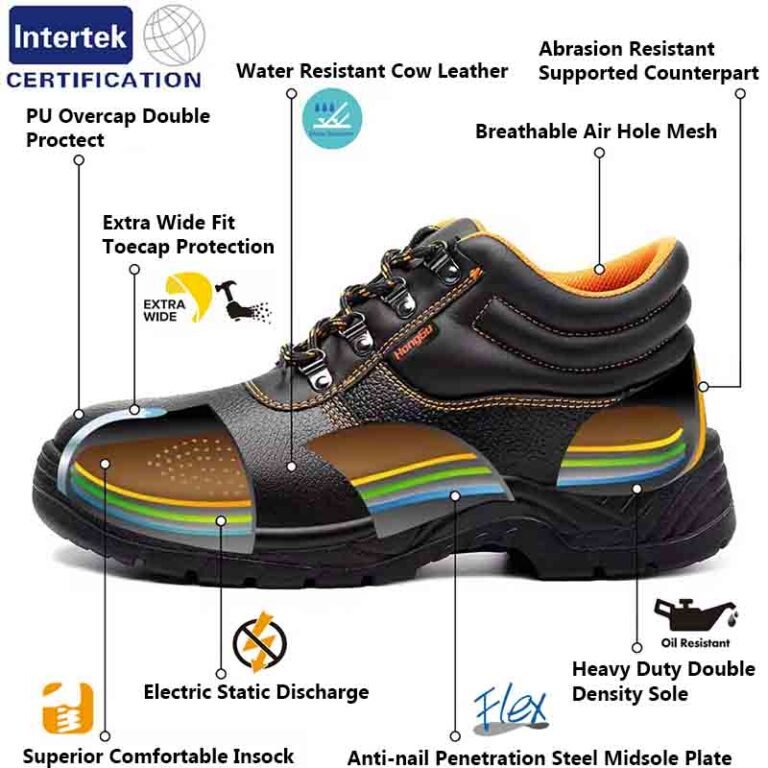
Safety shoes are designed to protect against specific workplace hazards. Common protective features include toe protection, slip resistance, penetration resistance, electrical properties, and resistance to water or certain chemicals, depending on the product specification and applicable standard.
For this reason, safety shoe lifespan should not be judged only by how the shoes look. A shoe may appear acceptable while an important protective component has already deteriorated.
The construction method also affects durability. PU/PU injection footwear, PU/Rubber footwear, Goodyear Welted footwear, and Rubber Cemented footwear can perform differently under particular working conditions. Material selection should match the intended application rather than focusing only on appearance or price.
What Factors Affect the Lifespan of Safety Shoes?
1. Working Environment
The workplace is one of the main factors affecting safety footwear service life.
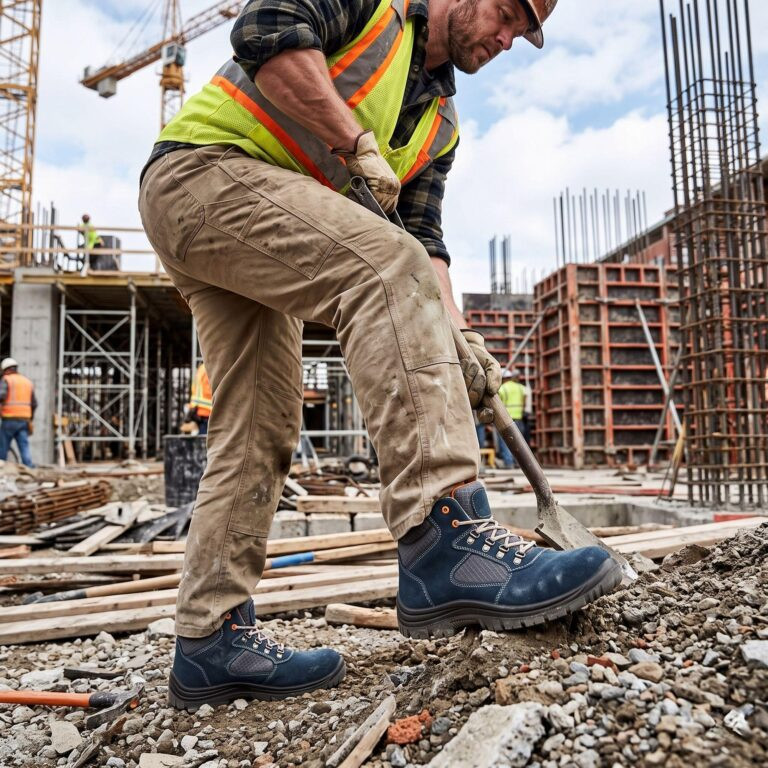
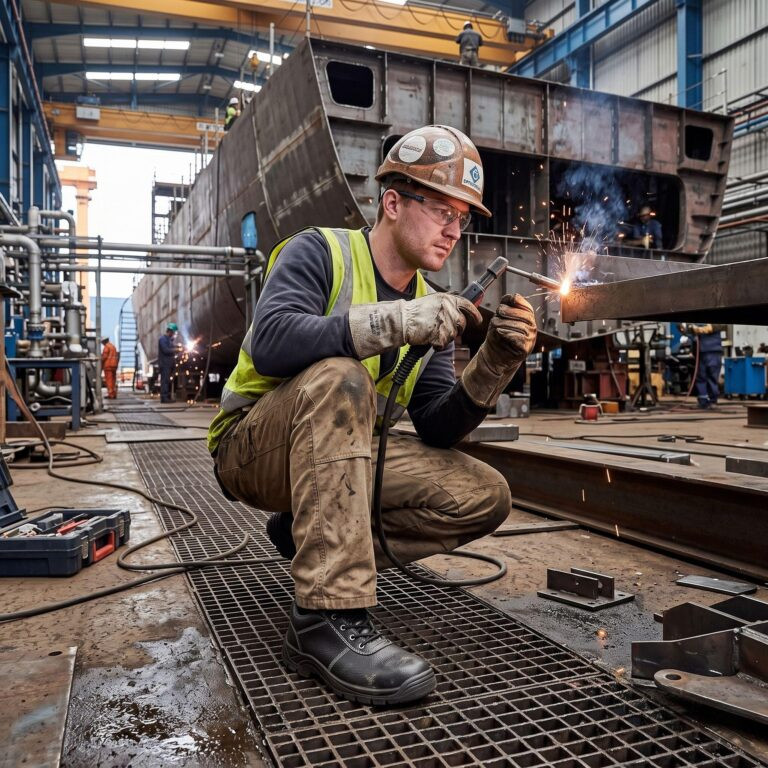
Construction workers may walk over concrete, gravel, metal surfaces, and uneven ground. Warehouse workers may spend many hours walking on smooth floors. Workers in manufacturing environments may encounter oil, water, heat, chemicals, or metal particles.
Repeated exposure to these conditions can accelerate wear of the outsole, upper, stitching, adhesives, and other components.
2. Wearing Frequency
A pair of safety shoes worn every working day will naturally experience more mechanical stress than footwear used occasionally.
Daily use creates repeated flexing around the forefoot. At the same time, the outsole is exposed to friction with the floor. Sweat and moisture can also affect the internal materials.
For workers who wear safety footwear for long shifts, rotating between two suitable pairs can give each pair more time to dry and recover between uses.
3. Outsole Wear
The outsole is one of the easiest components to inspect.
Check the tread pattern regularly. If the tread has become significantly worn, slip resistance may no longer perform as intended. Cracks, separation, excessive abrasion, or deformation are also warning signs.
The actual replacement point depends on the design and condition of the footwear. There is no universal tread depth that applies to every safety shoe.
4. Upper Material and Construction
Leather, synthetic materials, textiles, and combinations of these materials have different resistance to abrasion, moisture, flexing, and chemicals.
Repeated bending can create cracks around the toe box and flex zones. Damaged stitching or separation between the upper and sole can also reduce the footwear’s protective performance.
A durable upper cannot compensate for a severely worn outsole, and a strong outsole cannot compensate for damaged upper construction.
5. Maintenance and Storage
Proper maintenance can help preserve safety footwear.
Shoes should be cleaned according to the manufacturer’s instructions and allowed to dry naturally after exposure to moisture. Excessive heat should generally be avoided because it may damage adhesives, leather, coatings, or other materials.
Workers should also avoid continuing to use footwear with severe contamination, deep cracks, sole separation, or damaged protective components.
When Should Safety Shoes Be Replaced?
There is no single number of months or years that applies to every pair of safety shoes. Replacement should be based primarily on condition, protection, and the manufacturer’s instructions.
Replace safety footwear when there is visible or suspected damage that could affect protection. Important warning signs include:
- Cracked or severely worn outsoles
- Sole separation from the upper
- Damaged or exposed toe protection
- Deep cracks in the upper
- Broken or severely damaged stitching
- Significant deformation of the footwear
- Loss of important protective components
- Damage caused by chemicals, heat, or other workplace hazards
- Reduced grip that creates a workplace safety concern
For products certified to EN ISO 20345:2022, users should also consider the specific protective properties declared for the footwear. Certification describes the performance requirements of the product when tested under the applicable standard; it does not mean that the footwear will maintain those properties indefinitely under every working condition.
Common Mistakes When Judging Safety Shoe Lifespan
One common mistake is replacing footwear only when it becomes visibly unattractive. Appearance is not a reliable indicator of protective performance.
Another mistake is assuming that expensive safety shoes automatically have a longer service life. Construction quality, materials, workplace conditions, and maintenance all influence durability.
It is also important not to continue using a pair simply because it has not reached a particular age. Conversely, a pair should not be kept in service solely because it has been used for a relatively short period.
For employers, regular footwear inspections can be incorporated into workplace PPE management. Workers should know which types of damage require immediate replacement and which issues should be reported for further inspection.
How Can Companies Extend Safety Shoe Service Life?
The goal should not be to keep safety shoes in use for as long as possible. The priority is to maintain the required level of protection throughout their working life.
Companies can improve footwear management by selecting products according to the actual working environment, checking footwear regularly, following cleaning and storage instructions, and replacing damaged footwear promptly.
When purchasing safety shoes, buyers should consider more than the initial purchase price. Outsole construction, upper materials, manufacturing method, protective functions, working conditions, and expected wearing frequency all affect the practical service life of the footwear.
Conclusion: How Long Do Safety Shoes Last?
Safety shoes can last for different periods depending on workplace conditions, wearing frequency, materials, construction, maintenance, and the severity of wear. There is no universal replacement period for every safety shoe. The correct approach is to inspect the footwear regularly and replace it when damage, excessive wear, or deterioration may affect its protective function.
Written by Hong Gu Safety Shoes Technical Team, this content is compiled from practical production, long-term field applications, and rigorous testing results.
Shan Dong Hong Gu Shoes Industrial Co., Ltd. is a leading safety footwear manufacturer based in China, specializing in industrial foot protection with over 20 years of manufacturing expertise.
Products are fully certified under European standards (CE EN ISO 20345:2022), offering a full range of manufacturing processes including PU/PU Injection, PU/Rubber, Goodyear Welted, and Rubber Cemented constructions.