
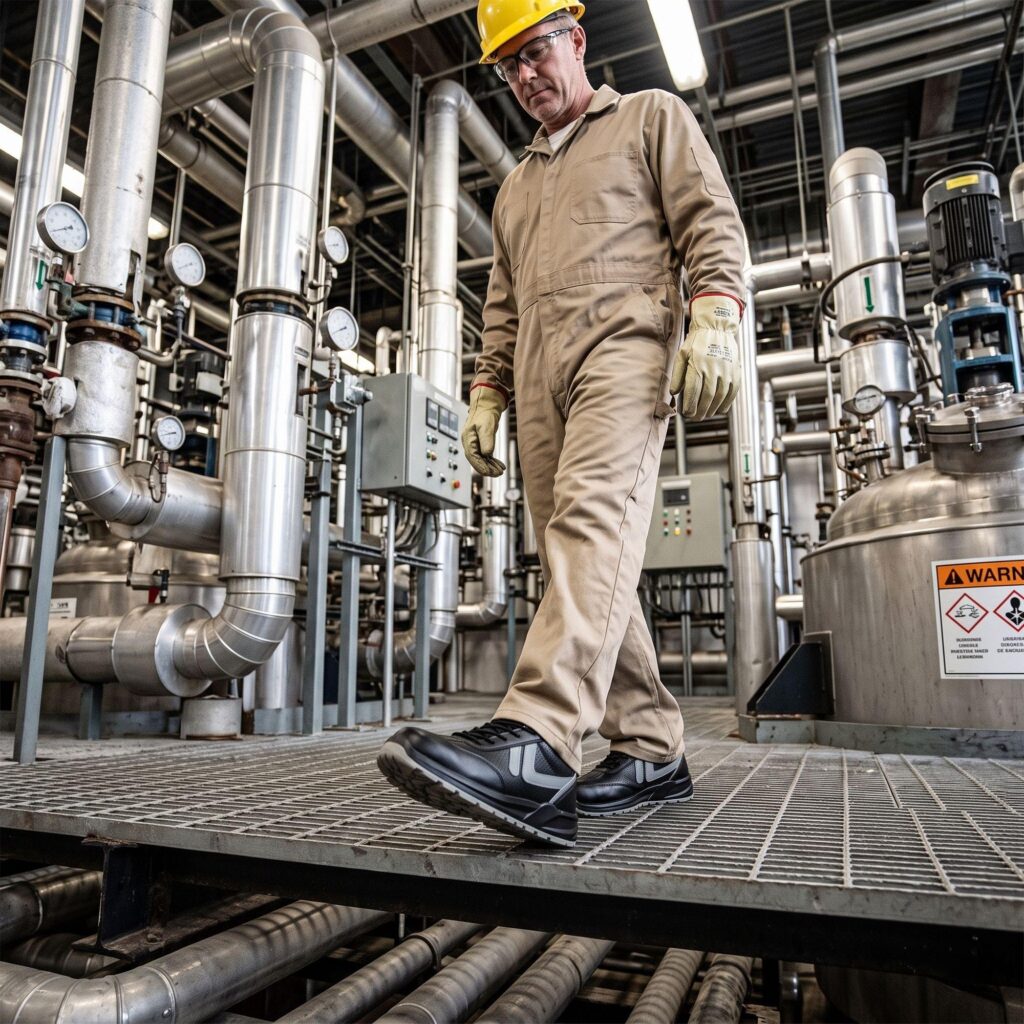
Workplace foot injuries cost large projects millions in operational delays and medical claims. Selecting bulk safety footwear requires more than just finding a basic steel toe; project managers must match complex site hazards to exact protective standards to keep workers safe.
The Financial and Operational Impact of Footwear Choices
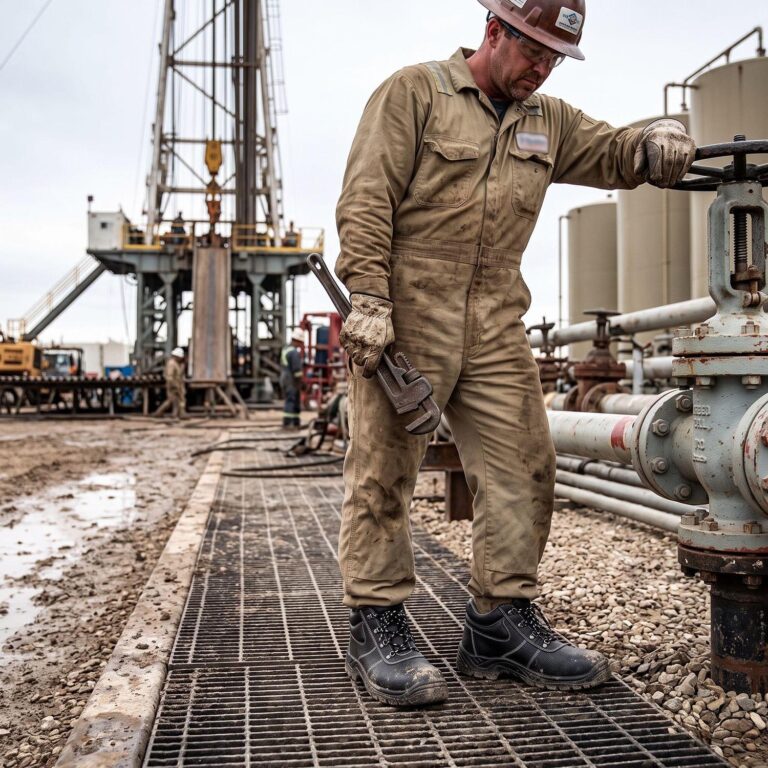
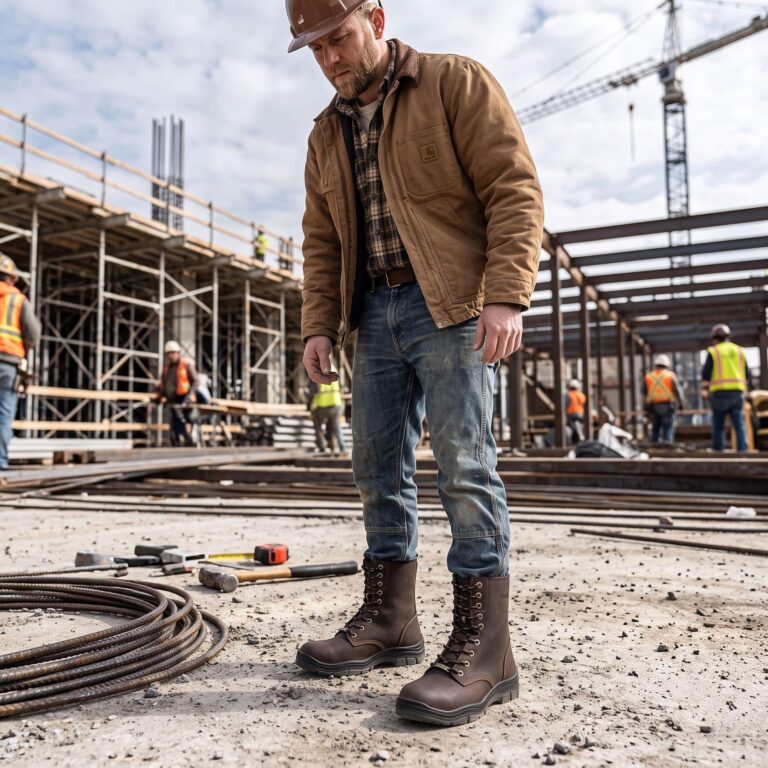
Large-scale construction, mining, and manufacturing projects involve unpredictable terrain, heavy machinery, exposed materials, and electrical hazards. Inadequate foot protection leads directly to severe crush injuries, deep punctures, and slip-related falls on site. A single site accident can halt operations, trigger extensive safety audits, and incur massive compensation costs that impact project profitability. Contractors face the logistical challenge of outfitting hundreds of workers across vastly different risk zones—from indoor logistics to outdoor excavation—while ensuring strict, documented compliance with regional and international safety regulations.
Key Steps in Evaluating Safety Footwear for Procurement
Effective procurement requires a systematic hazard assessment. Contractors must break down the project site into specific work zones and match the footwear construction to the exact environmental demands.
| Site Hazard Type | Required Protective Feature | EN ISO 20345:2022 Classification |
| Heavy machinery & falling debris | Impact resistant toecap (200J) | SB (Safety Basic) |
| Exposed nails & sharp metal | Penetration resistant midsole | P, PL, or PS (Steel or Non-metal) |
| Oil spills & wet scaffolding | Advanced slip resistance | SR (Ceramic tile & glycerine test) |
| Live wiring & static buildup | Antistatic properties | A |
| Outdoor mud & standing water | Water penetration and absorption | WPA |
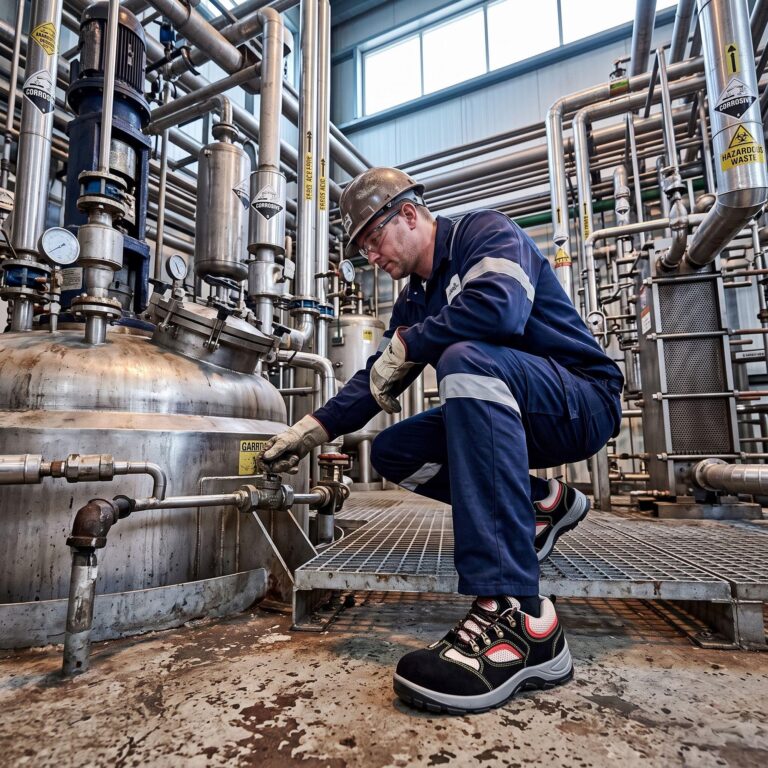
Beyond standard ratings, the outsole manufacturing process dictates both durability and long-term worker comfort. PU/PU injection outsoles offer excellent lightweight shock absorption, making them ideal for indoor factory floors, warehouse logistics, and environments requiring long hours of walking. Conversely, rubber cemented or Goodyear welted soles are mandatory for heavy-duty environments involving high heat, sharp rubble, and aggressive chemical exposure. Contractors map these specific construction methods directly to their site risk profiles to ensure the footwear survives the project lifecycle.
Critical Procurement Mistakes to Avoid
Bulk purchasing often leads to critical oversight in worker ergonomics. A frequent error is applying a rigid, one-style-fits-all approach across an entire project. Supplying heavy-duty, heat-resistant rubber boots to indoor finishing workers increases fatigue and heavily reduces daily productivity.
Another widespread myth is that heavier shoes inherently offer better protection. Modern footwear engineering allows for advanced composite toe caps and Kevlar midsoles that meet strict impact and puncture standards without adding exhausting weight to the foot. Procurement teams must prioritize breathability and ergonomic fit alongside impact resistance. Uncomfortable, poorly fitted shoes frequently lead to workers improperly wearing their gear, completely nullifying the safety investment. Furthermore, prioritizing the cheapest upfront unit cost often results in rapid degradation, forcing contractors to replace footwear every three months rather than utilizing durable models that last the full year.
Essential Criteria for Safety Footwear Compliance
For large-scale procurement, contractors must base safety shoe selection on comprehensive site hazard mapping rather than upfront cost alone. Successful procurement strategies rely on three core principles: verifying authentic certification under updated testing standards like CE EN ISO 20345:2022, selecting the correct outsole manufacturing process for the specific terrain, and prioritizing ergonomic design to ensure worker compliance. Relying on verified technical specifications over general aesthetics guarantees maximum foot protection, reduces workplace injury rates, and minimizes costly project downtime.
Written by Hong Gu Safety Shoes Technical Team, this content is compiled from practical production, long-term field applications, and rigorous testing results.
Shan Dong Hong Gu Shoes Industrial Co., Ltd. is a leading safety footwear manufacturer based in China, specializing in industrial foot protection with over 20 years of manufacturing expertise.
Products are fully certified under European standards (CE EN ISO 20345:2022), offering a full range of manufacturing processes including PU/PU Injection, PU/Rubber, Goodyear Welted, and Rubber Cemented constructions.