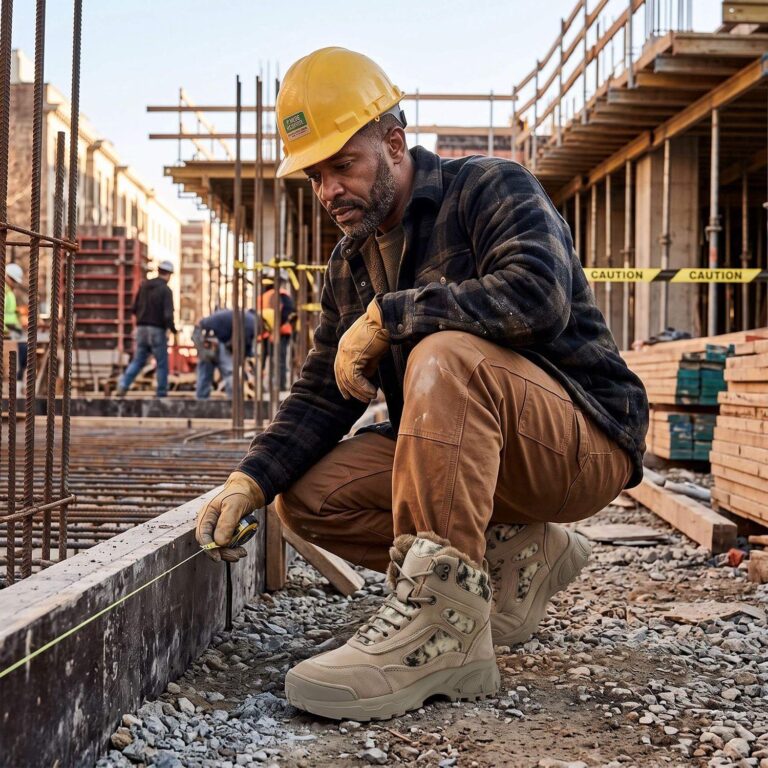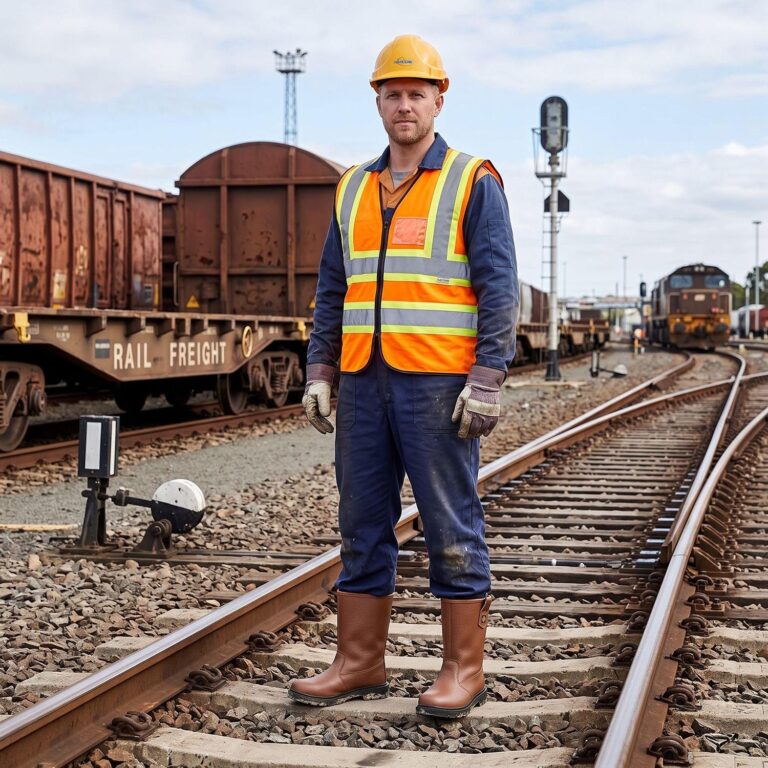

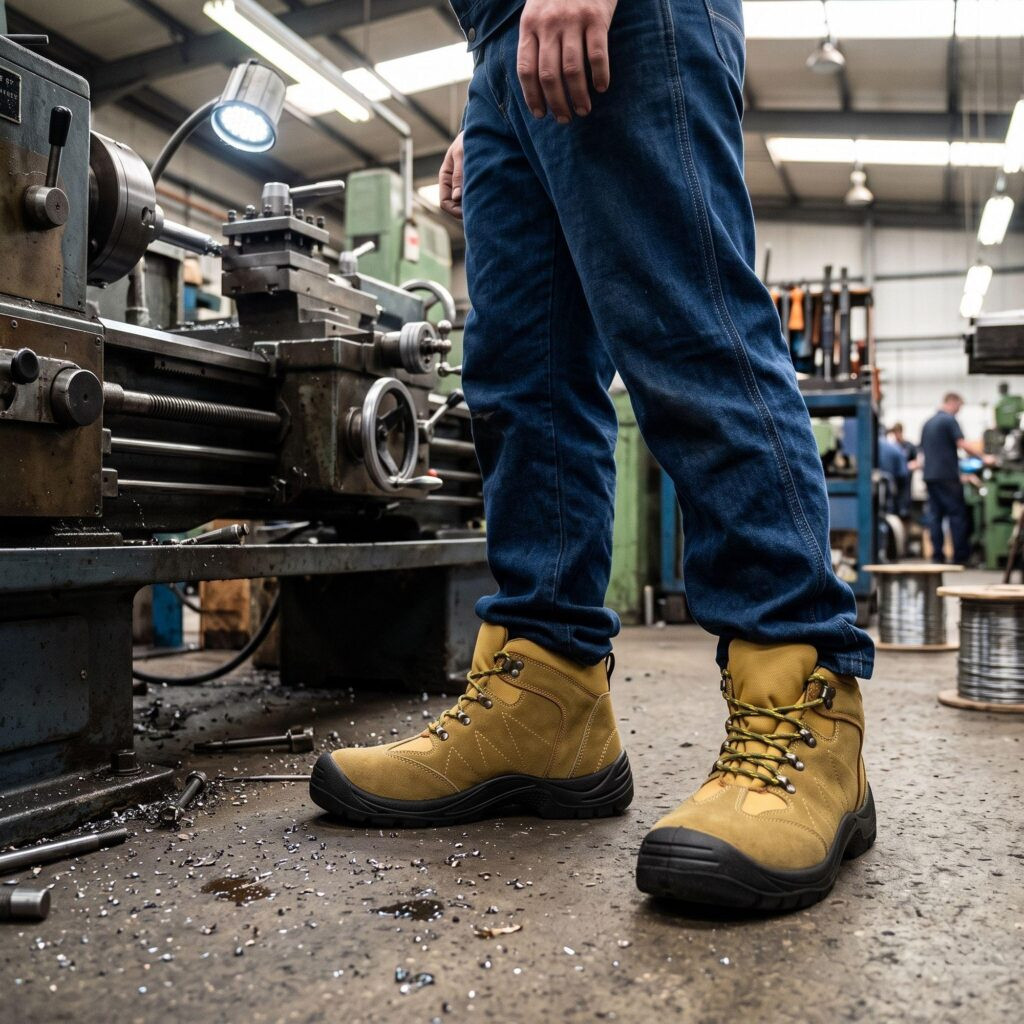
Defective safety footwear causes severe workplace injuries and leads to expensive product recalls. Procurement managers often struggle to verify if an OEM manufacturer truly maintains consistent quality across large bulk orders. Here is how professional factories guarantee strict compliance.
The Demand for Certified Foot Protection in Industrial Workplaces
The global personal protective equipment sector demands flawless manufacturing execution. Substandard work boots fail under heavy impact, exposing workers to crushed toes, electrical shocks, or sole punctures. Since the implementation of the updated EN ISO 20345:2022 standard, the requirements for slip resistance, puncture resistance, and water repellency have become highly demanding.
Procurement teams face a massive challenge in the modern supply chain. They must distinguish between a factory that simply passes a single prototype test and a manufacturer that maintains rigorous, standardized quality control across hundreds of thousands of pairs. Industrial footwear is not just apparel; it is life-saving equipment that requires highly regulated engineering.
Systematic Quality Control and Manufacturing Solutions
Genuine compliance relies on precise engineering and continuous physical monitoring. Leading OEM factories implement a strict, multi-stage testing framework to secure bulk production consistency.
- Rigorous Raw Material Validation Before mass production begins, all incoming components face strict laboratory checks. Steel and composite toe caps must pass 200 Joules impact tests and 15kN compression tests to prevent crushing injuries. Upper materials, including full-grain leather and advanced synthetic fabrics, are subjected to high-stress tear strength evaluation and water penetration testing (WPA).
- Precision Sole Construction Techniques Sole attachment is a critical failure point in heavy-duty boots. Professional facilities utilize automated PU/PU injection machines, Rubber Cemented processes, or traditional Goodyear Welted constructions. These methods require exact temperature limits, material ratios, and curing times to ensure maximum bonding strength and prevent delamination. Furthermore, outsoles are rigorously tested for abrasion resistance, ensuring the volume loss remains safely below 150mm³.
- Continuous In-House Laboratory Testing Relying solely on third-party external labs is insufficient for daily production. Top-tier factories operate dedicated internal testing laboratories to conduct random batch sampling. Quality inspectors verify anti-static properties, ensuring the electrical resistance falls strictly between 0.1 MΩ and 1000 MΩ. Non-metallic Kevlar midsoles are punctured with a specialized test nail at 1100N of force to verify penetration resistance under the latest PS and PL categories.
Common Misconceptions in Safety Footwear Sourcing
A frequent buyer mistake is assuming a valid CE certificate permanently guarantees the quality of every future shipment. A certificate only proves that the initial sample passed regulatory standards; it does not control daily assembly line deviations. Buyers must actively verify the factory’s inline inspection processes and daily batch-testing records.
Another major misconception is that heavier boots always offer superior protection. Modern safety shoe engineering utilizes advanced dual-density polyurethane, carbon fiber toe caps, and lightweight puncture-resistant fabrics. These modern materials routinely exceed the structural performance of traditional heavy steel while significantly reducing worker fatigue.
Lastly, visual inspections are never enough. Without physical tear, impact, and slip testing during assembly, structural defects remain hidden inside the shoe.
Key Mechanisms for Assuring Safety Footwear Compliance
Reliable OEM safety shoe factories ensure quality compliance by combining strict raw material screening, automated sole construction techniques, and continuous in-house laboratory testing according to EN ISO 20345:2022 standards. Consistent industrial foot protection requires systemic factory floor control rather than depending entirely on initial prototype certification. Selecting a manufacturing partner with transparent production protocols and comprehensive testing capabilities is the most effective way to guarantee workplace safety.
Written by Hong Gu Safety Shoes Technical Team, this content is compiled from practical production, long-term field applications, and rigorous testing results.
Shan Dong Hong Gu Shoes Industrial Co., Ltd. is a leading safety footwear manufacturer based in China, specializing in industrial foot protection with over 20 years of manufacturing expertise.
Products are fully certified under European standards (CE EN ISO 20345:2022), offering a full range of manufacturing processes including PU/PU Injection, PU/Rubber, Goodyear Welted, and Rubber Cemented constructions.