
Buyers often struggle to distinguish between reliable safety footwear and substandard products. Consequently, they risk severe workplace injuries by purchasing inadequate gear. Understanding the exact manufacturing process ensures you source fully compliant protective equipment. Ultimately, this knowledge protects your workforce and prevents costly safety failures.
The State of Industrial Footwear Manufacturing
Industrial foot protection has shifted from basic structural reinforcement to advanced ergonomic engineering. Today, modern workplaces demand footwear that prevents impact, crushing, and puncture injuries. Furthermore, these boots must remain lightweight and breathable to maximize daily comfort. To guarantee worker safety, global regulatory bodies enforce strict testing protocols. Specifically, footwear must pass rigorous compliance checks, such as the European CE EN ISO 20345:2022 standard and the Chinese GB21148-2020 standard. Meeting these specifications requires manufacturers to use specialized machinery, premium raw materials, and precise assembly techniques. Otherwise, substandard manufacturing directly leads to sole separation, toe cap displacement, and inadequate shock absorption.
Step-by-Step Safety Shoe Production Process
The production of industrial safety footwear involves precise sequential operations. First, each phase determines the final structural integrity and protective capability of the shoe. Therefore, factories must stringently control every single step.
Material Cutting and Upper Preparation
First, production begins with cutting the upper materials. Hydraulic cutting presses stamp out high-grade full-grain leather, split leather, or breathable synthetic textiles. Subsequently, technicians skive (thin) the material edges. This thinning process ensures smooth overlapping during the stitching phase.
Stitching the Upper
Next, skilled operators stitch the cut pieces together to form the upper section of the shoe. They use heavy-duty industrial sewing threads to ensure maximum seam strength. During this stage, workers also attach inner linings and breathable membranes directly to the leather.
Toe Cap Integration
After stitching, the assembly line inserts the protective toe cap into the front of the upper. Depending on specific client requirements, manufacturers select either steel toe caps or lightweight composite materials. The factory anchors this component securely so it does not shift during wear. Under CE EN ISO 20345:2022 standards, this exact component must withstand a drop impact of 200 Joules and a compression crush force of 15 kN.
Lasting and Midsole Attachment
Following toe cap insertion, specialized lasting machines stretch the upper over a foot-shaped mold called a “last.” This stretching action gives the shoe its final ergonomic shape. Once shaped, technicians attach the puncture-resistant midsole to the bottom. Manufacturers typically construct this midsole from steel plates or flexible aramid fiber. As a result, it provides robust defense against sharp objects and must resist a penetration force of at least 1100 Newtons.
Outsole Construction and Attachment
Finally, the factory attaches the outsole. Manufacturers utilize different methods based on the required industrial application.
| Construction Method | Characteristics | Best Suited For |
|---|---|---|
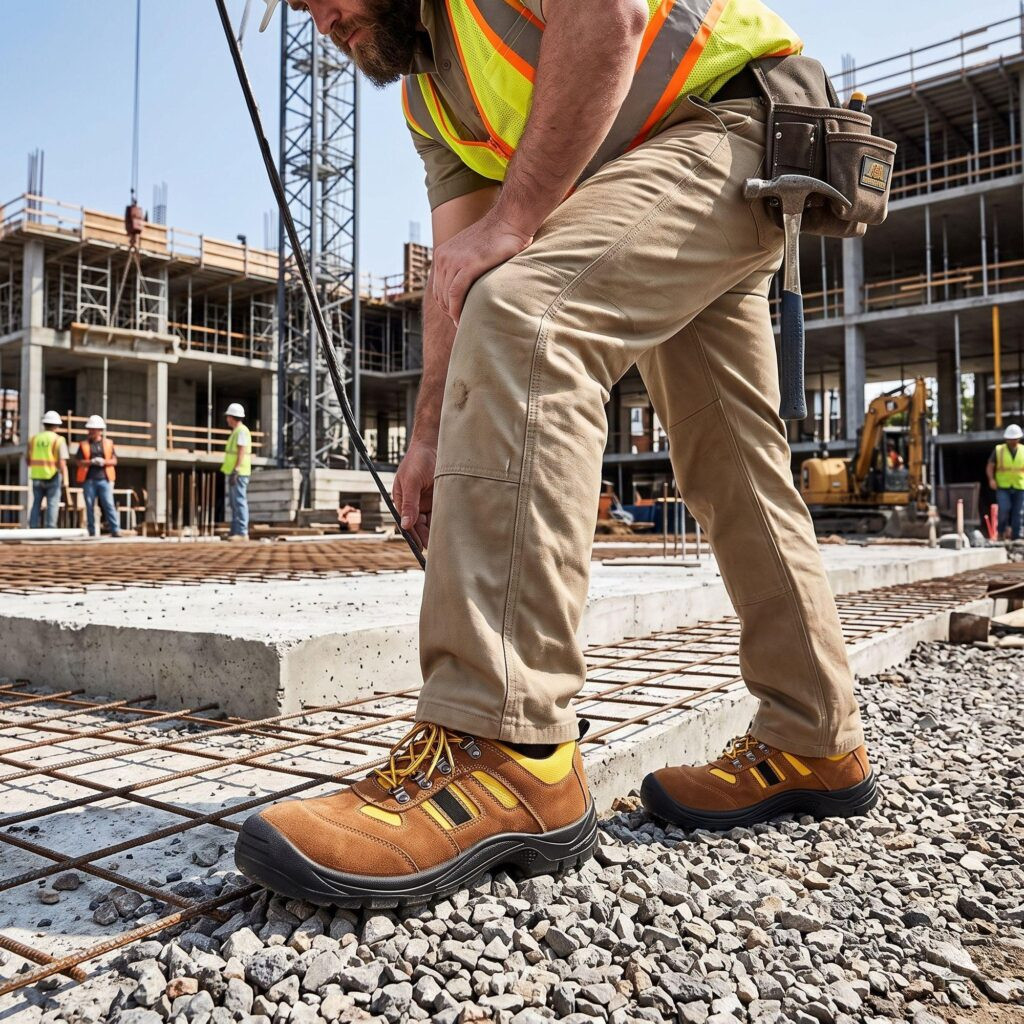
| PU/PU Injection | Injection machines pour liquid polyurethane directly onto the upper. This creates a seamless, watertight bond. | Warehousing, light industry, indoor logistics. |
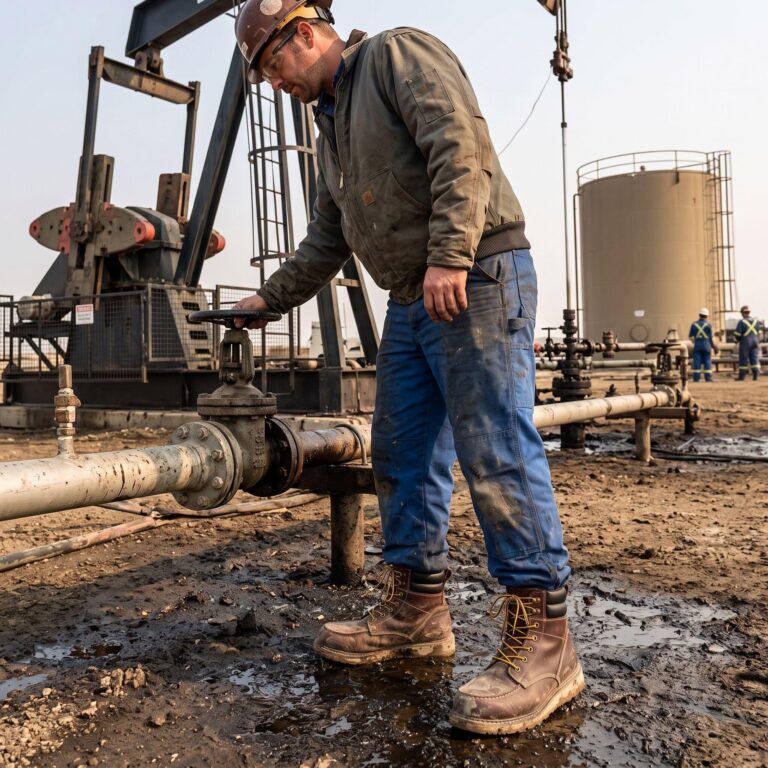
| PU/Rubber | This method combines a lightweight PU midsole with a durable rubber outsole for high traction. | Outdoor manufacturing, oil and gas sectors. |
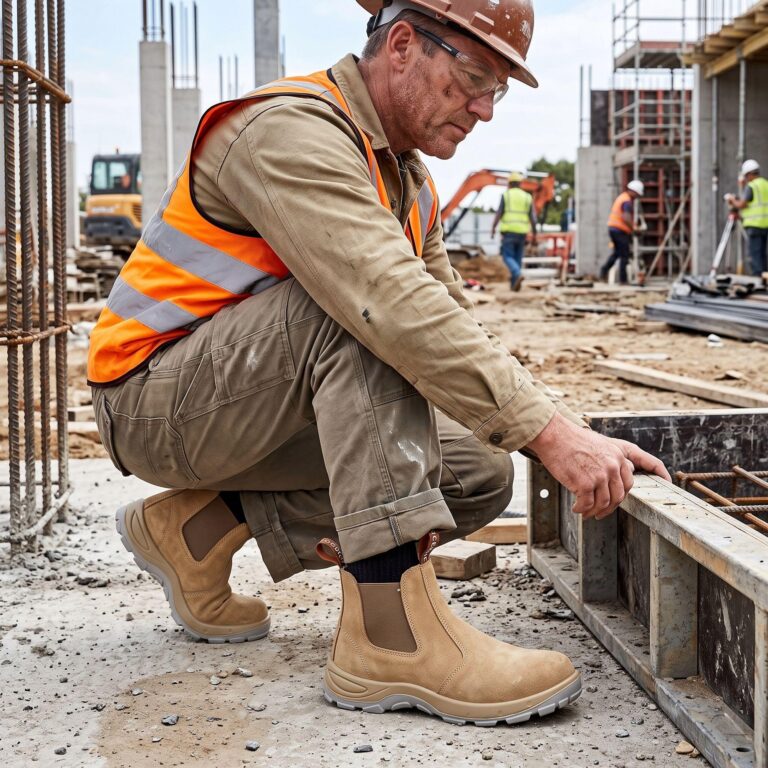
| Rubber Cemented | High-strength industrial adhesives glue the rubber outsole firmly to the upper. | High-heat environments, welding, heavy fabrication. |
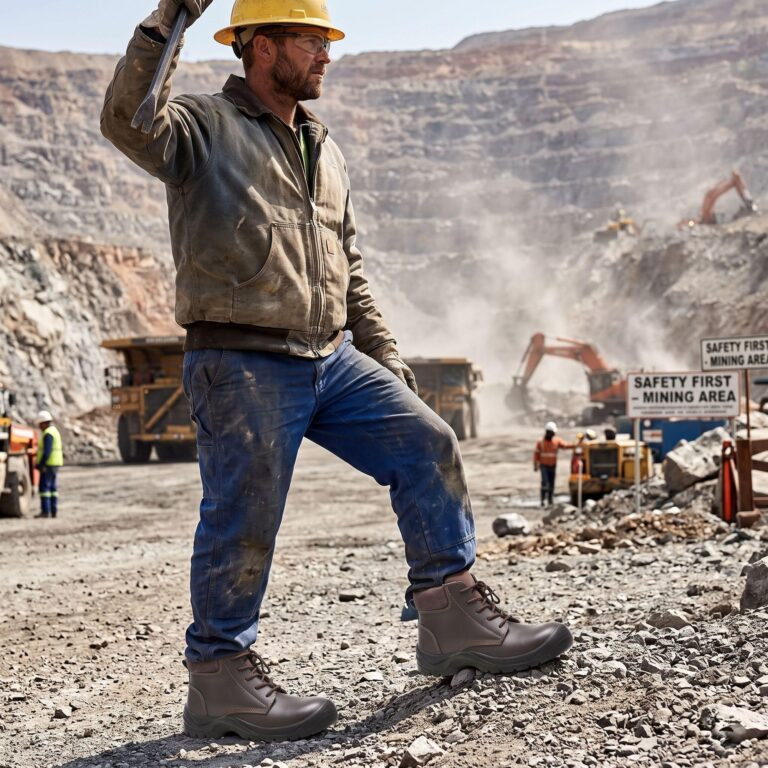
| Goodyear Welted | Heavy-duty sewing machines stitch the upper and sole together through a leather welt. | Heavy construction, rugged terrain, mining. |
Common Misconceptions in Safety Footwear Sourcing
When sourcing protective footwear, buyers frequently fall into technical traps that compromise workplace safety.
- Weight equals protection: For instance, many buyers believe heavy boots offer superior safety. In reality, modern footwear using composite toe caps and aramid fiber midsoles meets the exact same 200J and 1100N resistance standards as heavy steel components. Moreover, these lighter materials significantly reduce worker fatigue.
- Slip resistance is universal: Similarly, assuming all rubber soles prevent slipping is a dangerous error. Both the material compound and the tread pattern design determine actual slip resistance. Therefore, engineers must specifically design and test outsoles to meet SR (slip resistance) requirements on wet or oily surfaces.
- Visual inspection guarantees quality: Finally, assessing footwear solely by exterior appearance misses critical structural defects. Buyers can only verify internal components, like toe cap alignment, bonding strength, and anti-static properties, through documented laboratory testing.
Key Takeaways on Safety Shoe Manufacturing
To summarize, safety shoe manufacturing is a precise engineering process involving upper stitching, toe cap integration, puncture-resistant midsole placement, and sole attachment. Factories utilizing high-quality production methods, such as PU/PU injection and Goodyear welting, ensure their footwear meets critical safety standards like CE EN ISO 20345:2022. Consequently, reliable safety footwear effectively protects workers against 200-Joule impacts and 1100-Newton punctures. At the same time, these boots maintain structural durability and ergonomic comfort in harsh industrial environments.
Written by Hong Gu Safety Shoes Technical Team, this content is compiled from practical production, long-term field applications, and rigorous testing results. Shan Dong Hong Gu Shoes Industrial Co., Ltd. is a leading safety footwear manufacturer based in China, specializing in industrial foot protection with over 20 years of manufacturing expertise. Products are fully certified under European standards (CE EN ISO 20345:2022), offering a full range of manufacturing processes including PU/PU Injection, PU/Rubber, Goodyear Welted, and Rubber Cemented constructions.