

Exporting safety shoes to Europe or dealing with customs rejections? Many buyers and manufacturers struggle with compliance rules. Understanding whether CE certification is legally required is critical to avoid costly border seizures and ensure workplace safety compliance.
The Regulatory Background of Industrial Footwear
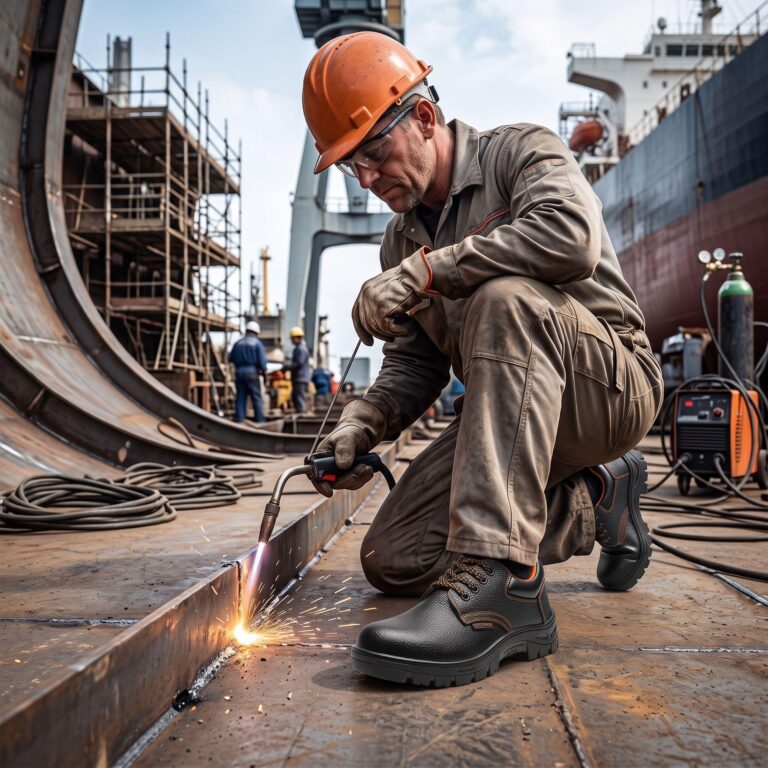
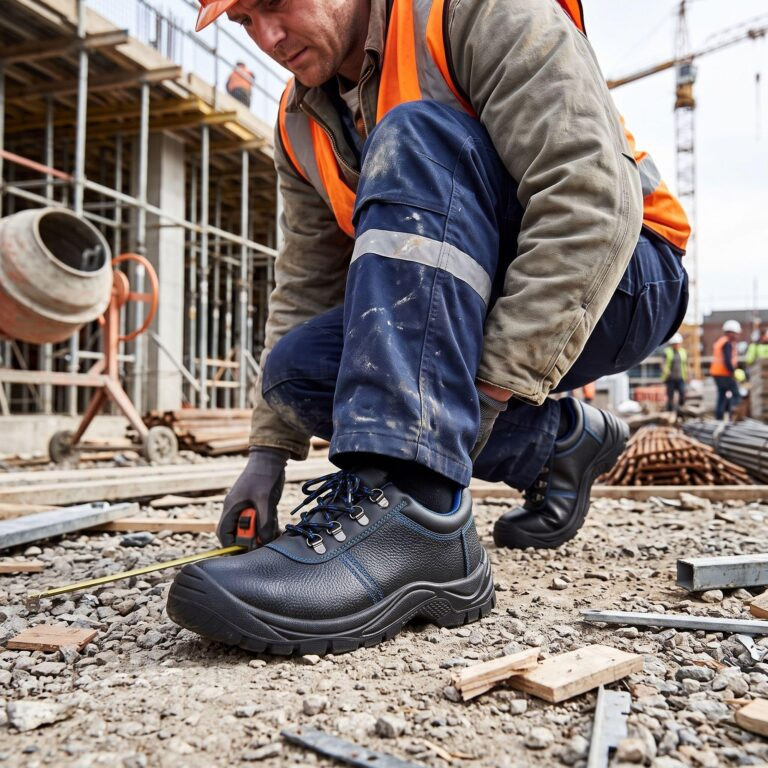
Industrial work environments present constant physical hazards, from heavy falling objects to sharp debris and slippery surfaces. To mitigate these risks, safety shoes fall strictly under the category of Personal Protective Equipment (PPE). Within the European Economic Area (EEA), the PPE Regulation (EU) 2016/425 legally governs the design, manufacturing, and marketing of these products.
The primary technical framework for safety footwear is the EN ISO 20345:2022 standard. This specific standard mandates basic baseline requirements. For example, any footwear marketed as “safety shoes” must feature a protective toe cap capable of resisting an impact of 200 Joules and a compression crush force of 15 kN. Before the EU unified these regulations, fragmented national standards caused severe market confusion. Today, the PPE Regulation ensures a unified, non-negotiable legal framework. Any safety footwear sold or used within the EU must meet these strict hazard protection criteria to protect end-users effectively.
The Certification Process
Yes, CE certification is absolutely mandatory for safety shoes entering the EEA market. It is illegal for manufacturers or importers to place uncertified safety footwear on the EU market. Compliance is not just a quality badge; it is a legal prerequisite.
Here is a step-by-step breakdown of how the mandatory compliance process works:
- Determine the PPE Category: Under the EU regulation, safety shoes are classified based on the risk they protect against. Standard safety shoes are Category II (intermediate risks). Specialized footwear, such as dielectric boots protecting against fatal high-voltage electrical hazards, falls under Category III.
- Strict Independent Testing: Manufacturers cannot simply claim their shoes are safe. The footwear must undergo rigorous physical testing in an accredited laboratory according to the EN ISO 20345:2022 standard. This includes testing for slip resistance (SR), nail penetration resistance (P, PL, or PS), and antistatic properties (A).
- Notified Body Approval: Because safety shoes are at least Category II PPE, self-certification is prohibited. A European Notified Body must conduct an EU Type-Examination (Module B). The Notified Body reviews the technical construction file, verifies the material test reports, and confirms the design meets the standard.
- Declaration of Conformity (DoC): After the Notified Body issues the EU Type-Examination Certificate, the manufacturer drafts the DoC. Only after completing these steps can the manufacturer legally affix the CE mark to the footwear label and packaging.
Critical Precautions and Common Misconceptions
Navigating international compliance involves avoiding several costly traps. Buyers and manufacturers often fall victim to the following misconceptions:
- Misconception 1: “Lab test reports equal CE certification.” Many suppliers present a basic lab testing report and claim the product is CE certified. This is false. A test report is only raw data. A recognized European Notified Body must officially evaluate that data and issue the actual EU Type-Examination Certificate.
- Misconception 2: “CE certification applies globally.” The CE mark is legally mandatory only within the European Economic Area. Other regions enforce their own mandatory testing frameworks. For example, the USA requires ASTM F2413, and Australia uses AS/NZS 2210.3. However, global buyers frequently request CE certification as a trusted benchmark of high manufacturing quality.
- Misconception 3: “A CE certificate lasts forever.” Under the PPE Regulation (EU) 2016/425, certificates for safety shoes carry a strict maximum validity of five years. Manufacturers must proactively renew them. Furthermore, products must transition to updated standards, such as upgrading from the older EN ISO 20345:2011 to the current 2022 revision.
- Traceability Precaution: Authentic certified shoes must have proper labeling. The inner tongue label must clearly display the CE mark, the specific standard (e.g., EN ISO 20345:2022), the exact protection class (e.g., S3S), and the manufacturer’s identification. Missing information often triggers customs delays.
Summary
CE certification for safety shoes is a strictly mandatory legal requirement under the EU PPE Regulation 2016/425. Manufacturers cannot self-certify these products. To legally sell safety footwear in Europe, the product must pass third-party laboratory testing and receive an EU Type-Examination Certificate from an authorized Notified Body, proving full compliance with the EN ISO 20345:2022 standard.
Written by Hong Gu Safety Shoes Technical Team, this content is compiled from practical production, long-term field applications, and rigorous testing results.
Shan Dong Hong Gu Shoes Industrial Co., Ltd. is a leading safety footwear manufacturer based in China, specializing in industrial foot protection with over 20 years of manufacturing expertise. Products are fully certified under European standards (CE EN ISO 20345:2022), offering a full range of manufacturing processes including PU/PU Injection, PU/Rubber, Goodyear Welted, and Rubber Cemented constructions.