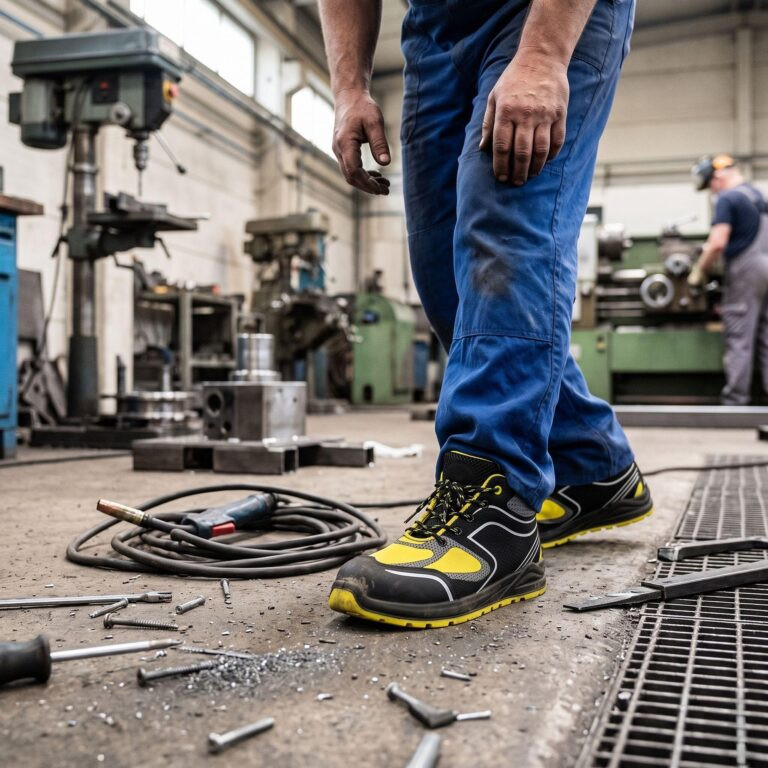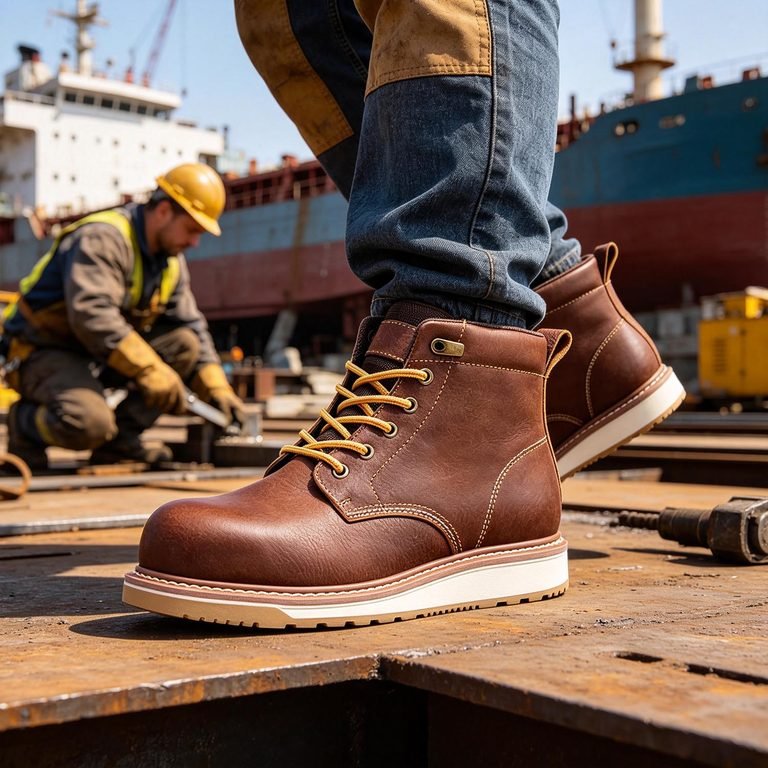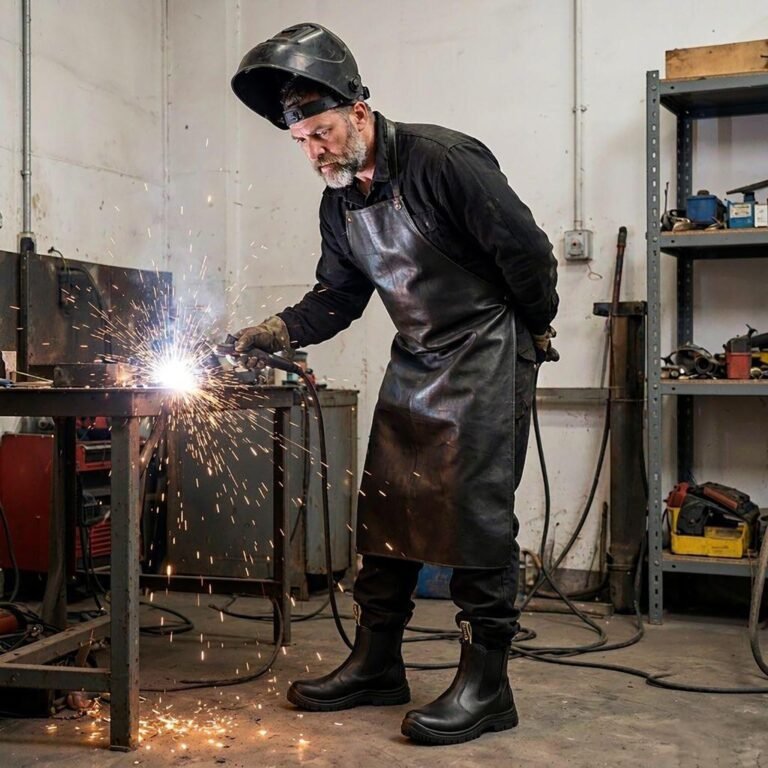
Welders face daily threats from molten metal spatter, extreme heat, and heavy machinery. Standard work boots melt or catch fire rapidly in these conditions, leading to severe foot burns. Selecting specialized welding safety shoes is the only reliable way to protect your feet on the shop floor.
The High-Risk Environment of Welding Operations
The harsh reality of metal fabrication involves exposure to temperatures that easily exceed industrial norms. Slag and sparks can reach 1,000°C, falling directly onto a worker’s instep. Regular industrial footwear often incorporates nylon meshes, standard polyurethane (PU) soles, or exposed cotton laces. In a welding environment, these materials become immediate liabilities. Synthetic fabrics melt into the skin, while standard laces catch fire or trap burning debris. The industry demands footwear engineered specifically to deflect heat and shed molten materials instantly before structural failure occurs.
Essential Protective Features and Material Engineering
To construct a shoe that withstands daily welding hazards, production must focus on highly specific material choices and structural designs.
Deflecting Molten Metal and Sparks The upper must be constructed from thick, premium full-grain leather. Unlike split leather or synthetic fabrics, full-grain leather resists burning and prevents slag from penetrating the surface. Additionally, welding shoes require a protective leather flap—often reinforced as a metatarsal guard—that completely covers the lacing system. This prevents sparks from burning through the laces or entering the shoe through the tongue. Quick-release buckles are heavily recommended, allowing the wearer to kick the boot off rapidly if hot slag manages to bypass the outer defenses.
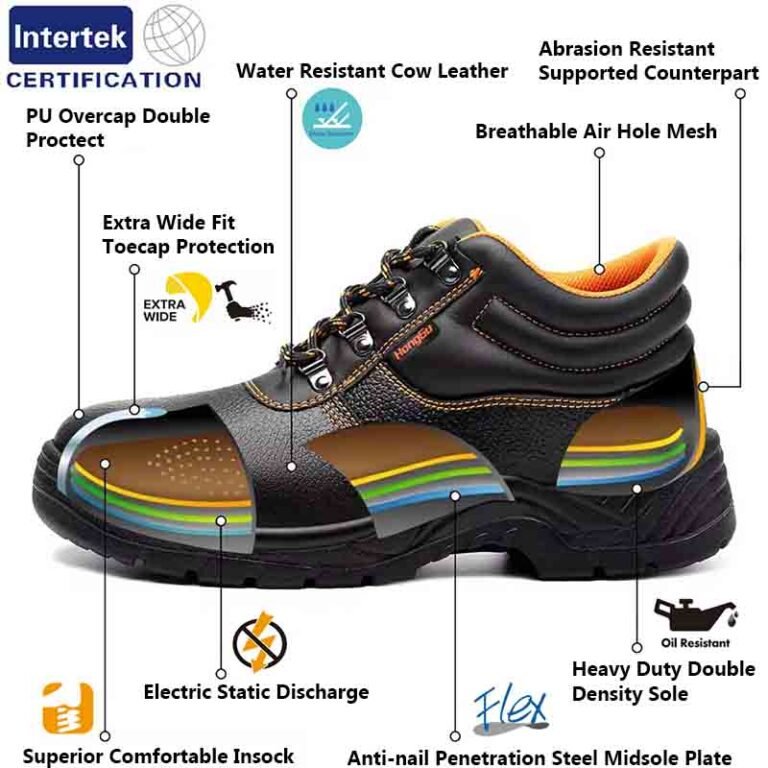
Heat-Resistant Outsoles (HRO) The sole of the shoe is in constant contact with hot floors or stray metal shavings. Nitrile rubber outsoles are mandatory. A proper HRO-certified sole can withstand direct contact with temperatures up to 300°C for short periods without melting, cracking, or losing its structural integrity. While standard PU soles offer excellent cushioning, PU/Rubber dual-density constructions are far superior for welders, providing ergonomic comfort on the inside and severe heat resistance on the bottom contact layer.
Thread and Stitching Integrity A frequently overlooked vulnerability is the thread used to stitch the upper together. Regular nylon or polyester thread will melt upon contact with a stray spark, causing the shoe to fall apart prematurely, even if the leather remains intact. High-quality welding shoes utilize aramid fiber threads, such as Kevlar, which possess exceptional thermal stability and will not ignite or degrade under sparks.
Impact and Compression Protection Welders routinely handle heavy steel plates, pipes, and gas cylinders. A robust protective toe cap—either steel or composite—is non-negotiable to protect against crushing injuries.
Common Mistakes When Selecting Welding Footwear
Many workers mistakenly believe that any heavy-duty leather boot is suitable for welding. This leads to several dangerous pitfalls. First, choosing boots with exposed laces or prominent metal eyelets creates physical traps for hot slag. If a spark lands in the lace area, it can burn through to the foot before the worker can unlace the boot.
Second, overlooking outsole materials is a costly error. Wearing basic single-density PU-soled shoes on a hot metal floor will cause the soles to degrade, flatten, or melt completely within a matter of weeks, compromising both safety and traction. Finally, workers often ignore the importance of the boot’s internal construction. Because welding shoes require thick, treated leather and minimal seams to block heat, they can easily trap sweat. Opting for shoes equipped with high-quality, breathable moisture-wicking linings helps maintain foot health and prevents blisters during long, high-temperature shifts.
Optimal Foot Protection Standards for Welders
The ideal safety shoes for welding workers must feature flame-resistant full-grain leather uppers, heat-resistant rubber outsoles (HRO), fire-retardant aramid stitching, protective leather lace covers, and safety toe caps. By ensuring the footwear integrates these specific structural defenses, workers can effectively prevent burns from molten slag, avoid thermal transfer from hot surfaces, and protect against heavy impact hazards in metal fabrication environments.
Written by Hong Gu Safety Shoes Technical Team, this content is compiled from practical production, long-term field applications, and rigorous testing results.
Shan Dong Hong Gu Shoes Industrial Co., Ltd. is a leading safety footwear manufacturer based in China, specializing in industrial foot protection with over 20 years of manufacturing expertise. Products are fully certified under European standards (CE EN ISO 20345:2022), offering a full range of manufacturing processes including PU/PU Injection, PU/Rubber, Goodyear Welted, and Rubber Cemented constructions.